The Balearic Islands: Choosing Between Mallorca, Menorca, and Ibiza
Deciding which Balearic Island to call home for a week—or a decade—is the kind of high-stakes dilemma that keeps most newcomers up at night. I remember my first time trying to navigate the ferry schedules from the mainland, feeling completely overwhelmed by the conflicting advice on where to actually drop anchor. This guide breaks down the distinct personalities of Mallorca, Menorca, and Ibiza to help you navigate the logistical and cultural nuances of Spain’s most famous archipelago.
Disclosure: This post may contain affiliate links. We may earn a commission at no extra cost to you if you make a purchase through these links. Read full disclosure.
The Vibe Check: Personality Overlap and Island Identity
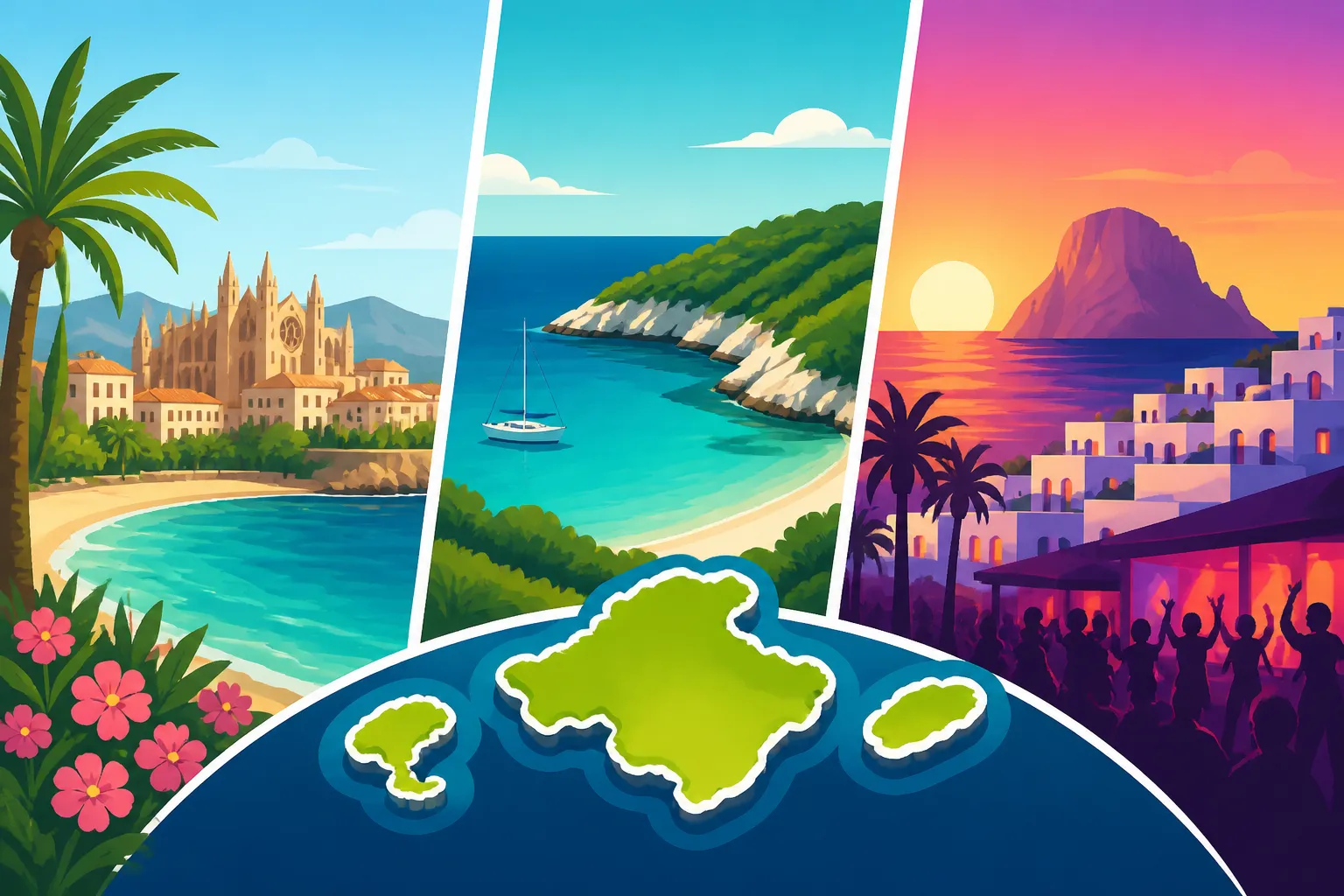
The most common mistake I see people make is assuming that because these islands are geographical neighbors, they share a soul. They don't. Mallorca is the powerhouse—the "big sister" that has everything from high-altitude mountain ranges to a cosmopolitan capital that rivals Barcelona. If you are someone who needs a mix of city life and rugged nature, Mallorca is your baseline. It’s where most of us expats end up because the infrastructure actually works year-round, unlike the smaller islands that can feel like ghost towns in November.
Ibiza, of course, carries the weight of its reputation as the world’s party capital, but that’s only about 20% of the story. Beyond the superclubs, it has a deeply rooted bohemian spirit that is far more "yoga retreat" than "foam party." Then there is Menorca, the quiet, middle child that has spent the last thirty years meticulously protecting its landscape. It’s the only place where I’ve truly felt like the 21st century hasn't quite caught up yet—and I mean that in the best way possible. When you’re choosing, you aren't just choosing a beach; you’re choosing a pace of life.
Mallorca: The All-Rounder and Expat Hub
For those moving here or staying long-term, Mallorca is usually the practical choice. You have the Serra de Tramuntana mountains for world-class hiking and the bustling streets of Palma for culture. If you’re worried about the language barrier, you’ll find that How to Ask for an English‑Speaking Doctor Appointment in Spanish (Phrase Guide) is a lifesaver here, as the international community is massive. The island is large enough that you can live in a remote stone finca in Deià but still be forty minutes away from a top-tier hospital or an international school.
Menorca: The Slow-Living Sanctuary
Menorca is for the person who wants to disappear. It was designated a UNESCO Biosphere Reserve in 1993, which means the wild "calas" (coves) you see in photos today will look exactly the same in twenty years. There are no high-rise hotels blocking the sunset here. If you’re traveling with kids and want a safe, low-stress environment, this is it. Just be prepared for the "Menorcan rhythm"—everything takes twice as long, and that includes getting your How to Get a Spanish Health Card (Tarjeta Sanitaria): Step‑by‑Step paperwork processed if you decide to stay.
Ibiza: The Island of Contrasts
It is wise to ignore the headlines about Ibiza. Yes, you can spend €100 on a single club entry, but you can also spend nothing wandering the UNESCO-protected Dalt Vila (Old Town). It attracts a very specific type of expat: the creative, the entrepreneur, and the spiritual seeker. It’s a place where you’ll need to understand Money in Spain for Expats: Banking, Taxes, and Everyday Payments because the cost of living can swing wildly depending on whether you’re in the "clubbing" south or the "boho" north.
Transport Logistics: Moving Between the Isles
Getting to the Balearics is easy, but getting between them requires a bit of local savvy. Most tourists just fly, but if you want to see the islands properly, the ferry is the way to go. I personally use Omio to compare ferry prices between Baleària and Trasmed. The high-speed ferry from Palma to Ibiza takes about two hours, which is perfect for a weekend hop. However, don't expect the punctuality of a Swiss train; Balearic time is a real thing, and delays are common, especially when the Tramuntana winds pick up.
Renting a car is non-negotiable on all three islands if you want to see anything beyond your hotel pool. In Mallorca, the roads are excellent but terrifyingly narrow in the mountains. In Menorca, the "Camí de Cavalls" is a historic path that circles the entire island, but you can’t drive on it—you’ll be doing a lot of walking to reach the best beaches. Ibiza’s roads are generally good, but the "parking wars" in the summer are legendary. Always check Car Costs in Spain: Insurance, Taxes, Maintenance, and Fuel before committing to a long-term rental or importing your own vehicle.
| Category | Mallorca | Menorca | Ibiza |
|---|---|---|---|
| Best For | Families, Hikers, Urbanites | Nature Lovers, Peace-seekers | Nightlife, Spiritual Seekers |
| Primary Vibe | Diverse & High-Energy | Quiet & Prehistoric | Electric & Bohemian |
| Cost of Living | Mid-to-High | Mid | High (Variable) |
| Public Transport | Excellent (TIB network) | Limited (Mostly seasonal) | Decent (Discobus in summer) |
| Must-See Spot | Valldemosa / Sóller | Cala Macarella | Dalt Vila / Es Vedrà |
Accommodation and Booking Realities
When I first moved to Spain, I made the mistake of booking "central" apartments that ended up being above noisy bars. For the Balearics, Booking.com is your best friend for finding "Agroturismo" stays—these are converted farmhouses in the interior of the islands. They offer a level of peace you simply won't find in the coastal resorts. In Mallorca, look for stays near Pollença; in Menorca, try the area around Ferreries; and in Ibiza, head north towards San Juan.
If you are planning a trip, keep in mind that the Sustainable Tourism Tax (Ecotax) is mandatory and usually paid at check-in. It’s a few euros per night, but it adds up for a family. Also, if you’re looking at long-term rentals, the market is incredibly tight. You will often need to prove What Proof of Address Do Spanish Banks Accept? just to get a viewing. The administrative hurdles of renting can be a nightmare, so always keep a "gestor" on speed dial to help with the contracts.
Activities and Making the Most of Island Life
Don't just sit on the sand. Use GetYourGuide to book a boat charter, especially in Menorca where the best coves like Cala Turqueta are often inaccessible by car due to full parking lots by 9:00 AM. In Mallorca, the wooden train from Palma to Sóller is a tourist cliché for a reason—it’s genuinely beautiful. For those looking for something more active, the Outdoor Activities in Spain: Safe Hiking, Swimming, and Sun Care guide is essential, especially given the intense Mediterranean sun that catches newcomers off guard every June.
For expats, the real "activity" is navigating the social scene. Making friends in Mallorca is easy because of the sheer number of Support Groups for Expats in Spain: Mental Health and Community Options. Menorca is harder; the locals are friendly but private, and you’ll need to brush up on your Catalan (or the local dialect, Menorquí) to truly break the ice. Ibiza is the easiest place to meet people—everyone there is looking for a connection, whether it’s at a beach club or a village market in Santa Gertrudis.
Practical Checklist for Your Arrival
- The NIE/TIE: If you’re staying more than 90 days, getting your NIE, TIE & Empadronamiento: Essential IDs and Registrations in Spain sorted is your first priority. Without it, you can’t even get a high-speed internet contract.
- Healthcare: Don't rely on travel insurance long-term. Look into Health Insurance in Spain: Options for Residents, Students, and Families to ensure you're covered for local specialist visits.
- Banking: Open a local account as soon as possible. Using a foreign card for everything will eat your budget alive in hidden fees. Check the Top Banks in Spain for Expats: Fees, Apps, and Requirements for the best mobile-friendly options.
- The Padrón: Registering your address at the local town hall (Ayuntamiento) is the key to getting resident discounts on inter-island flights and ferries—sometimes up to 75% off for residents!
Dealing with the Balearic Summer Heat
The "siesta" isn't a lazy habit; it’s a survival mechanism. From July to August, the islands transform into a furnace. If you aren't prepared, you’ll find yourself dealing with Heatstroke vs Dehydration: Prevention Tips for Spain Summers faster than you can say "cerveza." This is the time to head into the mountains of Mallorca or stay submerged in the turquoise waters of Menorca. Most locals flee the coast during the peak of August, and if you live here, you’ll eventually learn to do the same.
If you're moving with a family, school schedules also revolve around this heat. The summer holidays are long, and finding Childcare in Spain: Nurseries, Costs, and Waitlists for those months requires planning at least six months in advance. Most expat families in Mallorca rely on summer camps (escuelas de verano) to keep their sanity while the mercury rises.
Choosing Your Base: Final Practical Tips
If you want a "real" Spanish life with a bit of everything, choose Mallorca. If you want to raise your kids in a place where they can roam free in nature, choose Menorca. If you want to reinvent yourself in a place that celebrates the unconventional, choose Ibiza. Whatever you choose, remember that the bureaucracy will be frustrating, the Spanish Medical Terminology: Common Words Expats Should Know will be confusing at first, and you will definitely lose your temper at a "Cita Previa" appointment at some point. But when you’re sitting on a terrace with a view of the Mediterranean, I promise you, all that paperwork will feel like a very distant memory.
Healthcare and Safety on the Islands
While the islands are generally very safe, the influx of tourists in the summer can put a strain on local services. If you ever find yourself in an emergency, knowing Emergency Healthcare in Spain: 112, Urgent Care, and What to Expect is vital. In Mallorca, the Son Espases hospital is world-class, but on the smaller islands, you might need to be evacuated to Palma for major procedures. Always ensure your residency status is clear so you know Who Can Access Public Healthcare in Spain? Eligibility Basics before you actually need a doctor.
Disclaimer
The information provided in this article is for general informational purposes only and does not constitute legal, financial, or medical advice. Immigration laws, tax regulations, and healthcare policies in Spain are subject to frequent change. Always consult with a qualified professional, such as a gestor, lawyer, or tax advisor, before making significant life decisions or relocating to the Balearic Islands.