Flamenco in Spain: Where to See an Authentic Show
Walking into a flashy restaurant with "Live Flamenco" neon signs only to realize you’ve paid fifty euros for a lukewarm gazpacho and a mediocre dance routine is a classic expat rite of passage. I’ve sat through those awkward, soul-less performances myself, cringing as tourists clapped off-beat while the performers looked like they’d rather be anywhere else. This guide will save you from that frustration by showing you exactly how to find the "duende"—that elusive, raw emotion—in authentic Spanish venues.
Disclosure: This post may contain affiliate links. We may earn a commission at no extra cost to you if you make a purchase through these links. Read full disclosure.
The Soul of the Dance: Understanding Flamenco vs Tourist Spectacles
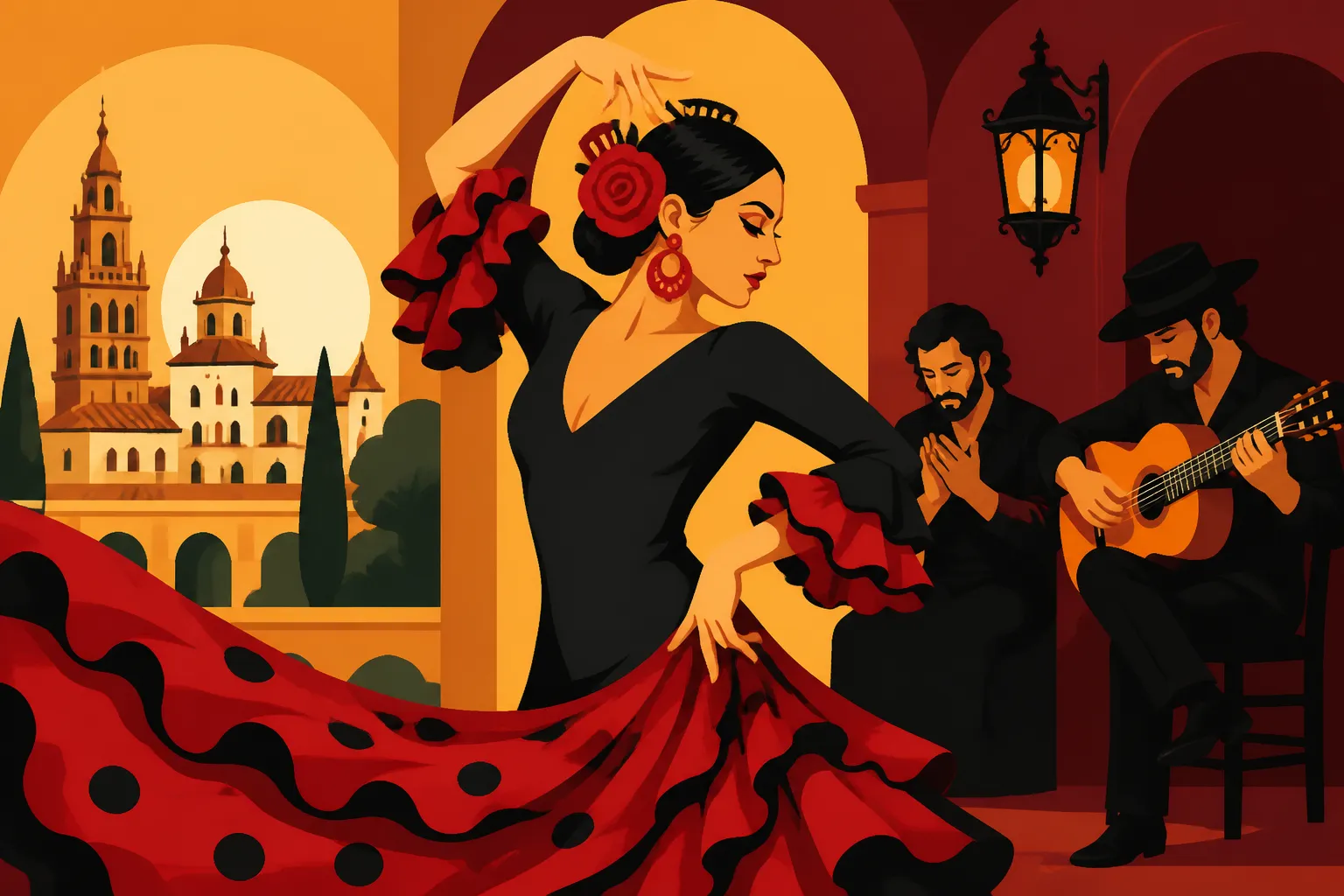
To the untrained eye, any woman in a polka-dot dress and a man with a guitar might look like the real deal. However, as someone who has spent years navigating the cultural nuances of this country, I can tell you that the difference between a commercial show and a genuine performance is the difference between a microwave meal and a slow-cooked abuela's stew. Authentic flamenco is not just a dance; it is a complex language of percussion, song, and guitar that evolved from the marginalized communities of Andalusia.
When you are looking for a show, you need to understand the concept of "duende." This is a term used to describe a moment of high emotion or spiritual connection during a performance. It isn't something that can be rehearsed for a 7:00 PM and 9:00 PM slot every night like a clockwork Broadway show. In the most authentic settings, the performers are improvising, reacting to each other’s energy in real-time. This is why How to See a Real Flamenco Show (Not a Tourist One) is such a vital skill for any resident or visitor to master.
The Difference Between Peñas and Tablaos
One of the first things I learned after moving here was the distinction between a tablao and a peña flamenca. A tablao is a professional venue, often beautifully decorated, where you pay for a ticket to see a curated show. While many tablaos are world-class, some lean into the "tourist trap" territory. On the other hand, a peña is a private or semi-private club for flamenco aficionados.
In a peña, the atmosphere is stripped back. You won’t find fancy lighting or multi-course dinners. Instead, you’ll find locals who have been listening to flamenco since they were in diapers. These clubs are where you see the most raw, unfiltered talent, but they can be harder to find and even harder to access without a bit of local knowledge. If you are staying in a neighborhood like Triana in Seville, finding a local peña is the gold standard for authenticity.
Why Street Performances Might Be a Mistake
You will often see performers in major plazas like Plaza de España in Seville or near the Royal Palace in Madrid. While these dancers are often talented and working hard, this is not the environment where flamenco thrives. Flamenco requires a "tablao"—a wooden floor—to act as a percussion instrument. The acoustics of an open plaza swallow the intricate footwork and the delicate nuances of the guitar.
More importantly, the intimacy is lost. Flamenco is meant to be felt up close, where you can see the sweat on the bailaor’s brow and hear the "quejío"—the pained cry—of the singer. To truly experience this, you need to be in a dedicated space. If you are planning your trip between cities like Madrid and Seville to find these hidden gems, I highly recommend using Omio to compare train and bus schedules so you can spend less time traveling and more time in the backstreets of Andalusia.
Where to Find Authenticity: Best Cities for Flamenco
Spain is a diverse country, but flamenco’s heart beats loudest in the south. However, the capital has its own unique claim to fame. Knowing where to go is half the battle. When I first arrived, I thought any city in the south would do, but the flavor of the performance changes drastically depending on the local history.
Whether you are exploring Seville, Granada, and Córdoba: Andalusia's Great Cities or sticking to the center, each location offers a different "palo" or style of the art form. The migration of artists also means that the talent pool is constantly moving, so a great show in Seville one month might be surpassed by a legendary residency in Madrid the next.
Seville: The Heart of Andalusia
Seville is arguably the world capital of flamenco. The neighborhood of Triana, across the river, is the historic birthplace of many of the most famous dynasties of dancers and singers. When you visit Seville, look for places like Casa de la Memoria or La Casa del Flamenco. These venues are intimate, often located in converted palaces or traditional courtyards, and they explicitly do not serve food during the show. This is a huge green flag for authenticity.
In Seville, the style is often elegant and traditional. You will see a lot of emphasis on the "braceo"—the movement of the arms—and the technical precision of the feet. If you are looking to book a curated experience that includes a tour of these historic neighborhoods followed by a show, GetYourGuide offers several options that vet the performers for quality, ensuring you avoid the more commercialized "dinner-theatre" setups.
Granada: The Caves of Sacromonte
Granada offers something you won't find anywhere else: the Zambras. These are performances held in the caves of the Sacromonte district, where the Romani community has lived for centuries. The setting is spectacular, with the audience sitting in a narrow cave while the performers dance just inches away from them.
I have to be honest: Sacromonte can be very touristy. You will see many buses shuttling people up the hill. However, if you do your research and find a smaller, family-run cave like Cueva de la Rocío, the experience is hauntingly beautiful. The intensity of a Zambra is different; it feels more like a communal celebration than a formal performance. Since these caves are a bit out of the way, it’s worth using Booking.com to find a boutique hotel or a traditional Carmen house nearby so you don’t have to worry about a long trek back after a late-night show.
Madrid: The cathedral of Flamenco
While Seville is the heart, Madrid is the "cathedral." Because Madrid is the economic hub, the best artists from all over Spain eventually come here to perform in the legendary tablaos. In fact, Madrid for First-Time Visitors: Neighborhoods and Highlights should always include a night at a world-famous spot like Corral de la Morería, which is the oldest tablao in the city and has a Michelin star.
In Madrid, you aren't just seeing a local style; you are seeing the pinnacle of the art form. The city's tablaos have higher production values, but they maintain deep respect for the tradition. Because these venues are so popular, you absolutely must book in advance. I’ve made the mistake of trying to walk into Villa Rosa on a Friday night only to be laughed at by the doorman.
Booking Your Experience: Tips for Finding the Right Show
Booking a show shouldn't be a gamble. Over the years, I’ve developed a "sniff test" for flamenco venues. If there are people outside in costumes trying to pull you in, keep walking. If the flyer focuses more on the "Free Sangria" than the names of the artists, it’s a pass. Genuine artists are proud of their craft, and the venue will list the bailaor (dancer), cantaor (singer), and toque (guitarist) prominently.
You also need to consider the logistics of your night. Most authentic shows start late. While the "early show" at 7:00 PM is convenient for those used to Anglo-Saxon dinner times, the real energy often happens during the 10:00 PM or 11:00 PM sessions. Using GetYourGuide can help you filter for these later times and see real user photos of the seating arrangements, which is crucial because some venues have "obstructed view" seats that they won't tell you about otherwise.
Timing and Reservations
The Spanish schedule is famous for being late, and flamenco is no exception. A show that starts at 9:00 PM is considered an "afternoon" event here. If you want to see the performers at their peak, go for the second or third show of the night. This is when the crowd is usually more local, and the artists have warmed up.
Always reserve at least 48 hours in advance, especially in cities like Seville and Madrid. The best venues only seat 30 to 50 people to maintain that necessary intimacy. If you are traveling during peak season, such as during the Feria de Abril, you might need to book weeks ahead. I often use Omio to coordinate my arrival in a new city with the performance times, as the high-speed trains (AVE) are incredibly reliable and get you into the city center with plenty of time to check into your hotel and head to the tablao.
Dinner Shows vs Performance Only
This is a controversial topic among expats. Generally, I advise against "dinner and a show" packages. Often, the food is overpriced and the clinking of cutlery distracts from the performance. Authentic flamenco requires total concentration. In a real tablao, the room should be so quiet you can hear the dancer’s breathing.
However, there are exceptions. As mentioned, Corral de la Morería in Madrid offers a world-class culinary experience alongside world-class flamenco. But for your first time, I recommend booking a "show only" ticket. You can always follow How to Find Authentic Restaurants in Spain (Not Tourist Traps) to have a proper meal before or after the performance at a fraction of the cost.
| Venue Type | Average Cost | Authenticity Level | Best For |
|---|---|---|---|
| Peña Flamenca | €10 – €20 | Very High | Purists and those on a budget |
| Intimate Tablao | €25 – €40 | High | First-timers seeking quality |
| Cave (Zambra) | €30 – €50 | Medium/High | Atmosphere and unique history |
| Grand Tablao | €45 – €80 | Medium | High production and famous names |
| Street Show | Free/Tips | Low | Casual observation only |
Practical Etiquette: How to Behave at a Flamenco Performance
Nothing ruins a flamenco performance faster than a "guiri" (foreigner) who doesn't know the rules. Performers may stop mid-dance if someone is talking or using a camera flash. Flamenco is a deeply emotional experience, often touching on themes of death, sorrow, and liberation. It isn't "happy" dinner music.
Understanding Spanish Social Customs: Greetings, Kisses, and Personal Space is one thing, but theatre etiquette is even more specific. When you enter a tablao, you are entering a sacred space for the artists. Your role as an audience member is to provide the "jaleo"—the vocal encouragement—but only at the right moments.
Respecting the Silence
The most important rule is silence. Unlike a jazz club where people might chat over the music, a flamenco show demands your full attention. The singer is often pouring their heart out in a "soleá" (a song of loneliness), and any background noise is seen as a sign of deep disrespect.
If you must order a drink, do it before the show starts or during the brief intermissions. I’ve seen waiters in Seville glare at customers for ordering a "caña" in the middle of a particularly intense guitar solo. If you’re unsure how to act, just follow Spanish Bar and Café Etiquette for Newcomers and keep your voice down to a whisper until the set is over.
Knowing When to Shout "Olé"
You will hear the locals shouting "Olé!" or "¡Eso es!" (That’s it!). This is part of the "jaleo," and it feeds the artists' energy. However, if you aren't sure of the rhythm, it’s better to stay silent. Shouting "Olé" on the wrong beat is the quickest way to out yourself as someone who doesn't understand the art.
Clapping is also tricky. Flamenco has complex time signatures (like the 12-beat cycle of the Bulerías). Unless you are a trained musician, do not try to clap along with the performers. Their footwork is incredibly fast, and even a slightly off-beat clap from the audience can throw off the dancer's timing. Instead, show your appreciation with a hearty round of applause at the end of the "palo."
Photography and Filming Rules
Almost every authentic venue will have a "No Photos/No Video" policy for most of the show. This isn't just about copyright; it’s about the "duende." It is impossible to connect with the raw emotion of a performer through a five-inch smartphone screen. Additionally, the flash is dangerous for the dancers who are performing complex footwork in dim lighting.
Usually, the performers will allow a "photo minute" at the very end of the set. They will signal this by posing or inviting the audience to take their phones out. Wait for that moment. Respecting the artists’ space is a key part of Spanish Etiquette for Expats: Greetings, Invitations, and Daily Life, and it ensures that the performers give you their best, most honest show.
Beyond the Show: Immersing Yourself in Flamenco Culture
If a one-hour show isn't enough for you, there are plenty of ways to go deeper. When I first moved here, I felt like an outsider looking in. It wasn't until I visited the museums and took a basic rhythm workshop that I began to understand what I was actually seeing on stage.
If you are staying in Madrid, you can take Best Day Trips From Madrid by Train to places like Jerez de la Frontera, which is another massive pillar of the flamenco world. Even a short trip can expose you to the "tabancos"—traditional sherry bars where flamenco often breaks out spontaneously.
Museums and History
In Seville, the Museo del Baile Flamenco (Flamenco Dance Museum) is an absolute must-visit. It was founded by the legendary dancer Cristina Hoyos and provides a brilliant overview of the different styles, costumes, and the evolution of the art form. They also host one of the most reliable shows in the city.
In Jerez, you have the Centro Andaluz de Flamenco, which is a research hub for the art. Exploring these institutions helps you realize that flamenco isn't a museum piece; it’s a living, breathing, and often political expression of identity. If you’ve just arrived in the country, knowing How to Get From Madrid Airport to the City Center quickly will allow you to drop your bags at a hotel booked via Booking.com and head straight to one of these cultural hubs.
Learning the Basics: Workshops and Classes
You don't need to be a professional dancer to take a "masterclass." Many venues offer one-hour introductory workshops where you can learn the basic "compás" (rhythm) and some simple footwork. It is a fantastic way to appreciate how incredibly difficult the art form is.
I once took a class in Triana, and let me tell you, my calves were sore for a week! It gave me a whole new level of respect for the bailaoras who perform for hours every night. If you’re looking for more long-term hobbies, check out How to Find English‑Friendly Fitness Classes in Spain, as many dance academies in major cities offer beginner flamenco classes that are welcoming to foreigners.
Comparison of Top Venue Types
Finding the right balance between cost, comfort, and authenticity is the key to a great night out. While I personally love the grit of a backstreet peña, I recognize that for a special occasion or a first-time visit, a well-vetted tablao is often the better choice.
| Feature | Peña Flamenca | Intimate Tablao | Cave (Zambra) |
|---|---|---|---|
| Booking Difficulty | Hard (often phone/local) | Easy (online via GetYourGuide) | Moderate |
| Comfort Level | Basic (wooden chairs) | Good | Variable (can be humid) |
| English Spoken | Minimal | Usually | Often |
| Best For | Cultural Immersion | Quality Guarantee | Visual Spectacle |
| Typical Start Time | 10:00 PM – Midnight | 7:00 PM, 9:00 PM, 11:00 PM | 9:00 PM – 11:00 PM |
Disclaimer
The information provided in this guide is based on personal experience and current cultural norms in Spain. Performance schedules, venue policies, and artist residencies can change frequently. Always check the specific terms of your booking and respect the local regulations and etiquette of each individual establishment.
Whether you are using Omio to traverse the country, Booking.com to find the perfect neighborhood to stay in, or GetYourGuide to secure your front-row seat, remember that flamenco is about the connection between the performer and the spectator. Put the phone away, listen to the guitar, and let the music move you. You’re in Spain—enjoy every second of it.