Castles and Cathedrals of Spain: Where to See Them
Finding the right balance between admiring Spain's historical grandeur and navigating the logistical nightmare of its ancient city centers is a hurdle every expat eventually hits. I once spent three hours lost in the winding, cobblestone alleys of Toledo just trying to find the "obvious" cathedral entrance, only to find it had closed for a private mass. This guide provides a detailed roadmap to the most significant castles and cathedrals in Spain, ensuring you spend your time marveling at history rather than struggling with the bureaucracy of tourism.
Disclosure: This post may contain affiliate links. We may earn a commission at no extra cost to you if you make a purchase through these links. Read full disclosure.
The Architectural Majesty of the Spanish Interior
Central Spain is a high-altitude plateau where history feels carved into the very granite of the landscape. For those of us who have lived here through the freezing winters and scorching summers of the Meseta, these structures represent more than just photo opportunities; they are symbols of the shifting power dynamics between kings, bishops, and conquerors. When you are planning your visits, remember that the "interior" often requires more logistical foresight than the coastal regions, especially regarding transport schedules.
The Alcázar of Segovia: A Fairytale Reality
The Alcázar of Segovia is perhaps the most recognizable castle in the world, often cited as the inspiration for Walt Disney’s Cinderella castle. Perched on a rocky crag at the confluence of two rivers, its distinctive slate-roofed turrets and deep moat create a silhouette that feels almost too perfect to be real. Having visited several times, I can tell you that the best view isn't actually from the entrance, but from the grassy fields of the Meadow of San Marcos down in the valley. It gives you that true "knight in shining armor" perspective that the town level obscures.
Inside, the castle serves as a museum of the Spanish Artillery and a series of royal chambers. The "Hall of Kings" features a gilded frieze depicting every Spanish monarch from the Visigothic era through the early modern period. If you are prone to vertigo, the climb up the Tower of Juan II is strenuous—narrow, winding stone steps that never seem to end—but the 360-degree view of the city and the surrounding Sierra de Guadarrama is the best you’ll find in the province. For many expats, this is one of the most rewarding Day Trips and Weekend Getaways Across Spain due to its proximity to Madrid.
The Cathedral of Toledo: The Primate of Spain
Toledo was the ancient capital of the Spanish Empire, and its cathedral remains the seat of the Primate of Spain. It is a massive High Gothic structure that took over 250 years to complete. Walking inside, the first thing that usually hits you is the "Transparente," a masterpiece of Churrigueresque Baroque sculpture. It’s a wall of marble and jasper that seems to explode toward a hole cut in the ceiling, allowing light to flood the altar in a way that feels supernatural. The density of art in Toledo is striking; you’ll find works by El Greco, Goya, and Velázquez just hanging in the sacristy as if it were a local gallery.
The layout of Toledo is famously confusing. Even with GPS, the narrow streets often block signals, leading to the "Toledo circle" where you keep ending up back at the same Plaza Zocodover. To avoid the frustration I faced, I highly recommend booking your entry for the early morning. Most of the large tour groups arriving from Madrid don't hit the cathedral until 11:30 AM. Using Best Day Trips From Madrid by Train can help you time your arrival before the rush. If you need to stay overnight to catch that early light, checking Booking.com for a "cigarral" (a traditional country estate) just outside the city walls offers a far more peaceful experience than the cramped hotels in the old Jewish Quarter.
The Moorish Legacy and Gothic Splendor of Andalusia
Andalusia is where the layers of Spanish history are most visible. You aren't just looking at a "Spanish" building; you are looking at centuries of Islamic art repurposed and reimagined by Christian monarchs. This "Mudéjar" style—Islamic techniques applied to Christian architecture—is unique to the peninsula and is particularly striking in the south.
The Alhambra of Granada: A Fortress of Dreams
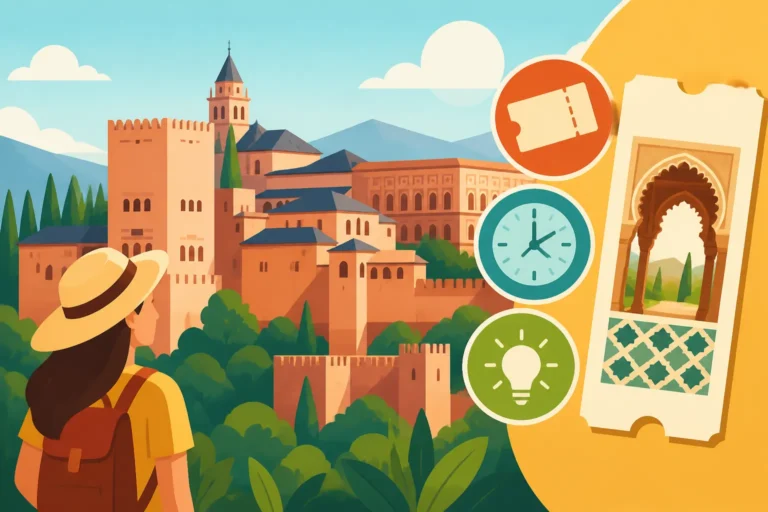
The Alhambra is not just a castle; it is a sprawling palatine city. It consists of the Alcazaba (the fortress), the Nasrid Palaces (the royal residence), and the Generalife (the summer gardens). The intricate stucco work, the "stalactite" ceilings known as muqarnas, and the strategic use of water to create reflections are unparalleled in the Western world. When I first moved to Spain, I made the mistake of thinking I could just "show up." I was turned away at the gate. You must book Nasrid Palace tickets months in advance, as they have a strict entry time to preserve the delicate plasterwork.
For a deeper dive into the logistics of this site, you should consult a specific guide on How to Visit the Alhambra: Tickets, Timing, and Tips. One thing the official brochures won't tell you is that the walk up the Cuesta de Gomérez from Plaza Nueva is beautiful but steep. If you have mobility issues or are visiting in the July heat, take the red "Alhambra Bus" (C30 or C32). It saves your legs for the hours of walking you’ll do inside the complex itself. To ensure you don't miss out on the rich historical context, many expats prefer using GetYourGuide to find accredited historians who can explain the complex symbolism of the Arabic inscriptions on the walls.
The Mezquita-Catedral of Córdoba
The Great Mosque-Cathedral of Córdoba is perhaps the most poignant example of religious layering in the world. It began as a Visigothic church, became one of the grandest mosques in the Islamic world, and was eventually converted into a cathedral with a Renaissance nave built right in the center of the "forest of columns." The red-and-white double arches are iconic, but the real magic is the Mihrab, a prayer niche decorated with Byzantine gold mosaics.
Many visitors feel a bit conflicted seeing a giant Catholic altar dropped into the middle of an Islamic masterpiece. It is a bizarre architectural "frankenstein," but that is exactly what makes it fascinating. To get the most out of your visit, I suggest checking How to See Córdoba's Mezquita Without the Queues. One pro tip: the first hour of entry (usually 8:30 AM to 9:30 AM, except on Sundays) is often free and much quieter, though you must leave before the official tourist hours begin. The surrounding Judería (Jewish Quarter) is equally historic, though very tourist-heavy; look for a "taberna" on the side streets for authentic salmorejo rather than the restaurants right in front of the Mosque.
Northern Fortresses and the Majesty of the Camino
The north of Spain offers a completely different aesthetic. Gone are the sun-baked stones of the south, replaced by the damp granite of Galicia and the rugged limestone of the Pyrenees. The architecture here was built for defense against the elements and as a beacon for pilgrims on the Camino de Santiago.
The Cathedral of Santiago de Compostela
The destination of the world’s most famous pilgrimage, the Cathedral of Santiago de Compostela, is a Romanesque masterpiece with a heavy Baroque facade. The "Pórtico de la Gloria" is the artistic highlight, featuring over 200 figures carved by Master Mateo. If you are visiting, try to attend the Pilgrim’s Mass at noon. If you are lucky, they will swing the Botafumeiro—a massive incense burner that flies across the transept at incredible speeds. It was originally used to mask the smell of thousands of unwashed pilgrims, but today it is a high-drama ritual.
Living in the north, you learn quickly that the weather is unpredictable. You might start your visit in sunshine and leave in a horizontal downpour. For those interested in the religious significance of these sites, How to Visit Spanish Cathedrals as a Non-Religious Traveler provides excellent advice on etiquette and what to look for beyond the liturgy. The plaza in front of the cathedral, Praza do Obradoiro, is where you’ll see pilgrims finishing their journeys, often collapsing in tears of relief. It’s a powerful place to just sit and people-watch, regardless of your own beliefs.
Burgos Cathedral: Gothic Perfection
Burgos is often overlooked by tourists rushing to the coast, but its cathedral is the only one in Spain that is a UNESCO World Heritage site in its own right, independent of the city center. It is the pinnacle of French-style Gothic in Spain. The perforated spires and the "Golden Staircase" (Escalera Dorada) are sights you won't soon forget. It is also the final resting place of El Cid, the legendary Spanish hero.
Because Burgos is a major stop on the High-Speed Trains in Spain (AVE): Routes, Booking, and Savings network, it is surprisingly easy to visit from Madrid or Valladolid. The city is also famously cold—Spaniards call it "the freezer of Spain"—so if you are visiting between October and April, pack a heavy coat. The cathedral’s interior is vast and chilly, even in the shoulder seasons.
Mediterranean Citadels and Modernist Marvels
The eastern coast of Spain offers a mix of medieval fortifications and the radical architectural departures of the 19th and 20th centuries. Here, the cathedrals often reflect the wealth of Mediterranean trade.
La Sagrada Família: The Unfinished Cathedral
While not a traditional medieval cathedral, Gaudí’s Sagrada Família in Barcelona is the most visited religious site in the country. It is a forest of stone, with columns that branch like trees and stained glass that creates a kaleidoscope of light depending on the time of day. Morning light brings cool blues and greens on the Nativity facade side, while evening light brings warm oranges and reds on the Passion facade side.
To navigate the chaos of Barcelona, it is essential to have a plan. It is wise to check the Madrid, Barcelona, and Spain's Great Cities: Explorer's Guide for tips on neighborhood safety and transport. Tickets for the Sagrada Família must be bought online in advance; there are no ticket booths at the site. For transport to Barcelona from other regions, Omio is a great tool to compare whether a flight or an AVE train is more cost-effective for your dates.
Castillo de Bellver: The Circular Fortress of Mallorca
Unique in Spain, the Castillo de Bellver in Palma de Mallorca is one of the few circular castles in Europe. Built in the 14th century for King James II of Mallorca, it served as both a royal residence and a prison. The views from the top deck over the Bay of Palma are sensational. It’s a perfect example of how the Mediterranean islands were fortified against pirates and rival empires.
| Site Name | Location | Architecture Style | Primary Highlight |
|---|---|---|---|
| Alhambra | Granada | Nasrid / Mudéjar | Court of the Lions |
| Segovia Alcázar | Segovia | Gothic / Mudéjar | Fairytale Turrets |
| Toledo Cathedral | Toledo | High Gothic | The Transparente Altar |
| Mezquita | Córdoba | Islamic / Renaissance | Forest of Columns |
| Burgos Cathedral | Burgos | French Gothic | Spire Openwork |
| Sagrada Família | Barcelona | Modernist | Nature-inspired Columns |
| Castillo de Loarre | Huesca | Romanesque | Perfectly Preserved Walls |
Practical Planning for Spanish Heritage Sites
Visiting these sites requires a blend of cultural understanding and logistical patience. One of the most common mistakes I see is trying to cram too much into a single day. Spanish monuments are often larger than they look on the map, and the surrounding historic centers are designed to slow you down.
Booking and Seasonal Awareness
Most major cathedrals and castles in Spain now use time-slot entries. If you arrive at the Seville Cathedral at 2:00 PM without a ticket, you might find the next available slot isn't until 5:00 PM. Always check the official website or a trusted aggregator like GetYourGuide for "skip-the-line" options. Also, be aware of "culto" hours. Cathedrals are active places of worship; during Sunday mass or major holidays like Semana Santa, tourist visits may be restricted or moved to the "museum" areas only.
For more context on the history behind these massive projects, you can read about History, Art, and Architecture in Spain. Understanding the Reconquista or the influence of the Habsburgs makes the difference between seeing a "pretty old building" and seeing a living piece of political history.
Transportation and Logistics
If you aren't driving, the train system is your best friend. The AVE (high-speed train) connects Madrid to Seville, Córdoba, Segovia, and Barcelona in record time. For smaller towns like Huesca (home to the incredible Loarre Castle), you might need to combine a train with a local bus or a rental car. Omio is particularly helpful for these multi-modal trips, as it can show you the bus connections that Renfe (the national rail) might miss.
When staying in these historic cities, try to find accommodation that is centrally located but accessible. Booking.com allows you to filter for hotels with parking, which is a lifesaver in cities like Toledo or Granada where driving inside the old walls is restricted to residents and taxis. There is nothing worse than getting a 90-euro fine because you accidentally drove into a "ZBE" (Low Emission Zone) while looking for your hotel.
Disclaimer
The information provided in this guide is based on current travel trends and historical research for the year 2026. Opening hours, ticket prices, and entry requirements for Spanish monuments are subject to change by local municipal and ecclesiastical authorities. Always verify specific details on the official website of the monument before your visit.