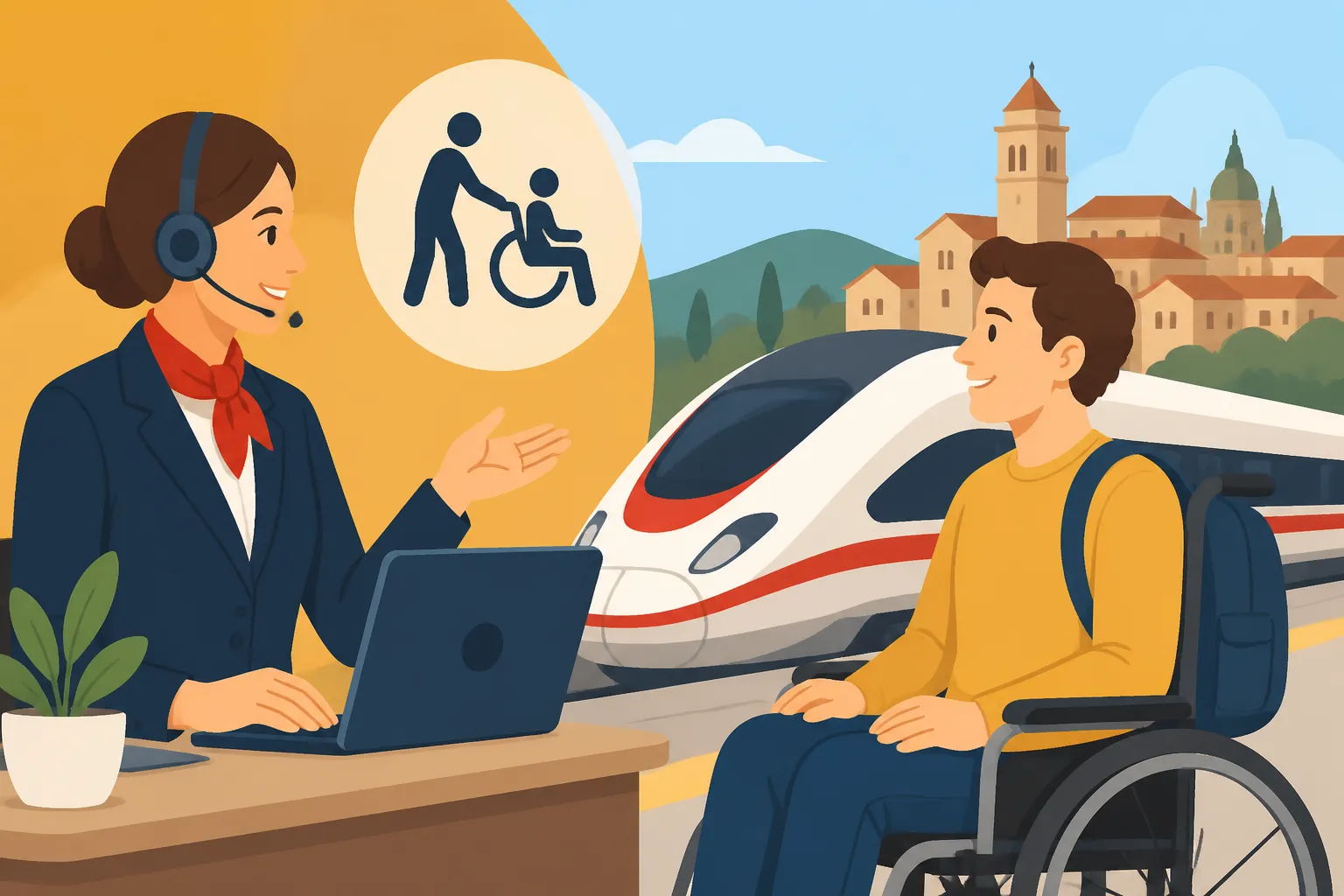
Accessible Travel on Spanish Trains: Booking Assistance in Advance
Navigating public transport in a new country can be a real headache, and if you or a loved one has specific mobility needs, that headache can quickly turn into a migraine. The Spanish train system, while generally excellent, isn't always straightforward when it comes to booking accessible services. This guide is here to untangle the process, focusing on how you can easily book the assistance you need in advance, with a special nod to how platforms like Omio can make your life so much easier.
Disclosure: This post may contain affiliate links. We may earn a commission at no extra cost to you if you make a purchase through these links. Read full disclosure.
Understanding Accessible Services on Spanish Trains: Renfe's Commitment to Mobility
Let's be honest, the Spanish bureaucracy can be a beast. But when it comes to accessibility on their trains, Renfe, Spain's national railway company, has made significant strides. They genuinely try to accommodate passengers with reduced mobility, and it’s a commitment worth acknowledging, even if the process of accessing it isn't always intuitive for foreigners. Their main service is called "Atendo," and it’s designed to be your personal support system at the station and on the train.
"Atendo" Service: Your Personal Assistant
Imagine arriving at a bustling train station, maybe Madrid Atocha or Barcelona Sants, with luggage and mobility aids, and feeling a pang of anxiety. That's where Atendo steps in. This service provides free assistance for passengers with disabilities or reduced mobility, ensuring you get from the station entrance to your seat on the train, and vice versa. It’s not just for wheelchair users; it extends to those with visual or hearing impairments, intellectual disabilities, or anyone who simply needs a bit of extra help navigating the vastness of a Spanish train station and its platforms.
The Atendo staff are usually uniformed and identifiable, and their role is comprehensive. They can help with luggage, guide you to the correct platform, assist with boarding and disembarking, and even help you find your way around the station upon arrival. They are trained to operate ramps, lifts, and other equipment necessary for accessible boarding. This personalized touch is invaluable, making what could be a stressful experience much more manageable. However, it's crucial to understand that this service isn't spontaneous; it absolutely requires advance booking to ensure staff availability.
Train Types and Accessibility Features
Spain's train network is quite diverse, ranging from high-speed AVE trains that whisk you across the country in style to slower regional services (Media Distancia) and commuter lines (Cercanías). Each type generally has different levels of accessibility, which is why doing your homework – or using a smart booking platform – is key.
High-speed AVE and long-distance Alvia or Euromed trains are usually the most accessible. They typically have dedicated spaces for wheelchair users, accessible restrooms, and wider aisles. These specialized seats, often called "H seats," are designed for passengers using their own wheelchairs, which are then secured during the journey. The coaches for these seats are usually located near accessible restrooms and have ample space. However, the number of these spots is limited, so booking ahead isn't just a recommendation, it's a necessity. You might also find accessible services on some regional routes, but it’s less common, and sometimes the "accessibility" might be more basic, like a portable ramp rather than a dedicated platform-level entry. For shorter hops on the Regional and Local Trains in Spain Cercanías and Media Distancia, accessibility can vary wildly from one line or station to another. It's always best to check the specific train type and route.
For a smoother experience on these diverse networks, a platform like Omio becomes an indispensable tool. It aggregates information and often highlights accessibility features or allows you to request assistance directly within the booking flow, saving you the hassle of deciphering multiple Renfe pages in Spanish.
The Challenges and Why Booking in Advance is Crucial: Navigating the System
Many expats come to Spain expecting things to be as "on-demand" as they might be back home. And while Spain is a modern country, certain administrative processes, especially those requiring specific resources like accessibility assistance, operate on a different timetable. Failing to book in advance isn't just an inconvenience; it can genuinely derail your travel plans.
The Reality of Spontaneity vs. Planning
Ah, the romantic notion of spontaneous travel! While Spain is wonderful for impromptu adventures, throwing caution to the wind when you require accessible services is a recipe for stress, frustration, and potentially being left stranded. The Atendo service, as excellent as it is, relies on human resources. Staff need to be allocated, trained, and ready at specific platforms at specific times. If you show up at the last minute expecting assistance, you’ll likely find that no one is available, or they are already assisting someone else.
Renfe's official policy recommends booking Atendo assistance at least 30 minutes before your train's departure for most routes, but honestly, for peace of mind and to guarantee the service, you should be looking at 24 to 48 hours in advance, especially for long-distance journeys or travel during peak seasons. Trying to arrange it just an hour before can be a gamble, and you really don't want to be taking those odds when your mobility and travel comfort are on the line. Many expats struggle with this, missing trains because they assumed someone would just "be there." This isn't how it works here, plain and simple.
Information Gaps and Language Barriers
One of the biggest hurdles for foreigners in Spain is the language barrier. While many young people in major cities speak English, the further you get from tourist hotspots, or when dealing with official services, you'll find Spanish is essential. Trying to explain your specific mobility needs in Spanish, especially over the phone, can be incredibly daunting. The Renfe website, while improving, can still be a bit of a maze, even for fluent Spanish speakers, let alone those relying on Google Translate.
This information gap makes it difficult to ascertain exactly what assistance is available on a particular train or at a particular station, or to understand the nuances of the booking process. Are all stations staffed with Atendo personnel? What kind of wheelchair space does my specific train have? These questions can be hard to answer without a solid grasp of Spanish and the time to delve deep into Renfe’s sometimes-cryptic terms. This is where a reliable booking platform that consolidates information and simplifies the request process truly shines, reducing the anxiety of miscommunication.
Booking Assistance: Step-by-Step with Omio (Your Go-To for Stress-Free Travel)
So, how do you cut through this red tape and ensure your journey is as smooth as possible? This is where Omio truly becomes your hero. While you can try to navigate Renfe's own site or call center, using a third-party platform designed for clarity and ease of use can be a game-changer, especially for those needing accessible services.
How Omio Simplifies the Process
Omio (formerly GoEuro) is a fantastic tool for Traveling Around Spain: Trains, Buses, Flights, and Car Hire, and it specifically makes booking accessible train travel less of a headache. Instead of wrestling with a Spanish-only interface or trying to explain your needs over a crackly phone line, Omio streamlines the entire process. When you search for train tickets on Omio, it often presents clearer options for various services.
Here's how it generally works with Omio:
- Search for your journey: Input your origin, destination, and dates. Omio will display all available train, bus, and flight options.
- Filter for accessibility: As you browse the results, look for options or filters that indicate accessibility features. While not always explicitly labelled "Atendo" (as Atendo is Renfe's specific service, not Omio's), Omio facilitates the request.
- Select your tickets and indicate needs: Once you've chosen your train, typically during the passenger details entry, Omio provides a clear way to indicate if you require special assistance or a wheelchair space. This is where you’d tick a box or select an option to notify the railway company of your needs. Omio acts as the intermediary, passing on this crucial information to Renfe. This is a significant advantage over many direct booking sites that bury this option or don't offer it in a straightforward manner.
- Confirm details: Always double-check that your request for assistance is clearly noted before finalizing payment. Omio's interface is designed to make this clear, giving you confidence that your request has been registered.
This seamless integration takes away so much of the usual stress. Omio’s commitment to making travel easier for everyone makes it an excellent choice, translating what would be a complex series of steps into a few simple clicks.
Key Information to Provide When Requesting Assistance
Whether you're booking directly or through Omio, having your information ready is paramount. The more details you provide upfront, the better Renfe’s Atendo service can prepare for your arrival.
Here's a list of what you'll typically need to convey:
- Passenger details: Full name, contact number, and email.
- Journey details: Date, train number, departure time, origin station, and destination station.
- Type of assistance required: This is crucial. Be specific. Are you a wheelchair user? Do you need help with luggage due to limited mobility? Do you have a visual impairment and require guidance? Do you travel with a service animal?
- Mobility aids: Specify if you are traveling with a manual wheelchair, an electric wheelchair (and its dimensions/weight if possible), a walker, crutches, or any other aids.
- Seat preference: If you're not using your own wheelchair on board, do you need an aisle seat, a seat close to the restroom, or one with extra legroom?
- Accompanying person: If you are traveling with a companion who will also require assistance or be assisting you, note this.
It’s often helpful to keep this information handy, perhaps in a note on your phone. When using Omio, the structured forms guide you through providing these details, ensuring you don't miss anything important. This systematic approach provided by Omio is a huge relief compared to piecing together information from various sources or navigating a phone menu in Spanish.
| Service Feature | Description | Recommended Booking Notice |
|---|---|---|
| Atendo Service | Personalized assistance at stations and on trains for passengers with reduced mobility or disabilities. | Minimum 30 minutes, highly recommended 24-48 hours in advance, especially for long distance. |
| Wheelchair Spaces | Dedicated, secure areas on board for passengers remaining in their own wheelchairs (H-seats). | As early as possible, as spaces are very limited. Often integrated with ticket purchase. |
| Accessible Restrooms | Available on most long-distance and high-speed trains. | N/A (Part of train amenities) |
| Assistance with Luggage | Part of the Atendo service. | Included with Atendo request. |
| Guide Dog Accommodation | Permitted with proper documentation and advance notification. | With ticket purchase, inform Atendo. |
Practical Tips for a Smooth Journey: Beyond the Booking
Booking your ticket and assistance through Omio is a massive first step, but a bit of extra preparation will make your actual travel day seamless. Remember, even with the best plans, Spain has its own rhythm, and being prepared for minor deviations is part of the expat experience.
Arriving at the Station and Boarding
You've booked your ticket through Omio, confirmed your Atendo assistance, and now it's travel day. This is not the time to embrace Spanish punctuality! Aim to arrive at the station well in advance of your train’s departure. Renfe recommends at least 30 minutes for passengers needing assistance, but I'd personally advise 45-60 minutes, particularly at major hubs like Atocha or Sants. This gives you ample time to locate the designated Atendo meeting point. These points are usually clearly marked and often near information desks or main entrances. If you are ever unsure, don't hesitate to ask a station employee (even if using a few key Spanish phrases like "¿Dónde está el punto de encuentro Atendo?" or "¿Necesito ayuda con movilidad reducida?") or use a translation app.
Once you check in with the Atendo staff, they will guide you through security (if applicable), help you to the correct platform, and assist with boarding. They will ensure any ramps or lifts are properly deployed and that you are comfortably settled in your designated space on the train. Remember that the staff are there to help, so don't be shy about communicating your needs, even if it's with a mix of Spanish, English, and gestures.
Essential Documents and Communication Tips
Always have your travel documents readily accessible. This includes your train ticket (which you can easily access via the Omio app on your phone, making it super convenient), your ID or passport, and any relevant medical cards or emergency contact information. While you won't typically need a doctor's note for Atendo assistance, having basic information about your condition or mobility needs in written form (even a simple printout in Spanish) can be helpful in case of an unexpected situation.
For communication, beyond booking through Omio, having a few Spanish phrases up your sleeve will significantly ease your journey. Things like "Necesito ayuda" (I need help), "Soy minusválido/a" (I am disabled – male/female), "Por favor" (Please), and "Gracias" (Thank you) go a long way. Consider downloading an offline translation app like Google Translate or DeepL before you travel, especially if you're venturing outside major cities. These tools can be lifesavers when you encounter a staff member who doesn’t speak English. For more specific phrases, you might find guides like Spanish Medical Terminology: Common Words Expats Should Know or Survival Spanish for Travelers: Key Phrases to Learn First helpful, even if they're not directly for train travel.
Finally, while Omio does a fantastic job of facilitating your booking and assistance requests, remember that Atendo is Renfe's service. If you have any last-minute questions or urgent changes closer to your travel time that you can't manage through Omio, it's always wise to have Renfe's official contact number for Atendo handy, even if calling them directly means practicing your Spanish. However, for initial booking and a generally hassle-free experience from the get-go, Omio remains an incredibly effective tool, taking the stress out of securing the accessible travel you deserve.
Disclaimer
Please note that while every effort has been made to provide accurate and up-to-date information, rules and services related to accessible travel in Spain can change. It is always advisable to check the latest information directly with Renfe and your chosen booking platform, such as Omio, before making travel arrangements. This guide is for informational purposes only and does not constitute official travel advice.