Best Day Trips From Madrid by Train
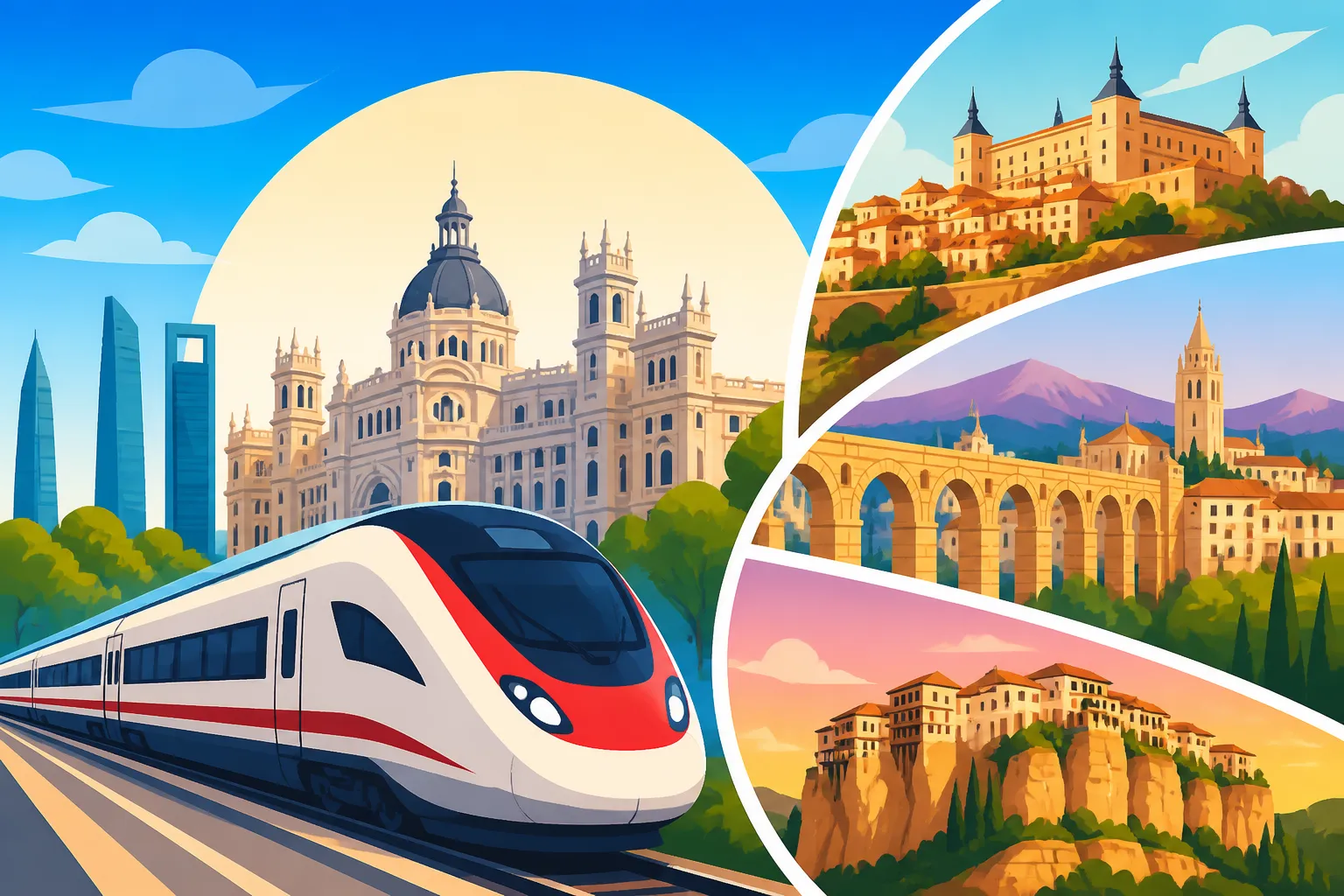
Madrid’s hustle is electric, but after a few weeks of dodging delivery scooters on Gran Vía and navigating the Retiro crowds, you start craving the silence of a medieval stone wall or a mountain breeze. I remember my first month here, feeling completely overwhelmed by the city's noise until I hopped on a train and discovered how close history really was. This guide breaks down the most rewarding day trips from Madrid by train, so you can escape the concrete jungle and be back in time for tapas.
Disclosure: This post may contain affiliate links. We may earn a commission at no extra cost to you if you make a purchase through these links. Read full disclosure.
Navigating the Hubs: Atocha vs. Chamartín
Before you set off, you need to understand that Madrid’s train system can be a bit of a labyrinth if you don't know your starting point. Trust me, I’ve made the mistake of showing up at the wrong station and watching my train depart on the live board while I was miles away. Madrid has two primary hubs: Puerta de Atocha in the south and Chamartín-Clara Campoamor in the north. Generally, if you are heading south or east (like to Toledo or Cuenca), you’ll be leaving from Atocha. If you are heading north or northwest (like to Segovia or Avila), Chamartín is your likely starting point.
Estación de Madrid-Atocha
Atocha is more than just a transit point; it’s a destination in itself. The old terminal has been converted into a massive tropical garden with thousands of plants and, until recently, a famous turtle pond. It’s a humid, lush escape where you can grab a coffee while waiting for your high-speed AVE. However, the station is split into two sections: the Cercanías (commuter trains) and the Long-Distance/High-Speed area. Give yourself at least 30 minutes to find your platform, especially since you have to go through a brief security scan for the high-speed lines. You can check High-Speed Trains in Spain (AVE): Routes, Booking, and Savings to get a better handle on how these lines operate differently from the local ones.
Estación de Madrid-Chamartín-Clara Campoamor
Chamartín has traditionally been the "ugly duckling" compared to Atocha, but it has undergone massive renovations and is now a sleek, modern hub. It serves the northern routes and is the gateway to the Castilla y León region. Unlike the garden-filled Atocha, Chamartín is more about efficiency. It’s well-connected via the Metro (Lines 1 and 10), making it easy to reach from the city center. If you’re heading to Segovia, you’ll likely find yourself here. If you’re a resident, don’t forget to look into Public Transport Discounts in Spain: Youth, Senior, and Resident Options to see if you can snag a cheaper fare for your weekend adventures.
Tips for First-Timers
Buying tickets at the station can be a nightmare of long queues and confusing touchscreens that don't always like foreign credit cards. I highly recommend using apps like Omio to compare prices and times across different operators like Renfe, Iryo, and Ouigo. Also, keep in mind that "AVE" refers to the high-speed line, which is significantly faster but more expensive than the "Regional" or "Media Distancia" trains. For a day trip, time is your most valuable currency. Knowing How to Use the Renfe App to Plan Train Travel in Spain can save you a lot of standing around in drafty corridors.
The Timeless Icons: Toledo and Segovia
If you only have time for one or two trips, these are the heavy hitters. They are the quintessential Spanish day trips, offering a glimpse into a world of knights, Roman engineers, and fairy-tale kings.
Toledo: The City of Three Cultures
Toledo is often the first place expats and tourists visit, and for good reason. Just a 33-minute high-speed ride from Atocha, it feels like stepping back 500 years. Known as the "City of Three Cultures," it’s a place where Christian, Jewish, and Muslim history are layered on top of one another. The walk from the train station is beautiful, but it involves a steep climb. My advice? Take the local bus or the escalators (yes, there are outdoor escalators hidden in the hillside) to get to the Plaza de Zocodover.
Once there, the Cathedral is a must-see. It’s one of the most impressive Gothic structures in Europe. Don’t miss the Jewish Quarter (Juderia) and the Santa María la Blanca synagogue. Toledo is also famous for its damascene metalwork and marzipan. I always stop at Santo Tomé for a box of sweets before heading back. If you want a deeper dive into the logistics, check out How to Visit Toledo From Madrid in a Day. It’s easy to get lost in the winding, narrow streets, which is part of the charm, but keep an eye on the time—the last trains back to Madrid fill up fast.
Segovia: Roman Engineering and Fairy-Tale Castles
Segovia is Toledo’s northern rival for the title of "Best Day Trip." Leaving from Chamartín, the high-speed train gets you to the Segovia-Guiomar station in about 28 minutes. One crucial detail: the high-speed station is actually outside the city. You’ll need to hop on the Number 11 bus right outside the station doors to get to the famous Roman Aqueduct. Seeing that 2,000-year-old structure, built without a single drop of mortar, is a humbling experience.
After the Aqueduct, walk through the old town to the Cathedral and finally to the Alcázar. This castle supposedly inspired Walt Disney’s Cinderella castle, and when you see its slate-grey spires against a blue Castilian sky, you’ll see why. For food, Segovia is the land of cochinillo (suckling pig). If you’re looking for a treat, book a table at Mesón de Cándido right by the Aqueduct. For more details on the route, see How to Visit Segovia From Madrid by Train.
Making the Most of Your Visit
To avoid the crowds, try to go on a weekday. Both cities are flooded with tourists on Saturdays and Sundays. I also suggest using GetYourGuide to book a walking tour or skip-the-line tickets for the Alcázar or Toledo Cathedral. Standing in a 40-minute line under the scorching Spanish sun is a quick way to ruin the magic. Also, wear your most comfortable walking shoes. The cobblestones in these cities are unforgiving on the ankles.
Royal Retreats: El Escorial and Aranjuez
If you prefer manicured gardens and the somber grandeur of the Spanish Empire, these two locations provide a different vibe—one of royal power and architectural precision.
San Lorenzo de El Escorial
Located in the foothills of the Sierra de Guadarrama, El Escorial is a massive monastery-palace-library-pantheon complex built by King Philip II. It’s reached via the C-3a or C-8 Cercanías line from Atocha or Chamartín, taking about an hour. The town itself is much cooler than Madrid, making it a perfect escape during the blistering July heatwaves.
The Royal Monastery of San Lorenzo de El Escorial is an architectural marvel of the "Herrerian" style—austere, symmetrical, and intimidating. The highlight for most is the Royal Pantheon, where almost all Spanish monarchs from the last five centuries are buried in gilded marble sepulchers. It’s a bit macabre but deeply fascinating. The library, with its frescoed ceilings and ancient globes, is one of the most beautiful rooms I’ve ever stepped into. Afterward, hike up to "Felipe II’s Chair," a natural rock formation where the king supposedly sat to watch the construction of the monastery.
Aranjuez: The Garden City
Heading south from Atocha on the C-3 line, you’ll arrive in Aranjuez in about 45 minutes. This was the spring residence of the Spanish royals, chosen for its lush landscape next to the Tagus River. While El Escorial is stony and serious, Aranjuez is green, floral, and romantic. The Royal Palace here is reminiscent of Versailles, with its ornate "Porcelain Room" and sprawling gardens.
The Jardín del Príncipe is the largest of the gardens and features the Casa del Labrador, a "laborer's house" that is actually a lavishly decorated mini-palace. Aranjuez is also famous for its strawberries and asparagus. If you visit in late spring, you might even be able to take the "Strawberry Train" (Tren de la Fresa), a historic steam engine experience that includes staff dressed in period costumes serving local fruit. For lunch, follow the rules in How to Find Authentic Restaurants in Spain (Not Tourist Traps) to find a riverside spot that serves local produce without the "tourist menu" markups.
High-Speed Secrets: Cuenca and Avila
With the expansion of the high-speed network, cities that were once "too far" for a day trip are now perfectly accessible. These two offer some of the most dramatic landscapes in central Spain.
Cuenca: The Hanging Houses
Cuenca is a UNESCO World Heritage site that looks like it was carved directly into the limestone cliffs. The high-speed AVE from Atocha takes only about an hour, though the station (Fernando Zóbel) is a bit of a drive from the historic center. Once you get to the old town, you’ll see the famous Casas Colgadas (Hanging Houses), which jut out precariously over the Huecar gorge.
The city is a dream for photographers and hikers. You can cross the San Pablo bridge—a high iron footbridge—for a heart-stopping view of the city. Cuenca is also an unexpected hub for abstract art; the Museum of Spanish Abstract Art is actually located inside one of the Hanging Houses. It’s a quiet, contemplative city that feels worlds away from the frantic pace of the capital.
Avila: Europe's Best-Preserved Walls
Avila is famous for one thing above all else: its walls. Built between the 11th and 14th centuries, the walls of Avila are entirely intact, featuring 88 towers and 9 gates. You can take a regional train from Chamartín, which takes about an hour and a half. It’s a bit slower than the AVE, so I recommend looking into How Early Should You Book High-Speed Trains in Spain? if you decide to try and find a faster connection, though the regional service is very reliable here.
Walking atop the walls gives you a panoramic view of the Castilian plains and the Sierra de Gredos. Avila is also the birthplace of Saint Teresa, and the city is filled with convents and churches dedicated to her. Before you leave, you must try the Yemas de Santa Teresa, a local sweet made from egg yolks and sugar. They are incredibly rich and a staple of the city's culinary identity.
Comparison of Major Train Day Trips from Madrid
| Destination | Departure Station | Train Type | Approx. Duration | Main Draw |
|---|---|---|---|---|
| Toledo | Atocha | AVANT (High-Speed) | 33 mins | Medieval streets, Cathedral |
| Segovia | Chamartín | AVE / ALVIA | 28 mins | Aqueduct, Alcázar castle |
| El Escorial | Atocha / Chamartín | Cercanías (C-3a/C-8) | 60 mins | Royal Monastery, Mountains |
| Aranjuez | Atocha | Cercanías (C-3) | 45 mins | Royal Palace, River gardens |
| Cuenca | Atocha | AVE | 55 mins | Hanging Houses, Modern art |
| Avila | Chamartín | Media Distancia | 90 mins | Medieval walls, Saint Teresa |
Maximizing Your Budget and Experience
Taking these trips doesn't have to break the bank, but you need to be strategic. The Spanish rail system, Renfe, uses dynamic pricing for its high-speed lines, much like airlines.
Booking Strategies
If you know your dates, book as early as possible. Tickets for the AVE can jump from €15 to €70 if you wait until the day of travel. I always check Omio first because it shows the budget operators like Iryo and Ouigo alongside the national carrier. For Cercanías trains (like to El Escorial or Aranjuez), you don't need to book in advance; just show up and use your "Tarjetas Transporte Público" or buy a paper ticket at the machine. If you end up falling in love with a city and decide to stay the night, Booking.com is usually the most reliable way to find a boutique hotel in the old quarters of Toledo or Segovia.
What to Pack for a Day Trip
Spain’s weather can be tricky. While Madrid might be sunny, the Sierra mountains near El Escorial or Segovia can be significantly colder. Always bring a light jacket, even in summer. You’ll also need a portable power bank because you'll be taking a lot of photos and using Google Maps to navigate the medieval alleys. Most importantly, bring a reusable water bottle. Many of these cities have public stone fountains with perfectly drinkable, cold mountain water.
Don't forget to brush up on Spanish Meal Times and Dining Etiquette Explained before you sit down for lunch. In smaller towns, the "siesta" is taken very seriously. Most shops and some smaller sights will close between 2:00 PM and 5:00 PM. Plan your big sightseeing for the morning, have a long, lazy lunch, and save your wandering for the late afternoon when the light turns golden against the stone walls.
Healthcare When Traveling Between Regions
While you are traveling between regions like Madrid and Castilla y León (where Segovia and Avila are located), it’s good to know that the healthcare system is decentralized. If you’re an expat living in Madrid, your "Tarjeta Sanitaria" works across Spain, but the administrative back-end belongs to the local "Comunidad." For a day trip, this won't matter much, but if you have a minor accident, knowing where the local "Urgencias" is located is vital. Always carry your ID and your health card, just in case the cobblestones get the better of you.
Disclaimer
This guide is intended for informational purposes only. While every effort has been made to provide accurate and up-to-date information regarding train schedules and prices as of mid-2026, transport services and local regulations in Spain are subject to change. Always verify specific travel details with official service providers before your journey.