Moorish Spain: Alhambra, Mezquita, and Al-Andalus Heritage
Standing in front of a "Sold Out" sign at the Alhambra ticket office after traveling six hours by bus is a rite of passage no expat or visitor should have to endure. Many travelers stand in that dusty line, heartbroken to realize they missed the Nasrid Palaces because they didn't book three months in advance. This guide solves that frustration by mapping out the essential Moorish heritage sites of Spain with the practical, hard-won wisdom of someone who lives here and has navigated the bureaucratic maze of Al-Andalus tourism dozens of times.
Disclosure: This post may contain affiliate links. We may earn a commission at no extra cost to you if you make a purchase through these links. Read full disclosure.
The Deep Roots of Al-Andalus in Modern Spain
To truly understand Spain, you have to look past the tapas and the beaches and see the ghost of Al-Andalus that still lives in the language, the architecture, and even the way the water flows through the streets of Andalusia. When I first moved here, I was struck by how many words began with "al"—almohada (pillow), alfombra (rug), alcázar (fortress). This isn't just linguistic trivia; it is the fingerprint of nearly 800 years of Moorish presence that transformed the Iberian Peninsula into a center of global learning, science, and art while the rest of Europe was largely in the dark.
The Golden Age of the Caliphate
The peak of this influence was undoubtedly during the 10th century when the Caliphate of Córdoba was the most sophisticated city in the world. As an expat living here, you begin to notice that the Moorish legacy isn't just in the big monuments; it’s in the "acequias" (irrigation channels) that still water the orange groves of Valencia and the "patios" that provide a cool escape from the brutal summer heat. For anyone wanting to How to Learn About Moorish History While Traveling in Spain, starting in Córdoba is essential. The city was a beacon of religious tolerance—the "Convivencia"—where Jews, Christians, and Muslims lived in a relative harmony that feels incredibly modern when you walk through the narrow streets of the Judería today.
The Mudéjar Transition
One thing that often confuses newcomers is the difference between "Moorish" and "Mudéjar." I remember trying to explain this to my visiting family: Moorish refers to the architecture built under Islamic rule, while Mudéjar refers to the style used by Muslim craftsmen who remained in Spain after the Christian Reconquista. This unique fusion is what gives Spain its distinctive look—think Gothic or Renaissance buildings decorated with intricate Islamic geometric patterns and tile work. You’ll see this everywhere, from the great cathedrals to the smallest village churches in Teruel or Toledo.
The Jewel of Granada Exploring the Alhambra
The Alhambra is more than just a fortress; it is a complex of palaces, gardens, and fortifications that represents the final, exquisite breath of the Nasrid Dynasty before they surrendered to the Catholic Monarchs in 1492. It is arguably the most visited site in Spain, and for good reason. However, the logistical challenge of getting in can be enough to make even a seasoned expat want to tear their hair out.
Mastering the Ticket Minefield
The absolute biggest mistake I see people make is thinking they can "just show up." The Alhambra operates on a strictly timed entry system, specifically for the Nasrid Palaces, which are the most delicate and famous parts of the complex. If your ticket says 10:00 AM for the Palaces, you must be in that line at 9:45 AM. If you miss your slot by five minutes, you are out of luck, and no amount of pleading in broken Spanish will help. If you find the official site sold out, I often suggest checking GetYourGuide for organized tours, as they frequently have access to ticket blocks that aren't available to the general public.
Navigating the Complex Layout
The Alhambra is massive. It’s not just one building; it’s a city on a hill. You have the Alcazaba (the military fortress), the Generalife (the summer palace and gardens), and the Nasrid Palaces. Visitors are advised to wear their most comfortable shoes because you will easily walk 10,000 steps before lunch. Start early. I prefer the first slot of the day when the light hits the intricate stucco work in the Court of the Lions. It’s a spiritual experience before the crowds arrive. For a full breakdown on the logistics, you should definitely read How to Visit the Alhambra: Tickets, Timing, and Tips to ensure you don’t get stranded on the hill.
The Great Mosque-Cathedral of Córdoba La Mezquita
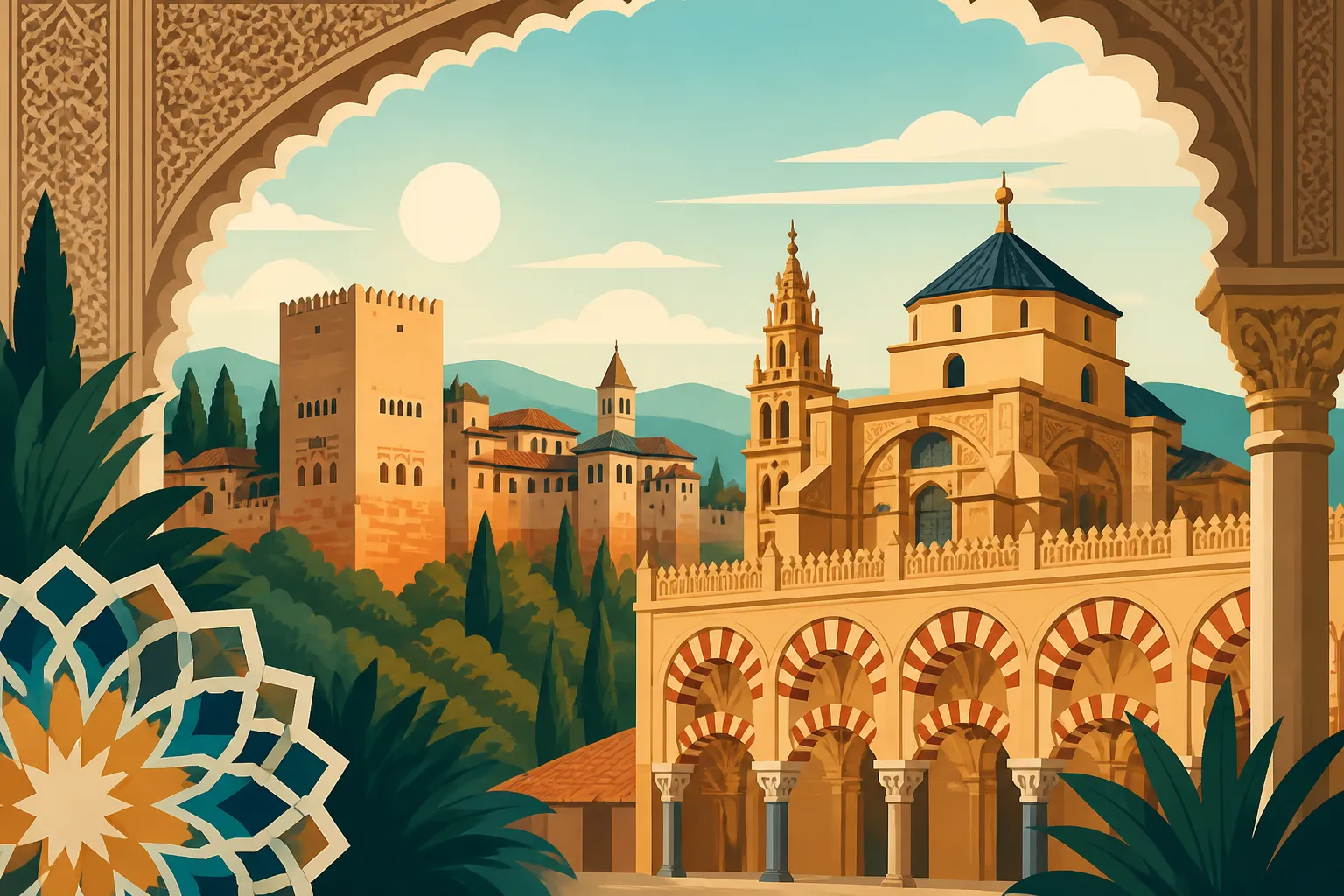
If the Alhambra is about the intimacy of the palace, the Mezquita is about the awe-inspiring scale of the divine. When you walk inside, the "forest of arches"—over 850 columns of jasper, onyx, and marble—stretches out in a way that makes the space feel infinite. It was once the second-largest mosque in the world, and its beauty was so undeniable that when the Christians reclaimed the city, they simply couldn't bring themselves to destroy it. Instead, they built a Renaissance cathedral right in the middle of it.
The Architectural Conflict
There is a famous quote attributed to King Carlos V when he saw the finished cathedral inside the mosque: "You have built what you or others might have built anywhere, but you have destroyed something that was unique in the world." Living in Spain, you see this tension everywhere, but nowhere is it as physical as in the Mezquita. The red-and-white double arches are iconic, and the "Mihrab" (the prayer niche) is covered in gold mosaics that were a gift from the Emperor of Byzantium. It is a masterclass in light and shadow. To make the most of your visit, check out How to See Córdoba's Mezquita Without the Queues because the lines in the midday sun can be brutal.
The Courtyard of the Orange Trees
Before you even enter the building, you spend time in the Patio de los Naranjos. This was originally the space for ritual ablutions. For us expats, it’s a place of quiet reflection in the heart of a busy city. The smell of orange blossoms in the spring (Azahar) is the sensory definition of Córdoba. I usually use Booking.com to find a small boutique hotel in the surrounding Jewish Quarter so I can walk to the Mezquita in the early morning before the tour buses arrive from the coast.
The Real Alcázar of Seville
Seville's Alcázar is often overshadowed by the Alhambra, but in many ways, it is more "liveable" and just as beautiful. It is the oldest royal palace still in use in Europe, and if you are a fan of Game of Thrones, you’ll recognize it as the Water Gardens of Dorne. It represents the pinnacle of Mudéjar architecture, built largely by King Peter of Castile using the same craftsmen who worked on the Alhambra.
The Palacio del Rey Don Pedro
The heart of the Alcázar is the Courtyard of the Maidens. The intricate plasterwork and the long reflecting pool create a sense of symmetry that is almost hypnotic. When I take visitors here, I make sure they look up at the dome in the Ambassadors' Hall—it’s a representation of the universe, and the gold leaf glitters even on the darkest days. Because it’s so central, I recommend using Omio to check the train schedules between Córdoba and Seville, as they are only 45 minutes apart by high-speed rail, making it an easy day trip if you’ve based yourself in one city. You can find more details on regional travel in our guide on Seville, Granada, and Córdoba: Andalusia's Great Cities.
The Lush Gardens of the Alcázar
The gardens here are much larger than those at the Alhambra and offer a different kind of beauty. There are peacocks roaming freely, an organ powered by water, and the "Baños de María de Padilla" (vaulted rainwater tanks) that stay cool even when Seville hits 45 degrees Celsius. It’s the perfect place to hide during the siesta hours. Just remember that Spanish Meal Times and Dining Etiquette Explained are strictly followed here; don't expect to find a full dinner menu until at least 8:30 PM after your garden stroll.
Moving Between the Great Moorish Cities
One of the logistical hurdles that visitors and new expats face is how to efficiently link Granada, Córdoba, and Seville. These three cities form the "Moorish Triangle." While they look close on a map, the terrain is mountainous and the train lines aren't always direct between all three.
The High-Speed AVE Advantage
The AVE (high-speed train) is a miracle of modern Spain. It connects Seville and Córdoba in under an hour. However, the train to Granada used to be a nightmare of bus-substitution, but the new high-speed link has changed the game. I always use Omio to compare the prices between the Renfe trains and the ALSA buses. Sometimes the bus is actually better for Granada because the station is more centrally located than the new high-speed rail terminal. For a deep dive into the rail system, see High-Speed Trains in Spain (AVE): Routes, Booking, and Savings.
Planning Your Itinerary
If you have a week, I suggest starting in Seville (3 days), taking the train to Córdoba for a long day or an overnight (1-2 days), and ending in Granada (2 days). This allows you to see the progression of Al-Andalus from its early caliphate days to its final stand. Many people try to rush this, but the heat in the south means you have to travel slowly. For those without their own transport, How to Plan a Week in Southern Spain Without a Car is a lifesaver.
| Feature | Alhambra (Granada) | Mezquita (Córdoba) | Real Alcázar (Seville) |
|---|---|---|---|
| Architectural Style | Pure Nasrid / Moorish | Umayyad Caliphate / Renaissance | Mudéjar / Gothic |
| Primary Attraction | Nasrid Palaces & Generalife | Forest of Arches & Mihrab | Courtyard of the Maidens |
| Booking Difficulty | Extremely High (Months) | Moderate (Weeks) | High (Weeks) |
| Time Required | 4-5 Hours | 2 Hours | 3-4 Hours |
| Best Time to Visit | Early Morning / Night Tour | Early Morning (Free hour often available) | Late Afternoon |
Essential Tips for the Heritage Traveler
Living here has taught me that the "experience" of these sites is often dictated by things that have nothing to do with the architecture. It’s about the sun, the crowds, and the sheer amount of information you're trying to process.
Managing the Sensory Overload
After three hours of looking at geometric tiles and Arabic calligraphy, "palace fatigue" is a real thing. It is worth suggesting that visitors break up their heritage visits with a "tapa" crawl or a visit to a modern museum. In Granada, after the Alhambra, go for a walk in the Albaicín (the old Moorish quarter) and watch the sunset over the palace from the San Nicolás viewpoint. It puts the scale of what you just saw into perspective. Also, don't forget to check Traveling Around Spain: Trains, Buses, Flights, and Car Hire if you're planning on venturing into the smaller "Pueblos Blancos" that also hold significant Moorish history.
Booking Strategy and Scams
A word of warning: only buy tickets from official sites or reputable platforms like GetYourGuide. Many people are scammed by "official looking" websites that charge triple the price or sell fake vouchers. Also, be aware that many sites require your passport number at the time of booking. This is part of the Spanish obsession with "control," and you must bring that same passport with you to the gate. They do check, and they will turn you away if the numbers don't match. For more on what to see in the wider region, check out What Are the Must-See Towns in Andalusia for a First Visit?.
The Mudejar Legacy in Northern Spain
While Andalusia is the heartland, the Moorish influence traveled far north. When you leave the south, keep an eye out for the Mudéjar architecture of Aragón, particularly in Teruel and Zaragoza. The Aljafería Palace in Zaragoza is a stunning example of an 11th-century Islamic palace located far from the southern strongholds.
Why the North Matters
The Aljafería was the seat of the independent Taifa of Zaragoza and later became the palace of the Christian kings of Aragon. It’s a crucial link in the story of Al-Andalus because it shows how Islamic art was adapted by the northern kingdoms. If you are taking the train from Madrid to Barcelona, a stop in Zaragoza is very easy to manage with Omio. It’s much less crowded than the southern sites and offers a more tranquil way to appreciate the craftsmanship.
Respectful Exploration
When visiting these sites, remember that many were—and some still are—active places of worship. The Mezquita is a functioning Catholic Cathedral. Even if you are visiting as a tourist, How to Visit Spanish Cathedrals as a Non-Religious Traveler provides excellent context on the social norms and dress codes expected in these historic spaces. Keeping your voice down and shoulders covered isn't just about the rules; it's about respecting the layers of history that make Spain so unique.
General Disclaimer
The information provided in this guide is for informational purposes only. While every effort has been made to ensure accuracy, travel requirements, ticket prices, and opening hours in Spain are subject to change by local authorities. Always verify specific details on official government or site-specific websites before planning your trip. The author is not responsible for any issues arising from changes in local regulations or site availability.