How to Plan a Multi-City Trip Across Spain
Oh, the dream of a multi-city adventure in Spain! It’s something many of us expats, and plenty of seasoned travelers, have longed for – picturing ourselves zipping from the tapas bars of Seville to the architectural wonders of Barcelona, perhaps a quick detour through a charming mountain village. But let's be real: turning that dream into a smooth reality can feel like trying to herd a flock of flamenco dancers into a perfectly choreographed routine. This guide is here to untangle the complexities, offering you a realistic, empathetic roadmap to planning an unforgettable multi-city trip across Spain without losing your sanity (or your luggage!).
Disclosure: This post may contain affiliate links. We may earn a commission at no extra cost to you if you make a purchase through these links. Read full disclosure.
The Allure and the Reality: Why Multi-City Trips in Spain Are Worth It (and What to Expect)
Spain is a country that truly has it all, from the sun-drenched beaches of the south to the rugged, green landscapes of the north, and everything in between. The idea of linking several vibrant cities and diverse regions into one grand adventure is incredibly appealing, and for good reason. You get to experience a broader tapestry of Spanish life, culture, and cuisine, rather than just scratching the surface of one destination.
Why Spain is Perfect for Multi-City Adventures
The sheer diversity packed into Spain's borders is what makes it so ideal for hopping from one distinct experience to the next. Imagine starting your journey amidst the Moorish splendor of Andalusia, exploring the Alhambra in Granada and the Mezquita in Córdoba, then perhaps moving north to the bustling, artistic streets of Madrid. From there, a high-speed train could whisk you away to the modernist marvels of Barcelona, or perhaps the coastal charm of Valencia. Each city offers a unique flavor, a different pace, and its own set of traditions. The excellent infrastructure, especially the high-speed rail network, means that these transitions can often be surprisingly smooth, allowing you to maximize your exploration time rather than getting bogged down in travel logistics. You can truly immerse yourself in the rich tapestry that is Spain, moving from ancient history to contemporary art, from tranquil plazas to lively markets, all within a single trip.
Common Pitfalls and How to Avoid Them
While the idea sounds idyllic, many travelers fall into common traps. The biggest one? Over-scheduling. It’s tempting to try and squeeze too many cities into a short timeframe, thinking you can "see it all." Trust me, you can't, and trying to will only lead to exhaustion and a blur of monuments. You'll end up rushing through cathedrals and museums, rather than savoring a leisurely tapas lunch or enjoying a quiet evening stroll. Another pitfall is underestimating travel time between locations, even on high-speed trains. While the journey itself might be quick, factor in getting to and from train stations, checking in and out of accommodations, and simply navigating unfamiliar surroundings. Lastly, don't forget the cultural nuances; what might work in a fast-paced city like Madrid might not apply to a laid-back Andalusian pueblo. Be flexible, embrace the unexpected, and remember that sometimes the best experiences come from slowing down.
Crafting Your Itinerary: Key Decisions Before You Book
Before you even think about booking a single train ticket or hotel room, you need a solid plan. This isn't just about picking cities you like; it's about strategizing to make the most of your time and money. Think of it as mapping out your personal grand tour, considering what truly excites you.
Defining Your Travel Style and Interests
This is the foundation of your entire trip. Are you a history buff yearning for ancient ruins and grand palaces? Then Andalusia is calling your name, with cities like Seville, Granada, and Córdoba offering a deep dive into Moorish Spain. Perhaps you’re an art aficionado, in which case Madrid's "Golden Triangle of Art" (Prado, Reina Sofía, Thyssen-Bornemisza) and Barcelona's Gaudí masterpieces are essential. Foodies will want to focus on regions renowned for their gastronomy, from the pintxos of the Basque Country to the paella of Valencia.
Consider your pace: do you thrive on constant movement, or do you prefer to settle into a city for a few days, explore deeply, and maybe take a few Best Day Trips From Madrid by Train? If you're traveling with family, you might need more relaxed schedules and kid-friendly activities. Solo travelers might prioritize vibrant nightlife or opportunities to meet other people. Your ideal multi-city trip will reflect your unique preferences, so take the time to truly define them. This self-assessment will help you prune unnecessary destinations and focus on what truly matters to you.
Mapping Your Route: Logic vs. Ambition
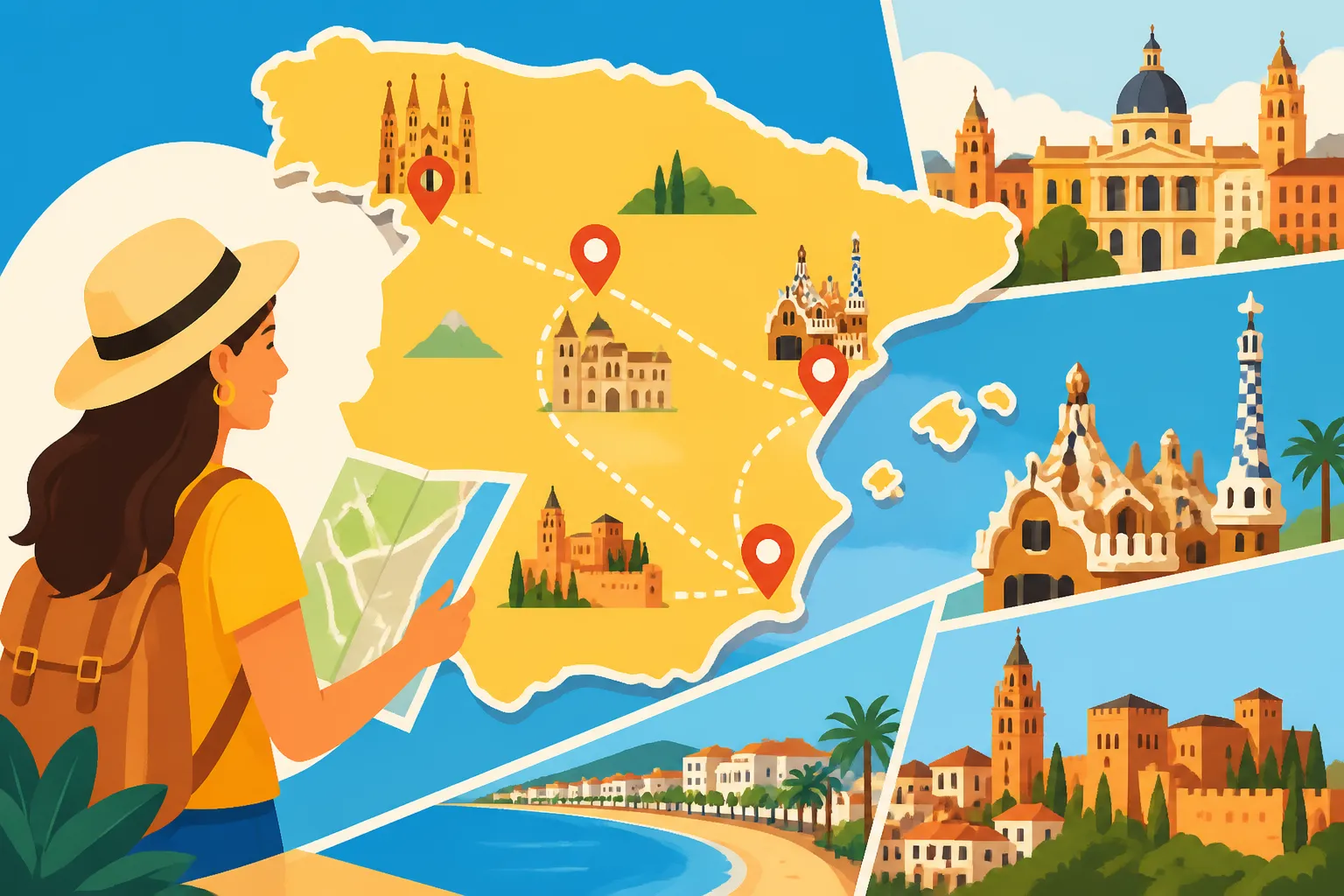
Once you have a clearer idea of your interests, it's time to start sketching out a geographical path. Spain is large, but its major cities are well-connected. A common and efficient strategy is to pick a "route" rather than scattering your destinations across the country. For example:
- North-South Corridor: Madrid as a central hub, then north to cities like Bilbao or San Sebastián, or south to Andalusia.
- Mediterranean Arc: Barcelona, Valencia, and then potentially down to the Costa del Sol.
- Andalusian Loop: Seville, Córdoba, Granada, Málaga – a classic circuit that offers incredible cultural immersion. You can even combine Seville, Granada, and Córdoba: Andalusia's Great Cities into a single, cohesive journey.
When mapping, consider the travel time between each location. A flight from Barcelona to Seville is faster than a train, but factor in airport transfers and security. A high-speed train from Madrid to Valencia, however, can be incredibly efficient. Try to create a logical flow that minimizes backtracking and maximizes time spent enjoying your destination. Don't be too ambitious; aiming for 2-3 major cities plus maybe a smaller town or two over a 10-14 day period is often more enjoyable than trying to cram in five or six. Remember, less can often be more when it comes to truly experiencing a place.
Budgeting for Multiple Destinations
A multi-city trip inherently means more logistics and potentially higher costs than staying in one spot. You’ll have multiple sets of accommodation, more inter-city transport, and a greater variety of activities. Here’s how to approach your budget:
- Transportation: This will be a significant chunk. Calculate train, bus, or flight costs between cities. High-speed trains, while efficient, can add up, especially if booked last minute. Look into passes or booking in advance.
- Accommodation: You'll be checking into different hotels, apartments, or hostels. Research prices in each city, as some (like Barcelona and Madrid) tend to be pricier than others (like Valencia or Seville). Using platforms like Booking.com allows you to compare various options and read reviews for each location.
- Activities & Food: Factor in entrance fees for museums, guided tours (which can be easily found on sites like GetYourGuide), and, of course, dining. Embrace Spanish Tapas Culture: How to Order and Where to Go to eat well and often affordably.
- Miscellaneous: Don’t forget local transport within cities, travel insurance, and a buffer for unexpected expenses. Always carry some cash, but know that card payments are widely accepted. For managing your funds across different locations, check out tips on Money for Travel in Spain: Cards, Cash, and ATMs.
Creating a detailed spreadsheet can be incredibly helpful here, breaking down expected costs for each segment of your journey. This visibility helps prevent nasty surprises down the road and allows you to adjust your plans if needed.
Seamless Travel Between Cities: Mastering Spain's Transport Network
Spain boasts an excellent public transport system that makes multi-city travel a breeze once you understand how to navigate it. Forget the notion of needing to rent a car for your entire trip; often, it’s more of a hindrance in city centers than a help.
High-Speed Trains: Your Best Friend for Distances
Spain’s AVE (Alta Velocidad Española) network is truly world-class, connecting major cities like Madrid, Barcelona, Seville, Valencia, and Málaga with impressive speed and comfort. These trains are often faster than flying when you consider door-to-door travel time, and they drop you right in the city center.
Booking in advance is crucial, especially for popular routes and during peak seasons, as prices tend to rise closer to the travel date. Websites like Renfe (the national rail operator) and third-party aggregators like Omio are great resources for finding tickets. Omio, for instance, lets you compare train, bus, and flight options side-by-side, which can be incredibly useful for planning. Keep an eye out for different fare classes; sometimes, a slightly higher fare offers more flexibility or better seating. For a deeper dive, check out our guide on High-Speed Trains in Spain (AVE): Routes, Booking, and Savings.
Buses and Regional Trains: The Budget-Friendly and Scenic Options
While AVE trains cover the major arteries, Spain’s bus network is incredibly extensive and often more budget-friendly for shorter distances or routes not served by high-speed rail. Companies like ALSA operate comfortable, modern buses that connect virtually every town and city. This can be a fantastic option for exploring smaller towns or more scenic routes where you want to enjoy the landscape. Regional trains (like Media Distancia or Cercanías) are also excellent for connecting nearby towns and cities, often at a very reasonable price. They might take a bit longer, but they offer a different perspective and can be quite charming.
Again, Omio can be a good tool here to compare bus and regional train options. For more detailed information on bus travel, our post on Intercity Buses in Spain: Networks, Booking, and Tips has you covered. Don’t dismiss these options; they offer great value and allow for more flexible routing to lesser-known gems.
Domestic Flights and Car Rentals: When They Make Sense
Domestic flights can be a time-saver for very long distances, such as traveling from Barcelona to the Canary Islands, or if you're trying to quickly cross the country from one far-flung point to another. Airlines like Vueling, Iberia Express, and Ryanair offer frequent and often affordable domestic routes. However, remember the hidden costs: airport transfers, baggage fees, and the time spent on security. For shorter or medium distances between major cities, the high-speed train often wins out.
Renting a car in Spain is generally not recommended for urban multi-city trips where your focus is on city centers. Parking can be a nightmare and expensive, and many city centers have restricted driving zones (Zonas de Bajas Emisiones – ZBE) that only residents or permitted vehicles can enter, leading to hefty fines if you're not careful. However, a car rental truly shines if your itinerary includes exploring rural areas, national parks, or a series of charming small towns where public transport might be less frequent. If you plan to rent, make sure you understand the requirements and insurance options, as detailed in our guide on Renting a Car in Spain: Requirements, Insurance, and Driving Tips. Consider it for a specific segment of your trip rather than the entire journey.
| Transportation Method | Pros | Cons | Ideal Use Case | Booking Platforms |
|---|---|---|---|---|
| High-Speed Train (AVE) | Fast, comfortable, city-center to city-center, reliable. | Can be pricey if not booked in advance, limited to major routes. | Connecting major cities efficiently (e.g., Madrid-Barcelona, Seville-Madrid). | Renfe, Omio |
| Intercity Bus | Extensive network, generally budget-friendly, often scenic routes. | Slower than trains, less comfortable for very long journeys. | Shorter distances, accessing smaller towns, budget travel. | ALSA, Omio |
| Regional/Local Trains | Connects smaller towns and cities, affordable, good for day trips. | Slower than AVE, less frequent than buses on some routes. | Exploring specific regions, suburban travel, day trips. | Renfe, Omio |
| Domestic Flights | Fastest for very long distances or island hopping. | Airport transfers add time/cost, baggage fees, security checks. | Cross-country (e.g., Barcelona-Canary Islands), saving time on extreme distances. | Vueling, Iberia, Ryanair, Omio |
| Car Rental | Ultimate flexibility for rural exploration. | Expensive parking, city driving restrictions, fuel costs, tolls. | Rural road trips, exploring areas with limited public transport. | Rentalcars.com, Europcar, Sixt |
Making the Most of Each Stop: Accommodation and Activities
Once you've nailed down your route and transport, it's time to refine your experience in each city. This involves not just where you lay your head, but how you immerse yourself in the local culture.
Choosing Your Base in Each City
Selecting the right accommodation is key to your enjoyment. In each city, consider not just the price, but the location, amenities, and overall vibe. Platforms like Booking.com are invaluable here for browsing a wide array of options, from charming boutique hotels in historic centers to modern apartments with kitchenettes.
- City Center vs. Neighborhoods: Do you want to be right in the thick of the action, within walking distance of major sights? Or would you prefer a quieter, more local neighborhood with good public transport links? For example, in Madrid, staying near the Puerta del Sol puts you at the heart of everything, but a neighborhood like Malasaña offers a trendier, more local feel. Our guide on Madrid for First-Time Visitors: Neighborhoods and Highlights can help you decide. Similarly, in Barcelona, the Gothic Quarter is historic but can be crowded, while Gràcia offers a village-like atmosphere. Check out Barcelona for First-Time Visitors: What to See and Skip for more detailed neighborhood insights.
- Duration: For shorter stays (1-2 nights), proximity to transport hubs might be a priority. For longer stays (3+ nights), you might value more space, laundry facilities, or a quieter location.
- Type of Accommodation: Hotels offer convenience and services, while apartments (available through sites like Booking.com) provide more space and the option to cook, which can be great for families or budget-conscious travelers. Hostels are perfect for solo travelers looking to socialize. For a comprehensive overview, read up on Accommodation in Spain: Hotels, Hostels, and Rentals.
Always read recent reviews, paying attention to comments about noise levels, bed comfort, and the helpfulness of staff. This local insight can make all the difference in ensuring a comfortable stay.
Booking Experiences and Day Trips
A multi-city trip isn't just about moving from one place to another; it's about what you do in each place. Pre-booking certain experiences can save you time and ensure you don't miss out, especially for popular attractions.
- Must-See Attractions: For places like the Sagrada Família in Barcelona, the Alhambra in Granada, or the Prado Museum in Madrid, booking tickets online well in advance is highly recommended. This often allows you to bypass long queues, saving precious sightseeing time. Websites like GetYourGuide offer skip-the-line tickets and guided tours for these major landmarks, often with knowledgeable local guides who can bring the history to life.
- Unique Local Experiences: Beyond the main sights, look for activities that delve deeper into local culture. This could be a cooking class in Seville, a flamenco show, a wine tasting tour in La Rioja, or a market visit with a local. GetYourGuide is excellent for finding these kinds of unique tours and activities, allowing you to filter by interest, duration, and even language.
- Day Trips: If you're staying in a city for a few days, consider a day trip to a nearby town or natural park. From Madrid, for instance, you can easily visit the historic cities of Toledo or Segovia. From Barcelona, Montserrat is a popular and stunning excursion. These smaller trips add variety and a chance to see a different facet of Spain without having to pack up all your belongings. Our guides on Best Day Trips From Madrid by Train and similar articles for other cities can provide inspiration and practical advice.
Remember to balance your schedule. Don’t over-pack your days with back-to-back tours. Allow for some spontaneous exploration, getting lost in charming streets, or simply enjoying a leisurely coffee and people-watching. Sometimes, the most memorable moments are the unplanned ones. Finally, always be mindful of your surroundings and keep your belongings secure; our guide on Staying Safe in Spain: Common-Sense Tips for Travelers offers valuable advice for any traveler.
Spain is an absolute treasure trove for multi-city exploration, offering a kaleidoscope of experiences from north to south, east to west. While the planning might seem a tad daunting at first, by breaking it down into manageable steps – considering your travel style, mapping a logical route, and leveraging Spain's fantastic transport networks – you can craft a journey that is both rich and rewarding. Embrace the adventure, enjoy the incredible food, marvel at the diverse landscapes, and let Spain captivate you, one city at a time.
Disclaimer
The information provided in this guide is for general informational purposes only and does not constitute professional advice. While we strive to keep the information up-to-date and accurate, details such as prices, opening hours, and regulations can change rapidly. Always verify current information with official sources, tour operators, and local authorities before making any travel decisions or bookings. Travel involves inherent risks, and personal safety and property are your own responsibility.