How to See Córdoba’s Mezquita Without the Queues
Oh, the Mezquita-Cathedral of Córdoba! It's one of Spain's absolute crown jewels, a breathtaking fusion of history and architecture that truly has to be seen to be believed. But, and this is a big but for anyone who's ever found themselves shuffling along in a long line, its immense popularity often means navigating crowds that can really detract from the magic. If you're dreaming of experiencing its serene beauty without feeling like a sardine, you've come to the right place. This guide is all about sharing the insider tips and savvy strategies I’ve picked up over the years to help you enjoy the Mezquita-Cathedral of Córdoba with minimal queues and maximum wonder.
Disclosure: This post may contain affiliate links. We may earn a commission at no extra cost to you if you make a purchase through these links. Read full disclosure.
Understanding the Mezquita-Cathedral and Why It's So Popular
Before we dive into dodging queues, it's essential to grasp just what makes the Mezquita-Cathedral so utterly captivating and, consequently, so incredibly popular. It’s not just a building; it’s a living testament to centuries of intertwined cultures and religions, a place that leaves an indelible mark on every visitor.
A Tapestry of History: Mosque and Cathedral
Imagine a building that started life as a Visigothic church, was transformed into one of the largest mosques in the Islamic world, and then had a Catholic cathedral built right in its heart. That, my friends, is the Mezquita-Cathedral. From the iconic horseshoe arches of the prayer hall, with their striking red and white stripes, to the intricate Mihrab and the later Renaissance and Baroque additions of the Christian cathedral, every corner tells a story. This unique blend creates an atmosphere unlike anywhere else, a truly spiritual and historical journey.
Visitors flock here not just to admire the architecture, but to feel the weight of history, to witness a place where different civilizations left their indelible mark. This profound historical and cultural significance draws millions each year, from students of history to curious tourists, all eager to walk through its hallowed halls. It’s a site that demands contemplation, and that’s hard to do when you’re elbow-to-elbow with hundreds of others.
The Sheer Scale and Beauty
Beyond its historical layers, the Mezquita-Cathedral is simply stunning. The vastness of the hypostyle hall, with its seemingly endless rows of columns and arches, creates an almost hypnotic effect. The play of light filtering through the various windows, illuminating the rich details of the mihrab and the gilded chapels, is truly a sight to behold. And then there's the Patio de los Naranjos (Courtyard of the Orange Trees), a serene oasis that welcomes you before you even step inside, offering a moment of calm reflection amidst the bustling city.
Because of this unparalleled beauty and architectural grandeur, it's consistently ranked as one of Spain's most visited monuments. Its reputation precedes it, often appearing on "must-see" lists for anyone traveling to Andalusia. This widespread acclaim, while well-deserved, is precisely why strategic planning is absolutely crucial if you want to avoid those notorious queues. You're not just visiting a monument; you're stepping into a masterpiece, and everyone wants a front-row seat.
Strategic Planning: Timing Your Visit for Fewer Crowds
Alright, let’s get down to the nitty-gritty: how do you actually see this marvel without spending half your day in line? It all boils down to timing. Seriously, a little planning around the clock and calendar can make all the difference.
The Early Bird Gets the Worm: Morning Glory
This is, hands down, the best piece of advice for avoiding queues at almost any major tourist attraction in Spain, and the Mezquita-Cathedral is no exception. The doors typically open around 8:30 or 9:00 AM, depending on the season and specific day. Arriving 15-20 minutes before opening is your golden ticket.
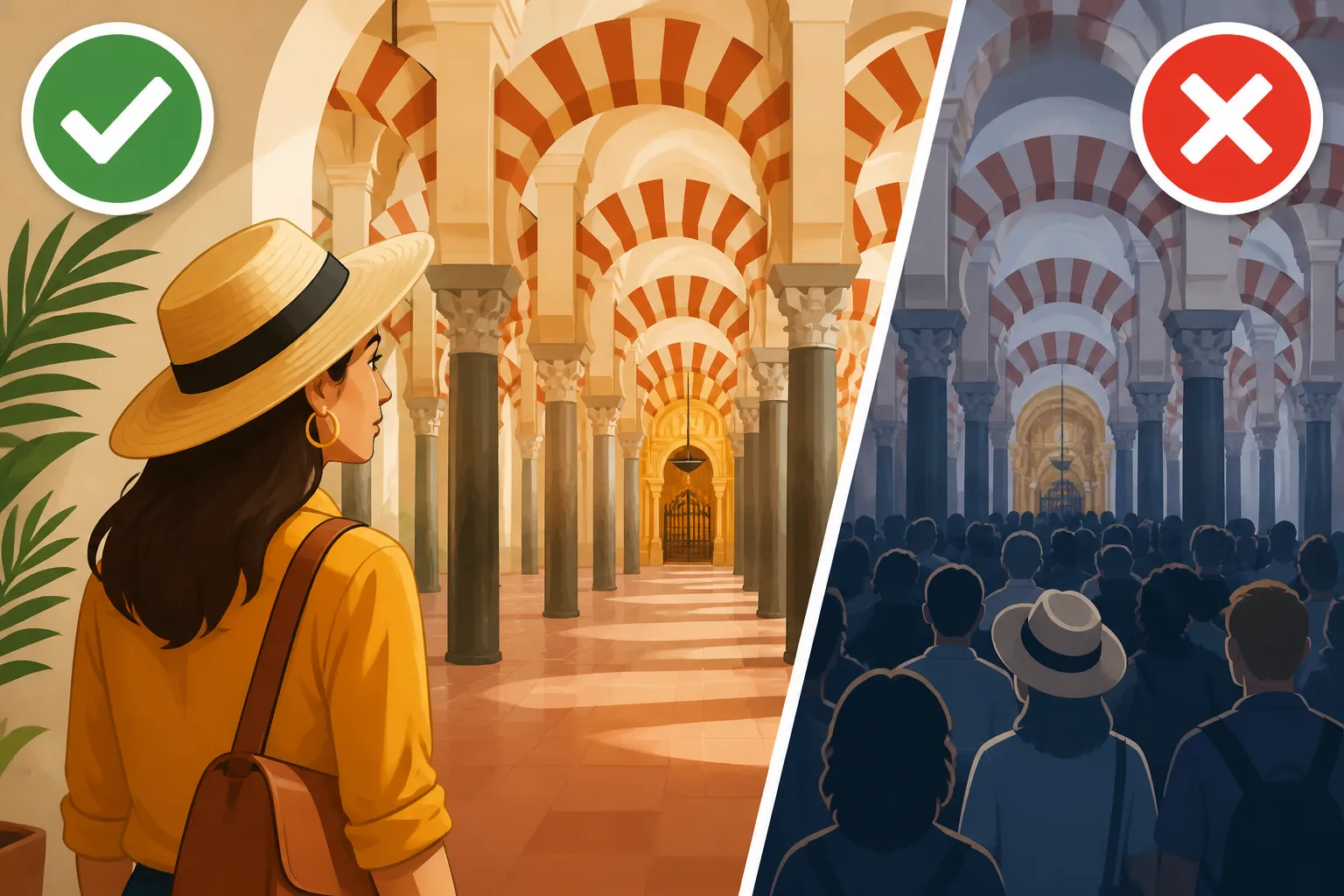
When I first moved to Spain, I learned this lesson the hard way at the Alhambra. Never again! Now, for places like the Mezquita, I'm practically knocking on the door before they unlock it. You'll join a much smaller group of dedicated early risers, and for those precious first 30-60 minutes, you’ll experience a tranquility that few others get. Imagine walking through the column forest with only a handful of people, the morning light casting long shadows, and the hushed atmosphere allowing for genuine awe. This early slot is perfect for photographers or anyone who wants a truly immersive, spiritual experience.
Afternoon Lull: A Quieter Window
If mornings aren't your jam, or if you find yourself enjoying a long Spanish lunch, don't despair! There's often a noticeable lull in the late afternoon, typically an hour or two before closing. Many tour groups have moved on, and people are starting to think about dinner or enjoying the evening paseo.
Check the official opening hours, which can vary by season, but generally, the period from about 4:00 PM onwards can offer a more relaxed experience. It might not be as quiet as opening time, but it’s usually significantly less crowded than midday. This timing works especially well if you plan to explore other parts of Córdoba in the morning, like the Judería or the Alcázar, and then dedicate your late afternoon to the Mezquita. Just be mindful of closing times and give yourself ample time – you don't want to feel rushed in such a magnificent place.
Seasonal Savvy: When to Avoid
Beyond the time of day, the time of year is a massive factor. Córdoba gets incredibly busy during peak tourist seasons and during major local festivities.
- Spring (Semana Santa & May): Absolutely gorgeous weather, but also the busiest. Holy Week (Semana Santa) sees an explosion of visitors for the religious processions, and May brings the famous Patios Festival, turning the entire city into a vibrant, crowded party. While these events are magical, visiting the Mezquita during them means encountering maximum crowds and often inflated prices for accommodation.
- Summer (July & August): Fewer international tourists, but many Spanish tourists. The trade-off? Blistering heat. Córdoba is one of the hottest cities in Europe, with temperatures often soaring past 40°C (104°F). If you go in summer, plan all your activities for early mornings or late evenings and embrace the air-conditioned siesta in between. This heat naturally thins the crowds during the day, so if you can brave it, you might find slightly shorter lines.
- Autumn (September & October): Often a fantastic compromise. The weather is still pleasant but starting to cool, and the summer holiday crowds have dissipated. You'll find a more relaxed atmosphere overall.
- Winter (November – February, excluding Christmas/New Year): Generally the quietest period. The weather can be cool, sometimes rainy, but the absence of crowds makes for a much more intimate experience. If you’re not fussed about basking in the sun and want to truly immerse yourself in history, this is an excellent time to visit.
To truly make the most of your trip, consider combining your Mezquita visit with exploration of the wider region. You can easily travel between cities like Seville, Granada, and Córdoba by train, and platforms like Omio can help you compare routes and book tickets in advance. This way, you can strategically plan your visit to avoid peak times not just in Córdoba, but across Andalusia, ensuring a smoother journey.
Booking Your Tickets Smartly
Spontaneity is great for finding hidden tapas bars, but not so much for avoiding queues at the Mezquita. Pre-booking your tickets is a non-negotiable step if you want a hassle-free visit.
Official Website vs. Third-Party Platforms
Your first stop should always be the official Mezquita-Cathedral website. This is where you’ll find the most accurate information on opening hours, ticket prices, and availability. Booking directly often means getting the best price and knowing your ticket is legitimate.
However, sometimes official sites can be a bit clunky or might not offer the flexibility you need. This is where reputable third-party platforms come in handy. Sites like GetYourGuide offer a range of options, including skip-the-line tickets and various guided tours, which can be incredibly useful. They often bundle tickets with other attractions or offer specific time slots that might not be as visible on the official site. While you might pay a tiny bit more for the convenience, the ability to bypass a long queue on a scorching day? Priceless. Just be sure to read reviews and confirm what exactly is included in your purchase to avoid any surprises.
Guided Tours for a Seamless Entry
For many expats and tourists, a guided tour isn't just about the information – though that’s invaluable for a place as complex as the Mezquita-Cathedral – it’s about the convenience of entry. Most guided tours guarantee skip-the-line access. Your guide will have pre-purchased tickets and will lead your group directly in, often through a separate entrance or designated queuing area.
This takes all the stress out of navigating the ticket lines and figuring out entry protocols. Plus, having an expert explain the Mezquita’s incredible history, point out architectural details you might otherwise miss, and weave the stories of its past is truly enriching. I highly recommend a guided tour for your first visit; it elevates the experience from simply seeing to truly understanding. You can find excellent options on platforms like GetYourGuide, often with various language choices.
The Free Hour: A Double-Edged Sword
Yes, you read that right. There is a "free hour" at the Mezquita-Cathedral, usually early in the morning, which allows free entry for a limited time, typically for religious worship. While this sounds like a fantastic way to save a few euros and beat the crowds, it’s a bit of a double-edged sword, especially for tourists.
The free hour is primarily for access to the Cathedral area for prayer and reflection, and typically, full tourist access to the entire monument is restricted or at least highly regulated during this time. Photography might be restricted, and you won’t have the freedom to wander as you would with a paid ticket. Also, because it's free, many people flock to it, often creating a different kind of queue and potentially a more crowded experience than just paying for an early entry ticket. If your primary goal is to appreciate the architecture and history as a tourist, I’d honestly recommend paying for a ticket and going right at opening. This ensures full access and a better overall experience without the confusion or limitations of the free hour.
Here's a quick comparison of booking options:
| Option | Pros | Cons | Ideal For |
|---|---|---|---|
| Official Website | Best Price, Direct Confirmation, Supports the monument. | Can be less user-friendly, fewer bundled options. | Budget-conscious, tech-savvy travelers. |
| Third-Party Platforms | Skip-the-line options, Bundled tours/tickets, User-friendly. | Slightly higher cost, need to verify inclusions. | Convenience seekers, those wanting structured tours. |
| Guided Tours | Skip-the-line access, Expert insights, Enhanced understanding. | Highest cost, fixed schedule, group experience. | First-time visitors, history buffs, those who dislike planning. |
| "Free Hour" Entry | No cost. | Limited access, potentially still crowded, not designed for tourism. | Those seeking spiritual reflection, very tight budgets. |
Navigating Your Visit: Tips for a Smoother Experience
Once you've smartly timed and booked your visit, there are still a few things you can do to ensure your actual time inside the Mezquita-Cathedral is as smooth and enjoyable as possible.
Entry Points and Security
Upon arrival, regardless of whether you have a pre-booked ticket or are part of a tour, you’ll typically enter through the Patio de los Naranjos. This grand courtyard serves as a natural antechamber. From there, you'll find the main entrances to the monument itself. Security checks are standard, similar to what you’d expect at any major attraction globally. Be prepared for bag checks, and remember that large backpacks might need to be checked into lockers or aren’t allowed inside.
If you’re with a guided tour, your guide will typically lead you to a specific group entrance. If you’re independent with a pre-booked ticket, look for signs indicating "Entrada con entrada" or "Tickets pre-comprados" which will direct you to the correct queue – often a much shorter one than the "Tickets on the day" line. Keep your digital or printed ticket easily accessible. Knowing the layout of the entrance area beforehand can save you precious minutes and unnecessary stress.
Inside the Mezquita: Flow and Respect
Once inside, take a moment. The sheer scale can be overwhelming. There isn't a single, rigid path to follow, but there's a natural flow that most visitors adhere to. Start by immersing yourself in the famous column forest, appreciating the endless arches. Then, gradually make your way towards the Mihrab, the focal point of the original mosque, and then explore the Christian cathedral inserted in the center.
Remember, this is still a functioning cathedral. Dress respectfully (shoulders and knees covered are always a good idea in religious sites in Spain), keep your voice down, and avoid loud conversations. Flash photography is often prohibited, especially in certain areas, so pay attention to signs. Most importantly, give yourself time. Don't rush from one point to the next. Linger, observe, and absorb the atmosphere. Find a quiet corner to simply sit and take it all in. If you're staying overnight in Córdoba, consider a well-located hotel booked through a platform like Booking.com, allowing you to easily walk to the Mezquita early in the morning and return for a relaxing siesta before exploring more of the city. For other travel needs, such as booking trains to and from Córdoba, Omio offers excellent tools for comparing routes and prices.
Beyond the Main Hall: Explore the Patios and Bell Tower
While the hypostyle hall and the cathedral are undoubtedly the main draws, don't miss out on the peripheral areas that add so much to the experience.
- Patio de los Naranjos: As mentioned, this courtyard is your entrance. But it's also a beautiful place to spend some time, especially on a sunny day. The scent of orange blossoms (in spring) and the gentle murmur of fountains provide a peaceful contrast to the bustling city outside. It’s perfect for a moment of quiet reflection before or after your visit.
- Bell Tower (Torre Campanario): This is often a separate ticket or included in specific tours, but it's well worth the extra effort. The ascent can be a bit of a climb, but the panoramic views of Córdoba, its terracotta rooftops, the winding river, and the surrounding countryside are absolutely spectacular. It offers a unique perspective on the Mezquita-Cathedral's scale and its place within the city. Check if your GetYourGuide tour or direct ticket includes access, or if you need to purchase an additional small ticket on site. The number of people allowed up at any one time is usually limited, making for a less crowded viewing experience at the top.
Exploring these additional areas, especially the bell tower, provides a holistic view of this incredible monument and ensures you leave no stone unturned in your quest for an unforgettable, queue-free visit. Remember to check out what other activities you can do in Seville, Granada, and Córdoba: Andalusia's Great Cities before planning your itinerary.
Beyond the Mezquita: Making the Most of Córdoba
Cordoba is so much more than just the Mezquita-Cathedral, though it’s undeniably its brightest star. To truly appreciate this magnificent city and ensure your trip is as smooth as possible, consider a few extra planning points.
Accommodation and Transport
If you're making the effort to visit the Mezquita-Cathedral early, staying overnight in Córdoba is highly recommended. This allows you the luxury of being just a short walk away when the doors open, eliminating any morning rush. Use platforms like Booking.com to find hotels or apartments near the historic center. The city is very walkable, but public transport like buses is available if you venture further out.
For arriving in Córdoba, trains are often the quickest and most comfortable option from major Spanish cities. The AVE high-speed train connects Córdoba efficiently to cities like Madrid and Seville. You can easily book your train tickets through Omio, which allows you to compare different routes and operators. If you're driving, be aware that parking in the historic center can be challenging and expensive, so consider hotels with parking facilities or park outside the center and walk in. For more general advice on Getting Around Spanish Cities: Metro, Bus, Tram, and Bikes, we have another guide.
The Charm of the Judería and Patios
After your Mezquita visit, wander through the Judería, Córdoba's old Jewish Quarter. It's a labyrinth of narrow, winding streets, charming squares, and flower-filled patios. This area is a UNESCO World Heritage site itself and is perfect for getting lost (in a good way!). Discover hidden shops, traditional taverns, and the city’s famous flower-laden courtyards, especially vibrant during the May Patios Festival.
Even outside of the festival, many private patios are open to the public, offering a glimpse into this unique Córdoban tradition. Grab a coffee or a traditional sweet at a local café, and simply soak in the atmosphere. Remember, Spanish Customs, Etiquette, and Social Life might differ slightly from what you're used to, so embrace the local rhythm.
Culinary Delights: Beyond Tapas
Córdoba boasts a fantastic culinary scene. While you'll find plenty of delicious tapas, don't miss out on local specialties. Salmorejo (a thicker, creamier version of gazpacho), flamenquín (fried ham and pork rolls), and rabo de toro (oxtail stew) are must-tries. There are countless authentic restaurants and tabernas dotted throughout the city. For tips on how to find authentic restaurants in Spain, avoid tourist traps, and navigate Spanish meal times, check out our guide on Spanish Meal Times and Dining Etiquette Explained.
Exploring the local cuisine is an integral part of experiencing Spanish culture. Don't be afraid to try new things and ask locals for recommendations – they usually know the best spots!
By combining smart planning for the Mezquita-Cathedral with a wider appreciation of Córdoba's charms, you'll undoubtedly have a memorable trip, experiencing the best of this Andalusian gem without the stress of constant queues.
Disclaimer
Please remember that travel conditions, opening hours, ticket prices, and local regulations can change. While I strive to provide the most up-to-date and accurate information, it is always wise to double-check the official Mezquita-Cathedral website and other relevant sources before your trip to Spain. This guide offers general advice based on common experiences and best practices for foreign residents and tourists.