Spain to Morocco: Ferry Crossings From Algeciras and Tarifa
Oh, the allure of Morocco! I remember my first trip, buzzing with excitement, but also a little overwhelmed by the logistics of getting across the Strait of Gibraltar. It can feel like a whole different beast compared to hopping on a high-speed train within Spain, with questions about ports, customs, and what on earth "Tangier Med" actually means. This guide is here to untangle all that for you, offering a clear, empathetic path from sunny Spain right into the vibrant heart of Morocco, and crucially, showing you how services like Omio can make booking your ferry as smooth as a fresh plate of couscous.
Disclosure: This post may contain affiliate links. We may earn a commission at no extra cost to you if you make a purchase through these links. Read full disclosure.
The Gateway to Africa: Why Ferries from Southern Spain?
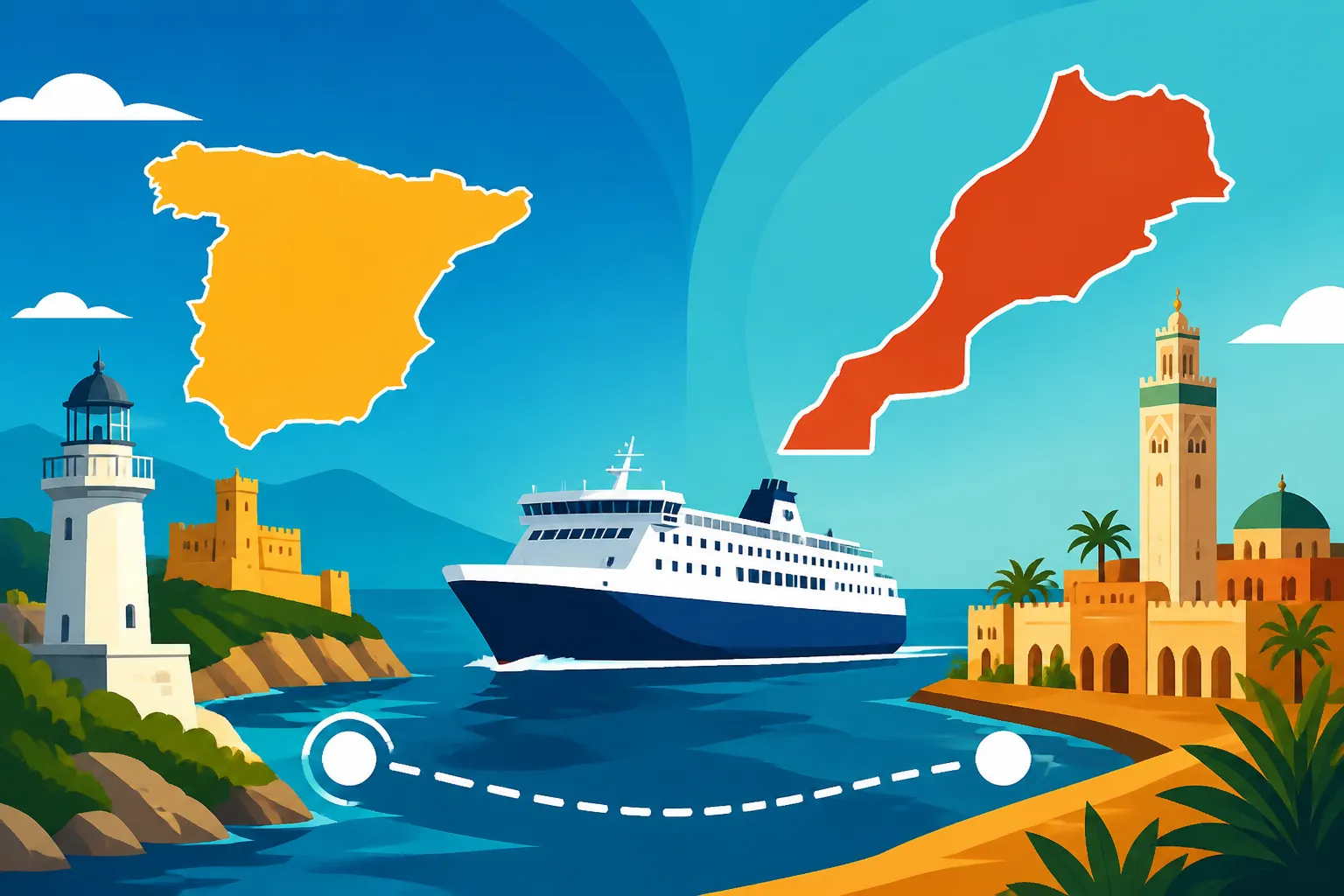
Southern Spain, particularly the region of Andalusia, isn't just a place of flamenco and sunshine; it's also Europe's historical and geographical doorstep to Africa. The Strait of Gibraltar, a narrow 13-kilometer stretch of water at its tightest point, beckons with the promise of a completely different culture, just a short ferry ride away. For centuries, this crossing has been a vibrant artery of trade, people, and ideas, and today it remains the primary way to travel between the continents without flying.
The decision to take a ferry isn't just practical; it's part of the adventure. You get to feel the anticipation build as the Spanish coast recedes and the African skyline emerges. It’s a sensory experience, often far more memorable than a quick flight, offering stunning views and a tangible connection to the journey itself. However, picking the right departure port can sometimes feel like a puzzle, with Algeciras and Tarifa being the two main contenders, each with its own distinct personality and advantages.
Algeciras: The Industrial Hub of Connections
Algeciras, a bustling port city, is often the first name that comes up when discussing ferries to Morocco. It’s a workhorse of a port, handling an immense volume of cargo and passenger traffic daily, making it one of the busiest in Europe. When you arrive in Algeciras, you'll immediately notice its industrial vibe – think large cranes, shipping containers, and a constant flow of trucks and vehicles. It’s not particularly picturesque, and many travelers see it purely as a transit point, a means to an end.
The big advantage of Algeciras is its sheer capacity and frequency of sailings. Because it's a major commercial hub, the ferries run almost constantly, offering more departure times throughout the day and night. This makes it a very reliable option, especially if your travel plans are a bit flexible or if you're traveling with a vehicle. You'll find multiple ferry companies operating from here, providing a healthy competition that sometimes translates into more competitive pricing. However, be prepared for a larger, more impersonal port experience, potentially longer check-in times due to the volume, and often a less scenic walk from the city center to the port itself.
Tarifa: The Charming, Fast Route
Just a short drive west from Algeciras, nestled at the very southernmost tip of continental Europe, lies Tarifa. This town is a world away from the industrial sprawl of its neighbor. Tarifa is a bohemian, wind-swept paradise, famous as a global capital for kitesurfing and windsurfing. Its charming old town, pristine beaches, and laid-back atmosphere make it a destination in itself. When you catch a ferry from Tarifa, you do so from a smaller, more intimate port, often right in the heart of the town, making the embarkation process feel a little less daunting.
The main draw of Tarifa is the speed and directness of its crossings. Ferries from Tarifa are exclusively high-speed catamarans, designed for swift passage. This means your journey across the Strait is significantly shorter, often taking less than an hour. You also arrive directly in Tangier Ville (the city port), which is incredibly convenient if Tangier itself is your first destination in Morocco, saving you the hassle of onward travel from Tangier Med. The downside? Ferries from Tarifa are more susceptible to high winds, which can lead to cancellations or delays, especially during certain seasons. Also, there are fewer sailings per day compared to Algeciras, and generally, only one main company operates this route.
Navigating the Major Ferry Routes and Destinations
Once you’ve settled on your departure port in Spain, the next step is understanding where exactly you’re headed in Morocco. It's not as simple as just "Tangier," because there are two distinct ports, and then there's the Spanish enclave of Ceuta, each offering a different experience and onward travel implications. Getting this straight from the start will save you a lot of confusion, believe me.
Algeciras to Tangier Med: The Main Artery
This is by far the most popular and frequent ferry route. Ferries departing from Algeciras overwhelmingly head to Tangier Med (Tanger Med). Now, this is a crucial distinction: Tangier Med is not Tangier City. It's a massive, relatively new, industrial port located about 40-50 kilometers east of Tangier city itself. Think of it as a huge logistical hub designed for cargo, trucks, and large passenger ferries, with efficient customs facilities. It’s a modern marvel of engineering, but it’s definitely not where you go to soak up the culture or grab a mint tea.
The journey typically takes around 1.5 to 2.5 hours, depending on the vessel. When you arrive at Tangier Med, you'll disembark into a large terminal building. If you're traveling with a car, the process of driving off the ferry and through customs can be a bit chaotic but generally moves along. For foot passengers, you'll clear immigration and then find yourself in an area with various transport options. From here, you’ll need to arrange onward travel to Tangier city, Chefchaouen, Fes, or wherever your Moroccan adventure truly begins. This usually means taking a grand taxi (shared taxi), a private taxi, or a bus. Don't worry, there are plenty of options readily available, though negotiating a fair price for a taxi is an art form you'll quickly learn!
Tarifa to Tangier Ville: The Direct City Link
For many, this is the preferred route due to its sheer convenience and charm. Ferries from Tarifa go directly to Tangier Ville (Tanger City Port). This is the old port right in the heart of Tangier city. The moment you step off the ferry, you're literally minutes away from the bustling medina, the Kasbah, and the vibrant city life. The crossing itself is a quick dash across the Strait, often taking less than an hour on the high-speed FRS ferries.
Arriving at Tangier Ville is a much more immediate and immersive experience. You walk off the ferry, clear a relatively quick customs process, and suddenly you’re in Tangier, surrounded by the sights and sounds of Morocco. Taxis are waiting right outside the terminal, and you can easily walk to many hotels or the main bus and train stations if you're heading further afield. This route is fantastic for those who want to maximize their time in Tangier or are looking for the quickest way into the city without any additional transfers. Just remember, as mentioned, this route can be more prone to weather-related delays or cancellations due to Tarifa's windy conditions.
Algeciras to Ceuta: A Spanish Enclave
While not technically a journey to Morocco, the Algeciras to Ceuta route deserves a mention because it takes you to a fascinating Spanish enclave on the North African coast. Ceuta is one of two autonomous Spanish cities (the other being Melilla) located on the continent of Africa, bordering Morocco. For history buffs, it's a unique blend of Spanish and North African cultures, complete with duty-free shopping, beautiful beaches, and a formidable fortress.
The ferry crossing from Algeciras to Ceuta takes about an hour, and multiple companies operate this route. It’s a domestic Spanish journey, meaning there are no passport controls or immigration checks until you decide to cross the land border into Morocco from Ceuta. This can be a strategic entry point for some travelers who prefer to experience the Spanish-Moroccan border crossing by land rather than sea, or who simply wish to visit Ceuta itself. It’s a different kind of adventure, offering a slice of Spain deeply embedded in North Africa.
| Departure Port (Spain) | Destination Port (Morocco/Enclave) | Main Ferry Companies | Typical Crossing Time | Key Features |
|---|---|---|---|---|
| Algeciras | Tangier Med (Morocco) | Balearia, Trasmediterránea, FRS | 1.5 – 2.5 hours | Industrial port, high frequency, more capacity for vehicles, cheaper generally. Requires onward travel to Tangier city (40-50 km). |
| Tarifa | Tangier Ville (Morocco) | FRS (primarily) | ~1 hour | Charming port, high-speed ferries, direct arrival in Tangier city. More prone to weather delays, slightly fewer departures. |
| Algeciras | Ceuta (Spanish Enclave) | Balearia, Trasmediterránea, FRS | ~1 hour | Spanish territory in North Africa, duty-free shopping. No immigration checks until crossing land border into Morocco. |
Choosing Your Ferry Company and Booking Smart
Alright, now that you've got a grasp on the ports and destinations, it's time to talk about the actual mechanics of booking your ticket. This is where many first-timers can get a bit stressed, juggling multiple websites and trying to compare prices. But it doesn't have to be a headache. With the right approach and a little help from modern booking platforms, it can be quite straightforward.
Key Ferry Operators: FRS, Balearia, and Trasmediterránea
There are a few big players dominating the Strait of Gibraltar ferry routes, each with their own strengths and slightly different offerings. Knowing a little about each can help you make an informed choice, although often your decision will come down to price and departure time, which you can easily compare on a single platform.
FRS (Ferry Rapidos del Sur): FRS is often the go-to for the Tarifa to Tangier Ville route, almost exclusively operating the high-speed catamarans that zip across the Strait. They also run some routes from Algeciras to Tangier Med and Ceuta. Their vessels are modern and efficient, focusing on speed and a comfortable, if somewhat no-frills, passenger experience. If you prioritize a quick crossing and direct city arrival (via Tarifa), FRS is usually your best bet.
Balearia: This Spanish company is a major player, offering a wide range of services from Algeciras to both Tangier Med and Ceuta. They operate a mix of fast ferries and conventional ferries, which can mean slightly varying travel times and prices. Balearia often caters to both foot passengers and those with vehicles, and their larger vessels tend to have more amenities like cafeterias, shops, and sometimes even a cinema or play area for kids. They are known for their strong presence across Spanish waters, including to the Balearic and Canary Islands.
Trasmediterránea (now part of Naviera Armas Trasmediterránea): Another long-standing Spanish company, Trasmediterránea also runs conventional and fast ferry services from Algeciras to Tangier Med and Ceuta. Similar to Balearia, they offer a full-service experience, accommodating vehicles and providing various onboard amenities. They have a solid reputation and are a reliable choice, especially if you're looking for flexibility with vehicle transport or if you want a more traditional ferry journey.
The Booking Process: Simplifying with Omio
Now, you could go to each of these individual ferry company websites, navigate their booking systems, compare prices, and check schedules. Or, you could do what most savvy travelers (and expats!) do: use a comprehensive booking platform like Omio. Seriously, this is a game-changer. Omio is designed to simplify multi-modal travel, allowing you to compare and book tickets for trains, buses, and ferries all in one place.
Here’s why Omio becomes your best friend for this journey:
- Comparison at a Glance: Instead of opening three different tabs for FRS, Balearia, and Trasmediterránea, you simply enter your departure (Algeciras or Tarifa), arrival (Tangier Med, Tangier Ville, or Ceuta), and dates on Omio. Within seconds, you'll see all available sailings, ferry companies, prices, and journey durations. This makes direct comparison incredibly easy, ensuring you get the best deal for your preferred time.
- Ease of Use: The interface is clean and intuitive. You don't need to be a tech wizard to navigate it. The steps are clear, from selecting your route to inputting passenger details and payment.
- Real-Time Availability: Omio pulls real-time data directly from the ferry operators, so you can be confident that the availability and pricing you see are accurate and up-to-date. This is vital, especially during peak seasons or holidays when ferries can fill up fast.
- Integrated Booking: Once you've chosen your preferred option, you can complete the entire booking and payment process directly through Omio. No more redirecting to clunky third-party sites. Your e-ticket is often sent straight to your email, making check-in a breeze.
- Multilingual Support: For those who aren't yet fluent in Spanish (or Arabic), Omio's platform is available in multiple languages, removing a common barrier and a source of frustration when dealing with foreign booking sites.
I can't stress enough how much easier using a platform like Omio makes the entire planning phase. It takes the guesswork and the frantic tab-switching out of the equation, letting you focus on the excitement of your upcoming adventure. Whether you're a seasoned expat or a first-time visitor, using Omio will streamline your journey from Spain to Morocco.
Understanding Ticket Types and Flexibility
When booking your ferry ticket, you'll encounter a few options that are worth considering, especially if you're traveling with a vehicle or need flexibility.
- Foot Passenger vs. Vehicle: This is the most basic distinction. If you're walking on, select "foot passenger." If you're bringing a car, motorcycle, or even a campervan, you'll need to specify the type and dimensions of your vehicle. Be very accurate here, as incorrect information can cause issues at check-in. The price difference for bringing a vehicle is significant, but for some, the convenience is well worth it, particularly if you plan to Driving in Spain: Road Rules, Fines, and What Surprises Expats and continue driving in Morocco.
- Seating Options: On most ferries, particularly the larger ones, you'll have standard seating included in your fare. Some companies, however, offer "VIP" or "Premium" lounges for an extra fee. These often come with more comfortable seats, fewer crowds, and sometimes complimentary drinks or snacks. For a short crossing, it's usually not necessary, but for those who prefer a bit more peace, it can be a nice upgrade.
- Open Tickets: Some ferry companies offer "open" return tickets, meaning you book your outbound journey but leave the return date flexible within a certain period (e.g., 3 months). This can be incredibly useful if your travel plans are uncertain or if you want to explore Morocco without a strict departure schedule. However, always confirm the terms and conditions, as "open" often means you still need to confirm your return crossing with the ferry company a few days in advance. While Omio primarily focuses on specific date bookings, it often displays flexible options if available through the operator.
- Cancellation and Change Policies: Pay close attention to these, especially if your plans aren't set in stone. The cheapest tickets often come with strict no-refund or no-change policies, or they incur hefty fees for modifications. If you anticipate any changes, it might be worth paying a little extra for a more flexible fare. This is another area where using a platform like Omio can help, as they clearly outline the terms associated with each ticket option.
Essential Pre-Departure and Onboard Information
So, you've got your ticket booked through Omio, whether it's for a speedy dash from Tarifa or a more leisurely crossing from Algeciras. The excitement is building! But before you can relax with a cup of mint tea in Tangier, there are a few practicalities to sort out. Getting these right will ensure a smooth journey and avoid any unnecessary stress at the port.
Documents, Visas, and Border Control
This is probably the most critical part of your pre-departure checklist. Don't underestimate it!
- Passport: Naturally, your passport is your most important document. Ensure it's valid for at least six months beyond your intended stay in Morocco. This is a standard international travel rule that can cause serious headaches if overlooked.
- Visa Requirements: Morocco has a fairly liberal visa policy for many nationalities, allowing citizens from countries like the USA, Canada, UK, Australia, New Zealand, and all EU member states to enter for up to 90 days without a visa. However, this is not universal. Always, always check the specific visa requirements for your nationality well in advance of your trip. Consult the official Moroccan Ministry of Foreign Affairs website or your local Moroccan embassy/consulate. If you need a visa, the process can take time, so plan accordingly. If you're traveling to Ceuta, remember it's a Spanish territory, so standard Schengen rules apply for entry.
- Arrival/Departure Cards: On the ferry, usually shortly after departure, Moroccan immigration officials will often come around to distribute and collect arrival cards. These are simple forms asking for your personal details, passport information, occupation, and purpose of visit. Fill it out carefully and neatly. Sometimes, if you're traveling with a larger group or during peak times, you might have to go to a designated area on the ferry to get your passport stamped. Keep an eye out for announcements or ask a crew member if you're unsure. This onboard processing is a huge convenience, as it means you typically just walk off the ferry and straight into Morocco without queuing at a border post.
- Vehicle Documents (if applicable): If you're bringing a vehicle, you'll need its registration document (permiso de circulación), proof of ownership, and international insurance (green card) that specifically covers Morocco. If the vehicle isn't registered in your name, you'll also need a letter of authorization from the owner. Don't forget your international driving permit if your license isn't a widely recognized EU or international format. The process for vehicle immigration can take some time, so patience is key.
What to Expect at the Port: Check-in, Boarding, and Delays
Spanish ports, especially Algeciras, can be busy, sprawling places. Tarifa's port is smaller and more contained, but the general principles apply.
- Arrival Time: The ferry companies recommend arriving well in advance of your departure time – typically 1.5 to 2 hours for foot passengers, and often 3 hours for those with vehicles. While this might seem excessive for a short crossing, it gives you ample time for check-in, security, passport control (if not done on board), and finding your gate. Better to be early and relaxed than rushing and stressed.
- Check-in: Head to the ferry company's counter with your booking confirmation (either printed or on your phone via the Omio app) and your passport. They'll issue your boarding pass. If you have a vehicle, you'll be directed to a specific lane.
- Security & Boarding: You'll go through a security check, similar to an airport, before proceeding to the boarding area. When it's time to board, follow the signs and instructions from the crew. Foot passengers typically walk directly onto the ferry, while vehicles drive into the ship's hold.
- Delays: Ah, the perennial challenge of travel! Ferry delays are not uncommon, especially on the Algeciras-Tangier Med route, where heavy cargo traffic can affect schedules. Weather, particularly strong winds (Levante or Poniente), can also lead to delays or even cancellations, particularly affecting the Tarifa route. Always check the ferry company's website or app for real-time updates before you leave for the port. Having a flexible attitude and a good book is always recommended. This is where the veteran expat in me smiles knowingly; it's all part of the adventure! If you have onward connections, try to build in some buffer time.
Onboard Amenities and Crossing Experience
Once you've navigated the port and found your way onto the ferry, it's time to relax and enjoy the crossing. The experience varies depending on the vessel and company.
- Seating: Most ferries offer ample seating in various lounges. On high-speed ferries, these are usually comfortable airline-style seats. On conventional ferries, you might find more spacious areas, sometimes with tables.
- Cafeterias & Shops: You'll almost always find a cafeteria or snack bar offering hot drinks, soft drinks, sandwiches, and pastries. Some larger ferries have duty-free shops where you can pick up perfumes, alcohol, or tobacco products. These can be a good option for grabbing a quick bite, but don't expect gourmet dining.
- Wi-Fi: Some modern ferries offer Wi-Fi, often for a fee. The connection can be spotty as you move across the Strait, so don't rely on it for critical work or streaming. It's usually better to enjoy the views and disconnect for a bit.
- Decks and Views: Take advantage of the outdoor decks! The views of the Spanish and Moroccan coastlines, the Rock of Gibraltar, and sometimes even dolphins playing in the Strait, are truly spectacular. This is where you really feel the geographical shift from Europe to Africa.
- Passport Control: As mentioned, on many routes, Moroccan police will process your passport on board. Listen for announcements, usually in Arabic, French, English, and Spanish. They will stamp your passport, making your arrival in Morocco super efficient. Make sure you get that stamp!
Post-Arrival in Morocco: Getting Your Bearings
Congratulations! You've successfully crossed the Strait, survived the paperwork, and now you're in Morocco. It's a land of vibrant colors, intoxicating smells, and a rhythm all its own. The moment you step off that ferry, you'll feel the change. But what next? Getting from the port to your actual destination, sorting out local currency, and getting connected are your immediate priorities.
From Tangier Med to Your Final Destination
If you arrived at Tangier Med, remember you're about 40-50 kilometers from Tangier city center. This is often the point where new arrivals can feel a bit vulnerable, as taxis and other transport options can seem overwhelming.
- Grand Taxis: These are the most common way to get around for longer distances in Morocco. They are large, older model Mercedes cars, usually beige or white, and they operate on fixed routes or can be hired privately. From Tangier Med, you'll find a queue of grand taxis. They will either wait to fill up with 6 passengers heading to the same general area (e.g., Tangier city center) or you can negotiate a private fare for the whole taxi. If sharing, expect to pay a set price per person; if private, negotiate fiercely but politely before you get in. A reasonable price to Tangier city center is around 200-250 MAD for a private grand taxi, but this can fluctuate.
- Local Buses: There are usually public bus services connecting Tangier Med to Tangier city's main bus station (Gare Routière). These are the cheapest option but can be slower and less frequent. Look for signs or ask at the information desk if available.
- Private Transfers: Many hotels or riads in Tangier (and even Chefchaouen or Asilah) can arrange private transfers for you. This is often the most comfortable and hassle-free option, as someone will be waiting for you, but it's also the most expensive. It might be worth it if you're arriving late at night or with a lot of luggage.
- Train Station: If your final destination is further afield like Fes, Meknes, or Casablanca, you'll first need to get to Tangier Ville's train station (Gare de Tanger Ville). From Tangier Med, a grand taxi or bus will take you there. Morocco has an excellent modern train network, including the high-speed Al-Boraq, which is a fantastic way to travel internally.
Arriving in Tangier Ville and Ceuta: City Access
If you chose the Tarifa to Tangier Ville route, you're in for a treat with the seamless arrival.
- Tangier Ville: As you disembark, you'll be right in the heart of the city. Petit taxis (small, usually light blue or yellow cars) are plentiful just outside the port. These are metered taxis for shorter distances within the city. Make sure the driver turns on the meter (
le compteur, s'il vous plaît). If they refuse, negotiate a fare before setting off, or find another taxi. You can also easily walk to many central hotels, the medina, or the train station from here. The immediate access is why many prefer booking this route via Omio. - Ceuta: Upon arrival in Ceuta, you're already in a Spanish city. The port is very close to the city center. You can walk, take a local bus, or a petit taxi to your hotel or directly to the border crossing with Morocco (El Tarajal border post) if that's your intention. The border crossing into Morocco from Ceuta can be notoriously slow and chaotic, so be prepared for a long wait, especially on weekends or holidays.
Currency Exchange and Initial Steps
Landing in a new country, you'll inevitably need some local currency and a way to communicate.
- Moroccan Dirham (MAD): The local currency is the Moroccan Dirham. It's a closed currency, meaning you can't officially import or export it. You'll need to exchange money upon arrival. There are exchange offices and ATMs at Tangier Med, Tangier Ville port, and throughout the cities. Rates are generally similar, but avoid exchanging too much at the port, as better rates might be found in city centers. Also, check with your bank about international ATM fees. For everyday spending, using local currency is almost always preferred over euros, though some tourist-oriented places might accept euros at a less favorable exchange rate. Remember, it's wise to carry some smaller denominations of dirhams for tips and small purchases, as change can sometimes be an issue. You can read more about Money for Travel in Spain: Cards, Cash, and ATMs to understand general practices.
- SIM Cards: Getting a local SIM card is highly recommended for navigation, communication, and staying connected. Major Moroccan providers like Maroc Telecom, Orange Maroc, and Inwi have kiosks at the ports and in the cities. You can usually get a prepaid SIM card with data for a very reasonable price. It's a quick process and provides immense peace of mind.
- Language: While Arabic is the official language and Moroccan Arabic (Darija) is spoken daily, French is widely understood and spoken, especially in urban areas and by anyone involved in tourism or business. Spanish is also commonly understood in the north of Morocco due to its proximity and historical ties. A few basic phrases in French or Spanish will go a long way, but most people in tourist areas will have some English. Don't be afraid to try out some phrases – locals appreciate the effort! Understanding Spanish Language and Everyday Communication for Visitors will give you a leg up in communication.
- Safety and Etiquette: Morocco is generally a safe country, but like any new place, it pays to be aware of your surroundings. Be mindful of your belongings, especially in crowded souks. Dress modestly, particularly when visiting religious sites. Haggling is expected in markets, and a friendly, respectful approach works best. Read up on Spanish Customs, Etiquette, and Social Life as a comparison, as some customs will overlap but many will be very different. For broader advice, check out Staying Safe in Spain: Common-Sense Tips for Travelers.
Getting ready for your Moroccan adventure is half the fun, and thankfully, with tools like Omio, the logistics of actually getting there can be less of a headache. Enjoy the ride, and embrace the chaos and charm that await you across the Strait!
Disclaimer
The information provided in this article is for general guidance only and is based on typical experiences. Visa requirements, ferry schedules, prices, and border procedures can change without notice. Always verify the latest information with official sources, such as government immigration websites and ferry operators, before making your travel plans. We do not accept responsibility for any loss, damage, or inconvenience that may arise from reliance on this information.