Is It Rude Not to Tip in Spain?
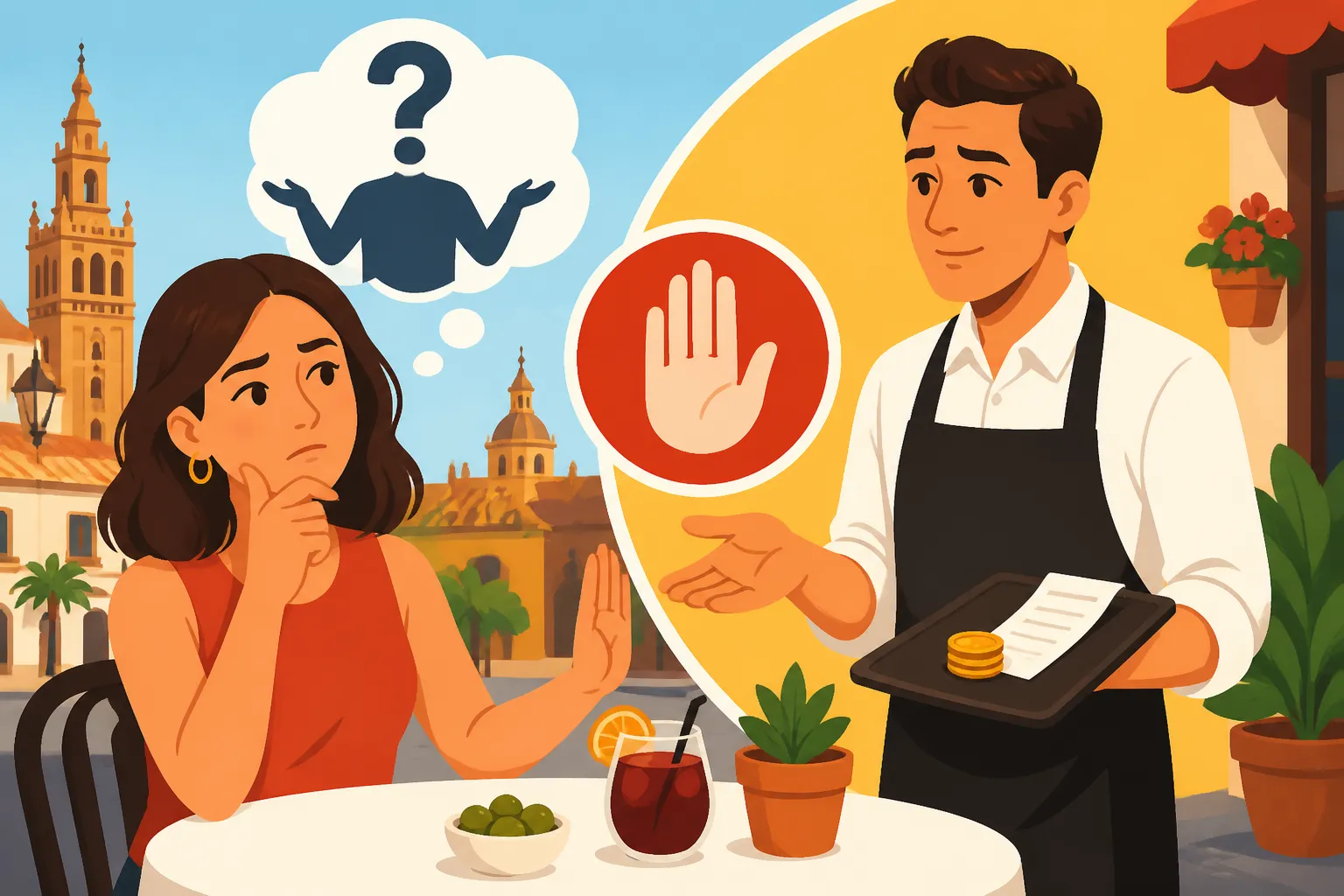
Oh, the age-old expat dilemma: "To tip or not to tip?" When you first arrive in Spain, it's one of those little cultural quirks that can leave you feeling utterly confused, even a bit anxious. Coming from a country where tipping is practically a religious obligation, the relaxed Spanish approach can make you second-guess every transaction. This guide is here to clear up that confusion, offering a realistic, expat-tested perspective on tipping etiquette across Spain, so you can enjoy your sangria without the tipping sweat.
Disclosure: This post may contain affiliate links. We may earn a commission at no extra cost to you if you make a purchase through these links. Read full disclosure.
The Spanish Tipping Culture: Not What You Expect
Let's be real: for many of us, the idea of not tipping feels… wrong. We've been conditioned to believe that if you don't leave a percentage, you're a terrible person, possibly even ruining someone's livelihood. But Spain? Spain operates on a beautifully different rhythm, and understanding this is the first step to shaking off that ingrained tipping guilt.
A Stark Contrast to Other Countries
Forget everything you know about tipping from North America. Seriously, throw it out the window. In Spain, the expectation of a tip, or propina, is fundamentally different. It's not built into the wage structure, nor is it a social obligation in the way it is in places like the United States. Spanish workers in the service industry earn a liveable minimum wage and are typically employed with proper contracts and benefits. This means their income isn't dependent on your gratuity.
So, when you hand over money for a coffee, a meal, or a taxi, the price you see is the price you pay. There isn't an unspoken additional 15-20% lurking in the background. This can feel liberating once you get used to it, but also incredibly perplexing for newcomers. You might see locals leave a few coins or nothing at all, which can leave you wondering, "Am I missing something? Am I being rude?" The short answer is usually no, you're not being rude. You're just observing a different custom.
The Concept of 'Propina' and Its Evolution
The word propina in Spanish refers to a tip or gratuity, but its cultural weight is much lighter than its English equivalent. Historically, it was a small extra for exceptional service or a gesture of appreciation, often just loose change. It wasn't about supplementing a low wage. In smaller, traditional establishments or local bars, you might still see a small plate where people drop a few coins. This is the bote – a communal jar where staff collect tips to share later.
In recent years, especially in more tourist-heavy areas and larger cities, the influx of international visitors with different tipping habits has created a slight shift. Some establishments might now expect a tip from foreigners, or at least they certainly won't refuse one. However, this is largely a reaction to external influences, not an intrinsic change in Spanish culture. The core principle remains: a tip is a bonus, not an obligation. For deeper insights into social norms, you might want to check out our guide on Spanish Customs, Etiquette, and Social Life.
Why the Confusion?
The confusion for expats and tourists primarily stems from the clash of cultures. We arrive with our own pre-conceived notions of tipping, reinforced by decades of habit and societal pressure in our home countries. Then we observe Spanish locals, who might leave nothing, or just a euro, after a fantastic meal. This creates internal conflict. "Are they cheap? Am I overpaying? Should I conform to local customs or stick to what feels right?"
Another source of confusion can be found in places that cater heavily to international tourism. In a busy plaza in Barcelona or a beachside restaurant in Málaga, where many customers are tourists, a small tip might be more common, or even subtly encouraged. However, move a few blocks away into a more local neighborhood, and the practice might vanish entirely. The key is to pay attention to your surroundings and, most importantly, not to stress about it. Your financial planning should account for the cost of living in Spain, but not necessarily a mandatory tipping budget.
When and How Much to Tip in Spain: A Practical Breakdown
Now that we've established the general philosophy, let's get down to the brass tacks: specific scenarios. Remember, these are guidelines, not commandments. The golden rule is always: if the service was genuinely excellent, and you want to leave something, a small gesture is always appreciated. If it was just fine, or even bad, you are under no obligation to tip.
Restaurants and Cafes
This is where most of the tipping angst occurs.
- Quick Coffee or Drink at a Bar: If you're just grabbing a café con leche at the bar, or a quick caña (small beer), locals rarely tip. If you sit at a table, maybe a few coins (10-50 cents) if you feel like it. No need to agonize over it.
- Casual Meals (Lunch, Tapas, Dinner): For a regular meal, whether it's a Menú del Día or a few tapas, a common practice is to round up the bill or leave a few euros, especially if you enjoyed the food and service. For example, if the bill is €28, leaving €30 is a nice touch. If it's €42, leaving €45 would be generous. A 5-10% tip is considered very good, but certainly not expected. You'll find that in many places, especially if you're exploring the local tapas culture in Spain, tips are often pooled.
- Fine Dining: This is the one area where a slightly more substantial tip (around 5-10%) is more common, though still not mandatory. If you've had an exquisite meal and the service was impeccable, leaving €5-€10 or even a bit more on a larger bill would be seen as a sign of true appreciation. However, check your bill first; sometimes a small service charge (servicio incluido) is already added, although this is rare in Spain for individuals. Always ask for the bill, or la cuenta, when you're ready to leave.
- Paying with Card: If you pay by card, there usually isn't an option to add a tip to the machine. If you want to leave a tip, you'll need to do it in cash. This is a common source of awkwardness, as many expats rely on cards for everyday payments in Spain. It's often a good idea to carry some small change for this purpose. Our guide on Money for Travel in Spain: Cards, Cash, and ATMs has more tips.
Bars and Tapas
For just drinks and a few casual tapas, especially when standing at the bar, a tip is genuinely optional. Many Spaniards will simply take their change and go. If you've had a few rounds, sat down, and the waiter has been attentive, leaving the small coins from your change (e.g., up to €1) is a common, polite gesture. It’s certainly not mandatory to tip after every single drink. For more on navigating these situations, see our advice on Spanish Bar and Café Etiquette for Newcomers.
Taxis and Ride-Shares
With taxis, it's very common to simply round up to the nearest euro. For instance, if your fare is €8.60, offering €9 is perfectly fine. If it's a longer journey or the driver was particularly helpful with luggage or navigating tricky streets, you might round up to the next full euro or add an extra euro or two. For ride-share services like Uber or Cabify, the app often provides an option to add a tip after the journey, usually in increments. This is entirely up to you. If you're using other forms of transport, like those booked through Omio, tipping drivers isn't typically part of the deal.
Hotels (Porters, Housekeeping, Concierge)
Hotel staff are often overlooked, but a small gesture can be appreciated.
- Porters: If someone helps you with several heavy bags to your room, €1-€2 per bag or a total of €2-€5 for good service is a kind gesture.
- Housekeeping: For a longer stay (multiple nights), leaving €2-€5 per day on your pillow at the end of your stay is a thoughtful way to acknowledge their work, especially if your room was kept immaculate.
- Concierge: If a concierge goes above and beyond to secure hard-to-get reservations or provides exceptional local recommendations, a €5-€10 tip (or even more for truly extraordinary service) would be a nice way to show your thanks. However, this is quite rare and truly only for exceptional assistance. If you're making bookings through Booking.com for your accommodation, remember these aren't included.
Hairdressers, Spas, and Other Services
In personal care services, tipping is less common than in North America. For a haircut, a manicure, or a massage, rounding up or leaving €1-€3 is a generous tip for good service, but many locals will simply pay the exact amount. It’s definitely not expected.
Tour Guides
This one can vary depending on the type of tour.
- Free Walking Tours: These tours, often advertised as "free," operate entirely on tips. While the tour itself has no upfront cost, the expectation is that you will tip what you feel the tour was worth at the end. For a good 2-3 hour tour, €10-€20 per person is a reasonable amount, depending on your budget and satisfaction. Remember, these guides rely solely on your generosity, so if you enjoyed it, please tip well. Websites like GetYourGuide often list these kinds of experiences.
- Paid Tours (Day Trips, Museum Tours): For pre-booked, paid tours, a tip is not required but is appreciated for excellent service. If your guide was knowledgeable, engaging, and went the extra mile, an extra €5-€10 per person for a full-day tour is a nice bonus. For shorter tours, €2-€5.
The Etiquette of Not Tipping: Is It Truly Rude?
This is the core question, and the answer, unequivocally, is no, it is generally not considered rude not to tip in Spain. This understanding is crucial for any expat to grasp, as it frees you from that nagging feeling of social transgression.
Understanding Spanish Service Wages
The fundamental reason why not tipping isn't rude lies in the labor laws and wage structure in Spain. Service industry workers, whether they're waiters, bartenders, or hotel staff, are paid a standard salary. This salary is not, unlike in some other countries, a sub-minimum wage that relies on tips to reach a living standard. This is a significant cultural and economic difference. Therefore, your tip is truly an extra token of appreciation, not a necessary income supplement.
There’s a strong cultural belief in Spain that an employer should pay a fair wage, not pass that responsibility onto the customer through an implicit tipping system. This is a very important distinction to internalize. When a Spanish person doesn't tip, it's not because they're being stingy; it's because they understand the system.
When a Tip is Truly Appreciated (But Not Expected)
While not obligatory, a tip is genuinely appreciated when it's given for truly exceptional service. Think about a time when:
- Your waiter went out of their way to explain the menu in English, made excellent recommendations, and was exceptionally friendly and efficient.
- A taxi driver helped you navigate a difficult address or carried your heavy luggage up three flights of stairs without complaint.
- A tour guide brought the history of a city to life with passion and humor, making your experience unforgettable.
In these situations, a tip elevates the interaction beyond mere transaction. It shows that you noticed and valued their effort, and that's always a wonderful feeling for anyone providing a service. It's a personal gesture of gratitude, rather than a percentage calculation.
How to Politely Decline to Tip (or Just Not Tip)
The beauty of the Spanish system is that you don't really need to "politely decline" a tip. You just… don't tip. Take your change, say "¡Gracias!" or "¡Muchas gracias!", and leave. No explanation is needed, no awkward eye contact, no lingering discomfort. It's simply not part of the social contract. If you pay with cash and want to leave a small tip, you can simply leave the desired amount on the table or tell the server "Quédate el cambio" (Keep the change) if it's a few coins. If you're paying by card, as mentioned, there's usually no option to add a tip, and it's perfectly normal to just pay the exact amount.
Many expats find this aspect of Spanish life incredibly refreshing. It removes the mental burden and allows you to enjoy the experience without the added pressure.
Practical Tipping Scenarios and a Handy Guide
To help you visualize, here are a few common scenarios you might encounter, along with typical approaches. Remember, these are based on local norms and expat experiences in Spain.
| Service Type | Scenario | Typical Local Approach | Expat/Tourist Approach (Optional) |
|---|---|---|---|
| Café/Bar | Quick coffee/drink at the bar | No tip | Few small coins (10-20 cents) |
| Café/Bar | Seated service for drinks/light snack | A few small coins (€0.20-€0.50) | Up to €1, or round up to nearest euro |
| Casual Restaurant | Lunch/dinner, good service | Round up bill or leave €1-€2 | Round up or 5-7% for excellent service |
| Fine Dining | Excellent meal & service | €2-€5 (or nothing) | 5-10% for truly outstanding experience |
| Tapas Bar | Several rounds of tapas & drinks | Round up to nearest euro, or €1-€2 | Round up to nearest euro, or €1-€3 |
| Taxi | Standard ride | Round up to nearest euro | Round up to nearest euro or add €1-€2 |
| Hotel Porter | Helps with luggage | Not common | €1-€2 per bag, or €2-€5 total |
| Hotel Housekeeping | Multi-night stay, clean room | Not common | €2-€5 per day on pillow at end of stay |
| Tour Guide | "Free" walking tour | €5-€10+ per person | €10-€20+ per person (they rely on tips) |
| Tour Guide | Pre-booked, paid tour | Not common | €5-€10 per person for exceptional service |
| Hairdresser | Standard service | No tip | €1-€3 for excellent service |
Consider a scenario where you've just enjoyed a wonderful meal in a local restaurant in Seville. The bill comes to €55. If you found the service to be attentive and friendly, leaving €60 would be a generous gesture. If it was perfectly acceptable but nothing extraordinary, leaving €55 is also completely fine. There’s no right or wrong, only your personal preference guided by appreciation, not obligation. For tips on navigating meal times and dining etiquette, you can consult our guide Spanish Meal Times and Dining Etiquette Explained.
Another common situation might be after a lengthy train journey booked through Omio. You arrive at the station, grab a taxi, and the driver is incredibly helpful with your luggage, offering some local tips. If the fare is €12.40, handing over €14 is a thoughtful thank you for the extra effort. If he just drove you from A to B, rounding up to €13 is perfectly acceptable.
Remember, the goal is not to conform to an American or British standard, but to understand and adapt to the Spanish way. Carrying some small change (€1 and €2 coins, and €5 notes) is always useful for these small, optional gestures, especially if you plan on using cash for everyday transactions.
Final Thoughts on Navigating Spanish Tipping
Many newcomers agonize over this. My advice? Relax. Really. The Spanish culture around tipping is much more laid-back than many of us are used to, and it's built on a different economic philosophy. You are not expected to tip, and not doing so is rarely considered rude.
If you receive truly outstanding service, a small gratuity, especially in cash, is a lovely way to show your appreciation, and it will be genuinely welcomed. But if you feel the service was adequate, or you simply don't have the spare change, walk away with a clear conscience. Focus on enjoying your experience, the incredible food, the vibrant culture, and the warmth of the Spanish people. Spain offers so much, and worrying about a few extra coins shouldn't overshadow that. And if you’re looking for places to stay, Booking.com can help you find a great spot, but remember that staff there typically don’t rely on your tips.
So, go forth, enjoy your Spanish adventures, and remember: ¡no pasa nada! (no worries!).
Disclaimer
The information provided in this guide is for general informational purposes only and does not constitute legal, financial, or professional advice. While we strive to provide accurate and up-to-date information, local customs and regulations can change. Always consult with relevant local authorities or professionals for specific advice tailored to your situation.