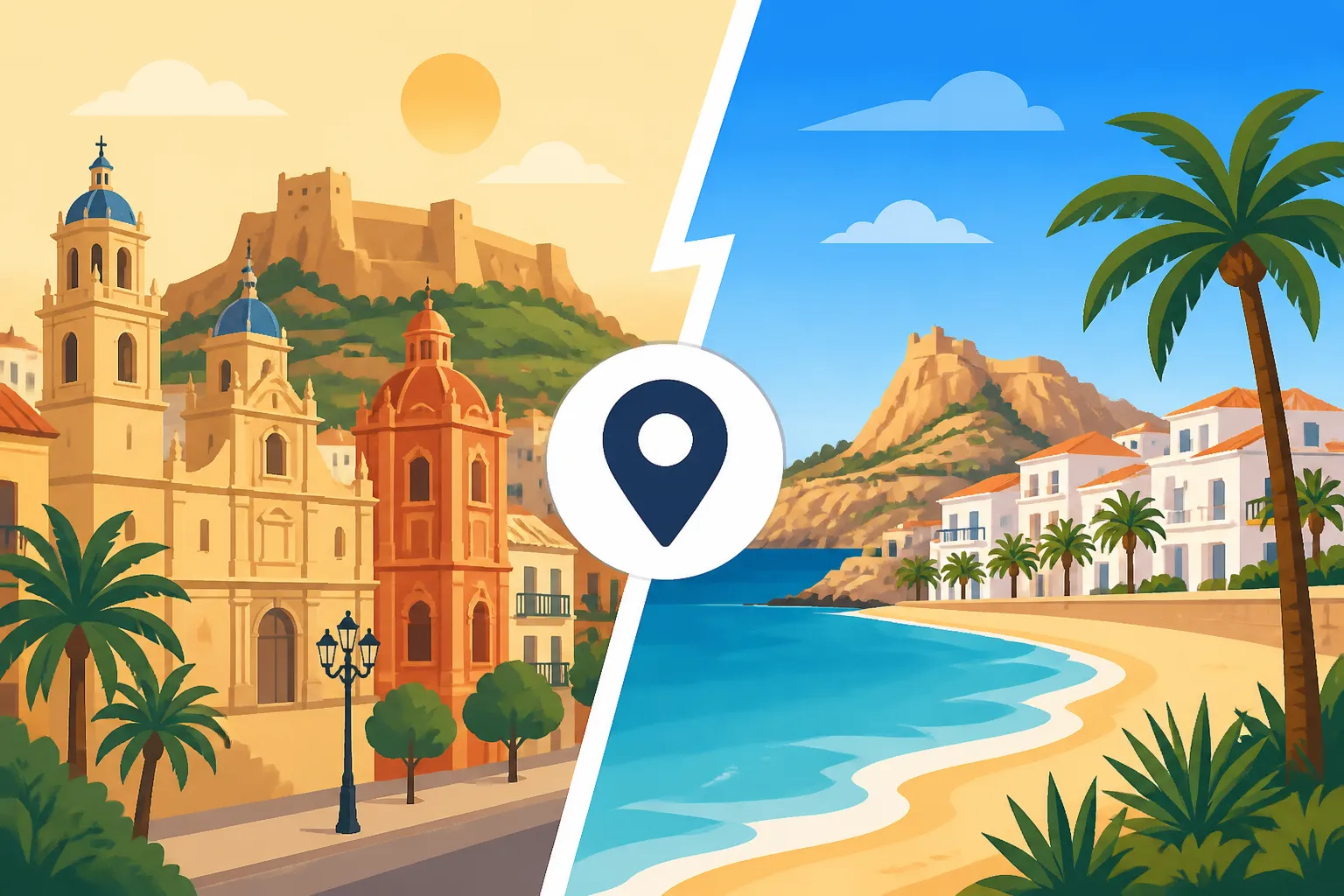
Where to Stay in Alicante and Murcia: City vs Coast
Oh, the eternal dilemma when you're dreaming of a life or even just a long holiday in beautiful Spain: do you dive into the vibrant pulse of a city, or melt into the serene embrace of the coast? This is a question many of us expats have wrestled with, especially when looking at two diverse regions like Alicante and Murcia. It’s not just about beaches versus buildings; it’s about lifestyle, convenience, and what truly makes you feel at home. This guide is here to help you navigate those very real choices, offering a candid look at what both the urban centers and the stunning coastlines of Alicante and Murcia truly offer.
Disclosure: This post may contain affiliate links. We may earn a commission at no extra cost to you if you make a purchase through these links. Read full disclosure.
Understanding Alicante: City Charm vs. Coastal Bliss
Alicante province is a fantastic place, offering a truly diverse landscape from bustling urban centers to idyllic sandy shores. It’s not just one or the other; you can find pockets of tranquility even within the city, and vibrant communities along the coast. The key is knowing what you're really looking for.
Alicante City: Culture, Convenience, and Urban Buzz
When you think of Alicante city, picture a delightful blend of history, modern amenities, and a lively atmosphere that perfectly encapsulates the Spanish Mediterranean spirit. This is a city that never truly sleeps, offering something for everyone, whether you’re a history buff, a foodie, or simply someone who thrives on urban energy.
The heart of Alicante is, without a doubt, the stunning Santa Bárbara Castle, perched majestically atop Mount Benacantil. From here, you get breathtaking panoramic views of the city, the port, and the seemingly endless blue of the Mediterranean. Down below, the winding, narrow streets of El Barrio, the old town, are a maze of colorful houses, hidden plazas, and tapas bars that spill out onto the pavement. Imagine ending your day with a glass of local wine and some tapas here – it’s an experience that truly connects you to the local rhythm. You'll find many charming boutique hotels and apartments in this area, perfect for diving deep into the local culture. When looking for these unique stays, checking Booking.com is always my first stop, as their filters allow you to pinpoint exactly the kind of authentic experience you're after, whether it’s a historic apartment or a modern hotel.
Beyond the old town, the city stretches out with elegant boulevards like Explanada de España, lined with palm trees and a distinctive mosaic walkway that's perfect for a leisurely stroll. The Mercado Central is a sensory explosion, offering fresh local produce, seafood, and a glimpse into daily Spanish life. Living in the city means unparalleled convenience. You’re within walking distance of fantastic restaurants, shops, cultural events, and public transportation. The tram system is excellent, connecting you to many coastal towns both north and south, making day trips incredibly easy. If you’re considering a more permanent move, read our guide on Renting in Spain: Contracts, Deposits, and Tenant Rights to understand the nuances of urban living arrangements. For those who enjoy a vibrant nightlife, the city center and El Barrio offer an array of bars and clubs that stay open late into the night, particularly on weekends.
Alicante Coast: Beaches, Relaxation, and Family Fun
Just a stone's throw from the city center, Alicante’s coastline unfurls into a series of magnificent beaches and charming towns, each with its own character. This is where you come for sun, sand, and a slower pace of life, often with excellent amenities still within easy reach.
Playa de San Juan, immediately north of Alicante city, is perhaps the most famous. It's a vast expanse of golden sand, stretching for kilometers, backed by a lively promenade dotted with restaurants, cafes, and ice cream parlors. It's incredibly popular with families and those who love water sports, offering everything from paddleboarding to windsurfing. The infrastructure here is top-notch, with plenty of beachfront apartments and larger resorts. If you’re planning a holiday here, Booking.com has a massive selection, from luxury resorts to more modest apartments, ensuring you find something that fits your budget and style. I often use Booking.com's map feature to visually pick out properties right on the beach.
Further north, towns like El Campello offer a more laid-back, traditional Spanish coastal vibe while still being incredibly well-connected to Alicante city by tram. Here, you'll find a beautiful marina, smaller coves, and a tranquil atmosphere that’s perfect for unwinding. It’s less touristy than some other spots, providing a genuine local experience. To the south, Santa Pola is known for its excellent seafood, salt flats (which are a fantastic spot for birdwatching, including flamingos!), and a more working-port feel. These coastal communities provide a wonderful balance for those who want proximity to the sea without feeling completely isolated. They are great for raising families, with plenty of outdoor activities and a strong community feel. For families thinking of moving, exploring School Enrollment in Spain: Registration Steps for Foreign Families is a wise next step. The gentle waves of the Mediterranean here are also perfect for children, making it a stress-free environment for family beach days.
Exploring Murcia: Inland Authenticity vs. Mar Menor Marvels
Moving south from Alicante, you enter the region of Murcia, a truly distinct part of Spain with its own unique charm. It’s a region of contrasts, from the rich agricultural plains (often called "Europe's orchard") and the historic capital city, to the unparalleled natural beauty of the Mar Menor and the wider Costa Cálida.
Murcia City: Historic Heart and Gastronomic Delights
Murcia city itself, the capital of the autonomous community, often gets overlooked by expats heading straight for the coast, and honestly, that’s a shame. This city is a hidden gem, offering a truly authentic Spanish experience without the massive tourist crowds you might find in more famous cities.
The city is dominated by its magnificent Baroque Cathedral of Murcia, a stunning piece of architecture that truly captures the grandeur of Spanish religious art. Wander through the old town, the Centro Histórico, and you’ll find charming plazas, narrow streets, and an abundance of traditional tapas bars. Murcia is renowned for its gastronomy, particularly its huerta (market garden) cuisine, featuring fresh vegetables, rice dishes, and fantastic seafood. Eating out here is not just a meal; it’s a cultural event, with lively conversations echoing through the squares late into the evening. You might find a wider array of traditional, family-run hotels and guesthouses here, offering incredible value. When I’m looking for authentic, non-touristy stays, Booking.com's selection in lesser-known cities like Murcia often surprises me with its quality and affordability.
Murcia city has a youthful energy thanks to its university population, which translates into a lively bar scene and a relaxed, welcoming atmosphere. It’s a city where you can genuinely slow down, enjoy long lunches, and soak in the everyday rhythm of Spanish life. It’s also an excellent base for exploring the surrounding countryside, from the Ricote Valley's Moorish heritage to the regional parks. For anyone planning a longer stay or thinking about working here, understanding Spanish Work Culture: Hours, Holidays, and Workplace Etiquette is really important. The pace of life here is noticeably slower than in, say, Madrid or Barcelona, which many expats find to be a refreshing change. The locals are incredibly friendly, and you'll often find yourself striking up conversations in a local bar.
Murcia Coast (Costa Cálida): Lagoons, Beaches, and Natural Beauty
Murcia’s coastline, known as the Costa Cálida (Warm Coast), is famous for the Mar Menor, Europe's largest saltwater lagoon. This truly unique natural feature sets Murcia’s coast apart and offers a distinct experience compared to other Spanish coastal areas.
The Mar Menor is separated from the Mediterranean Sea by La Manga, a narrow strip of land, creating a vast lagoon with exceptionally calm, shallow, and warm waters. This makes it an ideal spot for families with young children, as well as for various water sports like sailing, windsurfing, and paddleboarding, often without the large waves of the open sea. Towns like Los Alcázares and San Javier along the Mar Menor offer beautiful promenades, safe beaches, and a relaxed holiday atmosphere. You’ll find everything from holiday apartments to villas, often with stunning views of the lagoon. For your perfect coastal getaway, a quick search on Booking.com will show you an impressive range of properties from cozy apartments to spacious villas. Using Booking.com's filters for "beachfront" or "family-friendly" is a lifesaver here.
Beyond the Mar Menor, the wider Costa Cálida offers diverse beaches, from the wild, unspoiled coves of Calblanque Regional Park to the historic port city of Cartagena. While Cartagena has a city vibe, its deep historical connection to the sea and its incredible Roman theater right by the port make it an integral part of Murcia’s coastal offerings. You can combine cultural exploration with beach days, a fantastic blend. For those seeking even more privacy, there are quieter stretches of coastline near Águilas and Mazarrón, featuring secluded coves and dramatic cliffs. These areas are fantastic for outdoor activities such as hiking, snorkeling, and diving, offering a more adventurous coastal experience. If you enjoy the outdoors, you might be interested in Outdoor Activities in Spain: Safe Hiking, Swimming, and Sun Care.
Making Your Choice: Factors to Consider for Your Alicante & Murcia Stay
Deciding between a city and coastal stay in Alicante and Murcia isn't just about pretty pictures; it’s about aligning your desires with the practical realities of each location. Having lived here for years, I can tell you that what sounds appealing on paper might not always match the day-to-day experience.
Lifestyle and Pace of Life
This is arguably the most critical factor. Are you drawn to the constant hum of urban life, where new experiences are always just around the corner? Or do you crave the soothing rhythm of the waves, where your biggest decision might be which chiringuito (beach bar) to visit?
Alicante city and Murcia city offer a traditional Spanish urban lifestyle. You’ll have access to a vast array of cultural events, international cuisine, shopping, and networking opportunities. There's a certain energy to city living that many expats thrive on, particularly those who enjoy being social and having endless options for entertainment and services. If you’re a student, the city life with its universities and social scene might be ideal, and you can look into Student Housing in Spain: Options and Typical Contracts. However, this also means more noise, more people, and sometimes, the hassle of city traffic or parking.
The coastal areas, while still lively in high season, generally offer a more relaxed and family-oriented pace. Days revolve around the beach, long strolls, and enjoying the natural surroundings. It's often quieter, particularly outside of peak tourist months, allowing for a profound sense of calm and escape. This is perfect for retirees, families, or anyone seeking a tranquil retreat. However, access to certain specialized services or a wider variety of cultural events might require a trip inland to the nearest city. Think about your daily routine and what brings you joy. If it’s proximity to a vibrant social scene, cultural institutions, and diverse dining, the city will call to you. If your ideal day involves sand between your toes and a sea breeze, the coast is your haven. Booking.com offers filters for both "city center" and "beach proximity," which can help you quickly sort through options tailored to your desired lifestyle.
Accessibility and Transportation
Consider how you plan to get around and your reliance on public transport versus having a car. This can significantly impact your daily life and budget.
Alicante city is incredibly well-connected. It boasts the Alicante-Elche Airport (ALC) just a short bus or taxi ride away, and an extensive tram network that can take you along the coast, both north and south, to towns like San Juan, El Campello, and even Benidorm. The city itself is walkable, and public buses are frequent. If you don't want the expense or hassle of owning a car, the city is a strong contender. You can easily manage with just public transport, saving a lot of stress about Parking in Spain: Resident Permits, Zones, and Fine Appeals.
Murcia city is also well-served by its own regional airport, Región de Murcia International Airport (RMU), though it's less busy than Alicante's. The city has a good local bus network and a tram line. However, reaching many of the coastal areas, especially the more secluded coves or the specific stretches of the Mar Menor, is often easier with a car. While some coastal towns have public transport links, they might not be as frequent or extensive as those around Alicante. For those considering buying a car, our guide on Buying a Car in Spain: Paperwork, Taxes, and Registration will be invaluable. If you love exploring hidden beaches and off-the-beaten-path villages, a car will offer the freedom you need in Murcia.
Budget and Accommodation Types
The cost of living and accommodation can vary significantly between city centers and coastal resorts, as well as between peak and off-peak seasons.
Generally, accommodation in the absolute heart of Alicante city can be pricier, especially for larger apartments or hotels with prime views. However, if you venture slightly outside the immediate city center, you can find excellent value. Coastal towns, particularly during the summer months (July and August) and for specific holidays like Semana Santa, will see a surge in prices due to demand. Renting a villa with a pool in a popular coastal spot will always be more expensive than a city apartment of a similar size.
Murcia city, being less of a primary tourist magnet, often offers more affordable long-term rentals and hotels compared to Alicante city, while still providing a fantastic quality of life. The coastal areas of Murcia, especially the Mar Menor towns, also offer a good range of options, though popular spots along La Manga can command higher prices. You'll find everything from basic holiday apartments to luxury resorts. When setting your budget, it's crucial to compare options side-by-side. Booking.com is fantastic for this, allowing you to filter by price range, accommodation type (apartment, hotel, villa), and even amenities like a pool or kitchen. This helps you understand the realistic cost of your ideal stay across different locations. Before you commit to any long-term rental, it's always smart to have a clear understanding of the Cost of Living in Spain: Realistic Budgets and Savings Tips.
| Feature | Alicante City | Alicante Coast (e.g., San Juan) | Murcia City | Murcia Coast (e.g., Mar Menor) |
|---|---|---|---|---|
| Vibe/Pace | Bustling, cultural, vibrant urban life | Relaxed, beach-focused, family-friendly | Authentic, historic, slower, gastronomic | Calm waters, water sports, nature, tranquil |
| Attractions | Santa Bárbara Castle, Explanada, El Barrio, museums | Long sandy beaches, promenade, water sports | Cathedral, plazas, tapas scene, university | Mar Menor lagoon, beaches, natural parks, history (Cartagena) |
| Transport | Excellent public transport (tram, bus), walkable | Good tram/bus links to city, walkable promenade | Good local bus/tram, easier with car for coast | Car often recommended for wider exploration |
| Nightlife | Lively bars, clubs, late-night dining | Beach bars, relaxed evening meals | Traditional bars, tapas routes, student scene | Quiet evenings, beachfront dining |
| Cost (Accommodation) | Mid-High, especially city center; good value slightly outside | Mid-High, especially peak season/beachfront | Mid-Low, excellent value for city living | Mid, can be higher in prime Mar Menor spots |
| Best For | Culture vultures, foodies, social butterflies, no-car living | Beach lovers, families, active individuals, sun-seekers | Authentic experience, foodies, history buffs, slower pace | Water sports enthusiasts, families, nature lovers |
Ultimately, the "best" place to stay isn't a universal answer; it's deeply personal. Both Alicante and Murcia offer incredible experiences, whether you're drawn to the electric energy of the city or the soothing embrace of the coast. Take your time, consider what truly matters for your lifestyle, and remember that resources like Booking.com are invaluable for exploring the myriad accommodation options available across these stunning Spanish regions. Happy travels, or happy moving!
Disclaimer
Please note that while this guide provides general information and advice based on typical experiences in Spain, individual circumstances may vary. Regulations, prices, and services can change, and it is always recommended to verify specific details with official sources or local professionals before making any decisions.