Insurance for EU Citizens in Spain: Where the EHIC Runs Out
Okay, let's talk about something that trips up so many of us EU citizens when we first land here in Spain: healthcare. You arrive with your trusty EHIC card, feeling a sense of security, only to quickly realize it's not the golden ticket you thought it was for long-term living. Navigating the healthcare system as an EU expat in Spain can be a real head-scratcher, especially during that confusing period between arrival and full residency. This guide is here to untangle the complexities, highlight where your EHIC falls short, and walk you through comprehensive solutions, including how flexible options like SafetyWing can bridge the crucial gaps in your coverage.
Disclosure: This post may contain affiliate links. We may earn a commission at no extra cost to you if you make a purchase through these links. Read full disclosure.
The EHIC: A Lifesaver, But Not a Long-Term Solution
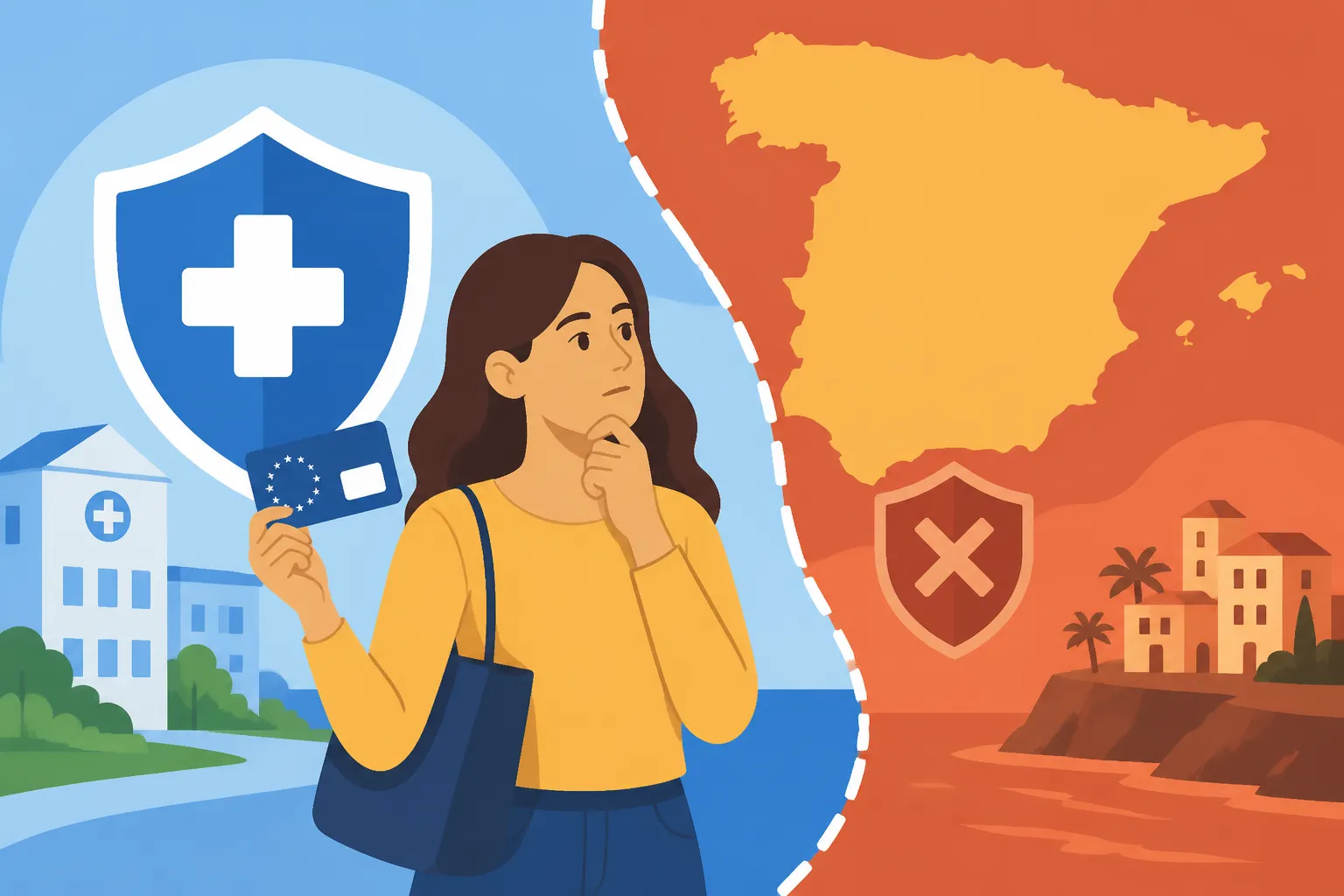
When you're packing your bags for Spain, your European Health Insurance Card (EHIC) probably feels like a comforting safety net. And for good reason! It's designed to give you access to medically necessary, state-provided healthcare during a temporary stay in any of the 27 EU countries, plus Iceland, Liechtenstein, Norway, and Switzerland. The key phrase there, though, is "temporary stay."
What the EHIC Actually Covers and Where It Falls Short
The EHIC is brilliant for what it is: emergency care. Imagine you're on a holiday in Seville, and you twist your ankle badly walking through the Triana market, or you get a sudden, severe ear infection from swimming in the Mediterranean. Flash your EHIC at a public centro de salud (health center) or hospital, and you'll typically receive treatment under the same conditions and at the same cost (in Spain, often free) as a Spanish resident. It's meant for unforeseen illnesses or accidents that require immediate attention to prevent you from having to cut your trip short.
However, many of us arrive in Spain with a vague idea that the EHIC will cover us indefinitely, or for any kind of medical need. That's simply not true. It doesn't cover planned medical treatment, nor does it cover private healthcare services. It won't pay for repatriation if you need to be flown home due to illness, and it certainly isn't a substitute for comprehensive travel insurance, let alone long-term health insurance. If you need to see a specialist for a non-urgent issue, or you want the comfort of an English-speaking doctor, your EHIC is unlikely to be much help. The frustration often sets in when you realize its limits extend beyond a simple short-term visit.
When Your EHIC Coverage Ends in Spain
This is where things get tricky, and it's a critical point for any EU citizen planning a move to Spain. The EHIC is for temporary visits. Once you become a resident in Spain, which typically happens when you register your address (get your empadronamiento) and apply for your residency certificate (the "green card" for EU citizens), the expectation is that you will integrate into the Spanish healthcare system. At this point, your EHIC technically ceases to be your primary healthcare coverage for treatment received in Spain, as you are no longer considered a "visitor" but a "resident."
The grey area comes for those who are in transition. Perhaps you've arrived, gotten your NIE and empadronamiento, but are still waiting on your residency certificate or haven't yet registered with Social Security through a job or self-employment. During this limbo phase, your EHIC might still technically be valid from your home country's perspective for a period, but it's not designed for the systematic healthcare needs of a new resident. Relying solely on it can leave you vulnerable. For digital nomads or those exploring longer stays before committing to full residency, this period is especially risky. This is precisely why flexible insurance options like SafetyWing are becoming incredibly popular, offering a safety net that adapts to your mobile lifestyle before you're fully rooted in Spain's public system.
Navigating Spain's Healthcare System as an EU Citizen
Spain boasts a fantastic public healthcare system, one that many expats are eager to access. But getting into it, especially as a newly arrived EU citizen, involves a bit of bureaucratic dance. It's not always as straightforward as simply showing up.
Accessing Public Healthcare Through Residency
For EU citizens, the main path to accessing Spain's public healthcare system is by demonstrating legal residency and contributing to the Social Security system, usually through employment, self-employment, or as a pensioner. The ultimate goal for many is to get their Spanish Health Card (Tarjeta Sanitaria), which grants you full access to public doctors, centros de salud, and hospitals.
The journey starts with getting your essential identification, the NIE (Número de Identificación de Extranjero), and then registering your address with your local town hall to get your empadronamiento. After that, as an EU citizen, you apply for your Certificate of Registration, often referred to as the "green card." Once you are legally employed or self-employed (autónomo), you'll be registered with the Social Security system (Seguridad Social), and your contributions will grant you access to public healthcare. Pensioners from other EU countries can often transfer their healthcare rights via an S1 form. You can read more about Who Can Access Public Healthcare in Spain? Eligibility Basics for a deeper dive. The entire process of formally registering for healthcare can be quite lengthy and involves several administrative steps, each with its own waiting times.
The Gap Between Arrival and Public System Registration
Here's the often-overlooked reality: you arrive in Spain, excited to start your new life, and you begin the residency paperwork. You might get your NIE relatively quickly, and maybe even your empadronamiento in a day or two. But securing that job contract, getting registered with Social Security, or waiting for your S1 form to process? That can take weeks, even months. During this period, you are physically present in Spain, living your life, but you haven't yet gained full entitlement to the public healthcare system.
This transition period is a critical vulnerability. What happens if you get appendicitis, break a leg, or need urgent medical attention while you're in this administrative limbo? Your EHIC, as discussed, is for temporary stays and might be challenged if you're clearly establishing residency. Without any other form of coverage, you could be facing significant medical bills. This is a common pain point for many new arrivals, and it's a legitimate concern that can cause a lot of stress. Don't underestimate the importance of bridging this gap. This is where a flexible and comprehensive solution comes into its own. Many expats find great relief in having a robust travel or expat health insurance plan like SafetyWing during these initial months, ensuring continuous protection while they navigate the Spanish bureaucratic maze.
Why Private Health Insurance is a Smart Move for EU Expats
While the public system is excellent, many EU expats, even those fully entitled to public healthcare, choose to invest in private health insurance. It’s not just about covering the gap; it’s about enhancing your healthcare experience in Spain. The Spain Healthcare System for Expats: Public vs Private is a complex beast, and private options offer distinct advantages.
The Benefits Beyond Basic Coverage
One of the most appealing aspects of private health insurance in Spain is the sheer convenience and speed. Public healthcare, while comprehensive, can involve longer waiting lists for specialist appointments and certain procedures. With a private policy, you often get much faster access to a wider network of private clinics and hospitals. For instance, if you need to see a dermatologist or an ophthalmologist, you can often book an appointment directly, sometimes within days, bypassing the referral system that is standard in the public sector. This means no more waiting for a GP appointment, then waiting for a referral, then waiting for the specialist. You can learn more about this in Seeing a Specialist in Spain: Referral Process Explained.
Another significant benefit for many expats is the availability of English-speaking doctors and staff. While you'll find some English speakers in the public system, it's not guaranteed, especially in smaller towns or at your local centro de salud. Private clinics often cater specifically to the international community, providing doctors and administrative staff who are fluent in English, which can be a huge relief when you're discussing complex medical issues. This is a game-changer for peace of mind, and you can find out how to locate these providers in How to Find an English-Speaking Doctor in Spain (Practical Guide). Ultimately, private insurance offers a level of comfort, flexibility, and expediency that many find invaluable, turning what could be a stressful healthcare encounter into a smoother process.
Tailoring Your Private Policy for Expat Life
When you're looking at private health insurance, it's not a one-size-fits-all situation. For expats, especially, there are specific things to consider to ensure your policy truly meets your needs. Look for comprehensive coverage that includes hospitalisation, specialist visits, diagnostic tests, and ideally, some form of dental and vision coverage. Pay close attention to co-payments (copagos) – some policies require you to pay a small fee for each visit or service, while others are "sin copago" (without co-payments), meaning you pay a higher monthly premium but nothing extra at the point of care. Understanding these terms is crucial when Choosing a Private Health Insurer in Spain: What to Compare.
If you're a digital nomad, a frequent traveler, or someone whose residency status might change, traditional Spanish private health insurance might not be as flexible as you need. This is where truly global and flexible options, like SafetyWing, shine. They understand that your life isn't static. These types of policies can offer medical coverage wherever you are, often including travel benefits too, which is perfect if you spend time between Spain and other countries. Always be upfront about pre-existing conditions when applying for any private policy, as non-disclosure can lead to claims being rejected. Reviewing the policy's terms for pre-existing conditions and waiting periods is an absolute must, regardless of the provider.
SafetyWing: The Expat's Flexible Health & Travel Insurance Solution
When you're navigating the uncertainties of expat life in Spain, especially that initial period or if your lifestyle involves frequent travel, a traditional, static health insurance policy might not fit. This is where SafetyWing enters the picture, offering a refreshingly flexible and robust solution tailored for the modern nomad and expat.
Why SafetyWing Stands Out for EU Citizens in Spain
SafetyWing was practically built for people like us – those who don't fit into neat boxes, who might be digital nomads, entrepreneurs, or simply taking a gap year. For EU citizens moving to or living in Spain, SafetyWing offers a unique blend of medical and travel insurance that is incredibly appealing. It’s not just about covering you for emergencies; it's about providing continuous peace of mind no matter where your adventures take you. Unlike many traditional policies that are tied to one country, SafetyWing covers you worldwide, including your home country for short visits (with specific limitations), and, crucially, while you’re establishing your life in Spain.
The beauty of SafetyWing lies in its flexibility. It operates on a monthly subscription model, meaning you can sign up quickly and cancel anytime. There are no long-term contracts binding you, which is ideal if you're uncertain about your long-term plans or if you're still processing your permanent residency and public healthcare entitlements. This allows you to scale your coverage up or down, or switch to a local provider once you're fully settled. For EU citizens in Spain, especially during that initial period when your EHIC is insufficient and your public healthcare access isn't yet secured, SafetyWing provides an accessible, comprehensive safety net. It’s designed to be as mobile as you are.
Key Features and How It Works in Spain
SafetyWing’s flagship product, Nomad Insurance, bundles essential medical coverage with travel insurance benefits. This means you’re covered not only for unexpected illnesses and accidents, but also for things like travel delays, lost checked luggage, and even emergency medical evacuation – features that are often missing from standalone health policies. In Spain, this translates to protection if you need to see a doctor for an urgent issue, are hospitalized, or require prescription medication due to an covered illness or injury.
The process is straightforward: you pay a monthly premium, and if you need medical attention, you visit any licensed doctor or hospital. SafetyWing provides a claims portal where you can submit your bills and receipts for reimbursement. While they may not have a direct billing network with every clinic in Spain like some large local private insurers do, the reimbursement model gives you the freedom to choose your provider. This is particularly useful in those early days when you might not have a strong grasp of the local healthcare network. Moreover, for those who eventually secure their Private Health Insurance for Spain Visas: What Policies Must Include for longer stays, SafetyWing can act as that perfect bridge, or even as supplemental coverage for global travel, as it’s designed to evolve with your needs. It really takes the edge off those anxieties about what happens if something goes wrong while you're still getting established.
Comparing Your Options: EHIC, Public, and Private
Understanding the various healthcare avenues available to you in Spain can feel overwhelming, but a clear comparison helps highlight the strengths and weaknesses of each. Let's break down the EHIC, the Spanish public system, general private insurance, and how a flexible option like SafetyWing fits in.
A Clear Look at Coverage Scenarios
Let's illustrate with a few scenarios. Imagine you're visiting Spain for a two-week holiday: your EHIC is perfect for unexpected, medically necessary treatment. If you get food poisoning or break an arm, you're covered in the public system, just like a local.
Now, consider you're an EU citizen moving to Spain with plans to become a resident, working a full-time job. Once you're registered with Social Security, you'll gain full access to the public healthcare system – your local centro de salud for routine care, specialists via referral, and public hospitals for emergencies. This is a comprehensive system. However, during the initial months before your Social Security registration is fully processed, you're in a vulnerable spot. Your EHIC isn't quite right for a "resident-in-waiting," and local private policies often require a long-term commitment. This is where SafetyWing shines, providing that crucial interim coverage from the moment you step off the plane until you're fully integrated into the public system, or decide on a traditional private plan.
Then there's the long-term expat who is fully integrated into the public system but desires more. They might opt for a traditional private health insurance plan in Spain (like Sanitas or Adeslas) to benefit from quicker appointments, a wider choice of doctors (including English-speaking ones), and direct access to specialists without public system referrals. This offers a premium experience but comes with higher monthly costs. Each option serves a different need, and understanding these distinctions is key to making an informed choice for your personal situation and Health Insurance in Spain: Options for Residents, Students, and Families.
Making the Right Choice for Your Spanish Journey
The "right" choice depends entirely on your personal circumstances, your budget, and your risk tolerance. If you're simply visiting for a short period, your EHIC is your primary medical safety net, supplemented ideally by travel insurance for non-medical travel mishaps. If you're moving to Spain permanently and will be working or are a pensioner, aiming for full integration into the public system is the most cost-effective long-term solution.
However, for those crucial transition periods, for digital nomads, or for anyone whose plans are a bit more fluid, hybrid solutions become indispensable. SafetyWing is particularly well-suited for a Spain Digital Nomad Visa: Requirements, Documents, and Timeline due to its flexibility and global coverage. Don't fall into the trap of thinking your EHIC will protect you indefinitely once you've moved here. That transition phase, from arriving as a visitor to becoming a fully registered resident, is a gap many overlook. Having a plan, whether it's a flexible policy like SafetyWing or a robust local private plan, provides significant peace of mind. The financial implications of unexpected medical emergencies can be staggering, so being proactive is not just smart, it’s essential. The table below offers a simple comparison to help you visualize your options:
| Feature | EHIC (European Health Insurance Card) | Spanish Public Healthcare System | General Private Health Insurance (Spain) | SafetyWing (Nomad Insurance) |
|---|---|---|---|---|
| Primary Purpose | Emergency/necessary care (temporary) | Comprehensive for residents | Comprehensive (private network) | Medical + Travel (flexible) |
| Eligibility | EU citizen, temporary stay | EU resident (Social Security link) | Anyone (subject to underwriting) | Nomads, expats, travelers |
| Cost | Free | Via Social Security contributions | Monthly/annual premium | Monthly subscription |
| Co-payments (Copago) | None in public system | None (some pharmacy copays) | Varies (with/without copagos) | Deductible applies |
| Specialist Access | Via public system referral (if eligible) | Via GP referral | Direct access (often) | Direct access (reimbursed) |
| English-speaking Docs | Not guaranteed | Not guaranteed | Often available | You choose provider |
| Travel Coverage | No (medical only) | No | Limited to Spain | Global travel benefits |
| Flexibility | Low (temporary use only) | Low (residency-dependent) | Medium (annual contracts) | High (monthly, cancel anytime) |
| Key Advantage | Free emergency medical cover abroad | Low-cost, comprehensive, lifelong | Speed, choice, comfort | Flexibility, global cover, bridge |
| Ideal For | Tourists, short visits | Long-term residents (employed/pensioner) | Residents wanting faster/private care | New arrivals, digital nomads, frequent travelers |
Practical Steps and Avoiding Common Pitfalls
Making sure your healthcare is sorted in Spain is one of the biggest hurdles for any expat, and it's easy to get lost in the details. However, a little preparation and vigilance can save you a lot of stress (and money!).
Documenting Your Healthcare Journey
One of the best pieces of advice I can give any expat in Spain is to become a meticulous record-keeper. Whether you're using your EHIC, transitioning to the public system, or relying on private insurance like SafetyWing, you need to keep everything. This includes your EHIC details (front and back!), your private policy number, customer service contacts, and claim procedures. For any medical encounter, make sure you get a copy of your doctor's notes, prescriptions, test results, and, crucially, all receipts.
Create a dedicated digital folder (and a physical one, for good measure) for all your health-related documents. This should include copies of your NIE, empadronamiento, Social Security registration documents, and any official letters from your healthcare provider. If you have an appointment, note down the date, time, doctor's name, and what was discussed. When using a reimbursement-based insurance like SafetyWing, understanding their specific claims portal and the required documentation is paramount. They’ll typically ask for detailed invoices and medical reports to process your claim efficiently. Staying organized will be your best friend, especially when dealing with a foreign healthcare system. Remember to also check out What to Bring to Your First Doctor Visit in Spain (Documents Checklist) to make sure you're always prepared.
When to Review Your Insurance Needs
Your healthcare needs and eligibility can change rapidly in expat life, so don't treat your insurance choice as a set-it-and-forget-it task. You should regularly review your coverage, especially when significant life events occur. This includes things like getting a new job (which will trigger Social Security contributions and public healthcare entitlement), renewing your visa or residency permit, welcoming a new family member, or even simply moving between different Spanish regions (as regional health systems can have slight variations).
A common pitfall is letting coverage lapse, even for a day. An unexpected accident or illness can strike at any moment, and being uninsured, even for a brief period, can be financially devastating. If you've been using a flexible, monthly policy like SafetyWing during your initial transition, continuously assess if it still aligns with your needs. Once you're fully established in the Spanish public system and feel comfortable with its offerings, you might decide to transition away from private coverage, or perhaps keep SafetyWing for its excellent travel benefits if you're a globetrotter. Conversely, if you find yourself wanting faster access to specialists or a wider choice of English-speaking providers, you might decide to augment your public coverage with a traditional local private plan. Proactive review ensures you're always covered appropriately, without paying for more than you need, or worse, less than you should. Health Insurance Costs in Spain: Budgeting Public vs Private is a good starting point for your financial planning.
Disclaimer
The information provided in this guide is for general informational purposes only and does not constitute legal, financial, or medical advice. While we strive to provide accurate and up-to-date information, regulations and policies regarding healthcare and insurance in Spain can change. It is essential to consult with qualified professionals, such as insurance providers, healthcare authorities, or legal advisors, for advice tailored to your specific situation. We do not endorse any specific insurance provider, though SafetyWing is mentioned as a relevant solution for the expat demographic. Always read policy documents carefully before making any decisions.