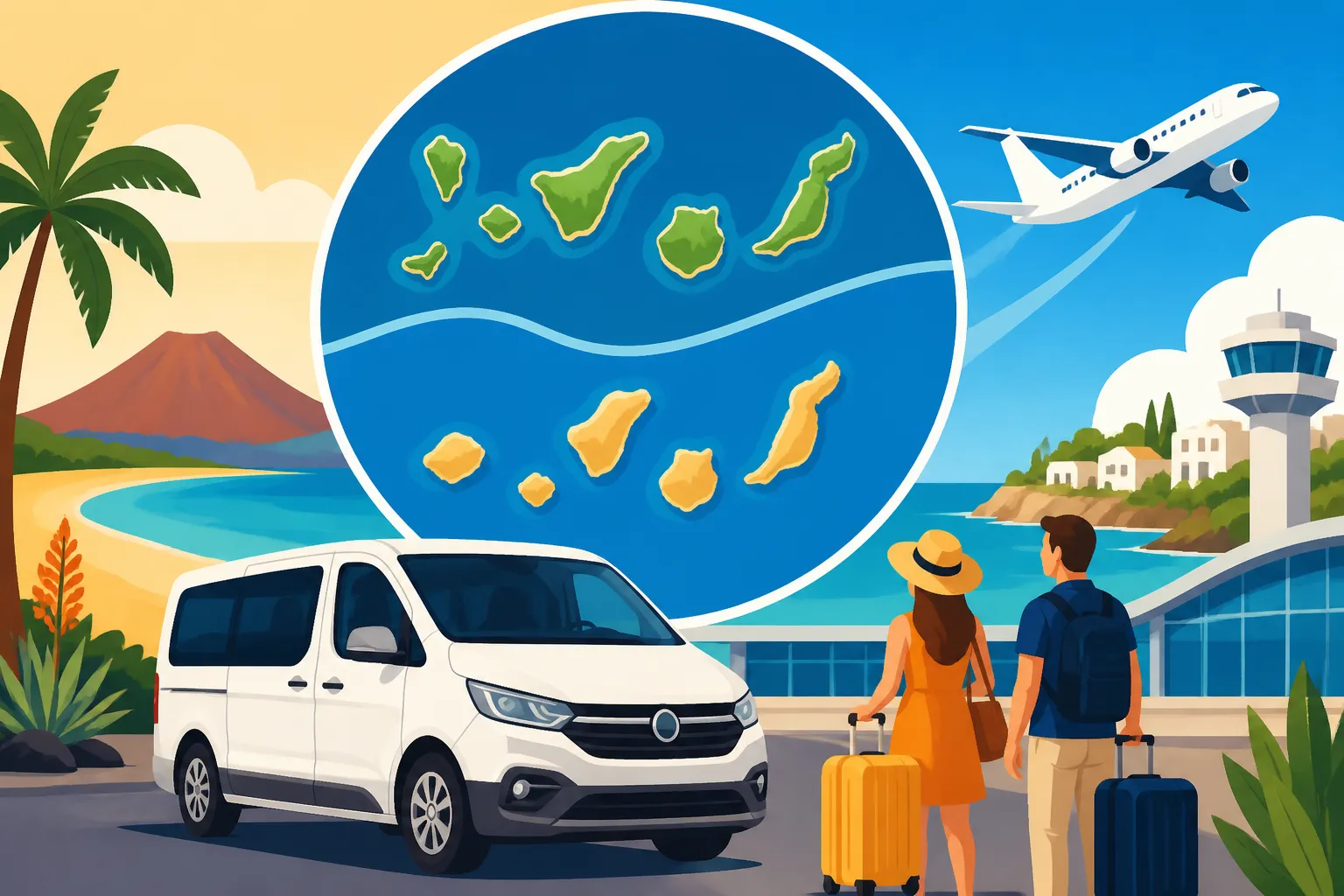
Canary and Balearic Airport Transfers: Island-by-Island Options
Ah, the Spanish islands! They call to us with promises of sun, sea, and sangria, don't they? But let's be real for a moment: after a long flight, often with a connection, the last thing you want to do is grapple with unfamiliar transport options, language barriers, and figuring out how to get from the airport to your hard-earned slice of paradise. It's a common expat lament, trust me. This guide is going to walk you through the nitty-gritty of airport transfers in both the stunning Canary and Balearic Islands, offering you real-world advice and showing you how platforms like Omio can be your absolute best friend in making your arrival as smooth as a glass of Rioja.
Disclosure: This post may contain affiliate links. We may earn a commission at no extra cost to you if you make a purchase through these links. Read full disclosure.
Navigating Airport Transfers in the Canary Islands
The Canary Islands, with their volcanic landscapes and year-round sunshine, are a magnet for travelers. But getting from your arrival gate to your specific resort, be it in the bustling south of Tenerife or the calm dunes of Fuerteventura, can feel like a mini-adventure in itself. Don't worry, I've done it countless times, and I've got some hard-won wisdom to share.
Gran Canaria (LPA) to City Centers and Resorts
Landing at Gran Canaria Airport (LPA), also known as Gando Airport, you're looking at a few primary destinations: the vibrant capital Las Palmas de Gran Canaria to the north, or the popular tourist hubs like Maspalomas, Playa del Inglés, and Puerto Rico in the south. The airport is conveniently located, about 18 km from Las Palmas and around 25-35 km from the southern resorts.
For those heading to Las Palmas, the public bus system is incredibly efficient and budget-friendly. Global Salcai buses (look for "Global" branding) operate frequent routes directly from the airport. Line 60 will whisk you straight to the San Telmo and Santa Catalina bus stations in Las Palmas. It's clean, usually air-conditioned, and provides a true local experience. Just remember, cash fares are typical, though some buses are starting to accept card payments. For southern resorts, routes like the 66 and 90 are your go-to. If you're traveling with heavy luggage or small children, navigating public transport can be a bit of a squeeze during peak times, even if it is straightforward. This is where options found on platforms like Omio can shine, allowing you to compare bus schedules and even pre-book tickets without the on-the-spot hassle.
Taxis are readily available outside the arrivals hall, painted in white with a green light on top. They're a reliable option, especially if you're a group splitting the fare or if you've just endured a long flight and want direct door-to-door service. However, they are significantly more expensive than the bus. Always confirm the approximate fare with the driver before setting off, or ensure the meter is running. For peace of mind, many people opt for private shuttle services, which can be booked in advance. These are particularly useful if you have an awkward arrival time or a lot of gear. Services can be found and compared on reputable sites, and Omio often lists options for private and shared transfers, providing clear pricing upfront.
Tenerife South (TFS) & North (TFN) to Major Resorts
Tenerife, the largest of the Canary Islands, has two main airports: Tenerife South (Reina Sofía, TFS) and Tenerife North (Ciudad de La Laguna, TFN). Most international flights land at TFS, which is closer to the island's popular southern resorts like Playa de las Américas, Los Cristianos, and Costa Adeje. TFN primarily handles inter-island and mainland Spanish flights, and it's nearer to the capital, Santa Cruz, and the picturesque north.
From TFS, buses are a popular choice. The Titsa bus company runs excellent services. Line 40 connects directly to major southern resorts, while Line 111 takes you to Santa Cruz de Tenerife. Again, it's efficient, but packing into a bus with a suitcase after a flight isn't everyone's cup of tea. Booking a shared shuttle or private transfer in advance can save you a lot of grief. For those landing at TFN, buses like Line 20 will take you to Santa Cruz, while others connect to La Laguna. Keep in mind that transfers between TFS and TFN are also possible via bus, typically taking about an hour and a half, which is useful if you have an onward inter-island flight.
Renting a car is another viable option, especially if you plan to explore beyond your resort. The roads in Tenerife are generally well-maintained, and having your own wheels gives you immense freedom. You can find competitive car rental deals and compare options, often even through a platform like Omio which aggregates different transport methods. Just remember to familiarize yourself with local Driving in Spain: Road Rules, Fines, and What Surprises Expats before hitting the road. Parking can be a bit tricky in some resort areas, so always check with your accommodation beforehand.
Fuerteventura (FUE) and Lanzarote (ACE): Getting to Your Accommodation
Fuerteventura Airport (FUE) and Lanzarote Airport (ACE), also known as César Manrique-Lanzarote Airport, serve their respective islands with similar transfer options. Both airports are relatively compact, making navigation straightforward.
For Fuerteventura, FUE is located near the capital, Puerto del Rosario. Buses (Tiadhe lines) connect the airport to Puerto del Rosario, Caleta de Fuste (a popular family resort), and other major towns like Corralejo in the north and Morro Jable in the south. Services are less frequent than in Gran Canaria or Tenerife, so checking the schedule in advance is highly recommended. Many package holidaymakers will have transfers included, but independent travelers will need to arrange their own. Taxi ranks are outside the arrivals hall, and while convenient, they can be pricey for longer journeys to the north or south of the island.
Lanzarote's ACE airport is just 5 km from the capital, Arrecife, and close to popular resorts like Puerto del Carmen and Costa Teguise. Public buses (Intercity Bus) are available, with routes connecting to Arrecife and the main resorts. However, a direct bus to specific hotels might require a change in Arrecife. For a more direct route, taxis are always an option, or consider a pre-booked shuttle. Both islands are fantastic for exploring by car, so picking up a rental directly from the airport is a popular choice for many visitors. This gives you the flexibility to visit unique spots like the Timanfaya National Park in Lanzarote or the stunning beaches of El Cotillo in Fuerteventura at your own pace. If you're contemplating a car, be sure to check out Renting a Car in Spain: Requirements, Insurance, and Driving Tips for valuable insights.
Seamless Arrivals in the Balearic Islands
The Balearic Islands – Mallorca, Ibiza, Menorca, and the tiny Formentera – each offer their own distinct vibe, from Mallorca's majestic mountains to Ibiza's legendary nightlife. Getting from their well-connected airports to your final destination usually involves a mix of buses, taxis, and pre-booked services.
Mallorca (PMI) to Palma and Beyond
Palma de Mallorca Airport (PMI), also known as Son Sant Joan Airport, is the third busiest airport in Spain, especially bustling during the summer months. It's the main gateway to Mallorca and is just about 8 km east of the capital city, Palma.
From PMI, you have a couple of solid options. The EMT Palma bus service is excellent. Route A1 runs directly from the airport to Palma city center, stopping at key points like Plaza de España. It's frequent, reliable, and affordable. If your accommodation is in a different part of the city or a nearby coastal town like Can Pastilla or El Arenal, this bus will get you close. For destinations further afield, like Alcudia, Magaluf, or Cala d'Or, you'll likely need to connect via Palma's main bus station (Estació Intermodal in Plaza de España) or opt for a direct shuttle service.
Taxis are always available right outside the terminal. They offer convenience, but during peak season, expect queues. A ride to central Palma will set you back around €20-€25. For longer distances to the north or east of the island, the fare can quickly add up. This is where many expats and tourists find value in booking private transfers through platforms like Omio. Not only can you compare prices, but you can also secure your transport in advance, avoiding long queues and ensuring a smooth journey directly to your resort, regardless of whether it's the buzzing scene of Magaluf or the tranquil coves of Cala Figuera. Don't forget, if you plan to hit the town, understanding Spanish Customs, Etiquette, and Social Life can make your experience even richer.
Ibiza (IBZ): From Airport to Party or Peace
Ibiza Airport (IBZ) is the primary entry point to the island, located about 7 km southwest of Ibiza Town. Whether you're here for the legendary superclubs or the serene beaches, getting to your chosen spot is pretty straightforward.
The local public bus service (Línea 10) connects the airport to Ibiza Town (Eivissa), the port, and Sant Jordi. During the summer, these buses are frequent and extend their operating hours. It's the cheapest way to travel, costing just a few euros. However, if you're heading to San Antonio, Santa Eulalia, or one of the many secluded villas, you'll need to transfer buses in Ibiza Town, which can be a bit cumbersome with luggage.
Taxis are plentiful at IBZ, but like Mallorca, demand can be high in summer. Be prepared for potential waits and higher fares, especially if you're venturing across the island. For those with a specific destination or larger groups, a pre-booked private transfer is often the most sensible and stress-free solution. These services can be easily arranged online, and checking various providers through Omio can help you find the best deal, whether it's a standard car, a minivan for your crew, or even a luxury transfer. Given the island's popularity, securing your transport ahead of time, especially during July and August, is a smart move.
Menorca (MAH) and Formentera: Quieter Transfers
Menorca Airport (MAH) serves the tranquil island of Menorca, known for its pristine beaches and relaxed atmosphere. The airport is located just 4.5 km southwest of the capital, Mahón.
From MAH, public buses connect to Mahón bus station (Línea 10), from where you can catch onward connections to popular resorts like Ciutadella, Cala en Porter, or Arenal d'en Castell. Bus services are reliable but less frequent than on larger islands. Taxis are also available, offering direct service to your accommodation, but once again, the cost can escalate for destinations further across the island. Many visitors choose to rent a car at the airport to fully explore Menorca's charm and hidden coves, which is something I highly recommend. It's a small island, perfect for leisurely drives. Comparing options on Omio can include car rentals, which can simplify your planning.
Formentera doesn't have its own airport. To reach this beautiful, car-free (mostly) island, you must first fly into Ibiza (IBZ) and then take a ferry from Ibiza Town port. Fast ferries take about 30 minutes. Once you arrive at La Savina port in Formentera, you can typically rent a scooter, bicycle, or use the local buses to reach your destination. While Omio doesn't directly handle the ferry portion to Formentera, it's invaluable for getting you to Ibiza Town port from IBZ. Think of it as a crucial first step in your journey to this idyllic destination. If you're unsure about currency or payments, a quick look at Money for Travel in Spain: Cards, Cash, and ATMs can be helpful.
Why Pre-Booking Your Island Transfer is a Game-Changer
Trust me, as someone who’s been navigating the administrative joys and logistical quirks of Spain for years, anything you can tick off your list before you land is a huge win. Airport transfers are top of that list, especially on the islands. It’s not just about convenience; it's about peace of mind, cost-efficiency, and frankly, avoiding unnecessary stress.
The Convenience Factor: Time and Stress Savings
Imagine this: you've just stepped off a plane, perhaps you're a bit jet-lagged, or maybe you're buzzing with excitement but also a little tired. The last thing you want to do is figure out which bus line to take, decipher a Spanish timetable, or haggle with a taxi driver, all while juggling luggage and perhaps impatient travel companions. Booking your transfer in advance through a reliable platform like Omio completely eliminates this immediate post-arrival scramble.
With a pre-booked transfer, you know exactly where to go, who to look for, and that your ride is waiting. There's no queuing for tickets, no fumbling for cash, and no trying to explain your destination in broken Spanish after a long journey. This is especially vital if you're arriving late at night when public transport might be less frequent, or if you have an early morning flight and need a guaranteed pickup. It truly transforms the beginning and end of your trip from a potential headache into a smooth, seamless transition. This level of planning is key to a relaxing holiday, allowing you to immerse yourself in the local culture right from the start, whether it's enjoying Spanish Tapas Culture: How to Order and Where to Go or simply relaxing by the sea.
Cost-Effectiveness and Avoiding Surprises
While public transport can be cheaper, pre-booking a private or shared shuttle often offers better value than a last-minute taxi, particularly for longer distances or larger groups. When you book through Omio, you get to compare prices from various reputable providers side-by-side. This transparency means no hidden fees, no surge pricing during busy periods, and no unpleasant surprises when you arrive at your destination. You pay upfront, so the cost is fixed, allowing you to budget effectively for your trip.
Moreover, if you're traveling as a family or with a significant amount of luggage, the cost of multiple bus tickets can sometimes come close to a shared shuttle, which offers much more comfort and directness. For a group of four, a private transfer can often work out to be very competitive per person. Omio makes it easy to see these comparisons and pick the option that best suits your budget and needs. It’s about being smart with your money and investing a little in comfort for a much better start to your holiday. For overall budgeting tips, you might find our guide on Cost of Living in Spain: Realistic Budgets and Savings Tips useful for your entire stay.
Practical Tips for Smooth Island Airport Transfers
Even with everything booked, a few extra tips can make all the difference when landing in a new place, especially on a bustling Spanish island. Preparation is your best friend.
Understanding Different Transport Types
Before you arrive, take a moment to understand the different transport options available at your specific airport and to your destination.
- Public Buses: Generally the most economical option. They are reliable and often connect major points, but might require transfers or a walk to your final destination. Fares are usually paid directly to the driver, sometimes cash only, so have small bills or coins handy. For example, in Mallorca, the A1 bus from Palma Airport is a lifesaver. Keep an eye out for information on Public Transport Discounts in Spain: Youth, Senior, and Resident Options if you qualify.
- Taxis: Convenient for door-to-door service. Look for official taxis at designated ranks. Fares are metered, but a surcharge for airport pickups or luggage might apply. Always ensure the meter is running or agree on a price beforehand if it's a fixed route.
- Shared Shuttles: A great middle-ground. These are pre-booked services that pick up multiple passengers heading in the same general direction. They're cheaper than a private taxi but more direct than a public bus. They might make several stops before yours, so factor in extra travel time. Omio is excellent for finding and comparing these.
- Private Transfers: The ultimate in convenience. You get a dedicated vehicle and driver for yourself or your group. It’s door-to-door, often with meet-and-greet service in the arrivals hall. Perfect for families, those with lots of luggage, or if you simply value speed and comfort above all else. Again, using Omio lets you easily book these options.
- Car Rental: Provides the most flexibility for exploring the islands independently. However, remember to factor in the cost of fuel, parking, and insurance. Book well in advance, especially during peak season, to secure the best rates and car type.
Here’s a quick comparison of typical options:
| Transport Type | Pros | Cons | Typical Cost (Approx.) | Best For |
|---|---|---|---|---|
| Public Bus | Cheapest, authentic local experience | Can be crowded, less direct, limited hours, potential transfers | €3-€10 | Budget travelers, solo, light luggage |
| Shared Shuttle | More affordable than taxi, door-to-door | Multiple stops, waiting for other passengers, fixed schedule | €10-€25 | Couples, small groups, moderate luggage |
| Taxi | Direct, fast, convenient | Most expensive, potential queues, surge pricing, language barrier | €20-€60+ | Convenience, groups splitting fare, late arrivals |
| Private Transfer | Door-to-door, personalized, no waiting, comfort | Higher cost than bus/shared shuttle | €40-€100+ | Families, large groups, luxury, fixed budget |
| Car Rental | Freedom to explore, direct from airport | Cost of rental, fuel, parking, insurance, navigation | Varies (Daily + Fuel) | Explorers, long stays, off-the-beaten-path |
Language Barriers and Local Nuances
While most airport staff and tourist-facing businesses will speak some English, don't assume everyone will, especially if you venture beyond the main tourist zones. Having a few basic Spanish phrases in your back pocket can go a long way. "Hola" (hello), "Gracias" (thank you), "Por favor" (please), and "Cuánto cuesta?" (how much does it cost?) are invaluable.
If you're relying on public transport, knowing the Spanish names of your stops or destination is crucial. Write down your hotel address and the exact name of your destination, just in case. Apps like Google Maps are fantastic for real-time bus tracking and navigation, but ensure you have mobile data access. You might want to consider Mobile Data and eSIMs for Travel in Spain before you land.
Remember, punctuality in Spain can sometimes be a bit more "flexible" than you might be used to in other countries. Buses might run a few minutes late, or a taxi might take a bit longer to arrive. Try to embrace the relaxed pace, but always build in a buffer, especially if you have a connecting flight or a timed activity. Patience is a virtue, particularly in a foreign country!
In essence, while the islands are generally well-equipped to handle tourists, a little proactive planning with your airport transfers can drastically improve your overall travel experience. By leveraging tools like Omio to compare and book your journey, you can truly start enjoying your Spanish island adventure from the moment you touch down. So go on, explore those options, book your ride, and get ready for some sun!
Disclaimer
Please note that while I strive to provide the most current and accurate information based on my experience and available data, travel information, prices, and regulations in Spain can change. It is always advisable to double-check specific details with official sources, transport providers, or your accommodation closer to your travel date. This guide is for informational purposes only and does not constitute official advice.