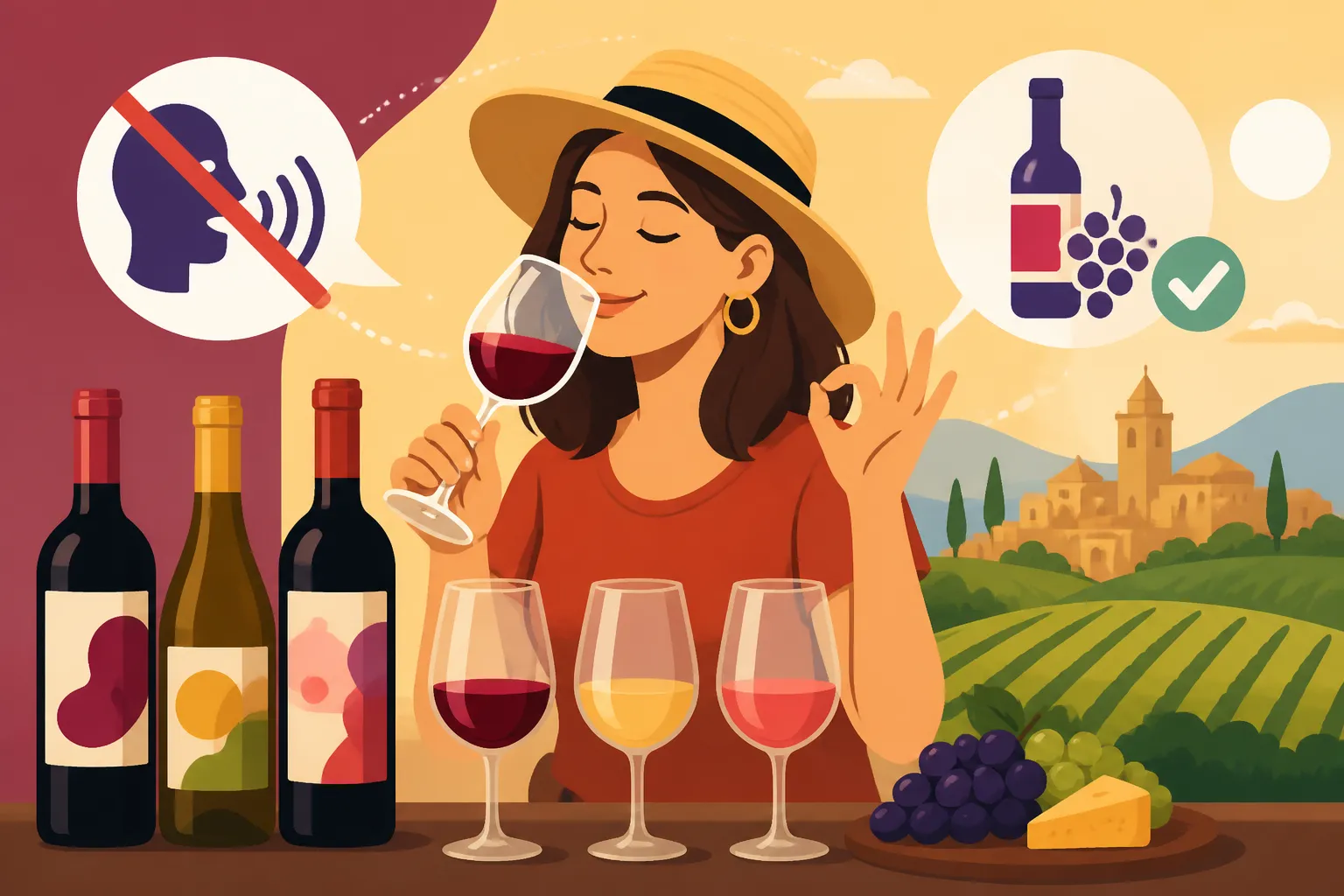
How to Try Spanish Wine Without Knowing the Language
Navigating the vibrant world of Spanish wine can feel a little daunting when you're a foreigner, especially if your Spanish extends only to "Hola" and "Gracias." Many expats and tourists find themselves intimidated by extensive wine lists or the sheer number of bottles in a local bodega, unsure how to articulate what they're looking for. But don't let a language barrier keep you from enjoying some of the world's most incredible wines! This guide will empower you with practical strategies, visual cues, and a few key phrases to confidently explore and savor Spanish wines, no matter your linguistic prowess.
Disclosure: This post may contain affiliate links. We may earn a commission at no extra cost to you if you make a purchase through these links. Read full disclosure.
Decoding the Spanish Wine Scene: A Non-Verbal Approach
Before you even open your mouth, understanding a few visual cues and basic categories can make a world of difference. Spain's wine culture is rich and diverse, and even a superficial understanding of its structure can guide your choices.
Understanding Basic Wine Categories Visually
Think of this as learning to recognize wine by its "appearance" rather than its "name." Most wine establishments, from a bustling tapas bar to a fine dining restaurant, will present wines in a way that allows for visual identification.
When you look at a wine list or a shelf full of bottles, you'll primarily be looking for four main types:
- Tinto (Red): These are usually in darker, often greenish, bottles. The labels will often feature deeper color schemes or images evocative of red grapes. If you see a bottle that's obviously red wine, you're on the right track. Spain is famous for its powerful red wines, made from grapes like Tempranillo, Garnacha, and Monastrell.
- Blanco (White): Typically presented in lighter, often clear or pale green bottles, making the lighter hue of the wine visible. Labels tend to be brighter, perhaps featuring lighter colors or images of white grapes. Spanish white wines, from regions like Rías Baixas and Rueda, are gaining international recognition for their crispness and aromatics.
- Rosado (Rosé): These wines are also usually in clear or light-colored bottles, showcasing their characteristic pink or salmon tones. Labels might have a fresh, summery aesthetic. While sometimes overlooked, Spanish rosados can be delightful, ranging from very light and dry to more fruit-forward.
- Cava (Sparkling): This is Spain's answer to Champagne, and it's fantastic! You'll usually find Cava in heavier, often darker bottles, with a distinct foil-wrapped cork and cage. The labels often proudly display "Cava" and might have a celebratory feel. Don't confuse it with other espumosos (sparkling wines) which might not carry the D.O. Cava designation.
Beyond the color, keep an eye out for aging classifications on the labels, especially for red wines. This can give you a hint about its style without needing to read a single word of Spanish.
- Joven: Means "young." These wines are typically released within a year of harvest and see little to no oak aging. They are fresh, fruity, and meant to be drunk young.
- Crianza: Red wines are aged for at least two years, with at least six months in oak barrels. White and rosé wines require at least six months of aging, with a minimum of four months in oak. You'll often see these terms prominently on the label.
- Reserva: Red wines are aged for at least three years, with at least one year in oak barrels. White and rosé wines are aged for at least two years, with a minimum of six months in oak. These will generally have more complexity and a smoother texture.
- Gran Reserva: Only produced in exceptional vintages, these red wines are aged for a minimum of five years, with at least 18 months in oak. White and rosé wines require at least four years of aging, with a minimum of six months in oak. These are the most mature and complex wines, offering rich aromas and flavors.
Recognising Key Spanish Wine Regions and Varietals
You don't need to be able to perfectly pronounce every Spanish wine region or grape varietal, but simply recognizing their names can guide your choices. Many menus and bottle labels prominently feature these names.
Here are some of the most famous regions and the grapes they are known for:
- Rioja: This is perhaps Spain's most famous wine region, primarily known for its elegant red wines made predominantly from Tempranillo grapes. You'll often see "Rioja" on bottle labels and wine lists.
- Ribera del Duero: Another powerhouse for red wines, also focusing heavily on Tempranillo (locally known as Tinto Fino or Tinta del País). Ribera del Duero wines are often bolder and more structured than those from Rioja.
- Priorat: A small but prestigious region in Catalonia known for its intense, mineral-driven red wines, often blends of Garnacha (Grenache) and Cariñena. These are typically higher-priced and very distinct.
- Rías Baixas: Located in Galicia, this region is renowned for its crisp, aromatic white wines made from the Albariño grape. If you love seafood, an Albariño is often the perfect pairing.
- Rueda: This region in Castilla y León is famous for its vibrant white wines made from the Verdejo grape, known for their herbaceous notes and slight bitterness.
- Jerez (Sherry): A unique fortified wine region in Andalusia. While very different from table wine, understanding that "Jerez" refers to Sherry can prevent surprises. There are many styles, from dry Fino and Manzanilla to sweet Pedro Ximénez.
By simply scanning for these names on a menu or a bottle, you can make an educated guess about the style of wine you're about to enjoy. For example, if you see "Rioja Tinto Crianza," you know it's a red wine from Rioja with a certain level of aging.
Practical Strategies for Ordering Wine in Bars and Restaurants
Even without a shared language, ordering wine in a Spanish establishment is entirely achievable. The key is to be confident, use your eyes, and embrace the universal language of gestures.
The Power of Pointing and Gestures
This is your secret weapon. Don't underestimate how much you can communicate without speaking.
If you're at a bar with bottles on display:
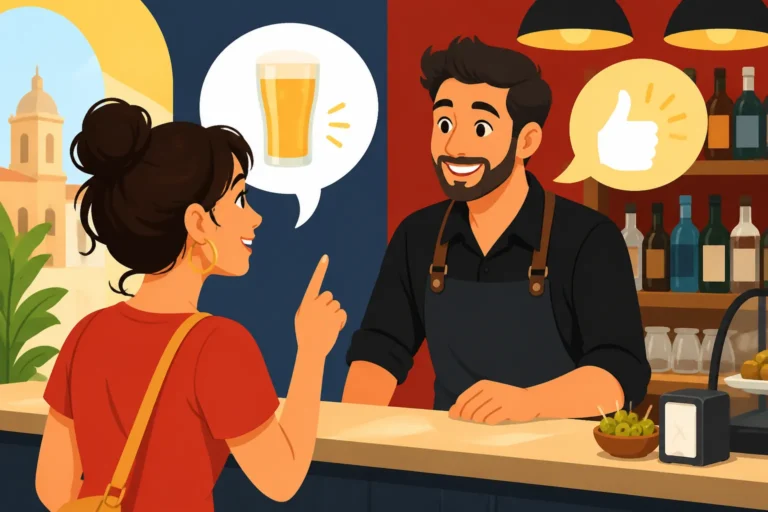
- Look around: See what others are drinking. If a glass of wine looks appealing, simply point to it and make a "one" gesture with your finger. The bartender will usually understand.
- Point to a bottle: If you see a specific bottle on the shelf that catches your eye, point directly to it. Then, clearly indicate if you want "una copa" (a glass) or "una botella" (a bottle). A simple hand gesture like miming a glass or bottle usually works.
- The wine list: If there's a wine list (carta de vinos), open it up, find the section for tinto, blanco, or rosado, and point to the wine you want. You can then say "una copa" or "una botella," or just make the gesture.
This straightforward approach works in almost any setting. Remember to always follow up with a polite "Gracias!"
Using Technology: Translation Apps and Photo Menus
In this digital age, your smartphone is an invaluable tool for bridging language gaps.
- Camera Translation: Apps like Google Translate offer a fantastic feature where you can point your phone's camera at text, and it translates it in real-time on your screen. This is a game-changer for deciphering entire wine lists or bottle labels. It might not be perfect, but it will give you the gist.
- Pre-Translated Phrases: Before you head out, you can type in a few key phrases into your translation app and have them ready. For example, "Dry red wine, please" or "Crisp white wine." You can then show the translated text to your server.
- Photo Library: Did you enjoy a particular wine last night? Take a photo of the bottle's label! When you're at a new bar or bodega, you can simply show the photo to the staff and ask "Tienes esto?" (Do you have this?) or "Algo similar?" (Something similar?).
While companies like Omio are great for sorting out your travel between wine regions, it's the translation apps that will truly shine when you're in the moment, trying to order that perfect glass.
Trusting Recommendations (with a caveat)
Sometimes, the easiest way to get a good wine is to ask for a recommendation.
You can try:
- "¿Una recomendación, por favor?" (A recommendation, please?)
- "¿Un tinto, por favor?" (A red, please?) – then follow with "Una recomendación?"
- "¿Un blanco seco, por favor?" (A dry white, please?) – again, followed by "Una recomendación?"
Most servers and bartenders in Spain are proud of their local wines and happy to suggest something. However, a small caveat: sometimes the recommendation might lean towards a more expensive option. If you have a budget in mind, you can try to indicate it with a gesture (e.g., pointing to a mid-range price on the menu) or even show a number on your fingers. Learning a few basic Spanish numbers is also incredibly helpful for this.
Basic Spanish Phrases for Wine Lovers
Even a few broken words can go a long way and are almost always met with appreciation. Don't worry about perfect pronunciation; effort counts!
Here are some essentials:
- "Tinto, por favor." (TEEN-toh, por fah-VOR) – Red wine, please.
- "Blanco, por favor." (BLAHN-koh, por fah-VOR) – White wine, please.
- "Rosado, por favor." (roh-SAH-doh, por fah-VOR) – Rosé wine, please.
- "Cava, por favor." (KAH-vah, por fah-VOR) – Cava, please.
- "Una copa de…" (OO-nah KOH-pah deh…) – A glass of… (point to the bottle or menu item).
- "Una botella de…" (OO-nah boh-TEH-yah deh…) – A bottle of… (point to the bottle or menu item).
- "Seco." (SEH-koh) – Dry. (You can add this after "Tinto" or "Blanco" for clarification).
- "Dulce." (DOOL-seh) – Sweet.
- "Con cuerpo." (kon KWEHR-poh) – Full-bodied.
- "Ligero." (lee-HEH-roh) – Light-bodied.
- "Gracias." (GRAH-thyahs/see-ahs) – Thank you.
- "¿Tienes…?" (TYEH-nes) – Do you have…? (point to a photo or item).
Combining these simple phrases with pointing and a friendly smile will get you far. If you're struggling to articulate, remember that gestures and a translation app are always there to back you up. You can find more helpful phrases in our guide on How to Order Food and Drinks in Spanish: A Practical Phrasebook.
Navigating Wine Shops (Bodegas and Supermarkets) Like a Pro
Buying a bottle of wine to enjoy back at your accommodation or to take home as a souvenir is a different experience than ordering a glass at a bar. Wine shops (bodegas, vinotecas) and even supermarkets offer a vast array, and here, visual cues and a little preparation become even more important.
Visual Cues in Wine Shops
Walk into a Spanish wine shop, and you'll likely see a well-organized layout, even if you can't read all the signs.
- Organization by Region: Many specialized wine shops (vinotecas) will arrange their wines by D.O. (Denominación de Origen). You'll see shelves clearly labeled "Rioja," "Ribera del Duero," "Rías Baixas," "Priorat," etc. If you know you prefer a Rioja, head straight to that section.
- Organization by Type: Wines might also be grouped by color (Tinto, Blanco, Rosado, Cava) or even by price point (from entry-level to premium).
- Promotional Displays: Keep an eye out for special displays or "ofertas" (offers/sales). These are often clearly marked and can be a great way to discover new wines at a good price.
- Staff Presence: While not always English-speaking, the staff in dedicated wine shops are usually very knowledgeable and passionate. Don't be afraid to try and engage them, even if you need to rely on a translation app.
In larger supermarkets, the wine section is usually clearly divided by red, white, rosé, and sparkling, sometimes with smaller sections for regions or price levels.
Asking for Help (Simplified)
Even without fluent Spanish, you can initiate a conversation in a wine shop and get the help you need.
Start with a polite "Hola, ¿me puedes ayudar, por favor?" (Hello, can you help me, please?). Then:
- State your preference: "Quiero un tinto, por favor." (I want a red wine, please). Or "Busco un blanco seco." (I'm looking for a dry white).
- Indicate style: You can use simple adjectives:
- "Algo afrutado?" (Something fruity?)
- "Algo suave?" (Something smooth/soft?)
- "Algo fuerte?" (Something strong/bold?)
- "Para acompañar pescado?" (To accompany fish?) or "Para carne?" (For meat?)
- Point to a price range: If you see wines priced at, say, 10€, 20€, and 30€, you can point to the shelf that aligns with your budget and say "¿Aquí?" (Here?).
- Show a photo: Again, a photo of a label you enjoyed previously is incredibly helpful. "Algo como esto?" (Something like this?).
- Use a translation app: For more complex requests, type it into your app and show the staff. For example, "I am looking for a light-bodied red wine that pairs well with pasta" will usually get you a good recommendation.
Many staff members in tourist areas might have some basic English, and even if they don't, they'll appreciate your effort to communicate and will usually try their best to understand. Consider taking a wine tasting or tour with companies like GetYourGuide or Booking.com, as these experiences often have English-speaking guides who can teach you key terms and help you confidently navigate purchases in the future.
Reading Labels: What to Look For
Once you've narrowed down your choices, quickly scanning the labels for key information can confirm if a bottle is what you're looking for.
- D.O. (Denominación de Origen): This is a crucial quality assurance mark, indicating the wine comes from a specific, regulated region. Look for it! It's like a stamp of authenticity.
- Alcohol Percentage (% vol.): Typically between 11% and 15% for table wines. This gives you an idea of its strength.
- Año (Year/Vintage): The year the grapes were harvested. This is important for understanding the age of the wine, especially for crianza, reserva, or gran reserva.
- Varietales de Uva (Grape Varietals): Some labels will clearly state the grapes used (e.g., "Tempranillo," "Garnacha," "Albariño"). This is helpful if you know what grapes you prefer.
- Bodega / Productor (Winery / Producer): The name of the producer. If you've enjoyed wines from a particular bodega before, look for their name.
- Embotellado por… (Bottled by…): Indicates where the wine was bottled.
Remember, a little visual sleuthing combined with a few key phrases can unlock a whole world of Spanish wine for you.
Enhancing Your Spanish Wine Experience
Beyond simply ordering and purchasing, there are many ways to deepen your appreciation for Spanish wine, even if Spanish isn't your native tongue.
Wine Tasting Experiences and Tours
One of the absolute best ways to learn about Spanish wine, its regions, and its culture without a language barrier is to join a dedicated wine tasting or tour. Many regions famous for wine, such as Rioja, Ribera del Duero, or Catalonia (for Cava), offer tours specifically designed for English speakers.
These tours typically include:
- Visits to several bodegas (wineries).
- Guided tastings, often with explanations of the wines, grapes, and production process in English.
- Opportunities to meet winemakers or their representatives.
- Sometimes, even a meal paired with the wines.
Companies like GetYourGuide frequently list English-speaking wine tours across Spain, making it incredibly easy to book and enjoy a day immersing yourself in the local wine scene. You'll learn far more in a few hours on a tour than you might in weeks of trying to decipher labels. Many bodegas in popular tourist areas also offer individual tastings and have staff who speak multiple languages. You might even discover some fascinating details about Spanish Wine Regions: A Beginner's Guide through these experiences.
Pairing Wine with Spanish Cuisine
Spanish wine and food are intrinsically linked. You don't need to speak Spanish to appreciate how beautifully they complement each other. Observing locals and understanding some basic pairings can greatly enhance your dining experience.
General guidelines:
- Red Wine (Tinto): Best with rich, savory dishes like roasted meats, cured ham (jamón), and hearty stews. A classic Rioja or Ribera del Duero is sublime with a good steak or a plate of ibérico. You can learn more about how food fits into the local schedule by reading Spanish Meal Times and Dining Etiquette Explained.
- White Wine (Blanco): Perfect with seafood, poultry, light salads, and rice dishes like paella. A crisp Albariño or Verdejo is a natural partner for fresh fish and shellfish.
- Rosé Wine (Rosado): Versatile and great with lighter meats, pasta dishes, salads, and even some spicier tapas.
- Cava (Sparkling): Not just for celebrations! Cava is incredibly food-friendly and pairs wonderfully with appetizers, fried dishes, and even complex tapas. Its acidity can cut through richness, making it a refreshing choice throughout a meal.
Experimenting with pairings is part of the fun. Don't be afraid to ask for "una recomendación para acompañar [fish/meat]" (a recommendation to accompany [fish/meat]) using the phrases you've learned. You might also enjoy our guide on Regional Spanish Dishes Every Visitor Should Try to find some fantastic food pairings.
Documenting Your Discoveries
To truly build your personal Spanish wine "vocabulary" without needing to learn the language, document your experiences.
- Take Photos: Every time you enjoy a wine you particularly like, take a photo of the bottle's label. This is your personal visual catalog. You can refer back to it when ordering in a shop or trying to find something similar.
- Use Apps like Vivino: This popular app allows you to scan a wine label with your phone's camera, and it will immediately pull up information about the wine, including tasting notes, ratings, and even where to buy it, all in your preferred language. It's like having an instant sommelier in your pocket!
- Keep a Small Journal: If you're old school, jot down the name (or a phonetic approximation), the region, and a few simple notes (e.g., "fruity," "smooth," "good with seafood").
By keeping track of what you enjoy, you'll slowly start to recognize patterns in regions, grapes, or bodegas that align with your taste, making future choices even easier.
Here's a quick reference table for some basic Spanish wine terms:
| English Term | Spanish Term | Pronunciation (approx.) | Context / Meaning |
|---|---|---|---|
| Red | Tinto | TEEN-toh | Red wine |
| White | Blanco | BLAHNK-oh | White wine |
| Rosé | Rosado | roh-SAH-doh | Rosé wine |
| Sparkling | Cava / Espumoso | KAH-vah / es-poo-MOH-soh | Spain's sparkling wine (Cava specific D.O.) |
| Glass | Copa | KOH-pah | A glass of wine |
| Bottle | Botella | boh-TEH-yah | A bottle of wine |
| Dry | Seco | SEH-koh | Dry (not sweet) |
| Sweet | Dulce | DOOL-seh | Sweet |
| Full-bodied | Con cuerpo | kon KWEHR-poh | Robust, rich wine |
| Light-bodied | Ligero | lee-HEH-roh | Light, delicate wine |
| Young | Joven | HO-ven | Young wine, little to no aging |
| Aged | Crianza / Reserva / Gran Reserva | kree-AHN-thah / reh-SEHR-vah / grahn reh-SEHR-vah | Terms indicating specific aging periods in oak/bottle |
| Winery / Cellar | Bodega | boh-DEH-gah | Winery, wine cellar |
| Region of Origin | Denominación de Origen (D.O.) | deh-noh-meen-ah-THYOHN deh oh-REE-hen | Quality designation for specific wine regions |
| Year / Vintage | Año | AH-nyoh | The year the grapes were harvested |
| Grape (singular) | Uva | OO-vah | Grape |
| Please | Por favor | por fah-VOR | Please |
| Thank you | Gracias | GRAH-thyahs (Spain) | Thank you |
| Recommendation | Recomendación | reh-koh-men-dah-THYOHN | Recommendation |
| Do you have…? | ¿Tienes…? | TYEH-nes | Do you have…? |
| I want… | Quiero… | KYEH-roh | I want… |
Enjoying Spanish wine doesn't require you to be a fluent Spanish speaker or a sommelier. With these practical tips, a little confidence, and the readiness to point, gesture, and perhaps use a translation app, you'll be swirling, sipping, and savoring the fantastic wines of Spain like a seasoned expat in no time. ¡Salud!
Disclaimer
The information provided in this guide is for general informational purposes only and does not constitute professional advice. While we strive to offer accurate and up-to-date information for expats and tourists in Spain, regulations, prices, and available services can change. Always verify current details with official sources or local professionals.