How to Sort and Recycle Rubbish Correctly in Spain
The first time you walk down a Spanish street with a bag of mixed refuse, you might feel a sudden wave of paralysis standing before a row of five different brightly colored containers. I remember my first week in Madrid, clutching a pizza box and a wine bottle, feeling like I was participating in a high-stakes logic puzzle while my neighbors watched from their balconies. This guide decodes the Spanish recycling system so you can master the "cinco contenedores" and avoid the confusion of local waste management.
Disclosure: This post may contain affiliate links. We may earn a commission at no extra cost to you if you make a purchase through these links. Read full disclosure.
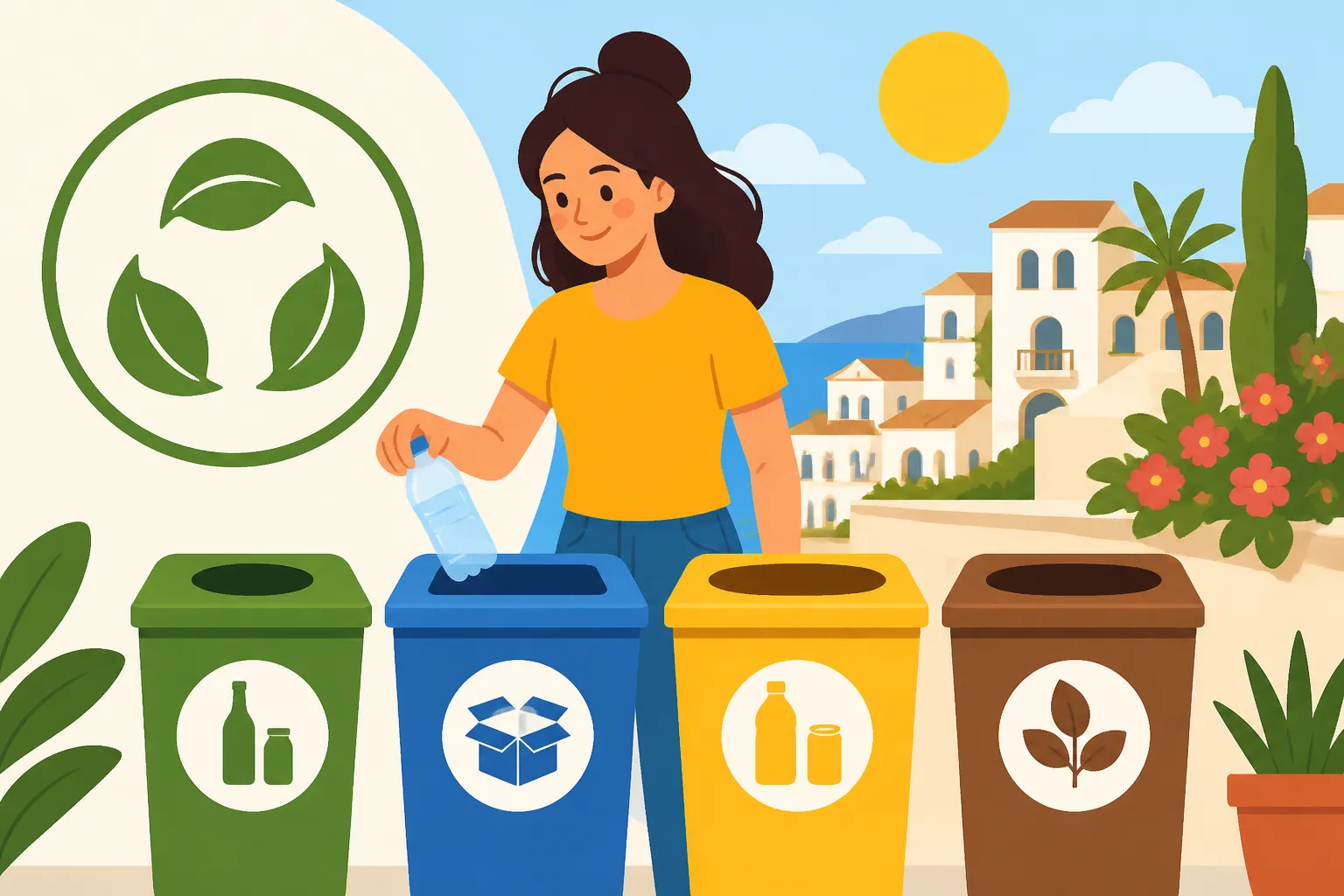
Decoding the Five Color Bin System in Spain
Recycling in Spain is managed at the municipal level, which means while the colors are generally standardized across the country, the specific rules can vary slightly from Seville to Santander. However, the core system relies on five distinct containers that you will see lined up on the sidewalk or tucked into "islas ecológicas" (underground bins). Understanding what goes where is the first step to feeling like a true local.
The Yellow Bin (Envases)
The yellow bin is perhaps the most misunderstood container in the Spanish system. Many expats arrive thinking that all plastic goes here. In reality, the yellow bin is strictly for "envases"—packaging. This includes plastic bottles, cleaning product containers, yogurt pots, plastic wrap, and even the silver trays from your takeaway meals. Metal is also welcomed here, so throw in your soda cans, tin cans from preserved white asparagus, and even metal jar lids.
One specific frustration for newcomers is realizing that a plastic toothbrush or a plastic toy does not belong in the yellow bin. Even though they are plastic, they aren't "packaging." If you are currently browsing Spotahome to find your first apartment, check the kitchen layout to see if there is enough space under the sink for a dedicated yellow-bin bag, as packaging tends to accumulate much faster than any other type of waste in a typical Spanish household.
The Blue Bin (Papel y Cartón)
The blue bin is for paper and cardboard. This is where your newspapers, magazines, old letters, and clean cardboard boxes go. It is vital to flatten your boxes before tossing them in. If you have been ordering household essentials from Amazon Spain to get your new bedroom set up, you will likely have a mountain of cardboard. Take the time to break these down; Spanish bins can fill up quickly, and leaving large boxes on the sidewalk is a surefire way to get a stern look from the building "portero."
A common mistake is throwing greasy pizza boxes or used paper napkins into the blue bin. If the paper is contaminated with food or oil, it cannot be recycled as paper and should be destined for the organic or grey bin instead. The golden rule for the blue bin is that the paper must be clean and dry.
The Green Bin (Vidrio)
The green bin, often shaped like a large igloo, is for glass. This includes wine bottles, beer bottles, and glass jars from jam or pulses. It is important to remove the lids (which usually go in the yellow bin) and the corks (which go in the organic bin) before tossing the glass inside.
Do not use the green bin for mirrors, light bulbs, or drinking glasses. These items are made of different types of glass or crystal that have different melting points and will contaminate the recycling batch. If you have shattered a glass while moving into your new place, that broken shards should actually go to a "punto limpio" or the grey bin, not the green igloo.
The Brown Bin (Orgánico)
The brown bin is the newest addition to many Spanish streets, often referred to as the "quinto contenedor." It is used for organic waste—food scraps, fruit peels, coffee grounds, and small garden waste. Using this bin correctly is one of the most impactful things you can do, as it allows the city to create compost.
To use the brown bin properly, you should ideally use "bolsas compostables" (compostable bags) rather than standard plastic ones. Many local supermarkets sell these. If your neighborhood hasn't rolled out the brown bin yet, your organic waste will likely still go into the grey bin for now. You can find more about how these local services are managed in our guide on Spanish Bureaucracy for Daily Life: Padrón, IDs, and Local Services.
The Grey Bin (Resto)
The grey bin (sometimes orange or dark green depending on the city) is for everything else that cannot be recycled in the other four containers. This is the "residual" waste bin. Think diapers, feminine hygiene products, pet litter, and dust from sweeping your floors. While it feels like the easiest bin to use, the goal of the Spanish system is to make this bag as small as possible.
| Bin Color | Material Category | Examples of What to Include | What to Keep Out |
|---|---|---|---|
| Yellow | Packaging (Envases) | Plastic bottles, cans, milk bricks, yogurt pots | Plastic toys, toothbrushes, CDs |
| Blue | Paper & Cardboard | Folded boxes, magazines, newspapers | Greasy pizza boxes, used napkins |
| Green | Glass (Vidrio) | Wine bottles, jars, perfume bottles | Mirrors, light bulbs, crystal glasses |
| Brown | Organic | Food scraps, coffee grounds, corks | Pet litter, diapers, plastic bags |
| Grey | Residual (Resto) | Diapers, dust, hygiene products | Batteries, electronics, paint |
Beyond the Sidewalk: Punto Limpio and SIGRE
Living in Spain eventually presents you with items that simply don't fit into the color-coded bins. If you try to shove an old toaster or a gallon of used cooking oil into the yellow bin, you are going to run into trouble. This is where the "Punto Limpio" comes in.
Using the Punto Limpio
Every major town has a "Punto Limpio"—a clean point or recycling center. There are "Puntos Limpios Fijos" (permanent sites usually on the outskirts of town) and "Puntos Limpios Móviles" (trucks that park at specific street corners on a set schedule). This is where you take electronics, batteries, old paint, furniture, and used cooking oil.
I highly recommend downloading your local city council's app to track the mobile recycling truck schedule. If you are using an eSIM from Airalo to stay connected while you get settled, you can easily pull up the map and find the nearest truck. For a deeper dive into these facilities, check out our article on How to Use Spain’s Recycling ‘Punto Limpio’ Facilities.
The SIGRE System for Medicines
Spain has a fantastic system for disposing of medication called SIGRE. You will find small white and green bins inside almost every "Farmacia." You should take all your expired or unused medications here, along with their original packaging and leaflets. This ensures that chemicals don't end up in the water supply and that the packaging is handled correctly. If you're still navigating the local medical landscape, our guide on Living in Spain as a Foreigner: Complete Housing & Daily Life Guide offers more context on pharmacies.
Practical Tips for Expat Recycling Success
Setting up your home for recycling success in Spain requires a bit of strategy, especially since many Spanish kitchens are famously compact. You don't need five separate trash cans taking up half your floor space, but you do need a system.
Small Space Strategies
Most veterans of the Spanish lifestyle use a small bin for organic waste and one larger bin for everything else, then sort the "everything else" into separate bags just before heading to the street. Since the bins are usually located within a block of your front door, making a nightly "rubbish run" becomes a social ritual. You might find yourself chatting with a neighbor while you both tackle the blue bin.
If you are just arriving and trying to figure out your neighborhood, refer to the Spain Relocation Checklist: First 30 Days for New Residents to ensure you are hitting all your administrative milestones while you learn the local waste rhythms.
Timing and Noise Etiquette
In many Spanish cities, there are specific times when you are supposed to take out the trash, usually after 8:00 PM or 9:00 PM. This is to prevent the smell from baking in the Mediterranean sun during the day. Furthermore, be mindful of the noise. Dropping twenty glass bottles into the green igloo at 2:00 AM is a quick way to annoy your neighbors.
Spanish apartment buildings often have strict unwritten rules about noise, and while the "comunidad" might seem relaxed, they value their sleep. Understanding these nuances is part of How to Deal With Spanish Building Rules (Pets, Noise, Renovations).
Understanding Fines and Local Enforcement
While Spain is generally a laid-back country, municipalities have become increasingly strict about waste disposal. Leaving bags of trash on the sidewalk next to the bin rather than inside it can result in significant fines. These are often enforced by "inspectores de limpieza" who aren't afraid to look through a discarded bag for a piece of mail with your name and address on it.
Avoid the "Abandono de Residuos"
If the bin is full, do not leave your bag on the ground. Walk to the next set of bins—usually just another 50 meters away. Leaving furniture or large appliances on the street is also illegal unless you have called the city’s "recogida de muebles" (furniture pickup) service. Most cities offer this service for free on specific nights of the week; you simply call a number, tell them what you are discarding, and leave it outside at the designated time.
If you are currently looking for a place and worried about the logistics of moving in, you might find that Spanish Apartment Sizes: m², Floor Numbers, and Listing Terms Explained helps you choose a home that makes these daily chores a bit easier to manage. And remember, if you ever find yourself locked out while taking the trash down to the street, keep our guide on What to Do If You Lose Your House Keys in Spain handy on your phone.
Summary of the Recycling Ritual
Recycling in Spain isn't just about the environment; it’s about participating in the civic life of your new home. It takes a few weeks to stop second-guessing whether a milk carton is blue or yellow (it’s yellow!), but once the habit kicks in, it becomes second nature. By using the system correctly, you save yourself from potential fines and earn the respect of your Spanish neighbors, who take great pride in the cleanliness of their "barrio."
Take it one bin at a time, keep your Amazon Spain boxes flat, and don't be afraid to ask a passerby "Perdone, ¿esto va al amarillo?" (Excuse me, does this go in the yellow one?). They will usually be more than happy to help a "guiri" who is trying to do the right thing.
Disclaimer
This guide is intended for informational purposes only. Waste management regulations and recycling categories can vary significantly between different Autonomous Communities and municipalities in Spain. Always consult your local "Ayuntamiento" (City Hall) website or local waste management authority for the most current and specific rules applicable to your area. Fines for incorrect disposal are determined by local bylaws and are subject to change.