How to Avoid Rental Scams in Spain: Red Flags for Newcomers
The Spanish rental market is high-pressure, making it a playground for scammers targeting expats. This guide exposes the most common fraud tactics, from the “landlord abroad” scheme to fake listings, and provides a step-by-step method to verify property ownership before you pay.
Disclosure: This post may contain affiliate links. We may earn a commission at no extra cost to you if you make a purchase through these links. Read full disclosure.
The “Landlord Abroad” and The Courier Scam
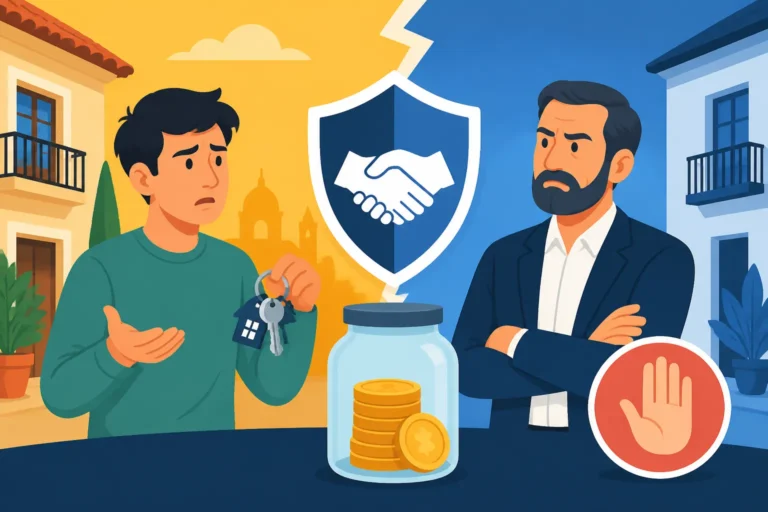
This is arguably the most pervasive scam targeting foreigners in Spain. It plays on the plausible idea that many property owners are expats themselves who have returned to their home countries.
The Scenario: You find a perfect apartment online. It is fully furnished, modern, and priced slightly below the market average. You contact the “owner,” who replies quickly in perfect English (or Spanish). They apologize and say they cannot show you the flat in person because they are currently working in London, Berlin, or New York.
The Trap: They propose a solution: “I will send you the keys via a trusted courier service (like DHL, Airbnb Secure, or a lawyer’s escrow) once you transfer the deposit and first month’s rent. If you don’t like the flat, the courier will refund you immediately.”
The Reality: There is no flat, and there is no courier. Legitimate courier companies do not hold escrow money for rental keys. Once you send the transfer, usually to an international bank account, the money is gone.
Red Flags in Listings and Communication
Scammers rely on volume. They post hundreds of listings hoping for one bite. If you know what to look for, you can spot them instantly.
1. The “Too Good to Be True” Price
If a two-bedroom apartment in the center of Barcelona is listed for €800 when the average is €1,400, it is a scam. Scammers lower the price to generate a flood of leads and create a bidding war mentality. Before you start your search, you should have a realistic understanding of market prices by reviewing a Cost of Living in Spain: Monthly Budget Guide for Expats to establish a baseline.
2. The Urgency Tactic
“I have three other people interested who are ready to transfer money now.” This pressure is designed to make you skip your due diligence. A legitimate landlord might be in a hurry, but they will never pressure you to pay before seeing the contract.
3. Inconsistent Photos
Look closely at the photos. Do the plug sockets look Spanish (two round pins) or British/American? Is the view out the window consistent with the neighborhood? Scammers often scrape photos from luxury listings in other countries. You can perform a Reverse Image Search (right-click the image and search with Google) to see if the same photos appear on real estate sites in Paris or New York.
4. Communication Shifts
Be wary if the listing is on a reputable site like Idealista or Fotocasa, but the “landlord” immediately asks to move the conversation to WhatsApp or email and deletes the listing. They do this to avoid the platform’s fraud detection algorithms.
Identity Theft: The “Data Harvest” Scam
A growing trend is not just stealing money, but stealing identities.
The Scenario: The landlord agrees to rent to you but asks for a photo of your passport, your employment contract, and your bank details “to draft the contract” before you have even seen the flat or met them.
The Risk: They can use your documents to open bank accounts, take out loans, or even post fake rental listings in your name.
The Rule: Never send a high-resolution scan of your ID until you have verified the landlord’s identity and seen the property. If you must send ID for a draft contract, watermark the image with “ONLY FOR RENTAL APPLICATION – [DATE]” across the face.
How to Verify Ownership: The “Nota Simple”
In Spain, you do not have to trust a landlord’s word. Property ownership is a matter of public record. The ultimate weapon against rental fraud is the Nota Simple.
The Nota Simple Informativa is an official report from the Land Registry (Registro de la Propiedad) that tells you exactly who owns a property.
How to Request It
- Ask for the Address: You need the exact address or the Referencia Catastral (Cadastral Reference) of the apartment.
- Go Online: Visit the website of the Colegio de Registradores.
- Pay the Fee: It costs approximately €9-€15.
- Receive the PDF: Usually within 24-48 hours.
What to Check:
- Does the name on the Nota Simple match the name of the person renting to you?
- If the owner is a company, does the person you are speaking to have the legal authority to represent that company?
If the landlord refuses to give you the specific address or cadastral reference “for privacy reasons” before the viewing, walk away.
Safe Payment Methods
How you pay is just as important as who you pay.
- Spanish IBANs: A legitimate landlord in Spain will almost always have a Spanish bank account (IBAN starting with ES). If they ask you to transfer money to a bank in Italy, Germany, or the UK because “that’s where their main account is,” be extremely suspicious.
- Avoid Cash: Never pay a deposit in cash without receiving an immediate, signed receipt including the landlord’s DNI/NIE number.
- Never Use Remittance Services: Western Union, MoneyGram, and cryptocurrency transfers are untraceable and non-refundable. Legitimate landlords do not use these.
Once you have verified the landlord and are ready to proceed, you will likely need to set up your own local payments. Understanding the banking landscape is crucial, so refer to Opening a Bank Account in Spain: Step-by-Step for Foreigners to ensure you can make secure transfers.
The Seasonal Rental Loophole
A specific risk in 2025/2026 involves “Seasonal Contracts” (Alquiler de Temporada). Scammers or unscrupulous landlords may try to force you into an 11-month seasonal contract for your permanent home to avoid the tenant protection laws of the Ley de Vivienda.
While not always a “scam” in the sense of theft, it is a fraudulent use of the law that strips you of rights like rent caps and mandatory extensions. Always verify that the contract type matches your actual purpose. If you are moving to Spain indefinitely, you want a Vivienda Habitual contract. For a detailed comparison of your rights under these different lease types, read Renting in Spain: Contracts, Deposits, and Tenant Rights.
Scam vs. Legitimate Rental: Comparison Table
| Feature | Scam Listing | Legitimate Listing |
| Price | Significantly below market average | Aligned with market rates |
| Viewing | “Not possible” / “Landlord abroad” | In-person or live video call |
| Contact | WhatsApp only; evasive about calls | Phone, email, office visit |
| Keys | “Sent by courier” after payment | Handed over upon signing |
| Contract | Vague, no ID numbers, sent via email | Formal, includes DNI/NIE, signed in person/digitally |
| Payment | Western Union / International IBAN | Spanish Bank Transfer (ES) |
| Ownership | Refuses to prove ownership | Provides IBI receipt or Deed if asked |
What to Do If You Are Scammed
If the worst happens and you realize you have transferred money to a fraudster:
- Contact Your Bank Immediately: Request a “recall” of the transfer. Speed is critical. If the funds haven’t cleared in the scammer’s account, they might be frozen.
- File a Police Report (Denuncia): Go to the Policía Nacional or Guardia Civil. You will need screenshots of the conversation, the listing, proof of payment, and any ID the scammer sent you.
- Report the Listing: Inform the platform (Idealista, Fotocasa) so they can take the ad down and prevent others from falling victim.
Final Tips for a Safe Search
- Arrive First: It is highly recommended to book a temporary hotel or Airbnb for your first few weeks. Never rent a long-term apartment blind from another country. You need to smell the damp, hear the neighbors, and meet the landlord.
- Use Agencies (With Caution): While agents charge fees, reputable agencies verify owners. However, ensure the agency itself is real—visit their physical office.
- Get Your Paperwork Ready: Legitimate landlords want proof of solvency. Having your documents ready can help you secure a real apartment quickly without resorting to risky “fast” deals. Ensure you are registered correctly by checking Empadronamiento in Spain: How to Register Your Address, as a landlord who refuses to let you register is often hiding something illegal.
References
Primary sources (official)
- Registradores de España (Land Registry – Nota Simple): https://www.registradores.org/
- Policía Nacional (Citizen Advice): https://www.policia.es/
- Sede Electrónica del Catastro (Cadastral Reference): https://www1.sedecatastro.gob.es/
Other helpful sources
- Idealista (Safety Guide): https://www.idealista.com/en/news/property-for-rent-in-spain/2024/02/15/63065-rental-scams-in-spain-how-to-avoid-them
- OCU (Organization of Consumers and Users – Rental Fraud): https://www.ocu.org/vivienda-y-energia/alquiler
Disclaimer
The information provided in this article is for educational and informational purposes only and does not constitute legal or financial advice. Rental laws and scam tactics evolve rapidly. We strongly recommend visiting the property in person and verifying ownership via the Land Registry before transferring any funds.