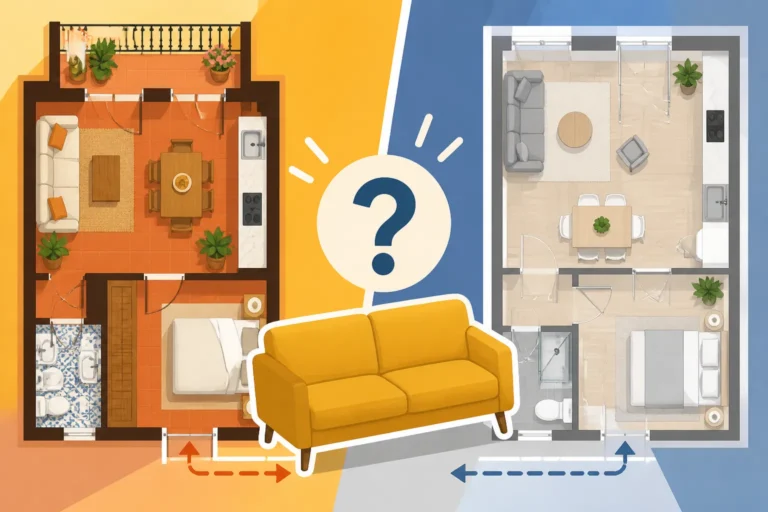
How to Furnish a Spanish Apartment on a Budget
Moving into a new apartment in Spain often comes with a jarring realization: the "unfurnished" label can mean a literally empty shell without even a lightbulb or a shower curtain. When I first signed a lease in Seville, I spent my first night sleeping on a yoga mat because I hadn't accounted for the logistics of Spanish delivery times. This guide solves the headache of transforming a bare "piso" into a home without draining your savings.
Disclosure: This post may contain affiliate links. We may earn a commission at no extra cost to you if you make a purchase through these links. Read full disclosure.
The Reality of Furnishing in Spain: From Empty Shells to Hidden Gems
The Spanish rental market is a unique beast. Depending on where you are—be it the narrow, winding streets of Madrid’s Malasaña or a modern development in Valencia—your furnishing needs will vary wildly. In Spain, apartments generally fall into three categories: furnished, semi-furnished, or unfurnished. However, "furnished" often means you are inheriting the landlord’s outdated 1980s sofa, while "unfurnished" can sometimes mean the previous tenant took the light fixtures and the kitchen cupboards with them.
Before you even buy a spoon, you need to understand your baseline. If the thought of building a kitchen from scratch sounds like a nightmare, many expats choose to use platforms like Spotahome to find verified, fully furnished apartments that bypass the initial "empty shell" phase. This is particularly helpful for those on a mid-term stay who don't want to deal with the resale market later. If you’ve already committed to a long-term, empty lease, you are now in the "piso vacío" survival phase.
Your first priority should be the essentials: a bed, a fridge (if not included), and lighting. Spain has a culture of "low and slow" when it comes to bureaucracy, and furniture delivery can follow a similar rhythm. While you are coordinating these first big purchases, staying connected is vital. I’ve found that using a travel-friendly SIM or an eSIM from a provider like Airalo is a lifesaver during those first few days when your home internet isn't yet installed, allowing you to track delivery trucks and chat with Wallapop sellers on the go. To understand more about the initial setup, you might want to check out Setting Up Your Life in Spain: Utilities, Internet, and Essentials.
Primary Sources for Budget Furniture: Where to Look First
When you are starting from zero, the big-box retailers are your best friends, but they aren't all created equal in Spain. Most expats head straight for IKEA, which has massive hubs in cities like Madrid, Barcelona, Málaga, and Seville. The "IKEA hack" is a global phenomenon, but in Spain, it is a rite of passage. The "Circular Hub" (formerly the as-is section) in Spanish IKEAs is often surprisingly well-stocked with floor models and slightly dinged items at a 40% discount.
However, don't limit yourself to the Swedish giant. Conforama is a major player in Spain and often has sales that beat IKEA on price, particularly for sofas and mattresses. They also tend to have more "Spanish-style" proportions, which is important if you are trying to fit a dining table into a narrow galley-style dining room. For the smaller essentials—think kitchen organizers, bedding, and basic tools—Amazon Spain is incredibly efficient. If you have a Prime membership, the "next day" delivery is often more reliable than the local furniture store’s three-week window. You can order a basic toolkit and a set of "Traductor Jurado" approved lightbulbs (just kidding, but check the fittings!) to be waiting for you the day you get your keys.
While you are budgeting for these items, it is wise to keep an eye on your overall Cost of Living in Spain: Monthly Budget Guide for Expats. Furnishing is a one-time spike, but it can easily derail your first three months if you aren't careful. Below is a comparison of typical budget sources in Spain:
| Source | Best For | Price Range | Delivery Speed |
|---|---|---|---|
| IKEA | Full sets, modern look | Medium | 3-10 Days |
| Wallapop | Second-hand bargains | Very Low | Instant (Pickup) |
| Conforama | Mattresses and Sofas | Medium | 5-15 Days |
| Amazon Spain | Kitchenware, Textiles | Low/Medium | 1-2 Days |
| Jysk | Scandi-style decor | Medium | 5-10 Days |
The Second-Hand Goldmine: Wallapop and Local Markets
If you want to furnish a Spanish apartment on a shoestring budget, you must master Wallapop. In Spain, Wallapop isn't just an app; it’s a national pastime. It is the go-to marketplace for everything from antique "mecedoras" (rocking chairs) to nearly new washing machines. The beauty of Wallapop is the hyper-local nature of it. You can filter by your neighborhood, which is crucial if you don't have a car and need to carry a coffee table three blocks home.
When using Wallapop, the "regateo" (haggling) is expected but should be polite. A simple "Is the price negotiable?" in Spanish can often shave 20 Euros off a wardrobe. Be wary of the "no envíos" (no shipping) tag for large furniture; you will need to arrange your own transport. This is where the local "man with a van" comes in. Look for flyers in your neighborhood or at the exit of large hardware stores like Leroy Merlin that say "PORTES." These are local independent movers who will transport your Wallapop finds for 20 to 50 Euros depending on the distance.
Beyond apps, look for "Rastros" or flea markets. The El Rastro in Madrid is famous, but every medium-sized town has its Sunday market. Here, you can find unique pieces that add character to a sterile rental. If you are navigating these markets as a newcomer, it helps to understand Spanish Etiquette for Expats: Greetings, Invitations, and Daily Life to ensure your interactions with local vendors are smooth and respectful. Often, if you buy multiple items from one vendor, they might throw in a lamp or a mirror for free.
Logistics and Common Pitfalls: Delivery, Assembly, and Narrow Streets
The biggest mistake I made during my first move was measuring the room but forgetting to measure the elevator. Spanish apartment buildings, especially in historic centers, often have tiny elevators that barely fit two people, let alone a flat-packed "Pax" wardrobe. If your furniture doesn't fit in the lift, the delivery drivers may refuse to carry it up the stairs, or they will charge a "suplemento" for every floor. Always ask about "entrega en domicilio" (delivery inside the home) vs. "entrega a pie de calle" (street-level delivery).
Another logistical hurdle is the assembly. Spanish apartments often have thin walls or, conversely, extremely hard stone walls that require a hammer drill (percutor). If you aren't handy, look for a "manitas" (handyman). You can find them on apps like TaskRabbit, which is growing in popularity in Spanish cities, or via local Facebook groups for expats. For those who are renting and worried about their deposit, be sure to read Renting in Spain: Contracts, Deposits, and Tenant Rights before you start drilling holes for shelves. Most Spanish contracts allow for "normal wear and tear," but large holes for TV mounts might need to be filled and painted before you leave.
Don't forget the "garbage day" rules. In many Spanish municipalities, there are specific days of the week when you are allowed to leave old furniture by the large communal bins for the city to collect. Conversely, this is also a great way to find "free" furniture. It is perfectly socially acceptable in Spain to "rescue" a solid wood chair left on the curb, provided it looks clean and pest-free. Just make sure you are aware of the local Recycling in Spain: Bin Colors, Rules, and Common Confusion to avoid fines for leaving items on the wrong night.
Essential Small Goods and Textiles: Making it a Home
Once the big items are in place, the costs of "small things" start to add up. To save money, skip the boutique home stores in the city center. Instead, head to a "Bazar Chino." These are large, independently owned variety stores that sell everything from kitchen strainers to hammers and decorative cushions. They are ubiquitous in Spain and offer the absolute lowest prices for household basics. While the quality varies, for things like plastic bins, hangers, and basic glassware, they are unbeatable.
For textiles—sheets, towels, and curtains—keep an eye on the "Rebajas" (seasonal sales). Spain has strict laws about when shops can hold sales, typically starting in early January and July. During these times, major retailers like Zara Home or El Corte Inglés slash prices by up to 70%. If you miss the sales, Amazon Spain remains a solid backup for high-thread-count sheets that won't break the bank.
If you are moving with a family, your needs will be different. You might be looking for specific child-friendly items or even school-related furniture. In that case, checking the Spain Relocation Checklist: First 30 Days for New Residents can help you prioritize your spending so you don't buy a designer rug before you've secured your child's desk and chair.
Final Tips for the Budget-Conscious Expat
Furnishing your home in Spain is a marathon, not a sprint. The temptation to have everything "done" in the first week is strong, but you’ll often find better deals and more suitable pieces if you live in the space for a month first. You might realize that the "sunny" bedroom actually gets quite cold in the winter, requiring a heavier rug and thicker curtains than you initially planned.
Keep a folder (digital or physical) with all your receipts. This isn't just for warranties; if you eventually move and want to sell your furniture to the next tenant, having proof of the original price and age of the items can help you recoup a significant portion of your investment. This is a common practice in the expat community and can make your eventual transition out of the apartment much easier.
Lastly, don't forget to look for community. Many cities have "Buy Nothing" groups on Facebook or "Expats in [City]" groups where people who are leaving the country often list entire apartment contents for a flat "take it all" fee. This can be the ultimate budget win, often getting you everything from a toaster to a bed frame for the price of a single new sofa.
Disclaimer
The information provided in this guide is for general informational purposes only. While we strive to provide accurate and up-to-date advice regarding the Spanish housing market and retail options, prices, regulations, and store policies can change frequently. We recommend verifying specific delivery terms, contract clauses, and local municipal rules before making significant financial commitments or modifications to a rental property. Your personal experience may vary based on your specific region in Spain.