How to Plan a Spain Itinerary by Train
Oh, the sheer thought of planning travel in a new country can be daunting, can't it? Especially in Spain, where the language barrier and seemingly endless options for getting around might have you reaching for that tinto de verano a little earlier than planned. But trust me, as someone who’s navigated these waters for years, there’s a secret weapon to stress-free exploration: Spain’s incredible train network. Forget the cramped flights or the confusing bus schedules; mapping out your Spanish adventure by train isn't just efficient, it's an experience in itself, opening up the country in a way you might not have imagined. This guide will walk you through exactly how to plan a Spain itinerary by train, so you can sit back, relax, and watch the stunning landscapes glide by.
Disclosure: This post may contain affiliate links. We may earn a commission at no extra cost to you if you make a purchase through these links. Read full disclosure.
Why Choose Train Travel in Spain?
When you first land in Spain, the idea of getting from one city to another might feel overwhelming. Buses seem cheap, flights seem fast, but let me tell you, train travel here hits that sweet spot of comfort, speed, and sheer convenience that often gets overlooked. It's truly a game-changer for exploring this beautiful country.
The Joys of High-Speed Rail (AVE)
Let's talk about Spain's crown jewel: the AVE (Alta Velocidad Española). These aren't just trains; they're sleek, modern marvels that whisk you across vast distances in what feels like no time at all. Imagine stepping out of your accommodation in central Madrid, strolling to Atocha station, and within two and a half hours, you're enjoying tapas in Seville's historic Santa Cruz neighborhood. That's the magic of the AVE. These trains are designed for comfort, offering spacious seating, often with power outlets, and a smooth, quiet ride that lets you truly relax, catch up on a book, or just gaze out at the ever-changing Spanish scenery. You're not stuck in airport security lines hours before your flight, nor are you dealing with the often out-of-the-way locations of airports. Instead, you depart and arrive right in the heart of the city, ready to start exploring immediately. The environmental benefit is a bonus, too – taking the train significantly reduces your carbon footprint compared to flying, making it a more sustainable choice for conscious travelers. Routes like the bustling Madrid-Barcelona corridor or the culturally rich Madrid-Seville route are perfect examples of how these trains shrink the country and make multi-city trips incredibly accessible.
Regional and Local Train Networks
Beyond the high-speed giants, Spain also boasts a robust network of regional and local trains that are absolutely essential for exploring the nooks and crannies of the country. These include the Media Distancia (medium-distance) trains and the Cercanías (commuter) lines. Don't underestimate these workhorses! While not as fast as the AVE, Media Distancia trains connect smaller towns and provincial capitals, often through scenic routes that the high-speed lines bypass. They're usually more affordable and offer a wonderful way to experience the local pace of life. For instance, if you're keen to explore the charming towns outside Barcelona or want to visit a historical site a bit off the main tourist trail, the Media Distancia trains are your best bet.
Then there are the Cercanías, which are Spain's equivalent of suburban or commuter trains. These lines are fantastic for day trips from major cities, connecting city centers to nearby towns, beaches, or even airports. If you're staying in Madrid, for example, you can hop on a Cercanías train to visit the stunning royal monastery in El Escorial or venture out to Segovia for a truly unforgettable day trip. They're frequent, inexpensive, and incredibly easy to use, especially if you get yourself a multi-journey ticket. Integrating these into your itinerary allows for incredible flexibility and a deeper dive into local culture without the need for a rental car. For more details on these vital connections, check out our guide on Regional and Local Trains in Spain Cercanías and Media Distancia.
Navigating the Spanish Train System: Booking and Tickets
Booking train tickets in Spain can feel like a maze at first glance, especially with different types of trains and operators. But once you get the hang of it, you’ll find it’s quite straightforward and offers a lot of flexibility.
Understanding Renfe and Other Operators
For a long time, Renfe was pretty much the only name in the game for train travel across Spain. It's the national rail company, and they operate the vast majority of services, including the high-speed AVE, the slightly slower but still efficient Alvia and Euromed trains, and the regional Media Distancia and local Cercanías lines. Knowing this is key because Renfe's website and apps are your primary portals. However, things have changed recently, and you now have more choices on some popular high-speed routes, particularly between Madrid and Barcelona, and Madrid and Valencia. New private operators like Ouigo and Iryo have entered the market, offering competitive prices and additional options for travelers. Ouigo, known for its vibrant pink trains, often provides a budget-friendly alternative for popular routes, while Iryo offers a more premium experience with high-quality services. When planning your itinerary, it's worth checking all these operators for the best fares and timings, especially for those busy city-to-city connections. Understanding the different train types and operators helps you make informed decisions, whether you're prioritizing speed, comfort, or cost.
Best Ways to Book Your Train Tickets
Now, let's get down to the brass tacks: how to actually get those tickets! The most direct way, of course, is through the official Renfe website or their mobile app. It's comprehensive, allows you to select seats, and offers all available fare types. However, sometimes the user interface can be a little… let's say, Spanish. It can be tricky if you're not fluent in the language or if your foreign credit card decides to be uncooperative. Don't let that deter you! Many expats find it easier to use reputable third-party booking platforms. Websites like Omio are fantastic for comparing routes and prices across multiple operators, including Renfe, Ouigo, and Iryo, all in English. They streamline the process, often making it much smoother for international travelers. You can also find good options on GetYourGuide if you're looking for ticket bundles that include tours or experiences.
My personal advice? Always book your high-speed train tickets in advance, especially for popular routes or during peak travel seasons like summer, Christmas, or Semana Santa. The prices for AVE tickets, much like flights, tend to increase closer to the departure date. Booking a few weeks or even months ahead can save you a significant amount of money. For regional and local trains, booking a few days in advance or even on the day of travel is usually fine, as they rarely sell out. Station kiosks and ticket offices are also an option, but be prepared for potential language barriers and queues, especially at larger hubs. For a deep dive into securing the best deals, take a look at our guide on How to Buy AVE Train Tickets in Spain and Save Money.
Ticket Types and Discounts
Just like with air travel, Spanish trains come with various ticket types and fare classes, each offering different levels of flexibility and amenities. Renfe generally offers 'Básico' (basic, least flexible), 'Elige' (more flexible, allows changes with a fee), and 'Prémium' (most flexible, includes meal and lounge access on AVE). The newer operators like Ouigo and Iryo also have their own tiered systems, usually with options for extra legroom, luggage, or cancellation flexibility. Understanding these can help you choose the best value for your trip. If your plans are set in stone, a Básico ticket will usually be the cheapest option. But if you think there's a chance you might need to change your travel date or time, paying a little extra for an Elige fare could save you a headache and more money in the long run.
Spain also offers a fantastic array of discounts that many foreign visitors are eligible for. For instance, if you're a senior traveler (60+), the Tarjeta Dorada (Gold Card) is an absolute must-have. It grants you significant discounts on all Renfe trains, often up to 40%, and pays for itself after just one or two long journeys. There are also youth cards (Carné Joven) for those under 30, and large family discounts. While some of these might require a bit of Spanish bureaucracy to obtain (often needing an NIE or residency), if you're planning an extended stay or multiple trips, they are well worth looking into. Always check Renfe's official website or ask at a station when you arrive about any discounts you might qualify for based on your age or residency status.
| Train Operator | Train Type | Key Routes | Typical Speed | Price Range | Flexibility | Booking Tips |
|---|---|---|---|---|---|---|
| Renfe | AVE (High-Speed) | Madrid-Barcelona, Madrid-Seville, Madrid-Valencia, etc. | Very Fast | High (can be cheaper if booked in advance) | Varies by fare (Básico, Elige, Prémium) | Book well in advance for best prices; check for Tarjeta Dorada if 60+. |
| Renfe | AVLO (Budget High-Speed) | Madrid-Barcelona, Madrid-Valencia | Very Fast | Low to Medium | Limited | Great for budget travelers; no frills. |
| Renfe | Alvia, Euromed, Intercity | Connects major cities not on AVE lines, or slower routes | Fast | Medium | Varies by fare | Good for specific routes (e.g., Madrid-Gijón, Barcelona-Valencia). |
| Renfe | Media Distancia (Regional) | Connects regional towns, e.g., Seville-Cadiz, Barcelona-Girona | Medium | Low | High | Less need to book far in advance; often purchased on the day. |
| Renfe | Cercanías (Commuter) | Local routes in major cities (Madrid, Barcelona, Valencia) | Slow | Very Low | Very High | Ideal for day trips and local transport; purchase at station. |
| Ouigo | High-Speed | Madrid-Barcelona, Madrid-Valencia | Very Fast | Low | Limited | Budget-friendly alternative; often good for last-minute deals. |
| Iryo | High-Speed | Madrid-Barcelona, Madrid-Seville, Madrid-Valencia | Very Fast | Medium to High | Varies by fare (Infinita, Singular, Inicial) | Premium service with comfortable seats; check for business travel. |
Crafting Your Train Itinerary: Routes and Destinations
Now for the fun part: mapping out your adventure! Spain's train network is so extensive that you can connect virtually any major city and many charming smaller towns with ease. It's about blending the iconic with the authentic, and trains help you do just that.
Popular High-Speed Corridors
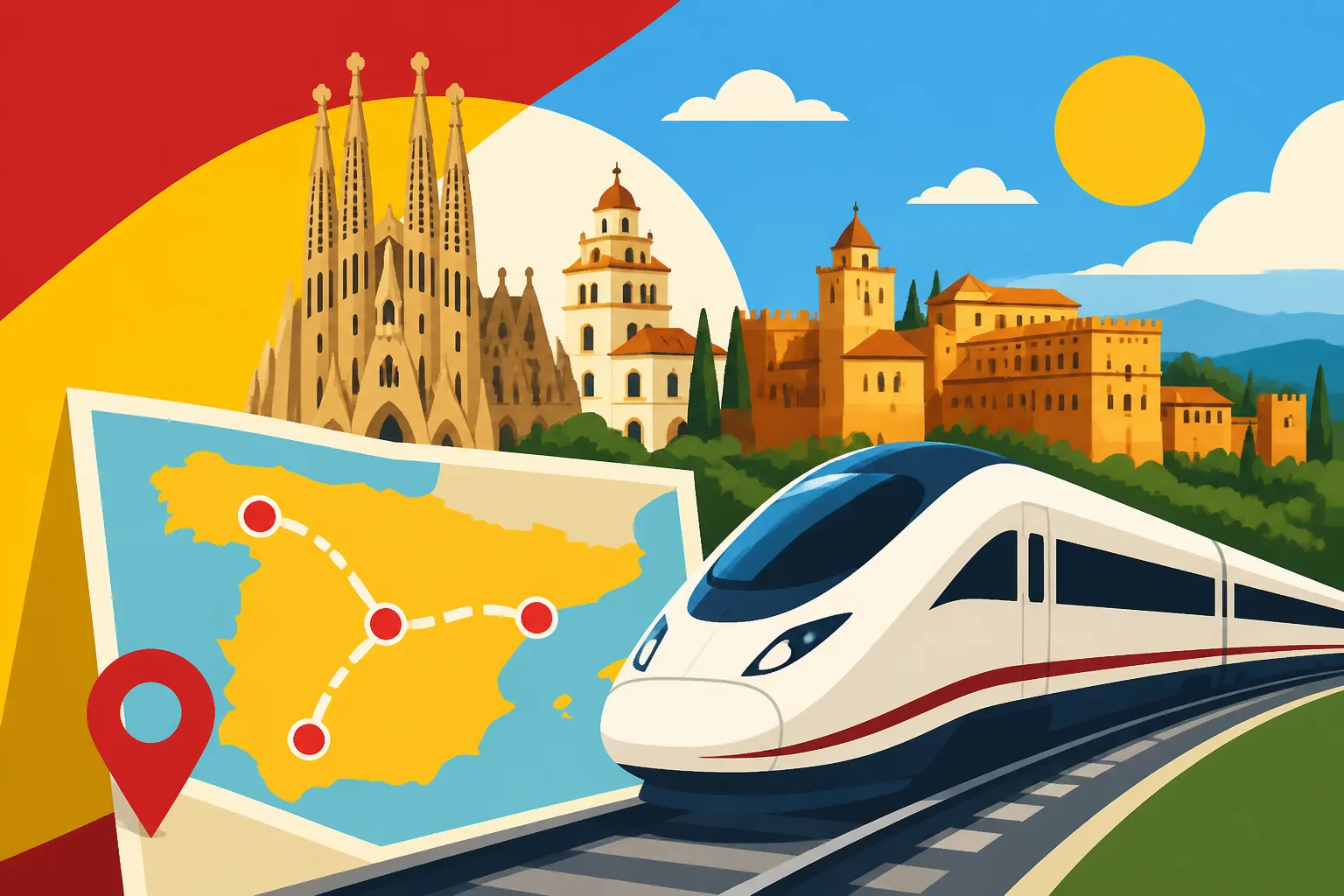
Most first-time visitors to Spain gravitate towards a few key cities, and thankfully, the high-speed rail lines connect these beautifully. Madrid, as the central hub, is a natural starting point for many itineraries. From here, you can zip north-east to Barcelona, the vibrant Catalan capital, in about 2.5 to 3 hours. Or head south to the sun-drenched region of Andalusia, reaching Seville in roughly the same amount of time. A classic itinerary might look something like this: Arrive in Madrid, spend a few days exploring its museums and vibrant nightlife, then take an AVE to Seville. After soaking in Seville's flamenco and Moorish charm, a short train ride can take you to Cordoba, home to the magnificent Mezquita. From Cordoba, you could continue to Malaga, giving you access to the Costa del Sol and its beautiful beaches, or head back up to Barcelona if you've got the time.
These high-speed corridors are incredibly efficient, allowing you to maximize your time in each destination rather than spending hours on transfers or airport logistics. Imagine enjoying breakfast in Madrid, exploring the Alhambra in Granada by afternoon (a bit further, but still a direct train connection), and having dinner in a completely different city. That's the luxury of Spain's AVE. Don't forget to incorporate travel time for reaching train stations and navigating local transport upon arrival. You can find excellent information on Traveling Around Spain: Trains, Buses, Flights, and Car Hire to help plan these connections.
Exploring Smaller Towns and Regions
While the big cities are undeniably captivating, Spain truly shines when you venture into its smaller towns and lesser-known regions. This is where the regional (Media Distancia) and commuter (Cercanías) trains become your best friends. From Madrid, for example, it’s incredibly easy to take a short train ride to places like Toledo or Segovia, both UNESCO World Heritage sites bursting with history and charm. These make for perfect day trips where you can explore ancient Roman aqueducts, medieval castles, and winding alleyways, returning to the comfort of your Madrid base in the evening. Our guide to the Best Day Trips From Madrid by Train offers even more inspiration.
Similarly, if you're based in Barcelona, you can easily access coastal towns along the Costa Brava or historical cities like Girona using regional trains. Even exploring Andalusia's famous pueblos blancos (white villages) can start with a train journey to a larger town like Ronda or Arcos de la Frontera, followed by a local bus or taxi. This allows for a delightful blend of convenient train travel and immersive local exploration. Websites like Booking.com are excellent for finding accommodation that's conveniently located near train stations in these smaller towns, making your logistics even smoother.
Sample Itineraries and How to Build Your Own
Let's put some of this into practice with a sample itinerary.
7-Day Southern Spain Rail Adventure:
- Day 1-2: Madrid. Arrive at Madrid-Barajas Airport, take the Cercanías train directly to Atocha station. Settle into your hotel. Explore the Prado Museum, Retiro Park, and Plaza Mayor.
- Day 3-4: Seville. Take an early morning AVE train from Madrid Atocha to Sevilla Santa Justa (approx. 2.5 hours). Explore the Seville Cathedral, Alcázar, and enjoy a flamenco show in Triana.
- Day 5: Cordoba. Morning AVE train from Seville to Cordoba (approx. 45 minutes). Spend the day at the Mezquita-Cathedral and Jewish Quarter. Return to Seville or continue to Malaga.
- Day 6-7: Malaga. Take an AVE train from Cordoba or Seville to Málaga María Zambrano (approx. 1-1.5 hours). Enjoy the Picasso Museum, the beach, and the vibrant port area. Depart from Malaga Airport.
This itinerary offers a taste of Spain's diverse culture and history, all connected seamlessly by train. For more options, you might check out how to plan A Week in Southern Spain Without a Car.
When building your own itinerary, consider these steps:
- List your must-see cities: Start with the main destinations you absolutely want to visit.
- Check direct train connections: Use Renfe's website or Omio to see which of these cities are connected by high-speed or regional trains.
- Estimate travel times: Account for 30 minutes before departure for stations and 30-60 minutes upon arrival to reach your accommodation.
- Group nearby destinations: Look for clusters of smaller towns accessible by regional trains from your main city hubs. For instance, from Barcelona, you can easily visit Girona or Montserrat. Our guide on Best Day Trips From Barcelona Without a Car offers practical advice.
- Factor in experiences: Don't just plan travel; plan activities. Platforms like GetYourGuide are excellent for pre-booking tours, skip-the-line tickets for attractions, or even food tours in each city, which you can easily weave between your train journeys.
- Book early, save money: As mentioned, high-speed tickets are cheaper the further out you book.
Practical Tips for a Smooth Train Journey
Embarking on a train journey in Spain should be an enjoyable, low-stress part of your travel experience. A little preparation goes a long way in ensuring everything runs smoothly.
Baggage, Boarding, and Onboard Experience
One of the great advantages of train travel over flying is the baggage allowance. Generally, Renfe and other operators are quite generous, allowing passengers to bring two to three pieces of luggage, often with weight and size limits much more relaxed than airlines. You can usually bring a large suitcase, a carry-on, and a personal item without issue. However, always double-check the specific baggage policy of your chosen operator (Renfe, Ouigo, Iryo) when booking, especially if you're traveling with oversized items like bikes or musical instruments, as these might require a small extra fee or prior arrangement.
When it comes to boarding, it’s a much more streamlined process than at airports. You typically need to arrive about 15-30 minutes before your departure time, especially for AVE trains. There's usually a quick security check where your bags pass through an X-ray scanner, but it's generally far less intrusive and time-consuming than airport security. Once through, you simply find your platform, look for your carriage number (clearly marked on digital screens and on the train itself), and settle into your assigned seat. Onboard, expect comfortable seating, often with individual power outlets, and free Wi-Fi on most high-speed services. Many AVE trains also have a cafe car (vagón cafetería) or offer at-seat catering options, so you won't go hungry. It's a truly pleasant way to travel, offering a chance to relax and enjoy the journey itself.
Language and Assistance
While many station staff in major cities speak some English, especially at larger tourist hubs like Madrid Atocha or Barcelona Sants, don't assume everyone will. It's always a good idea to have a few basic Spanish phrases in your back pocket. Knowing how to ask "Where is the platform?" (¿Dónde está el andén?) or "Which train goes to…?" (¿Qué tren va a…?) can be incredibly helpful. Google Translate or other translation apps are your best friends here; download the Spanish language pack for offline use, just in case. Don't be shy about asking for help; Spaniards are generally very friendly and willing to assist, even with a language barrier. Pointing to your ticket or destination on a map can also bridge the communication gap effectively. Remember, a little effort goes a long way in navigating a new culture. Our guide on Spanish Language and Everyday Communication for Visitors can give you a head start.
Connecting Transport and Accommodation
Once your train rolls into the station, your journey isn't quite over. Most major train stations in Spain are well-connected to the city's public transport network, making it easy to reach your accommodation. Madrid Atocha, for instance, has direct metro and Cercanías connections, as does Barcelona Sants. In Seville, Santa Justa station has bus and taxi ranks right outside. Before you arrive in each new city, do a quick search on how to get from the train station to your hotel. This small step can save you time and hassle, especially if you're arriving late or with a lot of luggage. Ride-sharing apps like Uber or Cabify are also widely available in most major Spanish cities.
When choosing where to stay, consider the proximity to a train station if you plan on multiple day trips or an early morning departure. Many hotels are strategically located near these transport hubs, making onward travel effortless. Websites like Booking.com allow you to filter hotels by proximity to landmarks or specific transport stations, which can be incredibly useful for optimizing your train-centric itinerary. For more comprehensive advice on finding your perfect base, check out Accommodation in Spain: Hotels, Hostels, and Rentals. And if you're flying into a major city to start your train journey, make sure you know how to get from the airport to the train station, like finding your way from How to Get From Madrid Airport to the City Center or How to Get From Barcelona Airport to the City Center.
Disclaimer
Please note that while every effort has been made to provide accurate and up-to-date information, rules, schedules, and prices for train travel in Spain can change. It is always recommended to verify details with official sources, such as Renfe's website or specific train operators, before making any travel arrangements. This guide is for informational purposes only and does not constitute professional advice.