Dress Codes and Social Norms in Spain
Walking into a nice restaurant in Seville wearing zip-off cargo pants and socks with sandals is a quick way to feel like a complete outsider. I have definitely had those moments during my first year here where I realized my comfortable tourist gear was actually a social signal of being totally unprepared for the local environment. This guide breaks down the nuances of Spanish dress codes and social norms so you can blend in and feel like a local from day one.
Disclosure: This post may contain affiliate links. We may earn a commission at no extra cost to you if you make a purchase through these links. Read full disclosure.
Decoding the Spanish Wardrobe: From City Streets to Coastal Sands
When I first moved to Madrid, I thought my standard weekend attire of athletic leggings and a hoodie would fly at the local bakery. I was wrong. In Spain, there is a distinct line between "activewear" and "streetwear." Unless you are currently jogging or inside a gym, wearing leggings or sweatpants in public is often viewed as a bit too casual, almost as if you haven't finished getting dressed for the day. Spaniards take immense pride in their appearance, a concept often referred to as "ir arreglado"—which basically means looking put-together.
The Estilo Reality: Why Spaniards Rarely Wear Gym Gear in Public
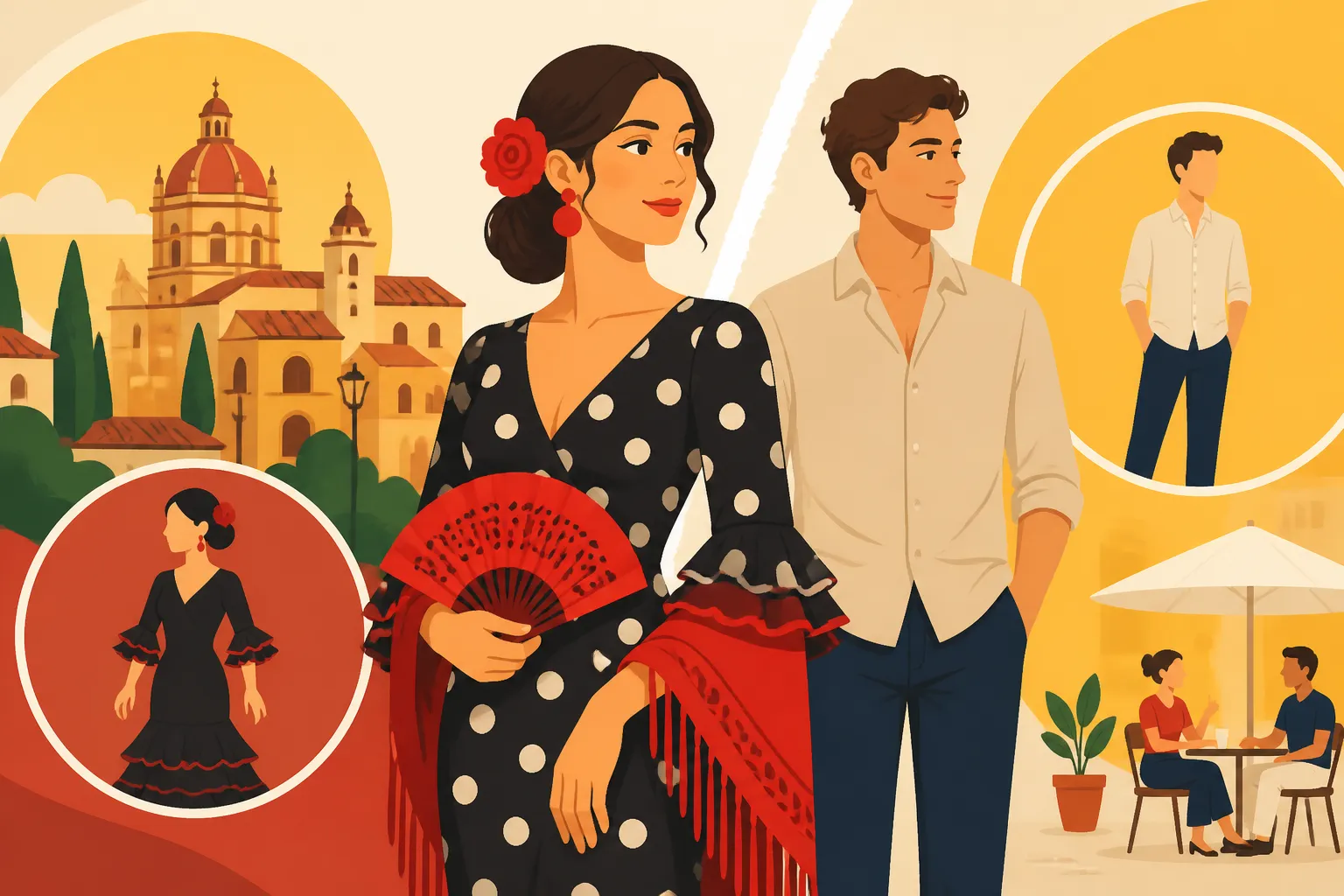
In the major metropolitan hubs like Madrid, Barcelona, and Valencia, the daily uniform is "smart casual." For men, this usually involves well-fitted chinos or dark denim, a button-down shirt or a high-quality polo, and leather shoes or clean, fashion-forward sneakers. You will rarely see a local man in baggy cargo shorts unless he is literally at the beach. For women, the style is effortlessly chic: think midi skirts, tailored trousers, and leather boots or stylish flats.
The key is the "total look." Even if a Spaniard is wearing something simple, it is usually ironed and paired with the right accessories. If you are planning a trip between cities, you can use Omio to check train schedules and observe how the style subtly shifts from the professional air of Madrid to the more avant-garde, artistic vibes of Barcelona. While you are exploring these cities, you will notice that even in the height of summer, locals prioritize fabrics like linen and cotton over technical hiking gear. To truly master Spanish Social Customs: Greetings, Kisses, and Personal Space, you must first look like someone who respects the environment they are entering.
Seasonal Shifts: When the Calendar Dictates the Closet
One of the biggest mistakes newcomers make is dressing for the temperature rather than the season. I remember a particularly warm day in late October when the sun was beaming at 25 degrees Celsius. I stepped out in shorts and a T-shirt, only to find the locals still wearing light trench coats, scarves, and boots. In Spain, the calendar often dictates the wardrobe more than the actual weather forecast.
Winter "officially" starts in November and ends in March. During this window, you wear winter clothes, even if a freak heatwave hits. Wearing flip-flops in a city center in October is a massive neon sign that says "I am a tourist." If you are staying in a local neighborhood booked via Booking.com, take a look at the people walking their dogs in the morning. You will see that even for a quick chore, they have layered appropriately for the month. This cultural commitment to seasonal dressing is part of the broader Spanish Etiquette for Expats: Greetings, Invitations, and Daily Life that values tradition and social cohesion.
Social Greetings and Personal Space: Mastering the Spanish Hello
Navigating the "Spanish Hello" can be a minefield for the uninitiated. Coming from a culture where a polite nod or a firm handshake is the gold standard, the physicality of Spanish social life was a shock to my system. Spaniards are generally high-contact people. They stand closer together than Northern Europeans or Americans, and they use touch to emphasize points in conversation.
The Art of the Two Kisses: Who, When, and How
The "dos besos" (two kisses) is the standard greeting between women, and between men and women. It is important to note that these are not actual kisses on the skin, but rather "air kisses" where your cheeks touch. You always start with the right cheek (your right, their left). I cannot tell you how many "near-miss" head-butts I had before I realized the right-side-first rule was non-negotiable.
Men usually greet other men with a handshake or a vigorous pat on the back, though close friends and family members will definitely hug. If you are meeting someone in a professional capacity for the first time, a handshake is the safe bet. However, don't be surprised if the atmosphere turns informal quickly. If you have booked a guided tour through GetYourGuide, your local guide might greet the group with a warm "Hola a todos" and a high level of energy that feels very personal. Learning these nuances is a key part of Making Friends in Spain as a Foreigner: Social Tips because it shows you are willing to adapt to the local rhythm.
Decibel Levels and Physicality: Why Everyone Seems to Be Shouting
If you walk into a crowded bar in Madrid at 10 PM, the noise level will be staggering. For a long time, I thought everyone was arguing. In reality, they were just having a passionate conversation about lunch. Spaniards speak loudly, they interrupt each other constantly, and they use their hands to paint pictures in the air.
In many cultures, interrupting is considered rude. In Spain, it is often a sign of engagement. If someone interrupts you, they aren't trying to shut you down; they are showing that they are so excited about what you’re saying that they can't wait to contribute. This can be exhausting for introverts, but once you lean into it, the energy is infectious. Understanding this volume and intensity is vital for anyone trying to navigate Spanish Bar and Café Etiquette for Newcomers without feeling overwhelmed.
Dining Etiquette and the Daily Rhythm: Siesta, Tapas, and Late Nights
The Spanish clock is perhaps the most difficult social norm for foreigners to adopt. The entire country operates on a schedule that is roughly two to three hours behind the rest of the Western world. If you try to eat dinner at 6 PM, you will likely find the restaurant doors locked or the staff having their own pre-shift meal.
Mealtime Timing: Why 7 PM Is Too Early for Dinner
Lunch (la comida) is the most important meal of the day, usually served between 2 PM and 4 PM. This is often a multi-course affair that can last two hours. Dinner (la cena) is much lighter and rarely happens before 9 PM. On weekends, it is perfectly normal to start dinner at 10:30 PM.
I remember inviting my Spanish neighbors over for "dinner" at 7:30 PM when I first arrived. They showed up looking confused, having just finished their afternoon snack (la merienda). To avoid this, align your expectations with the Understanding Spain's Daily Rhythm: Siesta and Late Nights guide. If you are traveling and need to find a place to stay that is near the late-night action, check Booking.com for hotels in areas like Chueca in Madrid or El Carmen in Valencia, where the streets don't even wake up until midnight.
The Unwritten Rules of Tapas and Tipping
Tapas culture is not just about the food; it is a social ritual. In many parts of Spain, like Granada or León, you get a free tapa with every drink. In other places, you order "raciones" (large plates) to share. The most important rule? Never, ever order your own separate plate and eat it in isolation while your friends do the same. Tapas are meant to be shared.
When it comes to the bill, the concept of "splitting the check" to the exact cent is rare among locals. Usually, one person pays and the others "get the next round," or the total is simply divided by the number of people regardless of who had the extra glass of wine. As for the extra cost, refer to Tipping in Spain: When, Where, and How Much to understand that leaving a 20% tip is not expected and can actually be seen as quite odd. A few coins or rounding up to the nearest five euros is usually more than enough for excellent service.
| Social Scenario | Tourist Expectation | Spanish Reality |
|---|---|---|
| Dinner Time | 6:00 PM – 7:30 PM | 9:00 PM – 11:00 PM |
| Tipping | 15% – 20% | Small change or 5% for great service |
| Greeting | Handshake or Wave | Two kisses (cheek to cheek) |
| Dress Code | Athletic/Comfort wear | Smart Casual / "Arreglado" |
| Coffee | Large "To-Go" cup | Small cup, consumed sitting down |
Navigating Religious and Formal Spaces: Respecting Tradition
While Spain is a modern, secular democracy, its cultural roots are deeply Catholic. This is most evident in the way people conduct themselves in religious buildings and during formal administrative tasks. Even if you are not religious, showing respect for these traditions is essential for a smooth experience.
Church Attire: Finding the Balance Between Heat and Respect
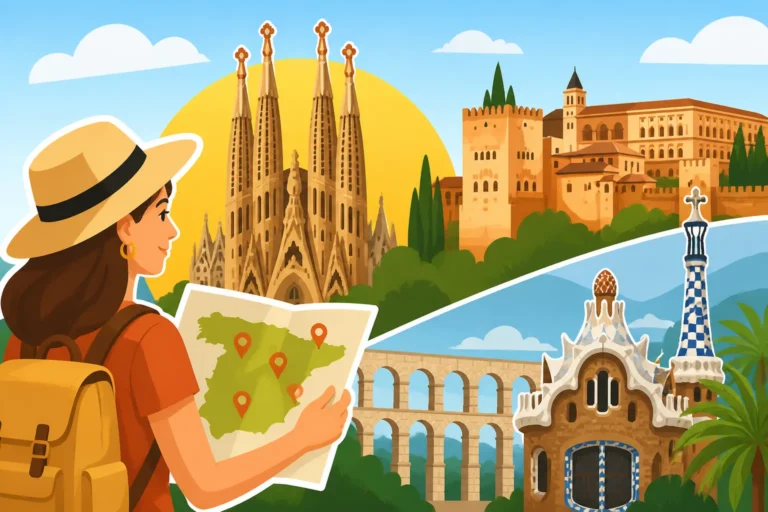
When visiting major landmarks like the Seville Cathedral or the Sagrada Família, the dress code is strictly enforced. Even in smaller village churches, the locals will notice if you walk in with bare shoulders or very short skirts. Many frustrated travelers have been turned away from the door because they were wearing tank tops.
A simple trick I learned from a veteran expat is to always carry a light scarf in my bag during the summer. You can quickly drape it over your shoulders before entering a sacred space. This is a key tip for How to Visit Spanish Cathedrals as a Non-Religious Traveler that saves you from the embarrassment of being denied entry. If you have booked tickets for these sites through GetYourGuide, check the fine print in the app, as they often remind you of the specific attire requirements for that venue.
Bureaucracy and Formal Meetings: Dressing for the Cita Previa
If you are an expat dealing with the dreaded "Cita Previa" (scheduled appointment) for your residency or TIE card, do not show up in beachwear. Whether you are at the extranjería or a local bank, dressing slightly more formally will often result in a smoother interaction.
Bureaucracy in Spain can be frustrating and slow. However, I found that when I showed up wearing a blazer and professional shoes, the officials tended to treat me with a bit more patience. It shouldn't matter, but in a culture that values "imagen" (image), it absolutely does. This falls under the broader category of Spanish Bureaucracy for Daily Life: Padrón, IDs, and Local Services where appearances can subtly influence the outcome of your administrative hurdles.
Modern Social Norms: Digital Life, Tipping, and Nightlife
Social norms in Spain are constantly evolving, especially with the rise of digital communication and the influx of international influence. However, some things remain uniquely Spanish.
WhatsApp Culture: The Official Channel of Spanish Life
In Spain, WhatsApp is not just an app; it is the primary way the country functions. From booking a hair appointment to communicating with your landlord or a potential employer, WhatsApp is the "official" channel. It is much more common than email for day-to-day interactions.
The social norm here is to be responsive but informal. Voice notes are incredibly popular. Don't be surprised if a business sends you a string of five-minute voice notes instead of a written quote. It is also perfectly acceptable to use emojis in professional WhatsApp chats once a rapport has been established. This is a major part of Spanish Language and Everyday Communication for Visitors that you won't find in a textbook but will use every single day.
Nightlife Transitions: From Terrace to Discoteca
Spanish nightlife is an endurance sport. It usually starts with "el tardeo"—afternoon drinks on a terrace. This transitions into a late dinner, which then leads to "copas" (mixed drinks) at a bar. The "discoteca" (club) stage doesn't usually begin until 2 AM or 3 AM.
The dress code for nightlife varies wildly by neighborhood. In Madrid's Salamanca district, you will need to be very "arreglado"—think heels and dress shirts. In Malasaña, the vibe is more hipster and vintage. If you are using Omio to travel to a festival like Benicàssim or Primavera Sound, the rules relax significantly, but for a standard night out in a major city, err on the side of "dressing up." Knowing Nightlife, Music, and Entertainment in Spain helps you pick the right venue for your style.
Disclaimer
This guide provides a high-level overview of cultural norms and dress codes in Spain based on regional trends and personal experience. Social expectations can vary significantly between autonomous communities and specific social circles. This information is intended for educational purposes and should not be taken as legal or professional advice. Always observe local cues and follow specific venue requirements.