Telemedicine in Spain: When It’s Useful and What to Expect
Navigating healthcare in a new country can be challenging, but telemedicine offers a fast, accessible solution. This comprehensive guide explores how digital healthcare works in Spain, when to use virtual consultations, and what expats should expect from remote medical services.
Disclosure: This post may contain affiliate links. We may earn a commission at no extra cost to you if you make a purchase through these links. Read full disclosure.
The Rise of Telemedicine in the Spanish Healthcare System
How Digital Health Evolved in Spain
Spain has always possessed a robust and highly regarded healthcare infrastructure, but the integration of digital health services was historically a slow, gradual process. Prior to recent years, telemedicine was largely confined to simple telephone consultations for basic follow-ups or administrative tasks within the public system. However, shifting global health demands necessitated a rapid and massive digital transformation. The Spanish Ministry of Health officially launched the Digital Health Strategy for the National Health System, drastically accelerating the deployment of virtual care technologies across the country.
For the expatriate community, this digital evolution is a massive advantage. Telemedicine effectively bridges the geographic and linguistic gaps that often make navigating a foreign healthcare system incredibly daunting. By offering immediate access to medical professionals through user-friendly digital interfaces, Spain has significantly modernized its approach to patient care and preventative medicine.
Public versus Private Telehealth Services
When exploring telehealth in Spain, it is absolutely essential to understand the divide between the state-funded public sector and the commercial private sector. In the public system, telemedicine is administered regionally. Each autonomous community has developed its own digital portal and mobile application, such as Salud Andalucía or Tarjeta Sanitaria Virtual in Madrid. Public telehealth primarily consists of telephone appointments, digital prescription renewals, and accessing electronic medical records. Video consultations in the public sector are still relatively rare and usually reserved for highly specific specialist follow-ups.
Conversely, the private healthcare sector has aggressively embraced telemedicine, offering highly advanced and comprehensive digital services. Major private hospital networks and top-tier health insurance companies provide robust mobile applications featuring 24/7 on-demand video consultations, AI-driven symptom checkers, and instant chat functions with general practitioners. If you are comparing these two distinct avenues, reviewing our detailed breakdown of the Spain Healthcare System for Expats: Public vs Private provides vital context.
Legal Framework and Patient Privacy
As telemedicine expanded, the Spanish government and European regulatory bodies had to implement stringent legal frameworks to protect patient safety and data privacy. In Spain, the provision of remote medical services is governed by national healthcare laws alongside the European Union’s General Data Protection Regulation (GDPR). This means that any platform offering telehealth services must comply with incredibly strict data encryption and security protocols.
The Spanish Data Protection Agency (AEPD) closely monitors how medical data is handled during virtual consultations. Doctors are explicitly advised against using unencrypted public messaging apps or standard emails to share sensitive health information. Instead, consultations must strictly take place on secure, proprietary platforms that guarantee end-to-end encryption. This ensures that your video call with a psychiatrist or your digitally transmitted blood test results remain entirely confidential.

When Telemedicine is the Most Useful Option
Minor Ailments and Routine Consultations
Telemedicine shines brightest when dealing with minor, non-emergency ailments that do not strictly require a physical examination. If you wake up with a mild sore throat, a suspicious but non-threatening skin rash, pink eye, or the painful symptoms of a standard urinary tract infection, booking a virtual consultation is incredibly efficient. A doctor can easily evaluate these common issues via a high-definition video feed, ask relevant diagnostic questions, and provide a treatment plan within ten minutes.
By choosing telehealth for these routine issues, you completely avoid the immense hassle of traveling to a clinic, sitting in a crowded waiting room, and exposing yourself to other contagious illnesses. This is particularly useful if you fall ill during non-business hours or on a national holiday. If you are ever unsure whether your specific symptoms warrant an immediate physical trip to the clinic, consulting our guide on What to Do If You Need Care on a Weekend in Spain can help you make an informed triage decision.
Managing Chronic Conditions and Prescriptions
For expats actively managing lifelong or chronic health conditions, routine medical care often involves frequent check-ins and repetitive administrative tasks. Telemedicine provides an incredibly convenient solution for this ongoing management. Conditions such as hypertension, type 2 diabetes, or hypothyroidism frequently require simple dosage adjustments based on recent laboratory results. A virtual consultation allows your doctor to rapidly review your uploaded blood work and discuss your progress without requiring you to take time off work for an in-person visit.
Moreover, telehealth platforms are exceptionally useful for managing complex medication logistics. If you need to renew a standard prescription for birth control, asthma inhalers, or blood pressure medication, a digital doctor can issue a legally valid electronic prescription directly to your smartphone. For a deeper, comprehensive understanding of how these renewals function within the broader system, reading Medication Refills in Spain: How Renewals Work is highly recommended.
If you are a new resident currently working to establish a local medical network, digital consultations are a brilliant way to gently bridge the gap. For comprehensive strategies on transferring your medical history and maintaining your health baseline abroad, reviewing Chronic Conditions in Spain: Managing Ongoing Care as an Expat will provide you with essential long-term planning tools.
Language Barriers and Mental Health Support
One of the most significant hurdles for any expatriate is successfully navigating complex medical terminology in a foreign language. Attempting to clearly explain nuanced symptoms in broken Spanish can lead to frustrating misdiagnoses and immense anxiety. Telemedicine effectively eliminates this stress. In the private digital health sector, applications frequently allow you to filter available doctors by their spoken languages, ensuring you can connect instantly with a fully English-speaking professional.
This linguistic matching is absolutely critical when it comes to mental health support. Therapy and psychiatric care rely heavily on subtle verbal communication and deep emotional nuance. Through telemedicine, expats can comfortably engage in weekly therapy sessions with licensed English-speaking psychologists from the absolute privacy, safety, and comfort of their own homes.
What to Expect During a Virtual Doctor Appointment
Booking and Navigating the Digital Portals
Initiating a virtual doctor appointment in Spain is generally a highly streamlined, exceptionally user-friendly process. If you are utilizing a private health insurance application, your first step is to download the provider’s official app and register your account using your NIE, passport number, or specific policy details. These proprietary apps serve as a centralized hub for all your digital health needs. To learn more about setting up and exploring these specific regional and private platforms, review our overview on Health Apps in Spain: Booking, Records, and Telemedicine Options.
Once securely registered, you will typically navigate to the “Telemedicina” or “Urgencias Digitales” section of the app. For routine specialist appointments, you can browse a digital calendar and select a convenient time slot. For urgent but non-life-threatening issues, many premium apps feature an on-demand virtual waiting room, where you simply click a button and are connected to the next available general practitioner, often within less than fifteen minutes.
Before the consultation actually begins, the platform will usually prompt you to briefly type out your symptoms and provide a space to upload relevant medical documents. If you have a visible issue, such as a skin lesion or a swollen joint, you can upload clear, well-lit photographs beforehand. This brilliantly allows the doctor to review your case and visually assess the problem before the video feed even connects.
The Video Consultation Experience
When it is time for your scheduled appointment, you will seamlessly join a secure, encrypted video call directly through the application or via a provided web link. The experience is highly similar to a professional video meeting, but with strict medical confidentiality protocols fiercely in place. The doctor will greet you, verify your identity for legal records, and begin the clinical interview.
During the consultation, the doctor will ask a series of highly targeted questions regarding your medical history, the exact onset of your symptoms, and your current pain levels. Because they cannot perform a hands-on physical examination—such as palpating your abdomen or listening to your lungs with a stethoscope—they rely heavily on your verbal descriptions.
These digital appointments are typically highly efficient and concise, usually lasting between ten and twenty minutes. The doctor will clearly explain their working diagnosis, outline the recommended treatment plan, and explicitly inform you if they believe your condition actually warrants an immediate, in-person physical examination at a local clinic.
Receiving Electronic Prescriptions and Referrals
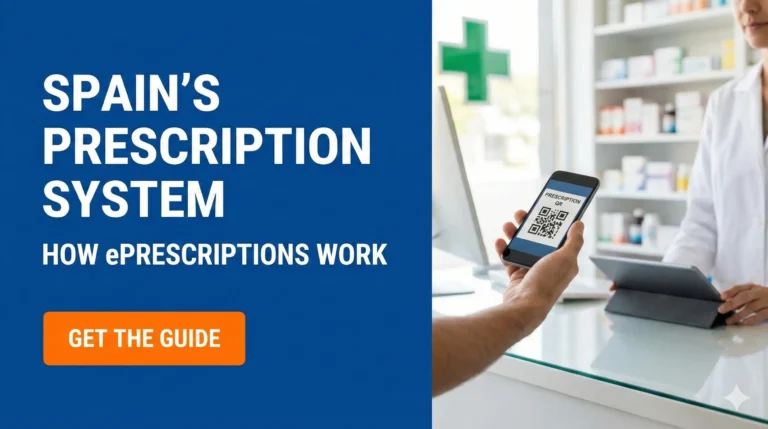
Following the virtual consultation, the administrative aspect of your care is handled entirely digitally. If the doctor determines that you require medication, such as a course of antibiotics or a topical steroid cream, they will securely generate a private electronic prescription. This receta electrónica privada is legally valid across the country and is typically sent to you as a secure PDF containing a scannable QR code. You simply walk into any Spanish pharmacy, show the pharmacist the QR code on your smartphone screen, and they will rapidly dispense the medication.
In addition to prescriptions, virtual doctors can issue formal medical referrals (volantes). If the general practitioner believes you need blood work, an X-ray, or an in-person evaluation by a specialized orthopedist, they will generate a digital referral document. You can then use this digital document to easily book the necessary physical tests at a local clinic within your insurance network.
Furthermore, a detailed clinical summary of your virtual consultation will automatically be saved into your digital patient portal. This ensures that your medical history remains perfectly synchronized and fully accessible for future reference. If you ever need to share these specific digital reports with an outside specialist or translate them for a doctor in your home country, our guide on Medical Records in Spain: Accessing and Sharing Your History outlines the exact administrative steps required.
Pros and Cons of Virtual Healthcare in Spain
Advantages of Remote Medical Consultations
The absolute primary advantage of telemedicine is the unparalleled convenience it brings to patient care. Remote consultations completely eliminate the logistical burdens of traveling to a clinic, navigating public transportation, and finding parking. This is especially beneficial for exhausted parents with sick children, elderly expats with mobility issues, or busy professionals who cannot afford to take half a day off work for a simple prescription renewal. If you need advice on securing localized pediatric care, exploring Pediatric Care in Spain: Choosing a Pediatrician is highly beneficial.
Finally, virtual healthcare dramatically reduces your exposure to secondary infections. Sitting in a crowded waiting room during flu season inherently exposes you to airborne viruses. By consulting with a doctor from the safety of your own living room, you protect your own immune system while ensuring you do not accidentally spread your illness to other vulnerable patients.
Limitations of Digital Doctor Visits
Despite its massive technological advancements, telemedicine has inherent, undeniable clinical limitations. The most obvious drawback is the absolute inability to conduct a comprehensive physical examination. A doctor on a smartphone screen cannot listen to your heart murmur, carefully feel for swollen lymph nodes, or physically palpate a rigid abdomen to check for appendicitis. Because of this, telemedicine is strictly inappropriate for acute, life-threatening emergencies, severe chest pain, major trauma, or sudden neurological symptoms.
Another limitation involves diagnostic testing. While a virtual doctor can order complex blood tests and medical imaging, they cannot perform them through a camera. You will still have to physically travel to a laboratory or imaging center to have the actual tests conducted. This means that for complex medical mysteries requiring immediate hands-on investigation, a virtual visit will ultimately just serve as an initial triage step rather than a final, definitive solution.
Comparing In-Person and Virtual Care
To help expats accurately determine the best avenue for their specific medical needs, it is highly useful to compare the logistical and clinical differences between traditional in-person visits and modern virtual consultations.
| Feature | Virtual Telemedicine Consultation | Traditional In-Person Clinic Visit |
| Best Used For | Minor ailments, prescription renewals, mental health, triage. | Severe pain, physical exams, diagnostic testing, complex illness. |
| Accessibility | Instant or very short wait; accessible from anywhere with Wi-Fi. | Requires travel; appointment availability varies by clinic. |
| Language Options | Extremely easy to filter for English-speaking doctors. | Depends heavily on the specific clinic and local demographics. |
| Physical Examination | Impossible; relies entirely on visual and verbal assessment. | Comprehensive; includes vital signs, palpation, and auscultation. |
| Exposure Risk | Zero risk of catching or spreading contagious illnesses. | Moderate risk due to shared waiting rooms and physical proximity. |
Ultimately, telemedicine is not designed to permanently replace traditional healthcare; rather, it is meant to fiercely complement it. By intelligently utilizing virtual care for routine maintenance and minor issues, expats can navigate the Spanish healthcare system much more efficiently, actively reserving their physical clinic visits for situations that genuinely require hands-on medical intervention.
How to Access and Pay for Telemedicine Services
Utilizing Private Health Insurance Apps
For the vast majority of expats living in Spain, access to high-quality telemedicine is seamlessly bundled into their private health insurance policies. Major Spanish insurers heavily promote their digital health applications as a core, invaluable benefit of their premium plans. When you purchase a comprehensive policy, unlimited virtual consultations with general practitioners are typically included at absolutely no extra out-of-pocket cost.
Navigating the complex Spanish insurance market to find a policy with robust digital features can be daunting. By securing a comprehensive private policy through a specialized expat broker like Innoinsure, you ensure that you are perfectly matched with a provider that prioritizes modern technological access. A dedicated agent from Innoinsure can verify that your chosen policy explicitly includes 24/7 video consultations and multi-lingual digital support, protecting you from accidentally purchasing a rigid, outdated health plan.
Paying Out of Pocket for Independent Platforms
If you do not hold comprehensive private health insurance, or if you are a temporary tourist without medical coverage, you can still easily access telemedicine in Spain through independent, pay-per-use digital platforms. Services operated by independent clinics or international telehealth apps allow you to book a one-off virtual consultation with a certified Spanish doctor.
These independent platforms operate on a highly transparent fee-for-service model. A standard virtual consultation typically costs between €20 and €50, depending on whether you require a general practitioner or a highly specialized consultant like a dermatologist or psychiatrist. You will be required to input your payment details before entering the virtual waiting room. For an in-depth look at standard medical pricing across the country, reviewing Health Costs in Spain: Typical Co-Pays and Out-of-Pocket Fees provides excellent financial context.
When paying out of pocket for a private digital consultation, using a borderless multi-currency account like Wise ensures that you are fiercely protected from exorbitant banking fees. By securely processing your payment through Wise, you guarantee that you are paying the exact Euro fee at the true mid-market exchange rate. This smart financial strategy prevents your home bank from tacking on hidden international transaction markups to your medical bill. If you later need to claim this exact expense on your travel insurance, our guide on How to Handle Medical Bills in Spain: Receipts, Claims, and Disputes explains the exact receipt requirements necessary for a successful refund.
Bridging the Gap with Wellness Supplements
While telemedicine is a phenomenal, rapid tool for acute minor illnesses and prescription management, maintaining optimal health abroad requires a highly proactive, preventative approach. Often, a virtual consultation for mild fatigue, digestive discomfort, or minor skin irritations will result in the doctor enthusiastically recommending lifestyle adjustments, specific vitamins, or holistic dietary supplements alongside traditional medicine.
Sourcing highly specific, premium-grade vitamins or specialized dietary supplements in a local Spanish pharmacy can occasionally be incredibly frustrating, as selections are sometimes limited and subjected to extremely high retail markups. To bridge this wellness gap, proactive expats often order high-quality vitamins, probiotics, and holistic wellness products from trusted global retailers like iHerb.
By utilizing iHerb, you can easily follow your virtual doctor’s holistic advice, sourcing exact international brands and specific supplement dosages that may be entirely unavailable in your local Spanish town. Having these preventative wellness products delivered directly to your Spanish residence ensures your immune system remains incredibly robust, ultimately reducing your need to book future medical consultations and allowing you to fully enjoy your healthy life abroad.
References
Primary Sources Official
- Ministerio de Sanidad (Ministry of Health Spain) – Salud Digital: https://www.sanidad.gob.es/areas/saludDigital/home.htm
- Agencia Española de Protección de Datos (AEPD) – Health Data Privacy: https://www.aepd.es/es
- Organización Médica Colegial de España (Spanish Medical Association) – Medical Ethics: https://www.cgcom.es/
Other Helpful Sources
- Expatica – Healthcare in Spain Guide: https://www.expatica.com/es/healthcare/
- International Bar Association – Telemedicine Survey Spain: https://www.ibanet.org/document?id=Healthcare-Telemedicine-Survey-Spain
Disclaimer
The information provided in this article is for educational and informational purposes only and does not constitute formal medical or legal advice. Telemedicine regulations, digital health platforms, and insurance coverage terms vary significantly across Spain and are subject to frequent legislative updates. Telemedicine is strictly not a substitute for emergency medical care; in the event of a severe or life-threatening medical emergency in Spain, immediately dial 112 or proceed to the nearest physical hospital emergency department.