How to Visit La Boquería and Other Famous Food Markets
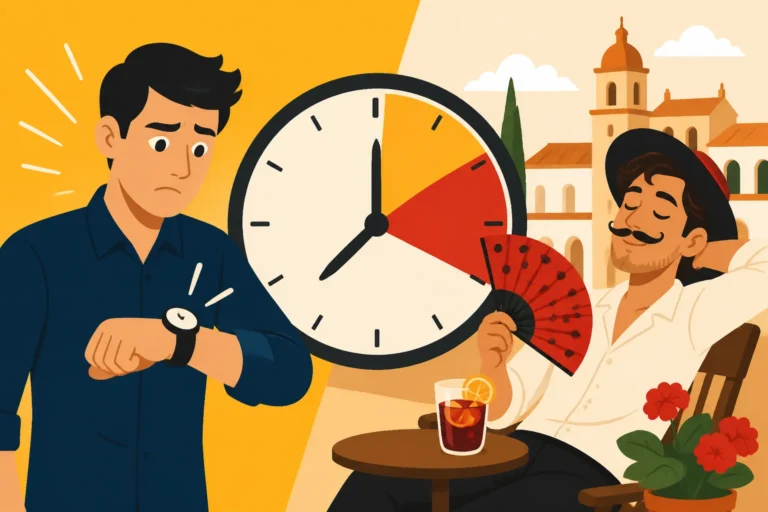
A familiar first-visit story: you walk into La Boquería at noon on a Saturday, get carried through the main aisle by the crowd, pay for a fruit cup you didn’t really want, and leave twenty minutes later with no idea what the fuss was about. This guide covers how to time, navigate and actually enjoy La Boquería and Spain’s other great food markets, the way locals use them.
Disclosure: This post may contain affiliate links. We may earn a commission at no extra cost to you if you make a purchase through these links. Read full disclosure.
Why Spanish Food Markets Feel Overwhelming at First
Spanish mercados are working markets first and tourist attractions second. In La Boquería and similar places, the stalls are there because neighbourhood residents and restaurant buyers have shopped them for generations. The visitor crowds sit on top of that daily routine, and the clash between the two is what most first-timers find uncomfortable.
The Two Markets Inside Every Famous Market
Picture two versions of La Boquería existing at the same moment. The front one faces La Rambla and is built for visitors: smoothie stands, pre-cut fruit, cones of ham, paper cups of churros. The back one is where the fishmongers, offal butchers, egg sellers and dried-goods stalls work. Prices there are aimed at people who cook. Many visitors spend their whole visit in the front section and leave thinking the market is a tourist trap. If you walk past the first ring of stalls, the place changes completely.
The same thing happens in Madrid’s Mercado de San Miguel. It has turned almost entirely into a gourmet tapas hall. That is a pleasant evening out, but it is not a fresh-produce market. If you know which kind of market you are walking into, you can set your expectations before you go. For a wider overview, see Spanish Markets and Food Halls: Where to Eat and Shop.
Etiquette That Nobody Explains
Spanish market rules are unwritten, and that is why they catch people out. Here are the main ones:
- Don’t handle the produce. At many stalls the vendor picks for you. Point, say how much you want, and let them choose. Signs asking visitors not to touch, and sometimes not to photograph, are common at the busiest stalls.
- Ask who is last in line. Queues at fish and meat counters often look like loose clusters. Locals ask “¿Quién es el último?” (who is last?) and then keep track of that person. When they’ve been served, it’s your turn.
- Buy before you photograph. If you want a close-up of a beautiful display of percebes, buy something small first. Vendors are much warmer to customers than to lenses.
- Keep your backpack in front of you. The aisles are narrow, and a bag on your back can knock goods off a counter and attract pickpockets.
That last point deserves more than a quick mention. Crowded market aisles near major tourist streets are textbook pickpocket territory. See Avoiding Pickpockets in Spain’s Tourist Areas for habits that help.
Know What You Want Before You Arrive
Choose a mission before you go. “Breakfast at a counter bar,” “buy picnic supplies,” and “photograph the architecture” each need a different time of day and a different route through the building. Arriving without a goal is how you end up drifting with the crowd and buying the first shiny thing you see.
How to Visit La Boquería Step by Step
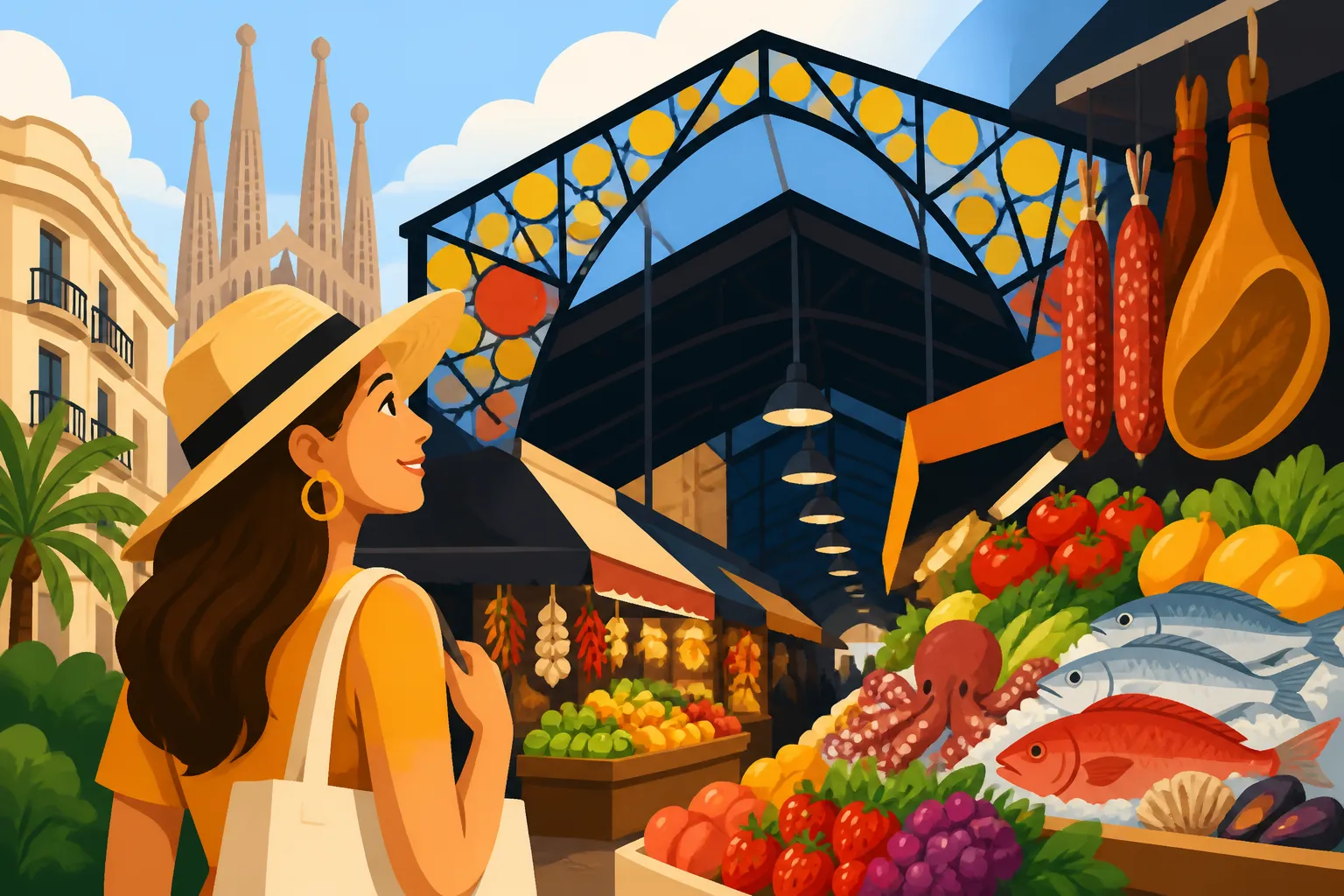
The official name is the Mercat de Sant Josep de la Boqueria. It sits on the western side of La Rambla, a short walk from the Liceu metro station. Its iron entrance arch and stained-glass sign are among the most photographed sights in Barcelona.
Timing Your Visit
The best window is early to mid-morning on a weekday. Stalls are fully stocked and the restaurant buyers are still around. The big tour groups and cruise-day crowds haven’t reached their peak yet. Saturday is the busiest day for both locals and visitors. The market is typically closed on Sundays and on public holidays, so check before planning a Sunday around it. How to Plan Travel Around Spanish Public Holidays helps you avoid arriving at locked gates.
Late afternoon is not a good time. Many fresh stalls close well before evening, and the ones still open have been picked over. The market has also brought in limits on large guided groups during peak hours, which tells you how busy those hours get.
A Practical Route Through the Market
- Enter from La Rambla but don’t stop at the first stalls. Walk straight down the central aisle toward the back.
- Head for the rear section and the fish hall in the middle. That’s where the market’s real character is: whole hake, red prawns, razor clams, and vendors calling out to regulars.
- Loop along the side aisles for cured meats, cheeses, olives, dried fruit and spices. Prices here are usually clearly marked by weight.
- Pick a counter bar for a seated bite. Look for one where local workers are eating, not just tourists taking photos.
- Leave through a side or back exit onto Plaça de la Gardunya or the streets of El Raval rather than pushing back out against the crowd on La Rambla.
Eating at the Counter Bars
The famous counter bars inside La Boquería serve market-fresh dishes cooked right in front of you: grilled fish, garbanzos with morcilla, fried eggs with baby squid, seasonal mushrooms. Seats are few and people don’t book. You stand behind the stools and wait. It’s normal to ask the person seated whether they’re nearly done.
Ordering is fast. Watching what the person beside you got and pointing works perfectly well. A few phrases still make the exchange easier, and Ordering Food and Drinks in Spanish: A Practical Phrasebook covers the basics. Ask about the daily specials, because the best dishes are often not written down anywhere.
If you’d like context before going in on your own, a guided food walk can help. Platforms such as GetYourGuide list Boquería and El Raval tasting tours that explain what you’re eating and introduce you to stallholders. Pick small-group tours, since large groups have the hardest time moving through the aisles.
Other Famous Food Markets Worth Visiting in Spain
La Boquería is only the start. Every major Spanish city has a showpiece market, and several are more relaxed and more rewarding than the Barcelona icon.
Comparing Six Great Markets
The table below compares six well-known markets so you can decide where to spend your time.
| Market | City | Main Character | Best For | Crowd Level |
|---|---|---|---|---|
| La Boquería | Barcelona | Historic fresh market with counter bars | Seafood, cured meats, counter lunches | Very high |
| Mercat de Santa Caterina | Barcelona | Neighbourhood market under a colourful wavy roof | Relaxed shopping, architecture | Moderate |
| Mercado de San Miguel | Madrid | Iron-and-glass gourmet tapas hall | Evening tapas and wine | High |
| Mercado Central | Valencia | Large modernista fresh market | Produce, rice, local ingredients | Moderate to high |
| Mercado de Triana | Seville | Riverside market over castle ruins | Tapas stalls, local shopping | Moderate |
| Mercado de la Ribera | Bilbao | Large covered market on the river | Basque produce, pintxos | Moderate |
Barcelona’s Quieter Alternative
Mercat de Santa Caterina, in the Sant Pere and El Born area, is a short walk from the Cathedral. Its undulating roof of coloured tiles, designed by Enric Miralles and Benedetta Tagliabue, shows the colours of fruit and vegetables and is best seen from above at nearby viewpoints. Inside it is calmer than La Boquería, with plenty of locals and enough space to look around properly. If you’re staying in El Born or the Gothic Quarter, it works well as an everyday market. What’s the Best Area to Stay in Barcelona? compares neighbourhoods if you want to stay near one. Searching for apartments with kitchens on Booking.com makes market shopping far more useful, because you can actually cook what you buy.
Madrid, Valencia, Seville and Bilbao
Mercado de San Miguel, beside Plaza Mayor, is the market people love or hate. Locals rarely shop there now. It’s a polished hall of oyster bars, croqueta counters and vermouth stands, and it’s at its best in the early evening. Treat it as a tapas crawl under one roof. If you want a real Madrid produce market, try one in a residential barrio instead. How to Find the Best Local Market in a Spanish City explains how to find them.
Mercado Central in Valencia is arguably the most beautiful market building in Spain: a modernista hall of iron, glass and ceramic domes, opposite the Gothic silk exchange, La Lonja. It’s a working market packed with Valencian produce, including the rice varieties used in paella. Since you’ll be thinking about paella anyway, read How to Find the Best Paella in Valencia (and Avoid Bad Ones) before you go.
Mercado de Triana in Seville sits at the Triana end of the Isabel II bridge, on the ruins of the Castillo de San Jorge, once the seat of the Inquisition. You can still visit the excavated remains below. The market combines fresh stalls with small tapas bars, and it gets lively around midday when locals stop in for a drink.
Mercado de la Ribera in Bilbao is a large covered market on the Nervión river at the edge of the Casco Viejo. Downstairs, Basque fish and produce dominate. A pintxos area brings in a social crowd, especially around aperitivo time. To fit in, read What Is Vermut Hour in Spain and How to Join In first.
Linking several of these cities into one food-focused trip is easy by train. Booking platforms such as Omio let you compare rail and bus options between Barcelona, Valencia, Madrid and Seville in one search, which helps when you’re planning around market days.
Shopping, Paying and Avoiding Common Pitfalls
How to Buy Like a Local
Order by weight or by piece. Cien gramos (one hundred grams) of jamón or un cuarto (a quarter kilo) of olives are normal requests. With cured ham, ask the vendor to slice it fresh in front of you rather than taking a pre-packed tray. Vacuum-packed cheese and ham travel well if you want to bring some home.
Haggling is generally not part of Spanish market culture, especially at indoor fixed-price stalls. Friendly conversation can still earn you a taste or a little extra. How to Bargain (or Not) at Spanish Markets explains where the line is. For open-air weekly markets, which work a bit differently, see How to Shop at a Spanish Outdoor Market.
Paying and Practical Details
Most stalls in the big markets take cards, but small vendors and counter bars sometimes prefer cash for small amounts, so carry some coins and small notes. Keep your phone and wallet in a front pocket or a zipped bag, particularly in La Boquería. Bring a reusable bag. Vendors may charge for plastic ones, and a tote makes carrying fragile items like eggs or figs much easier.
Pitfalls to Avoid
- Pre-cut fruit and juice at the entrance. These are the easiest buys and usually the weakest value. Fresh whole fruit from a stall further in is better.
- Unmarked prices sold by weight. If seafood or tapas are priced per kilo, ask for the final price before they’re cooked or wrapped.
- Visiting on the wrong day. Sunday closures and Monday quietness (fish stalls are often thinner on Mondays, since fishing fleets don’t bring in a full Sunday catch) can disappoint you.
- Treating the market as a quick photo stop. The real reward comes from slowing down, buying something, and eating at a counter.
Visit early, walk past the first stalls, follow the locals and buy something before you take photos. Done that way, Spain’s food markets become one of the best parts of any trip.
Disclaimer
This article is for general informational purposes only and does not constitute professional advice. Laws, prices and regulations vary by location and change over time. Consult a qualified professional for guidance on your specific situation.