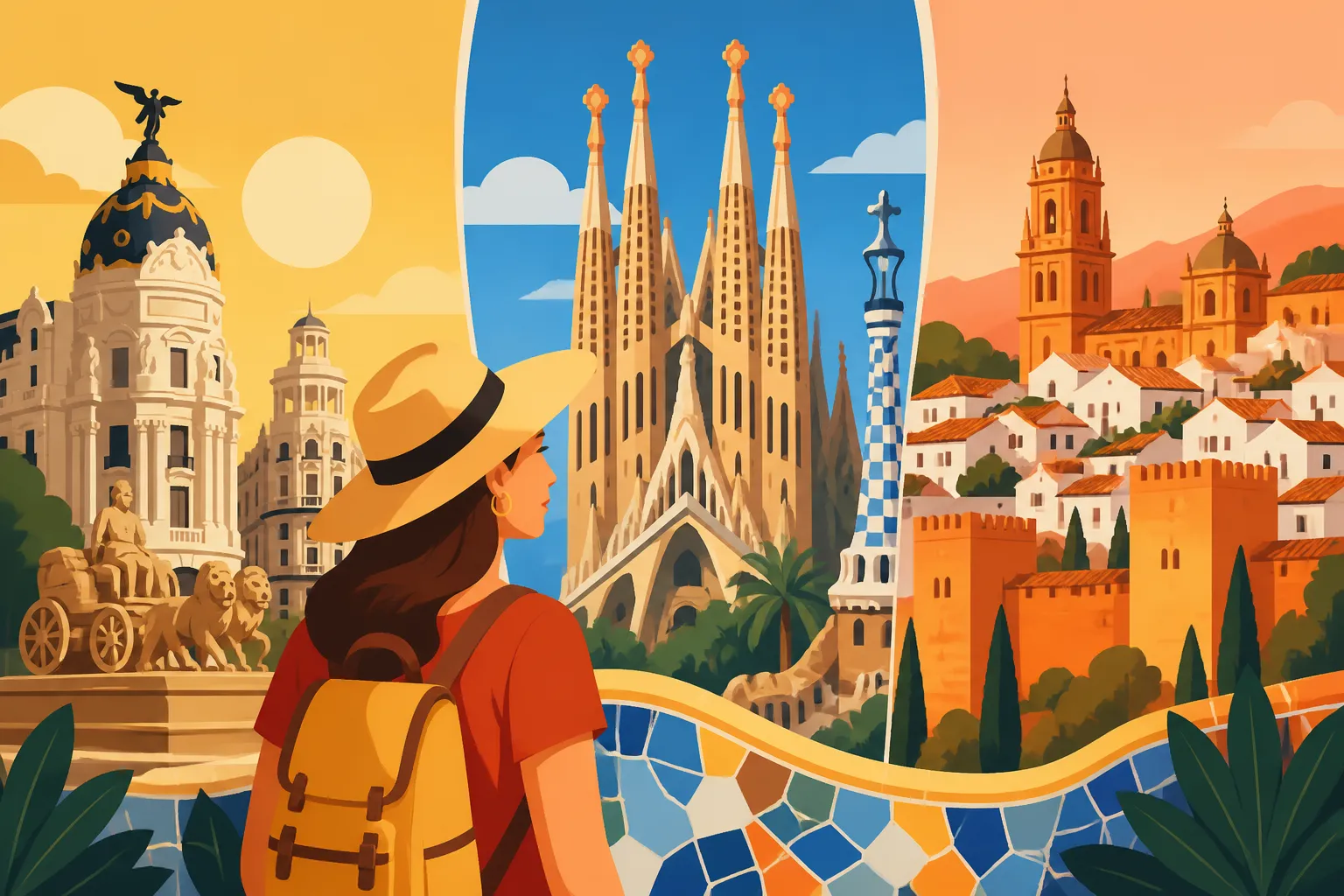
Madrid, Barcelona, and Spain’s Great Cities: Explorer’s Guide
Navigating Spain's major cities often feels like a beautiful but chaotic puzzle where the pieces don't quite fit. I remember my first week in Madrid, standing confused at a closed metro station during a festival I didn't know existed, feeling like a total outsider. This guide solves that frustration by breaking down the unique personalities, logistical hurdles, and hidden rhythms of Spain's greatest urban hubs so you can explore like a seasoned local.
Disclosure: This post may contain affiliate links. We may earn a commission at no extra cost to you if you make a purchase through these links. Read full disclosure.
The Big Two: Choosing Between Madrid and Barcelona
When you first land in Spain, the pull of the two titans—Madrid and Barcelona—is unavoidable. It is a rivalry that goes far deeper than football; it is a fundamental difference in lifestyle, architecture, and even the air you breathe. Most expats I know started in one of these two, and your preference usually depends on whether you crave the sophisticated, high-energy pulse of a continental capital or the breezy, creative, and slightly rebellious spirit of a Mediterranean port.
Madrid: The Heart of the Peninsula
Madrid is a city that never seems to sleep, but not in the neon-lit way of New York. It is a social sleeplessness. The streets of Malasaña and Chueca are packed at 2:00 AM on a Tuesday because the Madrileño lifestyle revolves around the "terrace culture." When I first moved here, I was shocked to see families with young children out at midnight, but you soon realize that the city is designed for public life. The architecture is grand and imperial, with the Palacio Real and the Gran Vía giving you a constant sense of history. However, for a newcomer, the sheer scale can be overwhelming.
Logistically, Madrid is the hub of the country. Everything radiates from Puerta del Sol. If you are staying for more than a few days, it is worth checking How to Get From Madrid Airport to the City Center before you arrive, as the options vary wildly in price and speed. For places to stay, it is a good idea to use Booking.com to find something in a neighborhood like Chamberí if you want to avoid the tourist traps of Sol, or La Latina if you want the most authentic tapas experience. Madrid doesn't have a beach, but it has the Retiro Park, which is essentially the city's lungs and the place where every expat eventually finds their peace among the rowboats and statues.
Barcelona: The Mediterranean Soul
Barcelona feels like a completely different country, and in many ways, it is. The presence of the Catalan language and the whimsical, organic architecture of Antoni Gaudí give the city a fairy-tale quality that Madrid lacks. But don't let the beauty fool you; Barcelona is a city of layers. There is the Gothic Quarter, where the narrow alleys can make you lose your sense of direction in minutes, and the Eixample, with its wide, gridded boulevards and high-end boutiques.
The main struggle for visitors here is the "over-tourism" in areas like Las Ramblas. My advice is to skip the main thoroughfare entirely and head to Gràcia. It used to be a separate village and still feels like one, with small squares where you can sit and have a vermut without being hounded by souvenir sellers. Because Gaudí's sites are so popular, you absolutely must use GetYourGuide to book your tickets in advance for the Sagrada Família or Park Güell. If you don't, you will spend half your trip standing in a queue under the hot sun. For a deeper dive into the logistics of the city, see Barcelona for First-Time Visitors: What to See and Skip.
Andalusia’s Golden Triangle: Seville, Granada, and Córdoba
If Madrid is the head and Barcelona is the heart, Andalusia is the soul of Spain. The "Golden Triangle" consists of Seville, Granada, and Córdoba—three cities that tell the story of the Moorish empire and the subsequent Reconquista through their stunning monuments. This region is where many of the stereotypes of Spain—flamenco, bullfighting, and gazpacho—actually originate, but each city offers a distinct flavor of those traditions.
Seville: The City of Fire and Orange Blossoms
Seville is arguably the most beautiful city in Spain, but it is also one of the hottest. If you visit in July or August, you will learn the true meaning of the siesta; the streets are literally deserted from 2:00 PM to 7:00 PM because the heat is dangerous. But once the sun goes down, Seville becomes magical. The smell of orange blossoms in the spring is something I have never experienced anywhere else. The city is home to the world's largest Gothic cathedral and the stunning Alcázar, which you might recognize from various film sets.
The neighborhood of Triana, across the river, is the spiritual home of flamenco. It is wise to avoid the flashy "flamenco dinners" and look for a small peña where the locals go. It is raw, emotional, and far more authentic. Planning your movement through the south is key, and using Omio to compare the high-speed AVE trains with the regional buses can save you a lot of money and time. For more specific advice on navigating this fiery city, check out What Are the Must-See Towns in Andalusia for a First Visit?.
Granada: A Moorish Dream Under the Sierra Nevada
Granada is unique because it was the last stronghold of the Moors in Spain. The Alhambra, a massive fortress and palace complex, sits on a hill overlooking the city with the snow-capped Sierra Nevada mountains in the background. It is breathtaking. However, getting tickets is a notorious headache for expats and tourists alike. You often need to book months in advance, and if you miss out, you are left scrounging for cancellations. I’ve lived through the frustration of trying to explain to visiting family why we can't get in, so please read How to Get Tickets for the Alhambra in Granada to avoid that heartbreak.
Beyond the Alhambra, Granada is famous for its tapas culture. In most of Spain, you pay for your tapas, but in Granada, they are often still free with every drink you order. This makes it a haven for students and budget travelers. The Albaicín district, the old Moorish quarter, is a labyrinth of white-washed houses and jasmine-scented gardens. It is steep and exhausting to walk, but the view of the Alhambra at sunset from the San Nicolás viewpoint is worth every drop of sweat.
Córdoba: The Courtyards and the Mezquita
Córdoba is often treated as a day trip from Seville, but that is a mistake. The city has a quiet, reflective dignity that the more boisterous Seville lacks. The Mezquita-Catedral is one of the most incredible buildings in the world—a forest of red-and-white arches inside a former mosque that has a Renaissance cathedral built right in the middle of it. It is a physical representation of Spain's layered history.
Every May, the city hosts the Festival of the Patios, where residents open their private, flower-filled courtyards to the public. It is a stunning display of local pride and horticultural skill. Because the streets of the Jewish Quarter are so narrow, the city stays surprisingly cool even in the heat. To make the most of your time here without the crowds, I suggest looking into How to See Córdoba's Mezquita Without the Queues. It is one of those places where a little bit of planning goes a very long way.
The Northern Stars: Bilbao, San Sebastián, and Santiago
When you head north, the dry, sun-baked plains of Castile give way to "Green Spain." The landscape looks more like Ireland or Switzerland than the Spain you see on postcards. This is the land of cider, seafood, and some of the world's best modern architecture. The rain is a constant companion here, but the locals don't let it stop them, and neither should you.
Bilbao and San Sebastián: A Gastronomic Powerhouse
The Basque Country is a world unto itself. Bilbao, once a gritty industrial port, was transformed by the arrival of the Guggenheim Museum. The "Guggenheim Effect" turned the city into a modern art hub, but the heart of the city remains the Casco Viejo (Old Town), where the tradition of pintxos (the Basque version of tapas) is taken to an art form. You don't just sit and eat; you move from bar to bar, having one small bite and a small glass of txakoli (sparkling white wine) at each stop.
Just an hour away is San Sebastián, which many consider the food capital of the world. It has more Michelin stars per square meter than almost anywhere else. But the real joy is the La Concha beach, a perfect crescent of sand right in the middle of the city. It is elegant, wealthy, and deeply rooted in Basque culture. If you are planning a trip up north, How Many Days Do You Need to See the Basque Country? is an essential read for balancing these two incredible cities.
Santiago de Compostela: The Final Stone
Santiago de Compostela is the capital of Galicia and the end point of the Camino de Santiago pilgrimage. There is a palpable sense of arrival and relief in the air here. Even if you haven't walked 500 miles to get there, the sight of the cathedral in the mist is moving. The city is built of granite, which turns a dark, shimmering grey when it rains—which is often.
The food in Santiago is distinct from the rest of Spain. It’s all about the pulpo a feira (octopus with paprika) and the massive plates of shellfish. The city feels old and academic, thanks to its historic university. It is a place for slow walks and long, hearty meals. For those interested in the pilgrimage aspect or just the city's unique vibe, I recommend How to Start the Camino de Santiago: Routes for Beginners for some context on why this city holds such a special place in the Spanish psyche.
The East Coast Mediterranean Gems: Valencia and Málaga
If you want the Mediterranean lifestyle without the chaotic intensity of Barcelona, the cities of Valencia and Málaga offer a more relaxed, but equally vibrant, alternative. These cities have undergone massive renovations in the last decade, turning them from overlooked ports into top-tier cultural destinations.
Valencia: The City of Arts, Sciences, and Rice
Valencia is the third-largest city in Spain, but it feels much more manageable than Madrid or Barcelona. It is a city of contrasts: the futuristic City of Arts and Sciences (designed by Santiago Calatrava) sits at one end of a 9-kilometer-long park that was once a riverbed, while the other end holds a stunning medieval old town. Valencia is also the undisputed home of paella.
One thing I tell every newcomer is: do not eat paella at night, and do not eat it at a place with photos of food on a board outside. Authentic paella is a lunchtime ritual. For the best experience, head out to the Albufera lagoon just south of the city. To navigate the local food scene and avoid the "tourist rice," check out How to Find the Best Paella in Valencia (and Avoid Bad Ones). The city's beaches are massive and wide, and the Turia Park is the perfect place for a bike ride. You can easily find bike tours or city passes on GetYourGuide to make navigating the park and the museums a breeze.
Málaga: More Than Just a Gateway to the Coast
For years, travelers only saw the Málaga airport on their way to the resorts of the Costa del Sol. That was a huge mistake. Málaga city has reinvented itself as a "City of Museums," with a branch of the Pompidou Centre, a Picasso Museum (he was born here), and a stunning Russian Art Museum. The port area, Muelle Uno, is a chic development of shops and restaurants that is perfect for a sunset stroll.
Málaga has a grit and a passion that is infectious. The Calle Larios is one of the most beautiful shopping streets in Europe, especially during the Christmas lights or the August Fair. The local sweet wine, served straight from the barrel in old taverns like El Pimpi, is a must-try. If you are using Málaga as a base for the wider region, How to See Ronda on a Day Trip From Málaga is a popular route that many expats take when they want to show off the "white villages" to visitors.
Comparing Spain's Major Cities
| City | Vibe | Best For | Must-See Landmark | Signature Dish |
|---|---|---|---|---|
| Madrid | Imperial & Energetic | Nightlife & Art Museums | Royal Palace | Cocido Madrileño |
| Barcelona | Creative & Coastal | Architecture & Beach | Sagrada Família | Pan con Tomate |
| Seville | Traditional & Romantic | Flamenco & History | Plaza de España | Salmorejo |
| Valencia | Modern & Balanced | Families & Food | City of Arts & Sciences | Paella Valenciana |
| Bilbao | Industrial-Chic | Modern Art & Cuisine | Guggenheim Museum | Pintxos |
| Málaga | Breezy & Cultural | Museums & Sunlight | Alcazaba Fortress | Espetos (Sardines) |
Master Planning Your Urban Route
Trying to see all these cities in one go is a recipe for burnout. Spain is larger than most people realize, and the geography is diverse. You need to be strategic about how you move between hubs to ensure you spend more time exploring and less time in transit.
Moving Between Cities: High-Speed Rail vs. Road
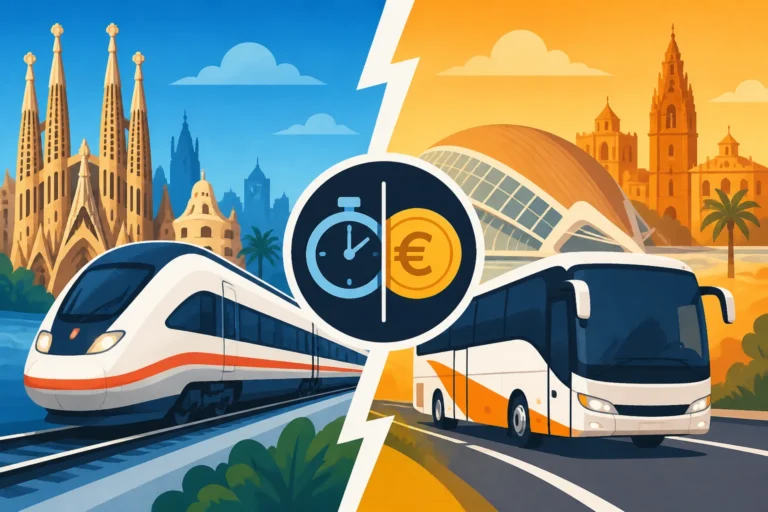
Spain has the best high-speed rail network in Europe, known as the AVE. It makes traveling between Madrid and Seville, or Madrid and Barcelona, incredibly easy—often taking under three hours. However, the tickets can be expensive if you don't book in advance. I highly recommend using Omio to compare the train prices with long-distance bus companies like ALSA. Sometimes a four-hour bus ride is a third of the price of a train, and the buses in Spain are surprisingly comfortable with Wi-Fi and plenty of legroom.
If you are traveling within a specific region, like Andalusia or the Basque Country, renting a car might be better for reaching the smaller towns, but for the "Great Cities," a car is a liability. Parking in city centers like Madrid or Seville is a nightmare and incredibly expensive. Stick to the trains for the big hubs. For more on train logistics, check out How to Buy AVE Train Tickets in Spain and Save Money.
Budgeting and Timing: When to Visit Each Hub
Timing is everything in Spain. As I mentioned, the south in summer is punishingly hot. Conversely, Madrid can be surprisingly cold in the winter because of its high altitude. The best times for a multi-city tour are usually late spring (May/June) or early autumn (September/October). During these windows, the weather is pleasant across the whole country, and you can avoid the massive crowds of the August holidays.
Budget-wise, Madrid and Barcelona are the most expensive for accommodation. You should expect to pay significantly more for a central hotel in Barcelona than you would in Valencia or Málaga. Using Booking.com's map feature helps you find neighborhoods that are one or two metro stops away from the center, which can save you 30% on your nightly rate. For a deeper look at expenses, see Cost of Living in Spain: Monthly Budget Guide for Expats.
Cultural Nuances and Urban Etiquette
Every city in Spain has its own local customs, but there are some general "Spanish rules" that apply to urban life. Understanding these will save you from the awkwardness of standing outside a closed restaurant at 7:00 PM or accidentally offending a local in a crowded bar.
Navigating the Daily Rhythm: Lunch, Siesta, and Late Dinners
The most common mistake visitors make is trying to live on a "standard" European or American schedule. In Spain's great cities, lunch is the main event and usually happens between 2:00 PM and 4:00 PM. Many shops will close during this time for the siesta. This doesn't mean everyone is sleeping; it often means they are having a long lunch with family or friends.
Dinner rarely starts before 9:00 PM. If you show up at a restaurant at 7:30 PM, the staff will likely still be setting up, or you will be sitting in an empty room with other confused tourists. To blend in, have a small snack (a merienda) around 6:00 PM to tide you over. For a full guide on how to handle these shifts, read What Time Do Spaniards Eat Lunch and Dinner?. It sounds simple, but adjusting your internal clock is the hardest part of moving here.
Safety and Logistics: Staying Street-Smart
Spain's cities are generally very safe, but pickpocketing is a serious issue in high-traffic tourist areas, particularly in Barcelona and Madrid. It can happen even to the most "aware" people. The key is to never put your phone or wallet on the table at a terrace and to always keep your bag in front of you on the metro.
Another logistical hurdle is the Cita Previa (prior appointment) system for any kind of administrative task. Even as a tourist, if you lose your passport or need official help, you can't just walk in. Everything is done online. For those moving here or staying long-term, Spanish Bureaucracy for Daily Life: Padrón, IDs, and Local Services is a vital resource for understanding how to get things done without losing your mind.
Practical Resources for City Explorers
To make your journey smoother, there are a few tools I rely on constantly. For booking experiences, from tapas tours to rooftop visits, GetYourGuide is my go-to because their cancellation policy is very flexible. For comparing the best way to get from City A to City B, Omio saves me from checking five different websites. And for finding that perfect apartment with a balcony in the historic center, Booking.com remains the most reliable for the Spanish market.
Don't forget to download the local transport apps for each city (like EMT for Madrid or TMB for Barcelona). They are far more accurate than Google Maps for bus times and route changes. If you are ever in doubt, just look for the nearest tabacos shop; the people working there are usually fonts of local knowledge about bus passes and neighborhood news.
Disclaimer
The information provided in this guide is for general informational purposes only and reflects the personal experiences and research of the author as of June 2026. While we strive to keep the details accurate and up-to-date, travel conditions, local laws, and business operations in Spain can change rapidly. Readers are encouraged to verify specific travel requirements, visa regulations, and local health guidelines with official government sources before planning their trip.