Allergy Testing and Treatment in Spain: A Practical Overview
Waking up in a beautiful Madrid apartment only to find your eyes swollen shut and your throat feeling like it has been rubbed with sandpaper is a classic, albeit miserable, expat initiation. My first spring in Granada was a total blur of sneezing and confusion because I simply did not realize how much the olive blossom would wreck my immune system. This guide breaks down exactly how to navigate allergy testing and treatment in Spain so you can stop suffering and start enjoying the terrace life again.
Disclosure: This post may contain affiliate links. We may earn a commission at no extra cost to you if you make a purchase through these links. Read full disclosure.
Understanding the Allergy Landscape in Spain
The geographical diversity of the Iberian Peninsula means that your triggers in the rainy north of Galicia will be vastly different from those in the arid plains of Castilla-La Mancha. For many foreigners, the first year is a honeymoon phase where the immune system is busy processing new environments, but by year two or three, the "Spanish sneeze" often settles in as your body overreacts to local flora.
Common Environmental Allergens in Different Regions
In the southern half of Spain, particularly in Andalucía and Extremadura, the "olivo" (olive tree) is the undisputed king of allergens. From late April through June, the pollen counts in cities like Jaén or Córdoba can reach levels that are practically off the charts. If you are living in these areas, you will notice a fine yellow dust covering cars; that is not just dirt, it is a potent respiratory irritant. Meanwhile, in coastal regions like Valencia or Barcelona, the "parietaria" (pellitory-of-the-wall) weed grows in the cracks of ancient stone walls and blooms for nearly nine months of the year, making it a nightmare for perennial sufferers.
Central Spain, including Madrid, suffers heavily from "plátano de sombra" (London Plane trees). These majestic trees line almost every major boulevard, and while they provide much-needed shade in July, their "pestañas" (the little hairs on the seeds) break off in March and April, causing mechanical irritation in the throat and lungs even for people who aren't technically allergic. Understanding these local nuances is the first step in realizing that your "permanent cold" is actually an environmental reaction.
Food Allergies and the Mediterranean Diet
While the Mediterranean diet is world-renowned for its health benefits, it can be a minefield for those with specific food allergies. "Frutos secos" (nuts) are ubiquitous, often hidden in sauces like romesco or sprinkled over salads without a second thought. Shellfish (mariscos) is another major player, and cross-contamination in busy "freidurías" (fried fish shops) is a very real risk that many expats underestimate.
In Spain, labeling laws are strict due to EU regulations, but the cultural understanding of "trace amounts" can be lax in smaller, family-run tascas. If you have a severe allergy, you have to be your own advocate. It is not enough to ask if a dish contains an ingredient; you often have to explain the severity of the reaction, as some servers might assume you are just a "picky eater" (delicado con la comida).
Seasonal Peaks and the Impact of the Calima
One factor that catches many newcomers off guard is the "Calima." This is a weather phenomenon where dust from the Sahara Desert is blown across the Mediterranean, turning the sky an eerie orange. While it is technically mineral dust and not a biological allergen, it acts as a massive irritant to the mucous membranes. For someone already struggling with pollen, the Calima can trigger a secondary inflammatory response that makes allergy symptoms feel ten times worse.
During these episodes, which are most frequent in the Canary Islands and the southern coast but can reach as far north as Asturias, doctors recommend keeping windows tightly shut and using high-quality air purifiers. It is a unique Spanish challenge that requires a combination of traditional allergy management and environmental awareness.
Accessing Allergy Testing: Public vs Private Pathways
The Spanish healthcare system is excellent, but how you access an "alergólogo" (allergist) depends entirely on your residency status and the type of coverage you hold. Navigating the bureaucracy is often the most stressful part of the process, but once you are in the system, the quality of clinical care is generally high.
The Public System Route from GP to Specialist
If you are working in Spain or are a permanent resident, you likely have access to the Sistema Nacional de Salud (SNS). Your journey begins at your local What Is a ‘Centro de Salud’ in Spain and How Do You Register? where you will meet your "médico de cabecera" (GP). In the public system, you cannot simply book a specialist. You must convince your GP that your symptoms warrant a referral.
Be prepared for a wait. While urgent cases are moved along, a routine referral for allergy testing can take anywhere from three to six months depending on your "Comunidad Autónoma." I remember waiting four months in Valencia just to get the initial patch test. However, the benefit is that once you are in, all testing and subsequent "vacunas" (allergy shots) are either free or heavily subsidized. For those just starting their paperwork, it is vital to know How to Get a Spanish Health Card (Tarjeta Sanitaria): Step‑by‑Step to ensure you aren't paying out of pocket for these visits.
The Private Healthcare Advantage
Many expats opt for private insurance specifically to bypass the waiting lists of the public system. With a policy from a provider like Innoinsure or Cigna Global, you can often book an appointment with an allergist directly, sometimes within the same week. This is particularly useful if you are in the middle of a "crisis season" and cannot wait months for relief.
When looking at Private Health Insurance for Spain Visas: What Policies Must Include, ensure that "pruebas diagnósticas" (diagnostic tests) are covered without high co-pays. Most private allergists in major cities like Madrid or Marbella are accustomed to international patients and may even offer services in English. Having this level of access allows you to get a "Prueba de Prick" or a blood panel done immediately, which is a lifesaver when you are trying to hold down a job while feeling like your head is underwater.
Self-Referral and Direct Testing Options
In recent years, some private laboratories in Spain, such as Synlab or Quirónsalud, have started offering direct-to-consumer allergy panels. You can walk in, pay a fee (usually between 80€ and 200€), and have a comprehensive IgE blood test done without a doctor’s referral. While this provides quick data, it lacks the professional interpretation of an allergist.
It is usually best to use this only as a last resort or if documentation is needed for a specific work requirement. It is always better to have an allergist interpret the results in the context of the Spanish Medical Terminology: Common Words Expats Should Know to ensure you aren't misdiagnosing a cross-reactivity issue as a primary allergy.
Types of Allergy Tests Available in Spanish Clinics
Once you finally sit down with an allergist, they will determine which diagnostic tool is most appropriate for your symptoms. Spanish clinics use the same gold-standard methods found globally, but the way they explain the process might be a bit different than what you are used to back home.
Skin Prick Testing: Pruebas de Prick
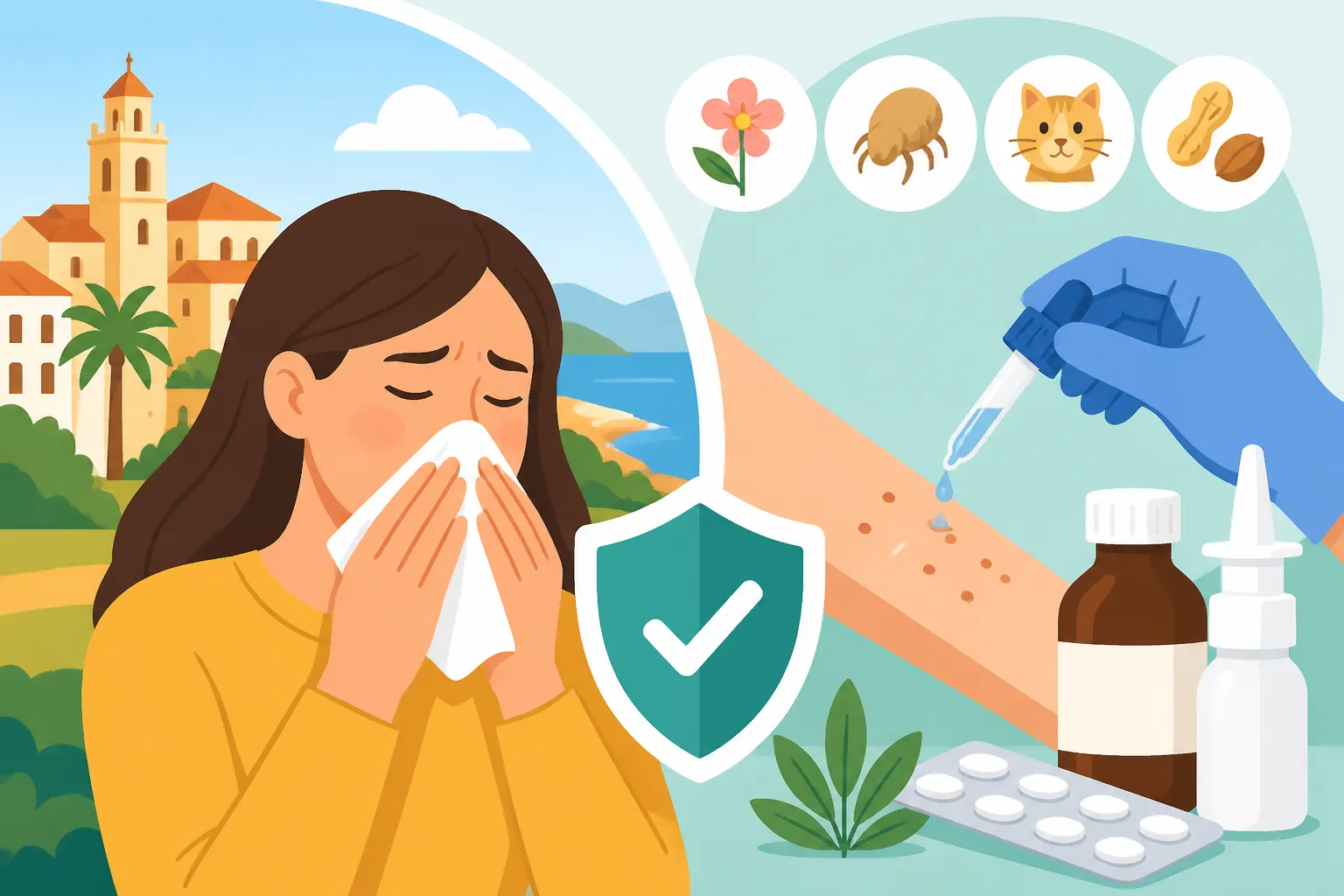
The "Prueba de Prick" is the most common first step. The nurse will apply drops of various allergens—usually local pollens, molds, animal dander, and common foods—to your forearm and then lightly scratch the skin. You then wait about 15 to 20 minutes in the waiting room, trying desperately not to scratch the itchy welts forming on your arm.
In Spain, allergists are very thorough about testing for "pólenes" that are specific to your province. If you live in Jaén, expect a heavy emphasis on olive pollen; if you are in the North, they will focus more on "gramíneas" (grasses) and "ácaros" (dust mites). It is a simple, effective, and relatively cheap test that provides immediate answers.
Blood Testing: IgE and Component Resolution
If you have a skin condition like eczema that prevents skin testing, or if the doctor wants to confirm a "hidden" allergy, they will order a blood test, often referred to as a RAST or ImmunoCAP. In Spain, many advanced clinics now offer "diagnóstico por componentes." Instead of just telling you that you are allergic to "peanuts," this test can identify the specific protein you are reacting to.
This level of detail is crucial for determining if you are at risk for anaphylaxis or if you are simply experiencing a cross-reaction with birch pollen. For digital nomads or those on shorter stays, using a service like SafetyWing for emergency reactions is a good safety net, but these deep-dive diagnostic blood tests are usually part of a long-term residency healthcare plan.
Patch Testing and Food Challenges
For contact dermatitis—think reactions to metals in jewelry or chemicals in Spanish laundry detergents—the doctor will use "parches." These are stickers placed on your back for 48 to 72 hours. You have to keep them dry, which is a challenge during the sweaty Spanish summer.
"Provocación oral" (oral challenges) for food allergies are always done under strict medical supervision in a hospital setting. If you suspect a severe food allergy, never try to test it yourself at home. The allergist will have you eat tiny, increasing amounts of the suspected food while monitoring your vitals. It is a long day at the clinic, but it is the only way to get a definitive "yes" or "no" on certain food triggers.
| Feature | Public System (SNS) | Private Healthcare |
|---|---|---|
| Wait Time | 3–8 months for specialists | 1–10 days |
| Cost | Free (with Social Security) | Monthly premium + possible co-pay |
| Referral | Required from GP | Usually not required |
| Specialist Choice | Assigned by clinic | You choose from a directory |
| Medication Cost | 40–60% subsidized | Full price (unless covered) |
Treatment Options and Availability in Spain
Once you have your diagnosis, the focus shifts to management. Spain has a very "pro-pharmacy" culture, and you will find that many medications that require a prescription in other countries are more easily accessible here, though the rules have tightened significantly in the last few years.
Antihistamines and Over-the-Counter Meds
For mild to moderate hay fever (rinoconjuntivitis), your first stop will be the local "farmacia." You can find classic antihistamines like Loratadina or Cetirizina over the counter. However, many Spanish doctors prefer newer generation drugs like Ebastina or Bilastina (Bilaxten), which are known for being less drowsy.
If you are struggling with the language barrier while buying meds, it helps to check out How to Ask for an English‑Speaking Doctor Appointment in Spanish (Phrase Guide) so you can accurately describe whether your symptoms are "picor" (itching), "estornudos" (sneezing), or "congestión." Also, be aware that many Pharmacies in Spain: Prescriptions, Over‑the‑Counter Meds, and Practical Tips will require a formal "receta" (prescription) for the stronger nasal steroids like Flixonase or Avamys, even if they used to sell them freely in the past.
Immunotherapy: Allergy Shots and Drops
If your allergies are life-altering, your specialist will likely suggest "inmunoterapia." In Spain, this is very common. You can choose between "vacunas" (monthly injections) or "gotas sublinguales" (drops under the tongue). This is a long-term commitment, usually lasting three to five years, but it is the only way to actually "cure" the allergy by desensitizing your immune system.
In the public system, the government subsidizes a significant portion of the cost of these vaccines. In the private sector, you will pay for the vials at the pharmacy and then take them to your clinic to be administered. It is a bit of a logistical dance, but the relief from "olivo" or "ácaros" is well worth the effort.
Emergency Care for Severe Reactions
For those with life-threatening allergies, carrying an "autoinyector de adrenalina" (EpiPen) is non-negotiable. In Spain, these are sold under brands like Jext or Altellus. You must have a prescription to get one at a subsidized rate, but in a true emergency, any How to Find a 24‑Hour Clinic in Spain (Urgencias) will have the equipment to stabilize you.
If you ever find yourself in a situation where you are struggling to breathe, do not wait. Call 112 immediately. The operators can often handle calls in multiple languages, and the response time in urban areas is usually excellent. For more on this, read about Emergency Healthcare in Spain: 112, Urgent Care, and What to Expect to understand the difference between the ER and a local clinic.
Practical Tips for Navigating Spanish Pharmacies and Doctors
Dealing with the medical system in a second language is exhausting. I’ve spent many hours in waiting rooms with a pocket dictionary, trying to figure out how to say "hives" (urticaria) without sounding like I was describing a different disease.
Useful Spanish Terminology for Allergy Sufferers
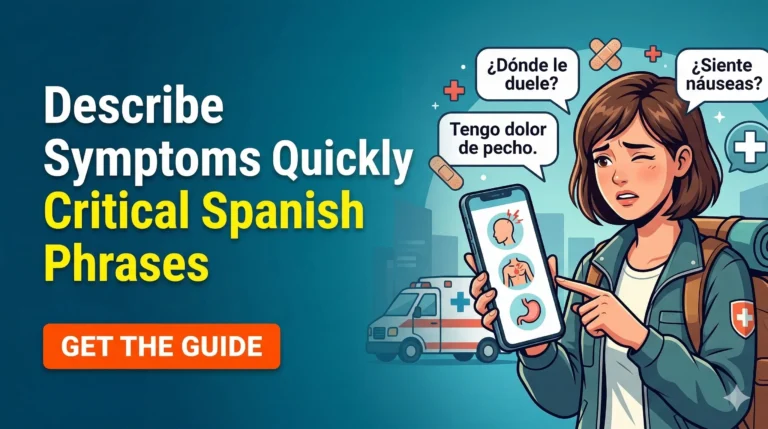
Learning a few key phrases will change your experience at the Finding Doctors in Spain: Appointments, Referrals, and Language Tips visits. Instead of just saying "I'm sick," use specific terms:
- "Tengo alergia al polen" (I have a pollen allergy).
- "¿Lleva frutos secos?" (Does this contain nuts?).
- "Me pican los ojos" (My eyes itch).
- "Tengo dificultad para respirar" (I have difficulty breathing).
The more specific you are, the faster the doctor can help. If you find the linguistic hurdle too high, you should definitely use a resource like How to Find an English‑Speaking Doctor in Spain (Practical Guide) to find a professional who can speak your native tongue.
Managing Medication Refills and Prescriptions
The "receta electrónica" (e-prescription) system in Spain is actually quite brilliant. Once your doctor prescribes a long-term allergy medication, it is linked to your health card. You simply go to any pharmacy, they scan your card, and the system tells them what you are allowed to buy.
However, if you are moving between regions (e.g., from Madrid to Valencia), the systems don't always talk to each other perfectly. Always keep a paper copy of your "informe médico" (medical report) just in case. If you lose your card or have issues, knowing What to Do If You Lose Your Health Card in Spain will save you a lot of headache at the pharmacy counter.
Finding English-Speaking Specialists
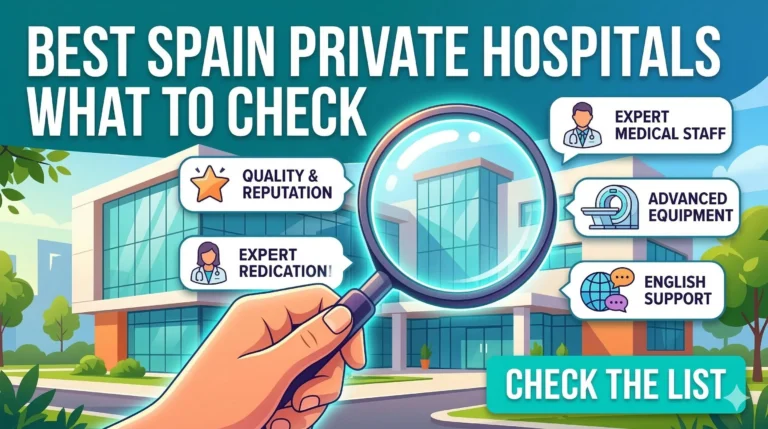
In major expat hubs like the Costa del Sol, the Costa Blanca, or Madrid/Barcelona, finding an English-speaking allergist is relatively easy. Many have trained abroad or work in private hospitals specifically catering to the international community. When you book via How to Book GP Appointments in Spain: Apps, Phones, and Walk‑ins, you can often request a doctor with "inglés."
Don't be afraid to ask for this. Spanish doctors are generally very proud of their professional certifications and are often happy to practice their English, provided you are respectful and patient. If you are using a provider like Innoinsure or Cigna Global, their apps usually have a filter for "idiomas," which makes the search process much smoother.
Lifestyle Adjustments for Expats in Spain
Beyond medicine, surviving the Spanish allergy season requires some lifestyle "trucos" (tricks) that the locals have mastered over generations.
Monitoring Pollen Counts
The Spanish Society of Allergology and Clinical Immunology (SEAIC) runs a website and an app called "Polen Control." It provides daily, localized pollen counts for various species. I check this religiously before planning a hike or even a long walk in the park. If the "gramíneas" are in the red zone, I know it’s a day for indoor activities.
Another tip: when you see the "pelusa" (fluffy seeds) from the plane trees flying around Madrid in April, wear sunglasses. Not for the sun, but to act as a physical barrier for your eyes. It sounds simple, but it significantly reduces the amount of mechanical irritation you'll face during your commute.
Dining Out Safely with Food Allergies
Spain is a social culture centered around food. To enjoy this safely, I recommend printing out "allergy cards" in Spanish. These are small business cards that list your allergies clearly: "Soy alérgico a los cacahuetes. Si como esto, mi vida corre peligro." (I am allergic to peanuts. If I eat this, my life is in danger.)
Handing this to the waiter ensures there is no "lost in translation" moment. Most modern restaurants will have a menu with icons representing the 14 major allergens. Look for these icons at the bottom of the page or in a separate folder. It’s also wise to know How to Find Gluten‑Free or Allergy‑Friendly Foods in Spain as many of the same stores carry specialized products for all types of hypersensitivities.
Home and Environment Management
Spanish homes are often made of stone or brick with tile floors, which is great for keeping cool but can be a challenge for dust mite allergies if not cleaned properly. "Ácaros" thrive in the humidity of the coast. Using a dehumidifier in cities like Barcelona or Málaga can drastically reduce your symptoms at night.
Also, be mindful of the "siesta" hours. During the peak heat of the day, pollen tends to settle. If you must exercise outdoors, early morning or late evening after a light rain are the best times. Avoid hanging your laundry outside to dry during peak pollen months, as your bedsheets will essentially become a giant pollen trap, ensuring you wake up congested and miserable.
Important Disclaimer
The information provided in this guide is for educational and informational purposes only and does not constitute professional medical advice. Always seek the advice of a qualified healthcare provider in Spain regarding any medical condition or treatment. The healthcare landscape and regulations in Spain can change, and while we strive for accuracy, users should verify information with official sources or medical professionals. Selecting an insurance provider like Innoinsure, Cigna Global, or SafetyWing should be done after reviewing their specific policy terms and conditions.