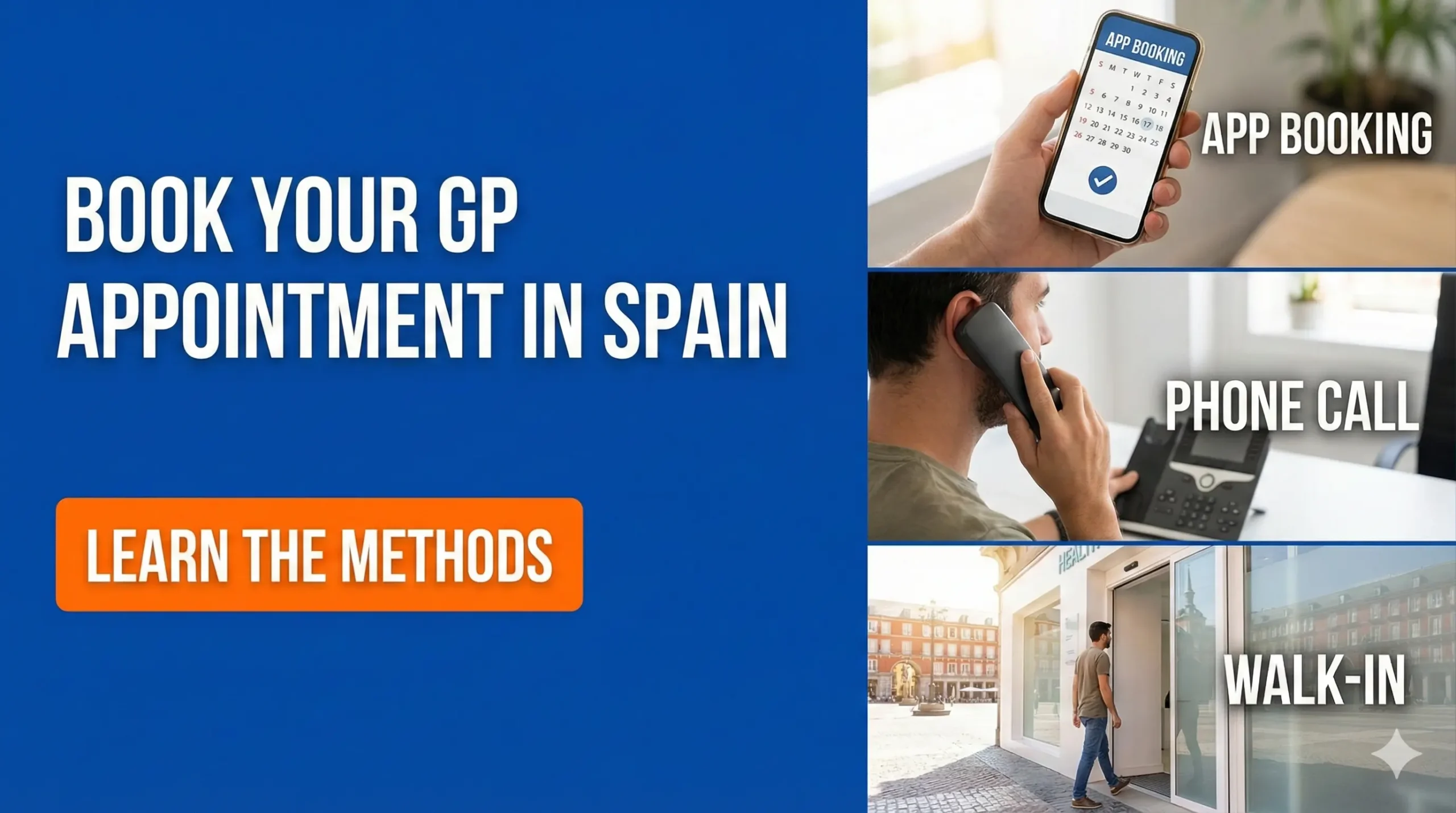
How to Book GP Appointments in Spain: Apps, Phones, and Walk-ins
Securing a general practitioner appointment in Spain is straightforward once you understand the regional systems. This comprehensive guide explains how to effectively book your GP visit using official mobile apps, online portals, phone lines, and walk-in centers across both public and private healthcare sectors.
Disclosure: This post may contain affiliate links. We may earn a commission at no extra cost to you if you make a purchase through these links. Read full disclosure.
Understanding the Role of the Medico de Cabecera
Before you initiate the booking process, it is vital to understand exactly what your médico de cabecera does and why they are central to your Spanish healthcare experience.
In the Spanish public health system, your médico de cabecera is your designated primary care physician. When you officially register at your local health center (known as the Centro de Salud or CAP in Catalonia), you do not float between different available doctors. You are specifically assigned to one individual physician. This doctor becomes intimately familiar with your medical history, your ongoing treatments, and your overall health baseline.
Your GP is responsible for diagnosing common illnesses, prescribing medications, issuing official sick leave notes (bajas médicas) required by your employer, and managing chronic conditions. Most importantly, they act as the absolute gatekeeper to specialized care. You cannot book an appointment with a public dermatologist, cardiologist, or orthopedic surgeon without first undergoing an evaluation by your médico de cabecera, who must formally issue an internal referral.
Essential Prerequisites for Booking a Public Appointment
You cannot simply open a web browser and book a public GP appointment the moment your flight lands in Madrid or Barcelona. The Spanish public healthcare system is contribution-based and highly regulated. To gain access to the booking platforms, you must first establish your legal and administrative footprint in the country.
Securing Your Legal Address
Your healthcare access is geographically bound to your residential address. The Spanish government needs to know exactly which neighborhood you live in to assign you to the correct local Centro de Salud. To prove your residence, you must register your lease or property deed at the local town hall to obtain your certificado de empadronamiento. If you are struggling with the initial steps of your relocation, familiarizing yourself with Navigating Spanish Bureaucracy for Daily Life will streamline this mandatory process.
Obtaining Your Health Card
Once you are registered at your address and actively paying into the Spanish Social Security system (either through traditional employment or as a registered freelancer), you must apply for your public health card. This card, the Tarjeta Sanitaria Individual (TSI), is the master key to the booking system. Printed on the front of this plastic card is your unique Personal Identification Code (CIPA or CIP). Every single official app, online portal, and automated phone line will demand this code before allowing you to view a calendar of available appointments. If you have not yet completed this vital step, you should immediately review our guide on Securing Your Tarjeta Sanitaria.
Booking Appointments Online via Regional Portals
Spain’s healthcare system is entirely decentralized. The national Ministry of Health in Madrid provides broad oversight, but the day-to-day management and funding of hospitals and clinics are handled independently by the governments of the seventeen Autonomous Communities.
Consequently, there is no single national website to book a doctor’s appointment. You must use the specific digital portal created by your regional government.
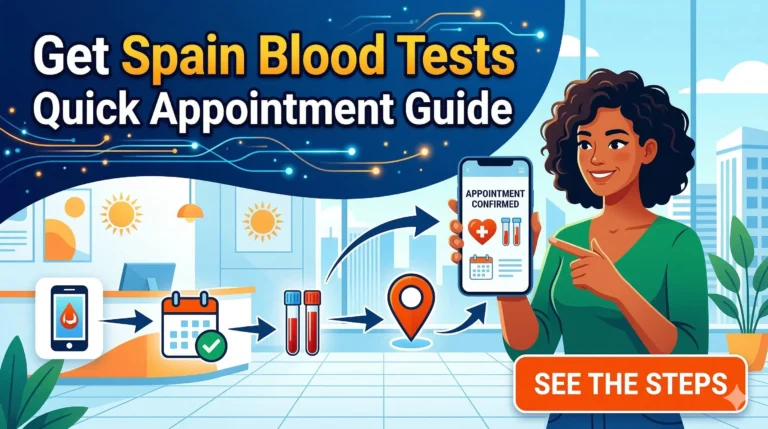
Step by Step Online Booking
While the visual interface of each regional website varies, the fundamental booking process follows a standardized logic across the entire Iberian Peninsula:
- Locate the Regional Portal: Identify your regional health service. For example, if you live in Andalusia, you will search for Servicio Andaluz de Salud (SAS). If you live in Valencia, you will search for Sanitat GVA.
- Access the Cita Previa Section: Look for the prominent button labeled Cita Previa (Prior Appointment) or Trámites Online (Online Procedures).
- Verify Your Identity: The system will prompt you to log in. You will need to type in the CIP code printed on your health card, your date of birth, and sometimes your DNI or NIE number. Alternatively, if you have a Digital Certificate (Certificado Digital) installed on your browser, you can log in securely with a single click.
- Select the Appointment Type: You will generally be offered several options. You must select Medicina de Familia (Family Medicine) or Enfermería (Nursing, which is used for routine blood pressure checks, wound dressing, or vaccinations).
- Choose Your Preferred Modality: Following the pandemic, most portals now ask if you prefer a Cita Presencial (an in-person visit at the clinic) or a Cita Telefónica (a telephone consultation where the doctor calls you).
- Select the Date and Time: The system will display the available calendar slots for your specifically assigned doctor. Select a time that fits your schedule and confirm the booking. You will usually receive a confirmation SMS or email, alongside a digital receipt that you can download.
The Convenience of Regional Mobile Health Apps
While the desktop online portals are functional, the absolute best, most efficient way to manage your healthcare in Spain is by downloading your regional government’s official mobile health application.
These smartphone apps are incredibly powerful. They not only allow you to book, reschedule, and cancel appointments in seconds, but they also serve as a comprehensive digital hub for your medical life. Within these apps, you can usually view your upcoming referral dates with hospital specialists, check the results of your recent blood tests, and access your digital vaccination records.
Because of the decentralized system, you must ensure you download the correct app for your specific territory. Here is a breakdown of the primary health applications used in regions heavily populated by expatriates:
Madrid Cita Sanitaria Madrid
The Community of Madrid operates a highly streamlined app simply called Cita Sanitaria Madrid. It is known for its user-friendly interface. Once you input your CIPA code the first time, the app remembers your profile. With two taps, you can view your doctor’s availability. The app also features a robust section for managing the appointments of your dependents, making it an indispensable tool for parents. For a broader look at managing your children’s healthcare needs alongside your own, consult our overview of Women’s and Family Health in Spain: Maternity, Pediatrics, and Screening.
Andalusia Salud Responde
The Salud Responde app serves the millions of residents across southern Spain. It is one of the most comprehensive health apps in the country. Beyond booking your primary care physician, the app allows you to communicate directly with medical administrative staff, renew chronic prescriptions, and access urgent health advice protocols.
Catalonia La Meva Salut
In Barcelona and the wider Catalan region, the official digital health platform is La Meva Salut (My Health, in Catalan). This platform is highly secure and offers deep integration with your electronic health records. Through the mobile app, you can book your metge de capçalera (the Catalan term for GP), initiate secure electronic consultations (e-Consulta) to send messages or photos of minor ailments directly to your doctor, and download your official clinical reports.
Valencia GVA Salut
Residents of the Valencian Community utilize the GVA +Salut app. It functions similarly to the others, requiring your SIP number (the Valencian equivalent of the CIP) to log in. The app provides push notifications reminding you of upcoming appointments and allows you to easily generate a digital barcode to pick up medications at the pharmacy, streamlining the process covered in our Spanish Pharmacy Guide: Prescriptions and Over-the-Counter Medicine.
Scheduling by Telephone Automated Systems and Receptionists
If you lack internet access, struggle with digital applications, or are facing an issue with your health card’s online registration, you can always book an appointment the traditional way: over the phone.
Every Centro de Salud has a dedicated telephone number for booking appointments. You can find this number printed on the back of your health card or by searching for your specific clinic on Google Maps.
Navigating the Automated Voice System
When you dial the clinic, you will rarely speak to a human receptionist immediately. Because Spanish clinics handle thousands of calls a day, they rely heavily on automated voice response systems.
The voice on the other end will usually begin by speaking rapidly in Spanish (or the co-official regional language, like Catalan or Basque). You will generally hear a prompt similar to: “Para pedir cita previa, pulse uno.” (To request an appointment, press one).
The automated system will then ask you to dictate or type in the identification numbers from your health card using your phone keypad. Once verified, the robotic voice will offer you the next available date and time for your assigned doctor. You can accept the slot by pressing a designated number or reject it to hear the next available option.
Speaking with Administrative Staff
If the automated system fails, or if you press the option to speak with an operator (hablar con un operador), you will be transferred to the administrative desk (mostrador) at your local clinic.
This is where expatriates often encounter their first major hurdle. The administrative staff at public health centers in Spain are incredibly hardworking, but they are almost never required to speak English. You must be prepared to conduct the booking entirely in Spanish.
To succeed, prepare your phrases in advance. Keep your Tarjeta Sanitaria in your hand, as they will inevitably ask for your number. A standard script looks like this:
- “Hola, buenos días. Quería pedir cita con mi médico de cabecera, por favor.” (Hello, good morning. I would like to make an appointment with my GP, please.)
- The receptionist will ask for your card number: “Dígame su número de tarjeta.”
- Once verified, they will offer a time. If it works, simply reply: “Perfecto, muchas gracias.”
If the language barrier is causing severe anxiety regarding your medical care, or if you feel you cannot accurately communicate your symptoms to a Spanish-speaking doctor once the appointment is booked, you should explore alternative strategies by reading Finding an English-Speaking Doctor in Spain.
In Person Booking and the Reality of Walk Ins
A common misconception among new arrivals is that a Centro de Salud functions like a rapid walk-in clinic where you can simply show up, take a ticket, and wait to see a doctor for a routine check-up. This is not how the Spanish public system operates.
If you walk up to the reception desk and ask to see a doctor for a lingering mild cough, a routine blood test, or a standard prescription renewal, the receptionist will simply look at their computer, book a cita previa for you for the following week, and politely send you home. Routine care strictly requires a pre-booked appointment.
Understanding Primary Care Urgencias
However, you absolutely can walk into your Centro de Salud without an appointment if you are experiencing a medical issue that is urgent, but not life-threatening. This is known as seeking care through the Urgencias de Atención Primaria (Primary Care Emergency Service).
Valid reasons for a walk-in visit include high fevers that will not break, acute gastrointestinal distress, minor cuts requiring stitches, suspected minor fractures, or sudden severe pain.
When you arrive without an appointment, you must inform the front desk that you need to be seen by the emergency doctor (médico de urgencias). You will be sent to a triage nurse who will evaluate your vitals and the severity of your condition. You will not see your assigned GP; you will see whichever doctor is designated for emergency duty that day. You will be placed in a waiting room, and patients will be seen based on the clinical severity of their condition, not on a first-come, first-served basis. If your condition is deemed truly critical, the clinic will call an ambulance to transfer you to the nearest major hospital.
Navigating the Private Healthcare Sector
While the public system is excellent, a massive segment of the expatriate community opts to purchase private health insurance (seguro médico privado). Private healthcare operates in an entirely different, highly commercialized ecosystem, and the booking process reflects this distinction.
When you hold a private insurance policy from companies like Sanitas, Adeslas, DKV, or Asisa, you are not restricted to a single neighborhood clinic, nor are you assigned a single mandatory médico de cabecera. You have the freedom to browse massive directories of affiliated doctors and clinics across the country.
The Speed and Convenience of Private Apps
The major advantage of private healthcare is the speed of access. Private insurance companies invest heavily in their digital infrastructure. When you download your insurer’s app, you log in with your policy number.
The booking process is exceptionally frictionless. You can search for “Medicina General” (General Medicine), filter the results by your zip code, and even filter by doctors who speak English. Because you have access to a vast network rather than a single assigned physician, you can almost always find a GP appointment for the very same day or the next morning. You simply tap the desired time slot, and the appointment is confirmed instantly without any need for bureaucratic approval.
If you are currently relying solely on the public system but are frustrated by the wait times for non-urgent care, exploring the costs and benefits of the private sector is highly recommended. You can begin evaluating your options by consulting our guide on Choosing Private Health Insurance in Spain.
Independent Digital Medical Booking Platforms
Even if you do not have private insurance, you can still access the private sector by paying out-of-pocket for a consultation. In Spain, third-party digital platforms like Doctoralia and TopDoctors are incredibly popular.
These websites function like search engines for doctors. You can search for a general practitioner in your city, read detailed reviews from other patients, view the price of a private consultation (which typically ranges from €40 to €80 for a GP), and book the appointment directly on the website. This is an excellent, stress-free option for tourists or new expats who have not yet secured their public health card but desperately need a prescription or a medical consultation.
Cancelling and Modifying Your Appointment
A critical aspect of the Spanish healthcare booking culture is the obligation to cancel your appointment if you can no longer attend. Because public healthcare is free at the point of use, no-shows (absentismo) place a massive, unnecessary financial and logistical strain on the system, artificially inflating wait times for other patients.
If you book a cita previa and your symptoms resolve, or a scheduling conflict arises, it is your civic duty to cancel it. Fortunately, this is incredibly easy to do digitally. You simply open your regional health app or log into the online portal, navigate to your pending appointments (citas pendientes), and tap the cancel button (anular cita). The time slot is immediately released back into the system for another patient to claim.
Comparison of GP Booking Methods in Spain
To help you determine the most efficient way to secure your medical care based on your specific situation, refer to this comparative breakdown of the booking methods available in Spain.
| Booking Method | Sector | Speed of Booking | Language Flexibility | Best Use Case |
| Regional Health App | Public | Fast (Takes seconds) | Regional Language / Spanish | Routine check-ups, ongoing prescriptions, non-urgent care. |
| Phone Call (Centro de Salud) | Public | Slow (Wait times vary) | Strictly Spanish | When digital portals fail or internet access is unavailable. |
| Walk-in (Urgencias) | Public | Immediate (Subject to triage) | Strictly Spanish | Acute illnesses, high fevers, minor injuries requiring urgent attention. |
| Private Insurer App | Private | Instant (Same-day slots common) | Filter for English speakers | Rapid access to care, immediate specialist referrals. |
| Third-Party Platforms (Doctoralia) | Private | Instant | Filter for English speakers | Tourists, non-residents, or those paying out-of-pocket without insurance. |
Conclusion
Mastering the process of booking a doctor’s appointment in Spain is a rite of passage for every expatriate. It marks the transition from feeling like a vulnerable visitor to a fully capable resident who can confidently navigate the domestic infrastructure.
While the decentralized nature of the Spanish public health system means you must dedicate time to finding the correct regional portal and downloading the appropriate app for your specific Autonomous Community, the technology itself is robust and reliable. By ensuring your administrative paperwork is in order, keeping your CIP code handy, and embracing the digital tools provided by both the public and private sectors, you guarantee that you and your family will always have swift, efficient access to one of the finest medical systems in Europe.
References
Primary sources (official)
- Ministerio de Sanidad (Spanish Ministry of Health): https://www.sanidad.gob.es/
- Comunidad de Madrid (Cita Sanitaria Portal): https://www.comunidad.madrid/servicios/salud/cita-sanitaria
- Servicio Andaluz de Salud (ClicSalud+ Portal): https://sspa.juntadeandalucia.es/servicioandaluzdesalud/clicsalud/
Other helpful sources
- Expatica (Healthcare in Spain Guide): https://www.expatica.com/es/healthcare/healthcare-basics/healthcare-in-spain-101467/
- Age in Spain (How to make a doctor’s appointment): https://www.ageinspain.org/post/how-to-make-a-doctor-s-appointment-in-spain
Disclaimer
The information provided in this article is for educational and informational purposes only and does not constitute formal medical or legal advice. Regional healthcare applications, booking protocols, and the availability of primary care emergency services (Urgencias de Atención Primaria) vary significantly across Spain’s Autonomous Communities and are subject to administrative changes. We strongly recommend consulting your specific regional health portal or visiting your local Centro de Salud to verify the exact booking requirements and emergency protocols applicable to your residential address.