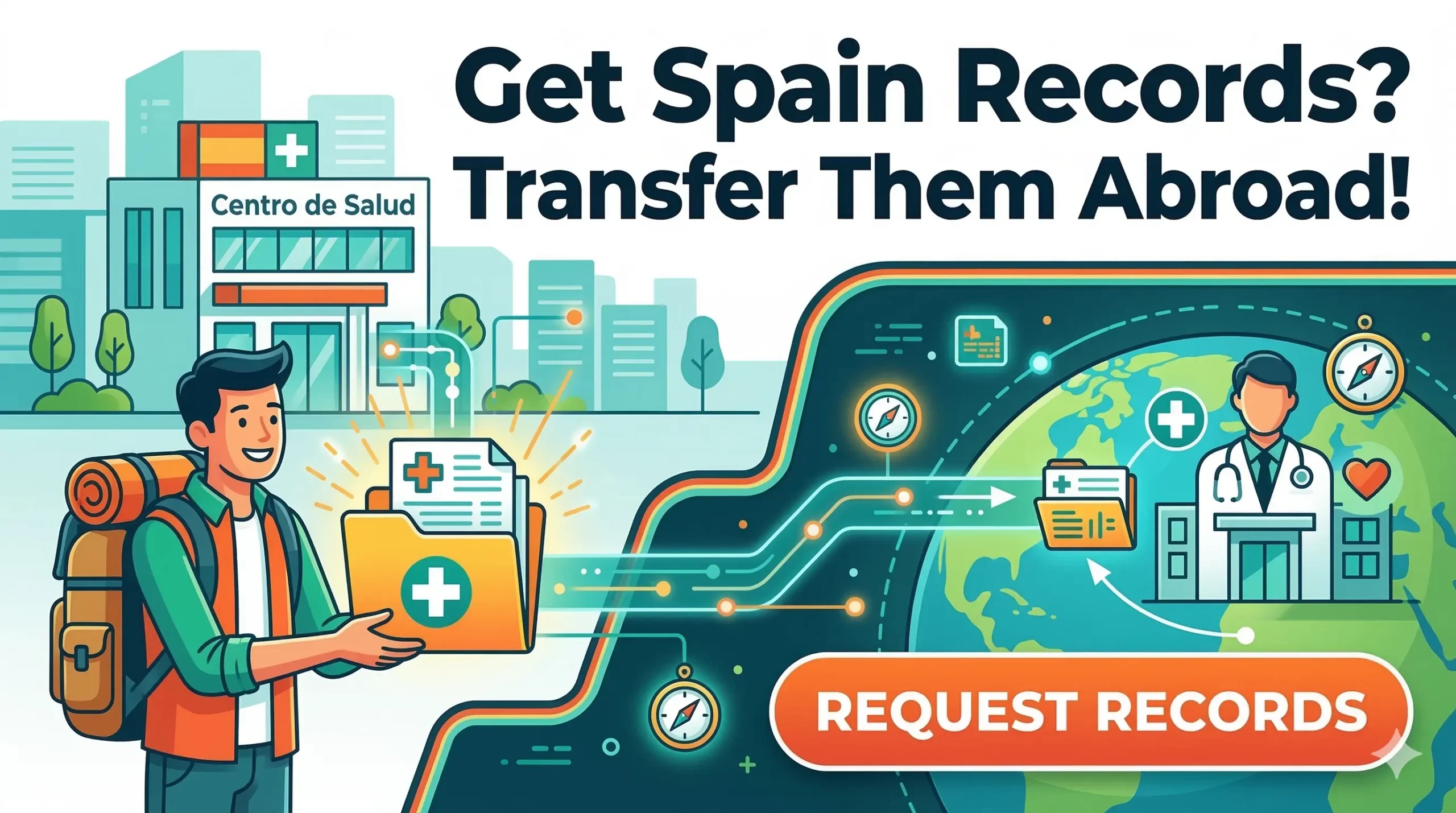
How to Request Medical Records in Spain for a New Doctor Abroad
Moving away from Spain is incredibly chaotic, but realizing your new doctor abroad has zero access to your Spanish medical history is downright terrifying. I once spent three months battling a Madrid hospital from across the Atlantic just to get my own surgical notes. This guide explains exactly how to legally request, download, and translate your medical records before relocating.
Disclosure: This post may contain affiliate links. We may earn a commission at no extra cost to you if you make a purchase through these links. Read full disclosure.
Understanding Your Right to Medical Records in Spain
When you are preparing to leave the country, you must switch your mindset from passive patient to aggressive administrator. The Spanish medical system will not automatically forward your files to your new doctor in the United States, the United Kingdom, or anywhere else. You must physically or digitally extract them yourself.
The Legal Framework and Patient Autonomy
Many expats mistakenly believe that the hospital or the clinic “owns” their medical records. Under Spanish law, specifically the Ley Básica Reguladora de la Autonomía del Paciente (Law 41/2002), the absolute opposite is true. You are the sole legal owner of your medical data. The hospital is merely the custodian.
Because you own the data, you have an unrestricted legal right to request a complete copy of your historia clínica (medical history) at any time, and the medical facility is legally obligated to provide it to you. However, the law also heavily protects patient privacy, meaning the bureaucratic hurdles you must jump through to prove your identity before they release the files are notoriously strict. You cannot simply call the reception desk and ask them to email your bloodwork to your new doctor abroad; they will flatly refuse due to European GDPR regulations.
The Fragmentation of Public and Private Data
The greatest frustration expats face when leaving Spain is discovering that their medical history is entirely fragmented. There is absolutely no central database that automatically merges your public health center data with the private clinic you visited for a specialized MRI.
If you used the state-funded system for your basic check-ups but used your private expat insurance to see a dermatologist and an orthopedic surgeon, you essentially have two completely separate medical identities. You must request records from both systems independently. To fully grasp why these two systems do not communicate, you can review our deep dive on the Spain Healthcare System for Expats: Public vs Private.
Step-by-Step Guide to Requesting Your Records
You must initiate the collection of your medical records at least a month before your flight. If you wait until you have already left Spain and surrendered your residency card, accessing these files becomes a bureaucratic nightmare.
Downloading Digital Records from the Public System
If you received care in the public healthcare system, the easiest way to access your records is through the Historia Clínica Digital del Sistema Nacional de Salud (HCDSNS). This is the national digital health portal.
To log into this portal, you must use a secure digital identity, which in Spain means utilizing your Certificado Digital or the Cl@ve system. Once logged in, you can download PDF copies of your Informe Clínico de Alta (hospital discharge reports), Pruebas de Laboratorio (lab results), and your Historia Clínica Resumida (summarized medical history).
However, because healthcare is managed regionally in Spain, you might also need to log into your specific autonomous community’s health app (such as La Meva Salut in Catalonia or Salud Andalucía). Do this immediately before you leave. Once you cancel your Spanish phone number or your TIE expires, you will permanently lose access to the two-factor authentication required to log into these public portals. If you need a refresher on how to navigate these regional portals, check out Medical Records in Spain: Accessing and Sharing Your History.
Requesting Physical Copies from Public Hospitals
While the digital portal is fantastic for basic bloodwork PDFs, it frequently fails when you need massive diagnostic imaging files. If you need the raw data files of an MRI, a CT scan, or specialized ultrasounds, you cannot download them.
You must physically go to the hospital where the procedure was performed and find the Servicio de Atención al Paciente (Patient Care Services) department. You will need to fill out a formal Solicitud de Historia Clínica (Medical Record Request form). You must bring your physical passport or TIE. The hospital will typically burn your raw imaging files onto a CD or a secure USB drive. By law, they have up to a month to fulfill this request, so you cannot do this on the way to the airport.
Getting Records from Private Providers
Extracting records from private clinics is generally much faster, but it depends entirely on the quality of your insurance provider. Some budget insurance companies require you to email each individual private clinic you visited to request your files.
This is exactly why having a premium expat policy set up by a broker like Innoinsure is a massive advantage when it comes time to relocate. A top-tier policy secured through Innoinsure usually comes with a highly sophisticated, centralized patient app. Because you stayed within the provider’s dedicated network, every single doctor’s note, private lab result, and specialist referral is stored in one unified digital dashboard.
You simply open your provider app, click the medical history tab, and batch-download your entire private medical file in minutes. If you are managing a complex, long-term illness, having this unified digital history is critical for ensuring your new doctor abroad understands your baseline; you can see why this matters in Chronic Conditions in Spain: Managing Ongoing Care as an Expat. Furthermore, if you just need a final sign-off or a prescription summary from your private Spanish doctor before you fly, premium policies via Innoinsure offer robust telehealth options. Discover how to leverage a final digital appointment in Telemedicine in Spain: When It’s Useful and What to Expect.
Translating and Transferring Your Files Abroad
Once you have successfully downloaded your Spanish PDFs and collected your hospital CDs, you face the next massive hurdle: the language barrier. Handing a 50-page Spanish oncology report to a doctor in London or Toronto is entirely useless.
The Need for Sworn Translations (Traducción Jurada)
Spanish doctors use highly localized medical abbreviations and jargon that standard translation software cannot accurately decipher. While you might be tempted to just run your general bloodwork through an online translator for your own peace of mind, doing so for complex surgical notes or chronic diagnoses is incredibly dangerous. A mistranslated medication dosage or an incorrectly translated pathology report can severely jeopardize your continuity of care.
For critical medical files, you must hire a Traductor Jurado (Sworn Translator). These are official translators certified by the Spanish Ministry of Foreign Affairs. They provide a legally binding, signed, and stamped translation of your medical records that any hospital in the world will legally accept as accurate.
| Translation Method | Cost Expectation | Best Used For | Acceptance by Foreign Doctors |
| DIY / Online Software | Free | General understanding of your own basic bloodwork | Generally Rejected |
| Standard Translation Agency | Moderate | Mild chronic conditions, general physical summaries | Accepted with caution |
| Sworn Translation (Jurada) | High (Priced per page) | Surgeries, oncology, severe chronic illnesses, legal visas | Universally Accepted |
Setting Up Your New Baseline Abroad
Before you depart, you should ask your primary care physician in Spain to write an informe médico de alta (discharge summary) or a resumen clínico (clinical summary). This is a single, condensed document that outlines your active diagnoses, your current medications, and your most recent vitals.
Instead of paying a sworn translator to translate 100 pages of historical medical fluff from the past five years, you only pay them to translate this one highly condensed, vital summary document. You then hand this legally translated summary to your new doctor in your destination country to establish your new medical baseline immediately.
Managing Your Health During the Relocation
The physical act of moving across international borders is exhausting, and the administrative stress will inevitably take a severe toll on your immune system. You must actively manage your health logistics right up until the moment your plane takes off.
Maintaining Coverage Until You Move
A common and dangerous mistake expats make is canceling their private health insurance the moment they hand in their apartment keys. If you cancel your policy brokered by Innoinsure too early, you instantly lose access to the digital patient portal, making it impossible to download your last-minute medical records.
More importantly, the week of the move is when you are statistically most likely to injure yourself—throwing out your back lifting heavy boxes or suffering severe stress-induced migraines. Utilizing an expert broker like Innoinsure allows you to perfectly time the cancellation of your policy so you remain fully covered during those final, chaotic days in Spain. If you cancel early to save a few euros and end up in the emergency room, the out-of-pocket costs will be devastating. Review Health Costs in Spain: Typical Co-Pays and Out-of-Pocket Fees to understand the financial risk you are taking by dropping coverage prematurely. If you do get hurt while packing, make sure you know exactly where to go by reading How to Find a 24-Hour Clinic in Spain (Urgencias).
Bridging the Pharmacy and Supplement Gap
When you permanently leave Spain, you immediately lose access to your trusted local farmacia and the specific European wellness brands your body has adapted to. Arriving in a new country means you will likely face weeks of administrative delays before you can register with a new local doctor or figure out the local pharmacy system—a frustration you probably remember from when you first arrived in Spain, which we detailed in What Is a ‘Centro de Salud’ in Spain and How Do You Register?.
During this stressful transit period, your gut health and immune system are incredibly vulnerable. To bridge this international gap, the savvy expat community relies heavily on iHerb. As you are packing up your Spanish apartment, you can order your specific baseline vitamins, potent immune-support formulas, and high-grade digestive probiotics directly through iHerb.
The brilliance of utilizing iHerb during a relocation is their global shipping infrastructure. You can place your order while sitting in Spain and have the package shipped directly to your new address in your destination country. Having a dedicated holistic wellness stash from iHerb waiting for you on the porch when you arrive ensures your body is actively supported while you unpack. Relocating internationally disrupts every aspect of your routine; relying on iHerb to effortlessly transfer your exact nutritional regimen across borders puts the control firmly back in your hands, keeping you healthy and energized as you start your new chapter.
References
Primary sources (official)
- Ministerio de Sanidad – Historia Clínica Digital del Sistema Nacional de Salud: https://www.sanidad.gob.es/profesionales/hcdsns/home.htm
- Boletín Oficial del Estado (BOE) – Ley 41/2002, básica reguladora de la autonomía del paciente: https://www.boe.es/buscar/act.php?id=BOE-A-2002-22188
Other helpful sources
- Expatica – The healthcare system in Spain: https://www.expatica.com/es/healthcare/healthcare-basics/healthcare-in-spain-101467/
- Citizens Advice Bureau Spain – Healthcare Information and Patient Rights: https://www.citizensadvice.org.es/faq/healthcare/
Disclaimer
The information provided in this article is for educational and informational purposes only and does not constitute formal medical, legal, or administrative advice. Patient data privacy laws, sworn translation requirements, and regional public health portal functionalities vary significantly across Spain’s autonomous communities and are subject to frequent legislative updates. Always consult directly with the Atención al Paciente department of your specific Spanish hospital, a certified Traductor Jurado, or your private insurance broker regarding your legal right to access medical records and the formal cancellation of your private healthcare coverage.