Spanish Gas Bottles vs Natural Gas: What You’ll Encounter
Stepping into an ice-cold shower mid-winter because the orange butane tank ran out while you were covered in soap is a universally dreaded expat rite of passage. I once stood shivering in a Madrid bathroom violently shaking an empty gas cylinder, completely clueless about how to replace it. This guide demystifies Spanish gas systems, replacing bottles, and navigating piped gas.
Disclosure: This post may contain affiliate links. We may earn a commission at no extra cost to you if you make a purchase through these links. Read full disclosure.
The Reality of Spanish Domestic Gas Systems
When expats arrive in Spain, they frequently assume that modern European apartments come universally equipped with central, piped-in utility lines for heating and cooking. In reality, the Spanish domestic gas infrastructure operates on a dual, deeply fragmented system that heavily depends on the physical age and geographical location of your specific apartment building.
The Enduring Legacy of the Bombona
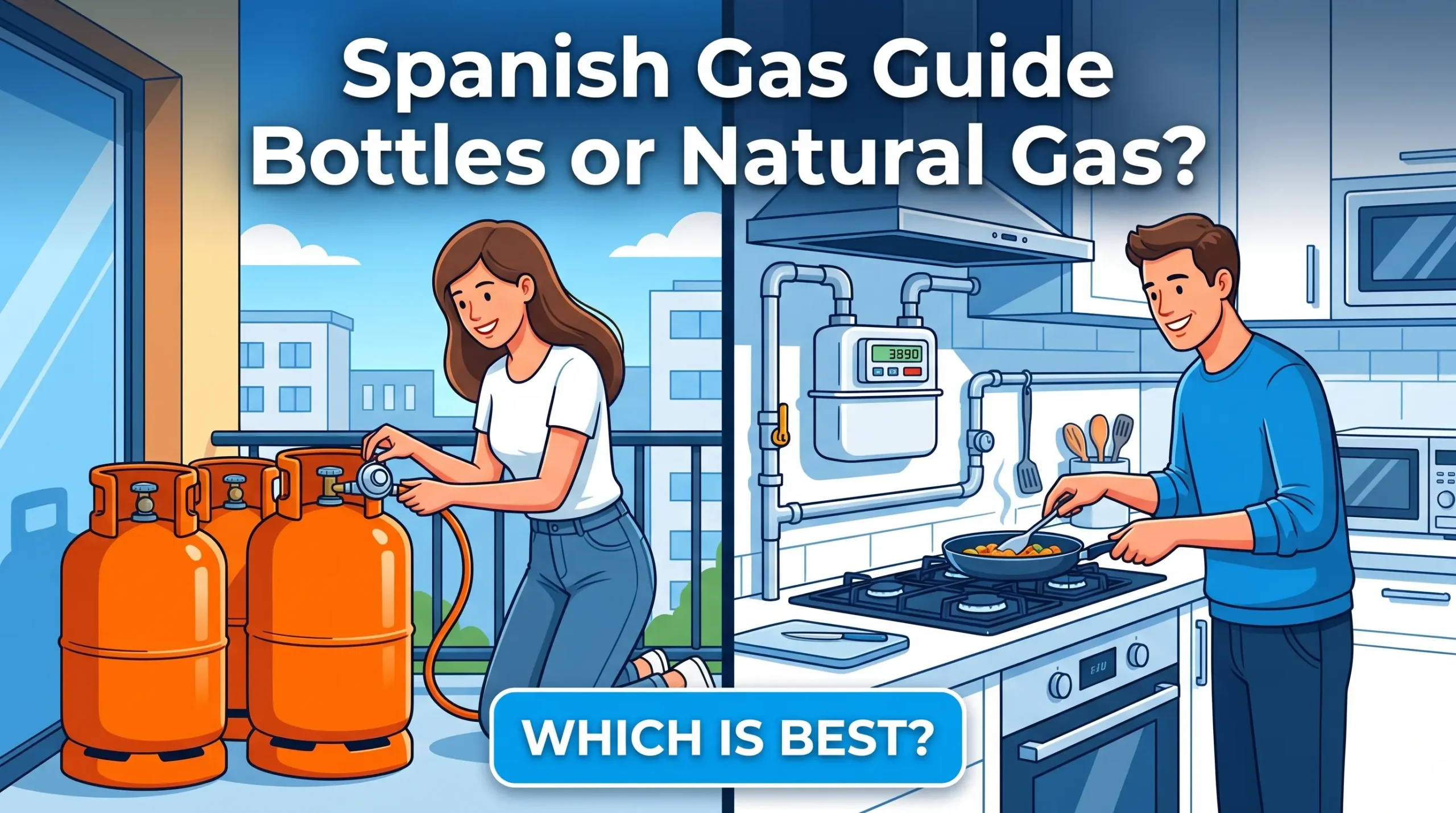
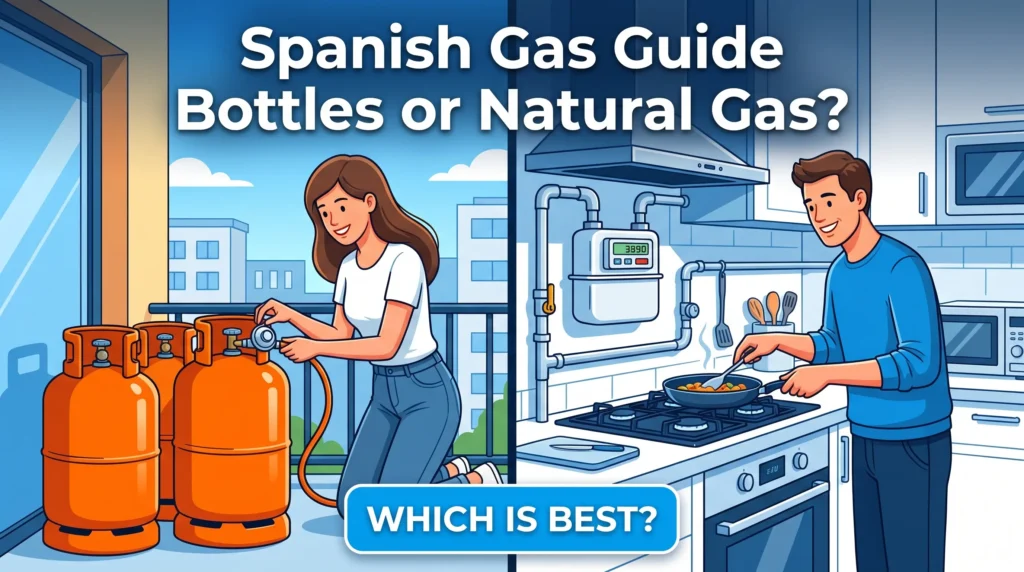
The absolute most iconic symbol of classic Spanish domestic life is the bombona de butano (butane gas bottle). These heavy, brightly colored metal cylinders—traditionally bright orange if distributed by Repsol, or metallic silver if distributed by Cepsa—are the lifeblood of millions of Spanish homes. If you rent an older apartment in a historic city center or move to a coastal or rural town, you will almost certainly rely on these physical bottles to heat your water and cook your food.
Relying on physical gas bottles means you are entirely responsible for your own supply chain. There are no automatic monthly meter readings or endless pipelines. When your tank is empty, your hot water stops instantly. You must physically detach the heavy metal cylinder, lug it out of your house, and exchange it for a full one. This manual, labor-intensive utility management is a massive shock to foreigners who have never had to think about where their hot water actually comes from.
To understand exactly what kind of infrastructure you are inheriting before you sign a binding lease, you must ruthlessly evaluate the flat’s utility setup. Knowing whether you are stuck hauling heavy gas tanks up five flights of stairs without an elevator is a crucial survival skill detailed in Spanish Apartment Sizes: m², Floor Numbers, and Listing Terms Explained. Factoring the recurring physical and financial burden of these bottles into your baseline expectations is a massive part of adjusting to your new life.
The Shift to Piped Natural Gas
Conversely, if you move into a newer building (obra nueva) or an apartment in a major urban grid that has recently undergone extensive renovations, you will likely encounter gas natural (natural gas). Locals often refer to this as gas ciudad (city gas).
This system operates exactly as you would expect in North America or Northern Europe. The gas is piped directly into your flat from the municipal street lines. It connects seamlessly to a modern wall-mounted boiler (caldera) that provides continuous, uninterrupted hot water and usually feeds into water-based radiator heating across the apartment. You never have to worry about running out of hot water mid-shower or dragging heavy metal tanks across the neighborhood.
However, the luxury of piped natural gas comes with heavy bureaucratic strings attached. You are forced to deal directly with Spanish utility monopolies to activate your account, schedule technician visits, and decipher incredibly complex monthly billing statements that are loaded with hidden municipal taxes and varying daily tariffs. Properly budgeting for these continuous, fluctuating monthly debits is a critical component of your transition, a financial ecosystem deeply explored in Utility Costs in Spain: Electricity, Gas, Water, and Internet.
Using Butane Gas Bottles in Your Daily Life
If your apartment relies on the bombona, you must learn the unwritten rules of acquiring, exchanging, and safely connecting these heavy cylinders. It is a highly localized, manual process that requires vigilance and physical effort.
How to Buy and Exchange Bombonas
You cannot simply buy a brand-new gas bottle at the supermarket. When you move into a flat that uses butane, there should already be an empty metal cylinder left behind by the previous tenant. You own the gas inside, but you are effectively renting the metal shell. When the tank runs dry, you must take the empty shell to a local authorized gas station (gasolinera) or a licensed neighborhood hardware store (ferretería) and exchange it for a full one.
The price of the standard 12.5kg bombona de butano is heavily regulated by the Spanish government. While it fluctuates slightly every few months based on global energy markets, it currently sits around 14 to 17 euros per bottle. A single bottle used strictly for a two-person household’s hot water and gas stove will generally last about three to four weeks. If your landlord did not leave you an empty bottle, you must go to a Repsol or Cepsa office, sign a formal supply contract (contrato de suministro), and pay a non-refundable deposit to secure your first metal shells.
The traditional way to acquire gas is to wait for the local delivery truck. In many neighborhoods, a bright orange truck drives slowly down the street while the driver violently bangs a metal wrench against the gas cylinders to announce their arrival. You literally have to run down to the street and flag them down to exchange your bottle. Because carrying a full, nearly 15-kilogram metal tank back up to your apartment will absolutely ruin your lower back, ordering a heavy-duty, reinforced rolling cart (carro para bombona) directly from Amazon Spain is the smartest purchase a new expat can make. Managing the cash flow for these constant, small cash purchases is a vital skill covered in Cost of Living in Spain: Budgeting for Expats.
Connecting and Storing the Bottles Safely
Connecting the bombona to your apartment’s plumbing is an intimidating process for the uninitiated. The top of the metal cylinder features a thick nozzle. You must attach a heavy metal regulator valve—universally known in Spain as the alcachofa (the artichoke) because of its shape—by pressing down firmly and flipping a black plastic switch to lock it into place and open the gas flow.
The alcachofa is connected to your boiler or stove via a thick, bright orange rubber hose. This hose is the most critical safety failure point in your entire apartment. Spanish law dictates that these hoses have a strict expiration date physically printed on the side of the rubber in black ink. If your hose is expired, it can crack and leak explosive gas into your home. You must inspect this hose the exact minute you move in.
If the hose is expired, or if you smell a faint, constant sulfur odor near the tank, you must turn off the valve immediately. You cannot ignore a gas leak. Ordering a high-quality, battery-operated combustible gas leak detector from Amazon Spain and placing it near your boiler provides absolute peace of mind while you sleep. If you need to replace the hose or the regulator, you must know how to navigate local tradesmen; review How to Find an English-Speaking Plumber/Electrician in Spain to ensure your infrastructure is repaired safely and legally.
Navigating the Piped Natural Gas Market
If you are lucky enough to have gas natural piped directly into your apartment, you avoid the physical labor of hauling bottles, but you enter the incredibly complex, highly regulated Spanish energy market.
Liberalized vs Regulated Tariffs
When you take over a piped gas contract (cambio de titular), you must choose how you want to be billed. The Spanish gas market is split into the Mercado Libre (Free Market) and the Mercado Regulado (Regulated Market).
In the Free Market, massive energy corporations like Iberdrola, Endesa, and Naturgy offer competitive, fixed-rate contracts. They will aggressively market these plans to you, often bundling them with your electricity or offering “discounted” weekend rates. However, for the vast majority of standard households, the absolute cheapest option is the regulated tariff, known as the Tarifa de Último Recurso (TUR).
The TUR is subsidized and strictly controlled by the Spanish government (specifically the Ministry for Ecological Transition). The prices are updated quarterly based on actual wholesale gas costs, and they are historically significantly cheaper than the fixed-rate traps offered by private marketers on the free market. You must explicitly demand the TUR tariff when setting up your account, even if the customer service representative tries to steer you toward a private plan. Managing these complex direct debits and ensuring your utility providers don’t randomly hike your rates requires a localized banking setup, deeply explored in Opening a Bank Account in Spain as a Non-Resident.
Dealing with Gas Companies and Contracts
The bureaucratic nightmare of the Spanish energy market is that the company that owns the physical pipes in your street (the Distributor) is often different from the company that sends you your monthly bill (the Marketer). If your boiler stops working, you have to figure out which entity to call.
Calling Spanish utility companies is a notoriously frustrating experience. You will navigate endless automated phone menus, wait on hold for thirty minutes, and speak to representatives who speak zero English. If you are a digital nomad or remote worker trying to manage your life in Spain, fighting with legacy monopolies over your utility bills is a massive drain on your productivity.
While you cannot avoid the gas monopolies, you can completely remove the friction from your other major household utilities. Setting up your primary digital infrastructure through an expat-centric provider like Tiekom guarantees you have flawless, high-speed fiber internet and mobile connectivity managed entirely in English. Having a robust Tiekom connection ensures you can easily log into the complex gas company portals, translate your billing statements in real-time, and download your invoices without the portal timing out.
Managing Your Heating and Utility Bills
Heating a home in Spain is a massive challenge. Despite the country’s sunny reputation, the winters—especially in Madrid and the northern provinces—are brutally cold, and the housing stock is terribly insulated.
Space Heaters and Winter Survival
If your apartment lacks central heating radiators, you will likely encounter the estufa de gas (portable gas heater). This is a rolling metal cabinet that houses a single 12.5kg butane bombona in the back and features an open, blue flame or glowing ceramic plates in the front.
Estufas de gas are incredibly popular because they blast an immense amount of heat into a room very quickly, and running them is vastly cheaper than running an electric space heater. However, they come with severe drawbacks. They emit a very distinct, heavy gas odor, they produce a massive amount of internal humidity (which leads to mold on your walls), and they actively consume the oxygen in your living room. You must crack a window to allow ventilation while using them, which completely defeats the purpose of heating the room.
If you are utilizing an estufa de gas, safety is paramount. You must immediately order a high-quality, digital carbon monoxide detector from Amazon Spain and place it in the same room as the heater. If you want to avoid the smell and the safety risks entirely while sleeping, ordering a premium, energy-efficient electric blanket from Amazon Spain ensures you stay warm through the freezing nights without leaving a gas flame burning in your bedroom. Integrating these winter survival tactics into your broader household readiness is thoroughly mapped out in What to Keep in a Spain ‘Emergency Kit’ (Heatwaves, Floods, Fires).
Coordinating Your Home Infrastructure
Balancing your energy consumption is a delicate dance in Spain. If you decide to abandon your portable gas heater and plug in three electric space heaters instead, you will likely trip your apartment’s potencia (contracted power limit) and plunge the flat into darkness.
You must adapt to the physical limitations of your Spanish flat. Older buildings were simply not designed to run multiple heavy electrical appliances simultaneously while combatting freezing drafts from uninsulated windows. To understand why your flat is so cold in the winter and loud in the summer, you must grasp the underlying construction realities heavily detailed in Spanish Noise‑Insulation Reality: What to Expect in Older Buildings. Managing your utility output, keeping your Tiekom internet router online when the breakers trip, and ensuring you always have a spare butane bottle in the gallery prevents the structural quirks of your apartment from ruining your daily routine. If you are a student trying to stretch a tight budget through the winter months, reviewing Student Finances in Spain: Bank Accounts and Budgeting Tips will help you calculate the changing seasonal utility costs.
| Feature | Bombona de Butano (Gas Bottle) | Gas Natural (Piped City Gas) |
| Availability | Universal (Available in all towns/old buildings). | Limited (Only in modernized urban grids). |
| Supply Method | Manual (You must physically buy and exchange tanks). | Continuous (Piped directly into the home). |
| Cost Structure | Pay-as-you-go (Regulated price per bottle, ~€14-€17). | Monthly direct debits with fixed taxes + usage. |
| Upfront Hassle | High physical labor; risk of running out mid-shower. | High bureaucratic setup; complex billing. |
| Best For | Budget control, older flats, coastal regions, portable heaters. | Convenience, central heating, modern remote workers. |
References
Primary sources (official)
- Ministerio para la Transición Ecológica y el Reto Demográfico – Gases Licuados del Petróleo (Butane Pricing): https://www.miteco.gob.es/es/energia/gases-licuados-petroleo.html
- Boletín Oficial del Estado (BOE) – Resoluciones sobre la Tarifa de Último Recurso (TUR) de gas natural: https://www.boe.es/
Other helpful sources
- Repsol Hogar – Precio Regulado Bombona de Butano: https://www.repsol.es/particulares/hogar/bombona-butano-propano/
- CNMC (Comisión Nacional de los Mercados y la Competencia) – Entender la factura de gas: https://www.cnmc.es/
Disclaimer
The information provided in this article is for educational and informational purposes only and does not constitute formal utility, financial, or safety advice. The official pricing for both regulated bombonas de butano (12.5kg cylinders) and the Tarifa de Último Recurso (TUR) for piped natural gas are subject to frequent, government-mandated adjustments published in the Boletín Oficial del Estado (BOE). Connecting, maintaining, and replacing flexible gas hoses (gomas de gas) and regulators (alcachofas) must comply with strict Spanish safety regulations. Always consult a certified gas technician (instalador de gas autorizado) to perform the mandatory five-year inspections or to investigate any suspected gas leaks.