Student Finances in Spain: Bank Accounts and Budgeting Tips
Arriving in Spain to study is thrilling until your home bank arbitrarily freezes your debit card, leaving you entirely unable to pay your new landlord or buy groceries. I once survived on stale bread for three days because an international wire transfer from my parents got lost in the Spanish banking ether. This guide decodes student finances, localized banking, and strict budgeting strategies to help you survive.
Disclosure: This post may contain affiliate links. We may earn a commission at no extra cost to you if you make a purchase through these links. Read full disclosure.
The Reality of Opening a Student Bank Account in Spain
One of the most profound culture shocks for international students arriving in Spain is the rigid, unforgiving nature of the traditional banking system. In many countries, opening a student account takes ten minutes on a smartphone. In Spain, it is historically an administrative gauntlet designed to test your patience and your Spanish vocabulary.
The Identification Paradox with Legacy Banks
If you walk into a traditional high-street bank like Santander, BBVA, or CaixaBank, you will immediately collide with a bureaucratic paradox. To open a standard resident bank account, the teller will demand to see your TIE (the physical Spanish foreigner identity card). However, to secure a flat to live in, your landlord will demand a local Spanish bank account. Furthermore, processing your physical TIE card can take months after you arrive, leaving you financially paralyzed during the most critical weeks of your relocation.
Even worse, physical bank branches in Spain generally close their customer service desks by 14:00 (2:00 PM), meaning you have to skip your morning university lectures just to stand in line and argue with a teller about why your account was locked. The legacy banking system is entirely incompatible with the fluid, digital lifestyle of an international student. To fully understand the scope of this bureaucratic loop and how to prepare your paperwork, review our guide on Opening a Bank Account in Spain as a Non-Resident.
Hidden Maintenance Fees and Traps
Traditional Spanish banks aggressively advertise specialized “Cuenta Joven” (Youth Accounts) or dedicated student accounts that boldly promise zero commissions. While these accounts look excellent on paper and in the glossy brochures handed out during university orientation week, the reality of maintaining them is fraught with hidden traps. The zero-fee status is almost always highly conditional.
To successfully avoid being charged up to forty euros a quarter in maintenance fees, the bank will require you to strictly meet specific, ongoing conditions. You might be forced to use your debit card a minimum of ten times a month, log into the web application weekly, or maintain a strict minimum balance. If you are an exchange student who travels frequently across Europe or returns to your home country for the long summer break, you might easily and accidentally miss these required monthly milestones.
Embracing Digital Alternatives
To completely bypass the hostility and rigidity of the traditional banking sector, modern students universally flock to digital neo-banks. These modern financial institutions operate entirely on your smartphone, entirely eliminating the need to ever stand in a physical line, sign stacks of paper, or argue in broken Spanish with an unhelpful teller. For expats and international students, utilizing N26 is a massive administrative lifesaver.
By opening a dedicated student account with N26, you instantly receive a recognized, official Spanish IBAN directly from your smartphone. You can generally verify your identity simply using your foreign passport, entirely bypassing the agonizing, months-long wait for your physical TIE card. Having this active Spanish IBAN from day one is absolutely mandatory for renting an apartment, securing a local phone plan, and navigating daily student life without overwhelming friction.
Furthermore, N26 does not hide predatory maintenance fees in its terms and conditions, nor does it force you to buy third-party insurance products just to keep the account active. You manage your money, freeze lost cards instantly, and meticulously track your spending seamlessly through a highly intuitive English-language app. This digital-first approach provides you with flawless, localized financial infrastructure. To see how a local IBAN is crucial for everyday survival, read How to Pay Bills in Spain: Direct Debit, Cash, and Online Portals.

Receiving Money from Home Without Bleeding Capital
Unless you have secured a fully funded, all-inclusive scholarship, your financial survival in Spain relies heavily on capital imported from your home country. Whether it is a lump-sum student loan disbursement, a government grant, or a monthly allowance from your parents, moving that money across borders is where most students quietly lose a massive portion of their budget.
The Hidden Costs of International Wire Transfers
If your parents walk into their local bank branch in the United States, the United Kingdom, or Australia and ask to wire two thousand dollars to your new Spanish bank account to cover your semester’s rent, they will be financially crushed by the legacy SWIFT system. Traditional banks do not send money in a straight line; the funds slowly bounce through a complex network of intermediary correspondent banks across the globe.
On a two-thousand-dollar transfer, a four percent markup means the legacy banking system is silently pocketing eighty dollars of your student budget simply for executing a digital conversion. Over the course of a four-year degree program, these hidden spreads compound into thousands of euros in lost capital. To fully grasp how these invisible fees systematically destroy your purchasing power over time, review Sending Money to/from Spain: Comparing Banks vs Transfer Services.
Bypassing Margins with Currency Specialists
To fiercely protect your extremely limited student budget, you must bypass the legacy banking system entirely and utilize a dedicated currency specialist like Wise. Veteran international students universally use this specific platform to create a protective, highly efficient financial bridge between their home country and the Spanish economy.
By executing your international tuition and rent transfers through a Wise account, you secure the true, transparent mid-market exchange rate—the exact same unpadded rate you see when you search currency pairs on Google. You completely eliminate the hidden bank markups and the predatory intermediary SWIFT fees, ensuring that your parents’ hard-earned money is actually used to fund your education and lifestyle rather than lining the pockets of institutional bank managers.
Furthermore, Wise provides you with a sophisticated multi-currency digital wallet. This allows you to hold liquid balances in US Dollars, British Pounds, and Euros simultaneously. If global macroeconomic events cause exchange rates to suddenly become highly favorable, you can instantly convert a large chunk of your semester budget into Euros and securely hold it, completely insulating yourself from future currency volatility. You can then execute a free SEPA transfer from your digital wallet directly into your local Spanish N26 account whenever you need to pay rent.
Establishing an Emergency Cash Buffer
Relying purely on digital transfers and smartphone applications is incredibly efficient, but it leaves you highly vulnerable to sudden technological failures or petty theft. As a student navigating a foreign country, you must always maintain a strategic emergency cash buffer.
If your phone is stolen by a pickpocket during a night out, or if the local internet infrastructure goes down, you will be entirely unable to access your digital banking apps to freeze your cards or order an Uber home. You must keep at least two to three hundred physical euros safely hidden in your apartment. This liquid cash ensures you can buy groceries, pay for a taxi to your embassy, or cover an emergency locksmith if you lose your keys while your digital life is temporarily compromised.
Budgeting for Rent and Daily Living Expenses
Spain is generally significantly cheaper than Northern Europe or North America, which is exactly what makes it an incredibly attractive destination for international students. However, failing to understand the deeply structural costs of Spanish housing and utilities will rapidly deplete your carefully planned budget before the semester even begins.
The Heavy Burden of Rental Deposits
Securing a single room in a shared student flat (piso compartido) or an individual studio apartment requires handing over a massive amount of upfront cash. The Spanish rental market heavily favors landlords, and they aggressively mitigate their perceived risk by demanding extensive financial guarantees from transient international students.
By law, the landlord must demand a one-month security deposit (fianza). However, it is incredibly common for landlords targeting international students to demand an additional one or two months of rent as an extra financial guarantee (garantía adicional) simply because you lack a Spanish employment contract. If you use a real estate agency to find the room, you will also be forced to pay a massive agency fee. While agency fees are legally supposed to be paid by the landlord for long-term habitual contracts, agencies routinely bypass this law by classifying student leases as short-term “seasonal contracts.”
This brutal reality means that to rent a simple five-hundred-euro room in Madrid or Valencia, you might need to hand over two thousand euros in pure, unrecoverable cash before you even unpack your suitcase. You absolutely cannot use your security deposit to cover your final month of rent, and retrieving this deposit from a stubborn landlord at the end of the academic year is a notoriously frustrating battle. To safely budget for these massive upfront liquidity drains, read our comprehensive breakdown in Renting in Spain: How to Budget for Deposits, Fees, and Utilities.
Managing Utilities and Grocery Budgets
Unless your rental contract explicitly states that utilities are included in the monthly price (gastos incluidos), you must carefully budget for the erratic monthly rhythm of Spanish bills. Electricity (la luz) in Spain is incredibly expensive and governed by a highly complex, time-of-use billing structure.
Your electricity bill consists of a variable charge based on what you actually consume, and a massive fixed charge based on your contracted power capacity (potencia). In the brutal heat of the Spanish summer or the damp, poorly insulated cold of the winter, relying heavily on air conditioning or electric space heaters will cause your utility bills to skyrocket. When sharing a flat with other international students accustomed to different climates, disagreements over the communal heating bill are a constant source of household tension. To understand exactly how these bills fluctuate and how to manage them, review Utility Costs in Spain: Electricity, Gas, Water, and Internet.
Grocery shopping, conversely, is where students can save massive amounts of money and reclaim their budget. Spain boasts phenomenal, high-quality domestic produce and incredibly cheap local wine. If you abandon expensive imported brands and shop at local municipal markets or budget supermarkets like Mercadona, Lidl, or Dia, a single student can eat incredibly well for two hundred to two hundred and fifty euros a month. Cooking communal meals with your flatmates is the ultimate expat budgeting hack. For a broader look at baseline costs, check Cost of Living in Spain: Budgeting for Expats.
Maximizing Local Student Subsidies
The Spanish government heavily subsidizes public transportation and cultural access for young people and students. Failing to leverage these incredible discounts is essentially throwing your limited capital into the garbage every single day.
If you are studying in a major metropolitan area, securing your localized youth transit pass is mandatory. In Madrid, the Abono Joven allows anyone under the age of 26 to travel across the entire, massive autonomous community—covering all metro zones, inner-city buses, and regional commuter trains—for an incredibly low flat monthly fee, often heavily subsidized down to mere pocket change. Barcelona offers a highly similar, massive subsidy with its T-Jove card.
Furthermore, your physical university ID card (carnet de estudiante) is a golden ticket across the entire country. To navigate the specific, bureaucratic paperwork required to unlock these massive civic subsidies, read Public Transport Discounts in Spain: Youth, Senior, and Resident Options.
Daily Payment Mechanics and the Bizum Revolution
Understanding exactly how money physically changes hands in the Spanish social ecosystem is vital for your cultural integration. The way students pay for tapas, split shared utility bills, and handle daily transactions has radically evolved over the last five years.
Why Bizum is Non-Negotiable
If you go out for dinner or drinks with a group of Spanish university students, absolutely nobody will ask the frustrated waiter to split the bill across six different credit cards. The waiter will simply bring one total bill, one person will pay the entirety of it with their card, and everyone else will instantly “Bizum” them their exact share before they even leave the table.
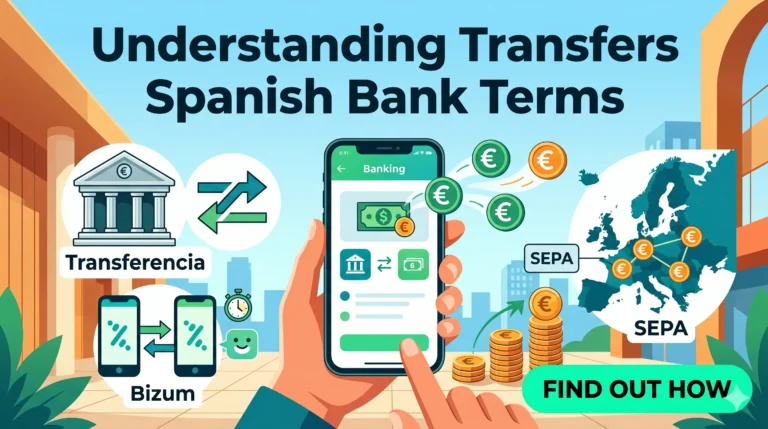
Bizum is a universally adopted, instant peer-to-peer payment system integrated directly into the infrastructure of the Spanish banking network. It is tied seamlessly to your mobile phone number. You simply open your Spanish banking app, select a contact from your phonebook, type in “15 euros for tapas,” and the money instantly appears in their checking account.
You absolutely cannot participate smoothly in Spanish student social life without it. However, the catch is that Bizum is strictly limited to participating Spanish banks. You cannot link a foreign US or UK bank account to Bizum. This is yet another critical reason why opening a localized account like N26 is mandatory; they fully integrate and support Bizum, allowing you to instantly split costs with your Spanish flatmates without any awkward cash exchanges.
Navigating Strict Cash Limitations
While splitting a casual bill at a restaurant is easy, you must be incredibly careful when handling large amounts of physical cash in Spain. The Spanish government actively combats tax evasion and the black market through strict, legally enforced cash limits.
Under current Spanish anti-fraud legislation, it is highly illegal to execute a cash transaction exceeding one thousand euros if one of the parties is acting in a professional or business capacity. If you arrive in Spain with a thick envelope full of physical euros and attempt to pay your private university tuition, a real estate agency fee, or a hefty apartment security deposit in cash, the transaction is completely invalid.
The Danger of Using Foreign Cards
If you stubbornly refuse to open a localized Spanish bank account and attempt to survive your entire study abroad year using the debit card attached to your hometown checking account, your budget will slowly disintegrate through a thousand tiny cuts.
Every time you tap your foreign card at a Spanish grocery store or a cafe, your legacy home bank will likely apply a hidden Foreign Transaction Fee, typically hovering around three percent. Furthermore, you will fall victim to the Dynamic Currency Conversion (DCC) scam everywhere you go.
Managing Local Income and Future Finances
For many international students, studying in Spain is not just a temporary semester abroad; it is the beginning of a long-term expat journey. Establishing rigorous financial habits early will dictate your ultimate success if you decide to transition into the Spanish workforce after graduation.
Student Visa Work Permissions
Historically, international students holding a standard Spanish student visa (estancia por estudios) from outside the European Union were strictly prohibited from working, or forced to navigate an agonizing bureaucratic process to secure a highly restricted part-time work permit.
Today, international students holding a valid Spanish student visa are generally permitted to work up to thirty hours per week, provided the employment is compatible with their studies and does not interfere with their strict academic schedule. This allows students to secure local corporate internships, work in language academies, or pick up hospitality shifts to supplement their imported budgets.
If you secure local employment, you will be formally entered into the Spanish Social Security system and will receive actual Spanish payslips (nóminas). Understanding how local income taxes and social security deductions affect your theoretical gross wage is critical to projecting your actual take-home pay. To decode the complexities of local employment contracts, read Spanish Salary Basics: Gross vs Net Pay and Common Deductions.
Avoiding the Expat Spending Trap
The most common financial mistake international students make is treating their entire academic year like a continuous, extended vacation. Because drinks, tapas, and domestic flights are objectively cheaper in Spain than in London or New York, the temptation to eat at restaurants every single day and travel to a new European city every weekend is overwhelming.
You must actively resist the expat spending trap by establishing a strict, Euro-based budget from day one. One of the greatest psychological errors is constantly converting Spanish prices back into your home currency in your head. If a coffee costs two euros, and you tell yourself “that’s only two dollars and twenty cents,” you are subtly diminishing the value of the local currency and justifying overspending. You must adjust your mindset to view a euro as a euro. If your monthly budget is eight hundred euros, spending fifty euros on a night out is a massive percentage of your available capital, regardless of how cheap it feels compared to Manhattan.
Building Global Portfolios Early
If you are an older student pursuing an MBA, a PhD candidate with secured grant funding, or simply an expat who arrived in Spain with significant pre-existing savings, leaving that surplus wealth sitting idle in a zero-interest checking account is a devastating financial mistake.
To actively protect and safely grow the wealth you are not actively spending on tuition and rent, veteran expats utilize global, highly portable brokerage platforms like Interactive Brokers. By transferring your surplus capital into an institutional-grade account with Interactive Brokers, you gain direct, unfiltered access to low-cost, globally diversified ETFs and sovereign bonds. This allows your money to compound efficiently in the background while you study. If your post-graduate career eventually takes you to Germany, the UK, or back to the US, your investments remain seamlessly intact within Interactive Brokers, completely bypassing the nightmare of liquidating highly restrictive localized Spanish banking products. To ensure you understand how holding global wealth interacts with Spanish reporting laws if you transition into full residency, carefully review Filing Taxes in Spain: A Guide for Expats (IRPF).
| Banking Strategy | Primary Use Case | Hidden Fee Risk | Expat Suitability |
| Traditional Spanish Bank | Mortgages, legacy branch support | High (Quarterly maintenance fees) | Low (Bureaucratic, demands physical residency cards) |
| Foreign Home Bank Card | Absolute emergency backup | Extremely High (FX fees, ATM fees) | Very Low (Will drain your student budget) |
| Digital Transfer Service | Moving large tuition/rent funds | Very Low (Transparent mid-market rates) | Extremely High (Protects capital across borders) |
| Digital Spanish Neo-Bank | Daily spending, Bizum, direct debits | Low (Zero-fee baseline accounts) | Extremely High (Instant local IBAN, English app) |
References
Primary sources (official)
- Banco de España – Portal del Cliente Bancario (Comisiones): https://clientebancario.bde.es/pcb/es/menu-horizontal/productosservici/relacionados/comisiones/
- Ministerio de Inclusión, Seguridad Social y Migraciones – Estudiantes Extranjeros y Trabajo: https://www.inclusion.gob.es/web/migraciones/estudiantes
- Bizum – Condiciones y Funcionamiento Oficial: https://bizum.es/
Other helpful sources
- Expatica – Guide to studying in Spain: https://www.expatica.com/es/education/higher-education/study-in-spain-106757/
- N26 – How to open a student bank account in Spain: https://n26.com/en-es/student-bank-account
Disclaimer
The information provided in this article is for educational and informational purposes only and does not constitute formal financial, banking, or legal immigration advice. Spanish banking regulations regarding non-resident account compliance, the exact legal framework permitting international students to work 30 hours per week, and the strict limitation on professional cash transactions are highly complex and subject to frequent legislative updates. Always consult directly with your university’s international student office, your banking institution, or a certified immigration lawyer (abogado de extranjería) regarding your specific visa restrictions and tax liabilities before securing local employment or executing large financial transfers.