How to Find an English‑Speaking Plumber/Electrician in Spain
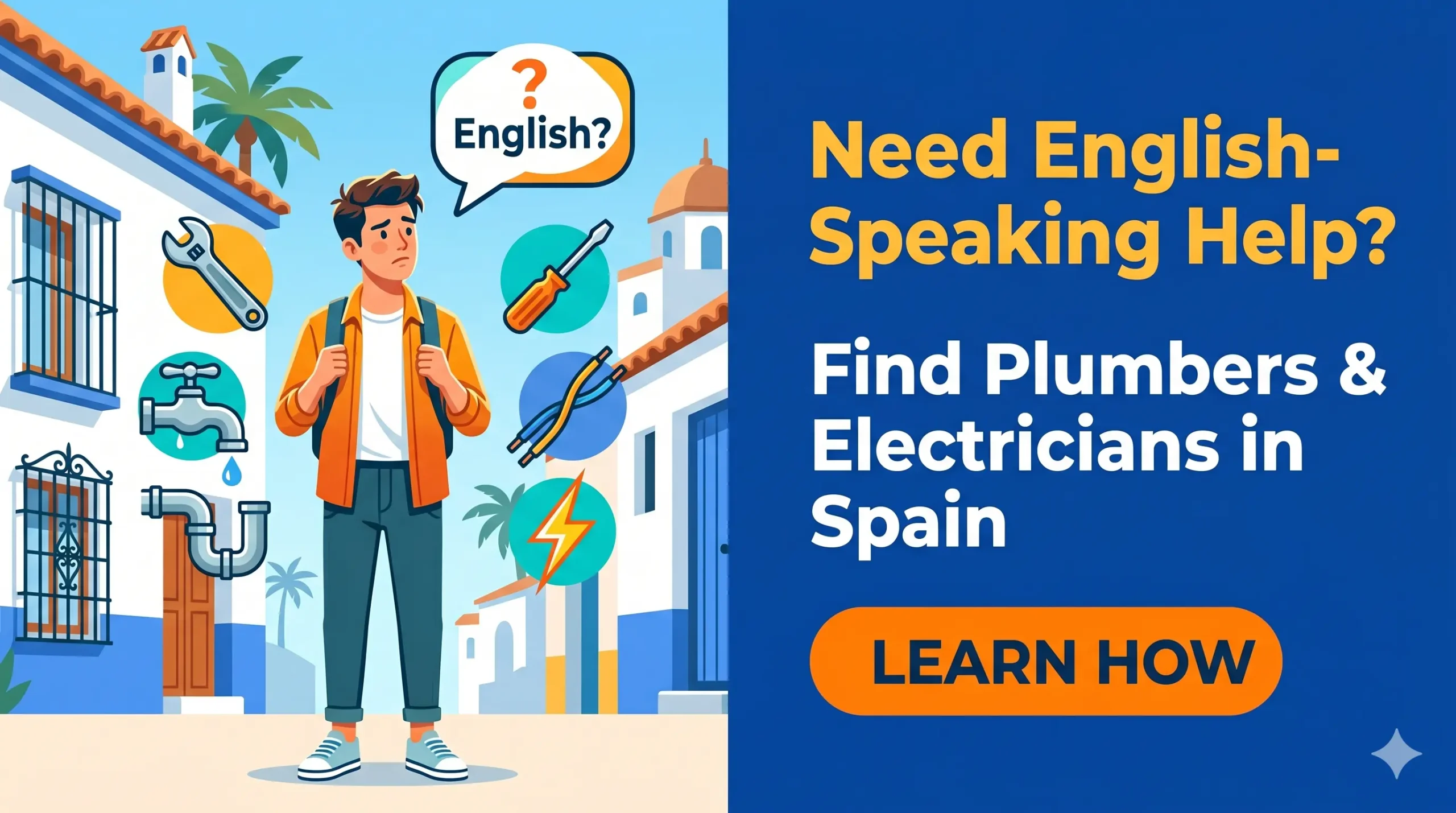
Watching water pour from a burst pipe while frantically trying to remember the Spanish word for “wrench” is a terrifying expat initiation. I once spent an hour trying to communicate with a local emergency plumber through a translation app while my kitchen flooded. This guide explains exactly how to bypass the language barrier, vet reliable English-speaking tradespeople, and survive Spanish home emergencies.
Disclosure: This post may contain affiliate links. We may earn a commission at no extra cost to you if you make a purchase through these links. Read full disclosure.
The Crisis of Communication in Spanish Home Repairs
When something breaks in your Spanish apartment, the stress of the physical damage is immediately compounded by the linguistic challenge. Technical Spanish is an entirely different dialect from the conversational Spanish you use at the local cafe.
Why Digital Translation Fails in Emergencies
If your hot water heater (termo eléctrico) suddenly dies in the middle of winter, you cannot rely on generic translation software to diagnose the issue over the phone. Plumbers (fontaneros) and electricians (electricistas) use highly specific, regional slang for tools and parts. If you misinterpret a question about your main breaker panel or the water shutoff valve, the technician might arrive with the completely wrong equipment, and they will still charge you for the visit.
Furthermore, Spanish contractors generally operate via rapid-fire WhatsApp voice notes rather than formal emails. If your Spanish listening comprehension is weak, trying to decipher a crackly audio message from an electrician driving down the highway is impossible. You need to find a professional who can fluently explain the root cause of the problem and the exact cost of the repair in English before they start ripping open your walls.
Renters Versus Owners and Who Makes the Call
Before you start hunting for a bilingual plumber, you must verify if you are actually authorized to make the call. If you own your property, the burden falls entirely on you. However, if you are an expat renting an apartment, calling an independent contractor without your landlord’s permission is a massive mistake.
Under Spanish rental laws, the landlord (casero) is financially responsible for maintaining the structural habitability of the flat, including major plumbing, electrical, and boiler repairs. If you hire your own English-speaking electrician to fix a faulty wire and hand the invoice to your landlord later, they can legally refuse to pay you back, claiming they were not consulted or that they have their own preferred maintenance company.
Always contact your landlord first. If the landlord ignores you, or if it is a catastrophic emergency and you cannot reach them, you must formally notify them in writing before bringing a third party into the home. To understand exactly what maintenance costs you are legally responsible for, deeply review Renting in Spain: How to Budget for Deposits, Fees, and Utilities.
Where to Look for English Speaking Tradespeople
Finding a certified, bilingual contractor requires moving away from the standard Spanish yellow pages and tapping directly into the localized expat networks.
Leveraging Expat Directories and Marketplaces
Your first and most reliable stop should be dedicated international directories. Platforms like Expatica or MumAbroad frequently curate lists of verified, English-speaking contractors operating in major hubs like Madrid, Barcelona, and the Costa Blanca. These directories are actively maintained and often feature companies founded by British, American, or Northern European expats who fully understand the standard of communication you expect.
For smaller, odd jobs—like mounting a television, fixing a loose cabinet, or installing a new light fixture—apps like TaskRabbit have gained massive traction in Spain. You can filter “Taskers” by the languages they speak, allowing you to instantly hire an English-speaking handyman with public reviews and transparent hourly rates. To ensure you have the bandwidth to quickly search these directories and instantly message contractors during a power outage, relying on a stable, expat-friendly mobile data provider like Tiekom is an absolute lifesaver.
Facebook Groups and Local Forums
The absolute most powerful tool for finding reliable tradespeople in Spain is word-of-mouth within localized Facebook groups. Groups titled “Expats in Valencia” or “English Speakers in Andalusia” are goldmines for contractor recommendations.
When you post a request for a plumber or an electrician, do not just accept the first name given. Look for contractors who are repeatedly recommended by multiple different users over several months. Be wary of contractors who instantly self-promote on your post without any prior community vetting. The expat community is small, and if a tradesperson does terrible work, their reputation will be quickly destroyed in these exact forums.
The Local Hardware Store Network
If you live in a smaller pueblo outside the major expat hubs, you might struggle to find a native English speaker online. In this scenario, your best asset is the local ferretería (hardware store).
Spanish hardware stores are the social and professional hubs of the neighborhood trades. The owners personally know every plumber, electrician, and carpenter in a five-kilometer radius. If you walk in, explain your issue, and ask if they know a técnico who speaks a little bit of English, they will often pull out their personal cell phone and make the connection for you. Building rapport with these local business owners is a crucial step to integrating into your neighborhood.
| Source for Tradespeople | Language Guarantee | Speed of Finding Help | Best Used For |
| Expat Directories | 100% English | Medium (Requires emailing for quotes) | Major renovations, complex electrical work |
| TaskRabbit App | High (Filterable) | Very Fast (Same or next day) | Odd jobs, furniture assembly, minor fixes |
| Facebook Groups | High (Expat vetted) | Medium to Fast | Trusted plumbers and emergency repairs |
| Local Hardware Store | Low to Medium | Fast (Hyper-local) | Sudden emergencies in smaller towns |
Vetting Contractors and Understanding Quotes
Once you find a bilingual professional, you must protect yourself from surprise fees. The Spanish quoting and billing system relies on specific terminology that expats frequently misunderstand.
Navigating Call Out Fees and the Presupuesto
When you contact a Spanish tradesperson, you must explicitly ask if they charge a tarifa de desplazamiento (call-out fee or travel fee). Many emergency plumbers and electricians will charge you anywhere from 40 to 100 euros simply to drive to your apartment and knock on your door, regardless of whether they actually fix the problem. You must agree to this fee in writing before they dispatch the van.
Once they assess the damage, you must demand a presupuesto sin compromiso (a no-obligation quote). This is a formal, written estimate breaking down the exact cost of the labor (mano de obra) and the specific replacement parts. Do not accept a vague verbal estimate. If a complex pipe needs replacing, having the contractor write down the exact dimensions and costs prevents them from doubling the price when the job is done.
The IVA Trap and Avoiding Scams
The most common point of friction during payment is the Impuesto sobre el Valor Añadido (IVA), which is the Spanish Value Added Tax set at 21%. When a contractor gives you a quote, they will frequently quote the price sin IVA (without tax) to make the number look smaller. When it comes time to pay, they will suddenly tack on an extra 21%. You must always ask, “¿Este precio incluye el IVA?” to avoid this painful surprise.
Furthermore, many contractors will offer you a “discount” if you pay in physical cash without an official invoice (factura). Do not accept this. While it saves you the 21% tax, it strips you of all consumer rights. If the pipe bursts again the next day and destroys your downstairs neighbor’s ceiling, you have absolutely zero legal proof that the contractor performed the work. Always demand a formal factura with the contractor’s official tax identification number (NIF/CIF).
To execute these payments securely, avoid keeping massive amounts of cash in your apartment. You should pay via a direct domestic bank transfer or Bizum. Ensuring you have an agile local banking setup to process these transfers is critical; review Opening a Bank Account in Spain as a Non-Resident to prepare your infrastructure. Falling for cash-only, off-the-books repairs is a trap explored heavily in Common Financial Scams Targeting Expats in Spain (and How to Avoid Them).
DIY Fixes and Emergency Preparedness While You Wait
Even if you find the perfect English-speaking plumber, they might not be able to reach your apartment for 24 to 48 hours, especially during a Spanish holiday or the month of August. You must be prepared to stabilize the situation yourself.
Prepping Your Home for Utility Failures
The moment you move into a new Spanish apartment, you must locate three critical elements: the main water shutoff valve (llave de paso), the main electrical breaker box (cuadro eléctrico), and the gas shutoff valve. If a pipe bursts at midnight, you do not have time to search for the valve; you must be able to turn off the main water supply blindly.
Because traditional Spanish building construction often features hidden plumbing behind tiled walls, catching a leak early is paramount. Many veteran expats proactively order smart water leak detectors from Amazon Spain and place them under the kitchen sink and near the washing machine. If a slow drip occurs, the sensor instantly sends an alert to your phone before the floorboards are ruined. Keeping these smart home devices constantly online requires a highly reliable internet connection, which is why securing your home fiber through Tiekom is a vital protective measure.
Ordering Parts and Temporary Solutions
If a minor fixture breaks—such as a showerhead, a toilet flapper, or a simple light switch—you do not necessarily need to pay a contractor 80 euros to fix it. You can easily find the exact replacement measurements and order the precise parts directly from Amazon Spain with next-day delivery. Ordering a basic, high-quality toolkit and some heavy-duty emergency plumbing tape from Amazon Spain during your first week in the country guarantees you have the physical tools to temporarily stop a leak while you wait for the professionals.
If your central air conditioning unit dies in the middle of a brutal August heatwave and the technician cannot arrive until Monday, you must pivot to survival mode. You can quickly order a portable evaporative cooler or high-velocity desk fans from Amazon Spain to keep your family safe from heat exhaustion. To understand how to manage the electrical draw of these temporary devices without constantly tripping your main breaker, deeply review Utility Costs in Spain: Electricity, Gas, Water, and Internet.
If the repair work requires the contractor to drill into walls, generate massive amounts of dust, or shut off the water to the entire building, you must formally notify your building’s community president beforehand. Performing heavy, noisy repairs during the sacred afternoon siesta hours will instantly infuriate your neighbors. To navigate these unspoken community rules and ensure you do not receive a formal noise complaint, carefully review How to Deal With Spanish Building Rules (Pets, Noise, Renovations).
Managing your home logistics securely ensures you are never caught entirely helpless. Having emergency funds liquid and available to pay a weekend call-out fee is essential; to strategize your daily cash flow, read Student Finances in Spain: Bank Accounts and Budgeting Tips. And if the worst happens and extreme weather damages your apartment, you must ensure your baseline survival supplies are already staged, a protocol covered in What to Keep in a Spain ‘Emergency Kit’ (Heatwaves, Floods, Fires).
References
Primary sources (official)
- Ministerio de Derechos Sociales, Consumo y Agenda 2030 – Derechos de Consumo en Reparaciones: https://www.dsca.gob.es/es/consumo/como-reclamar-conflicto-consumo
- Boletín Oficial del Estado (BOE) – Ley General para la Defensa de los Consumidores y Usuarios: https://www.boe.es/buscar/act.php?id=BOE-A-2007-20555
Other helpful sources
- Organización de Consumidores y Usuarios (OCU) – Tus derechos en los servicios de reparación: https://www.ocu.org/consumo-familia/derechos-consumidor/informe/derechos-servicios-reparacion
- Expatica Spain – Contractors Directory: https://www.expatica.com/es/directory/housing/contractors/
Disclaimer
The information provided in this article is for educational and informational purposes only and does not constitute formal legal, financial, or consumer rights advice. Spanish labor pricing, including specialized tarifa de desplazamiento (call-out fees), is unregulated and determined entirely by independent contractors. Always demand a written, itemized presupuesto sin compromiso before authorizing any destructive repairs, and insist on receiving a legally binding factura to protect your consumer warranty rights under the regulations of the Ministerio de Derechos Sociales, Consumo y Agenda 2030.