When Do Spain’s Festivals Peak Through the Year?
Planning a trip around Spain’s vibrant culture can be a nightmare if you do not know the specific windows when towns transform from quiet plazas into week-long street parties. Many travelers arrive a day late or a week early, missing the magic entirely because they relied on a vague guidebook. This guide clarifies exactly when Spain’s festivals peak throughout the year, helping you synchronize your itinerary with the country's most iconic celebrations.
Disclosure: This post may contain affiliate links. We may earn a commission at no extra cost to you if you make a purchase through these links. Read full disclosure.
Understanding the Spanish Festival Calendar Rhythm
To understand when festivals peak, you first have to understand that Spain does not really have an "off-season" for partying; it has a shifting geography of celebration. When I first moved here, I thought August was the only time people took to the streets. I quickly learned that the calendar is a complex tapestry of Catholic traditions, pagan seasonal shifts, and local history. The peak depends entirely on which region you are targeting and what kind of experience you want.
Generally, the festival calendar follows the sun. As the weather warms in the south, the festivals begin in Andalusia. As the heat becomes unbearable in the south during mid-summer, the focus shifts to the northern coast and the central plains. You also have to account for the "Puente" or bridge holidays. If a festival falls on a Thursday, Spaniards will almost certainly take the Friday off, creating a four-day peak of activity. Checking Public Holidays in Spain: How They Affect Travel and Opening Hours is essential before you book anything, as these dates dictate when shops close and crowds swell.
Religious roots play a massive role, but do not let that fool you into thinking these are somber events. Even the most solemn processions often end in a lively social atmosphere at the local bars. If you are planning to attend these peaks, you need to be strategic. For instance, using Omio to compare train and bus schedules early is vital because transport into a festival city can sell out weeks in advance.
The Spring Surge: When the Party Really Begins
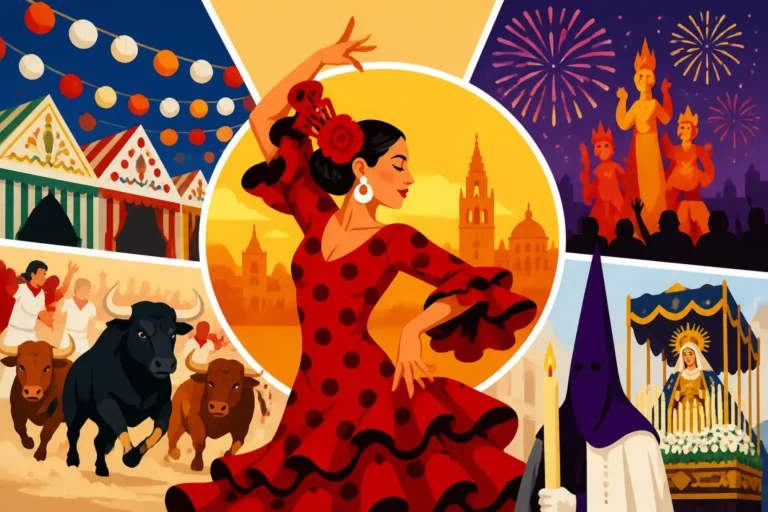
The first major peak of the year happens in the spring, specifically during March and April. This is when the Mediterranean coast and the south of Spain come alive. If you are in Valencia in mid-March, you are witnessing one of the loudest, most visually stunning peaks in the world: Las Fallas. While the festival technically lasts several weeks with daily "mascletàs" (firecracker shows), the true peak is from March 15th to the 19th. This is when the giant monuments are fully erected and eventually burned. For a smooth experience, I recommend reading How to Enjoy Las Fallas in Valencia as a Visitor to understand the logistics of navigating a city that essentially shuts down its traffic for a week.
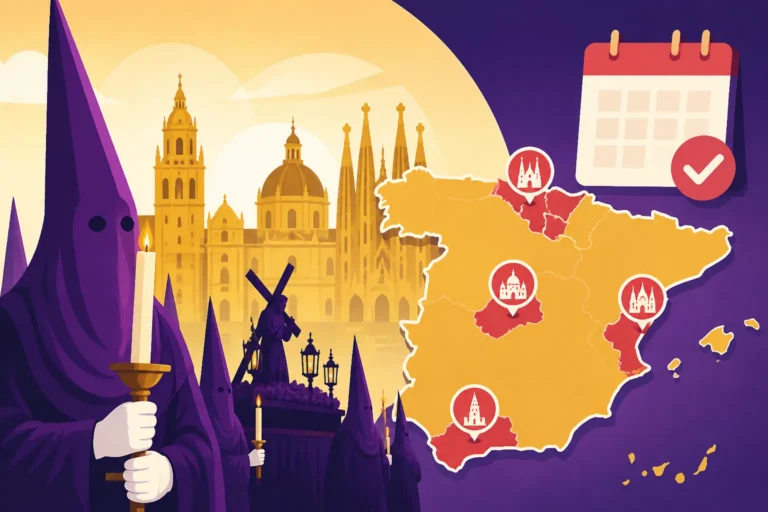
Immediately following March comes the heavy hitter of Spanish tradition: Semana Santa (Holy Week). This is not just a festival; it is a national phenomenon that peaks on Maundy Thursday and Good Friday. In cities like Seville, Malaga, and Valladolid, the streets are packed with "pasos" (floats) and hooded penitents. If you are a first-time visitor, it can be overwhelming. Knowing How to Experience Semana Santa Without the Biggest Crowds can save your sanity. The energy during these 48 hours is palpable—a mix of incense, mournful trumpets, and intense local pride.
Two weeks after the somber tones of Holy Week, Seville pivots 180 degrees for the Feria de Abril (April Fair). This is the peak of Andalusian glamour. Thousands of "casetas" (tents) are set up, and the air is thick with the scent of fried fish and Manzanilla wine. Unlike other festivals, the Feria is very much about social circles, but the public areas still offer plenty of action. During this time, accommodation prices on Booking.com skyrocket, so if you are not booking six months out, you might find yourself staying in a neighboring town and commuting in.
Summer Madness: High Season for Street Festivals
Summer is when the festival calendar truly explodes, with a major peak occurring around the Summer Solstice (June 23rd-24th). This is the Night of San Juan. While celebrated nationwide, it peaks on the beaches of the Mediterranean and the Atlantic. Imagine thousands of bonfires stretching across the sand as people jump over flames and wash their faces in the sea at midnight for good luck. It is a raw, elemental experience that marks the unofficial start of the summer holidays.
July brings the world-famous San Fermín in Pamplona. The peak here is undeniably the morning "encierro" (Running of the Bulls) between July 7th and 14th. While many people come for the danger, the real heart of the festival is the 24-hour street party. If you are planning to go, do not just show up; use GetYourGuide to find balcony rentals where you can watch the run safely from above. It is a far better investment than trying to fight the crowds on the ground.
August is perhaps the most intense month for local "Fiestas Mayores." Almost every village in Spain has its own festival during this month, often peaking around the 15th (the Assumption of Mary). In Barcelona, the Gràcia neighborhood transforms its streets into recycled-art wonderlands during the Festa Major de Gràcia. This is also when the messy, chaotic peak of La Tomatina occurs in the town of Buñol on the last Wednesday of August. Thousands of people throw overripe tomatoes at each other for exactly one hour. For the logistics of this specific event, check out How to Get Tickets and Spots for La Tomatina.
Autumn and Winter Traditions: Harvests and Magic
As the heat fades, the festival peaks move into the realm of harvests and history. September is the month of the "Vendimia" (Wine Harvest). In regions like La Rioja and Jerez, the peak of the festivities involves the first treading of the grapes and a lot of communal drinking. It is a more rustic, earthy type of celebration compared to the flashy summer fairs. This is a great time to explore Spanish Tapas Culture: How to Order and Where to Go as the seasonal produce is at its absolute best.
October 12th marks the Fiestas del Pilar in Zaragoza. This is a massive regional peak for Aragon, featuring floral offerings and traditional "Jota" dancing. It is one of the few major festivals in the interior of the country that draws huge national crowds during the autumn months. Using Omio is particularly helpful here, as Zaragoza sits right on the high-speed rail line between Madrid and Barcelona, making it a very easy weekend trip.
Winter festivals in Spain peak twice: during the Christmas period and the January "Three Kings" parade. While December is cozy, the real cultural peak for Spanish families is the night of January 5th. This is the "Cabalgata de Reyes" (Three Kings Parade), where elaborate floats toss candy to children. Even if you don't have kids, the atmosphere in major cities like Madrid is magical. If you are basing yourself in the capital for this, take a look at Madrid for First-Time Visitors: Neighborhoods and Highlights to pick a spot near the parade route so you can escape the cold quickly once the sweets have all been caught.
Practical Planning for Peak Festival Dates
Attending a Spanish festival at its peak is an exercise in patience and preparation. You have to accept that you will be in a crowd. It is advisable to tell travelers that if you hate people touching your shoulders or waiting 20 minutes for a drink, you should visit these cities during the "shoulder" days of the festival rather than the peak. However, if you want the full-throttle experience, you need to lock in your logistics early.
Transport and Accommodation
During peaks, the High-Speed Trains in Spain (AVE): Routes, Booking, and Savings become the most sought-after tickets in the country. Renfe (the national rail operator) often releases extra seats, but they vanish instantly. This is where Omio is useful because it aggregates the private operators like Iryo and Ouigo, which often have better availability and lower prices during festival spikes.
| Festival Name | Region | Peak Dates | Travel Tip |
|---|---|---|---|
| Las Fallas | Valencia | March 15-19 | Book a hotel near a metro stop to avoid road closures. |
| Semana Santa | Andalusia | Palm Sunday – Easter | Stay within walking distance of the city center. |
| San Fermín | Navarre | July 7-14 | Wear the traditional white and red to blend in. |
| La Tomatina | Valencia (Buñol) | Last Wednesday of August | Take a shuttle bus from Valencia city instead of driving. |
| Three Kings | Nationwide | January 5 | Arrive at the parade route at least 2 hours early. |
For accommodation, Booking.com is my go-to, but I recommend looking for apartments with kitchens. During peak festivals, restaurants are often so crowded that you will appreciate being able to have a quiet breakfast or late-night snack at your own place. Also, check the cancellation policies; festival dates are often "non-refundable" due to high demand.
Safety and Etiquette
With large crowds come logistical challenges. Staying Safe in Spain: Common-Sense Tips for Travelers is a must-read because pickpockets are unfortunately very active during these events. They look for distracted tourists watching the fireworks or the processions. I always carry my phone and wallet in a front-zipped pocket or a crossbody bag hidden under my jacket.
Respect the locals as well. For you, it is a holiday; for them, it might be a deeply religious event or a traditional neighborhood pride moment. Don't be "that" tourist who treats a solemn procession like a carnival. Observe how the locals behave—if they are quiet, you should be too. If they are shouting "Guapa!" at a statue of the Virgin Mary, then feel free to join in the enthusiasm.
Why You Should Experience the Peak at Least Once
There is a reason these festivals draw millions of people. There is a sense of collective joy that is hard to find anywhere else in the world. When you are standing in the middle of a crowd in Valencia as a five-story tall statue made of wood and papier-mâché erupts in flames, or when you are squeezed into a narrow street in Seville and a massive float carrying a 17th-century sculpture passes inches from your face, you feel the weight of history and the power of community.
It requires more money and more planning, but the "peak" is the concentrated essence of Spanish culture. By using tools like GetYourGuide for specialized local tours and Omio for your transport, you can mitigate many of the frustrations of travel. Just remember to bring your most comfortable walking shoes, a high tolerance for noise, and a willingness to go with the flow. You won't regret being there when the fireworks finally go off.
For more detailed information on specific events throughout the year, I highly recommend checking out our comprehensive guide on Festivals, Fiestas, and Public Holidays in Spain. It covers the smaller, more niche events that might not draw the millions but offer a unique window into the diverse heart of the country.
Disclaimer
The information provided in this guide is based on typical annual schedules and cultural practices in Spain. Festival dates, local regulations, and travel conditions can change due to municipal decisions, weather, or unexpected events. Always verify specific dates and booking requirements with official local tourism boards or event organizers before making non-refundable travel arrangements. High-demand periods often involve significantly increased costs and crowded conditions; travelers should plan accordingly and prioritize personal safety.