Public Holidays in Spain: How They Affect Travel and Opening Hours
Planning a simple grocery run on a Tuesday only to find every supermarket shuttered and the streets eerily quiet is a rite of passage for every expat in Spain. I remember my first year in Madrid, staring at a closed Mercadona door with an empty fridge, completely unaware that a regional holiday had effectively paused the city. This guide solves the confusion of the Spanish calendar, helping you navigate the complex layers of national, regional, and local public holidays.
Disclosure: This post may contain affiliate links. We may earn a commission at no extra cost to you if you make a purchase through these links. Read full disclosure.
The Three Tiers of Spanish Public Holidays
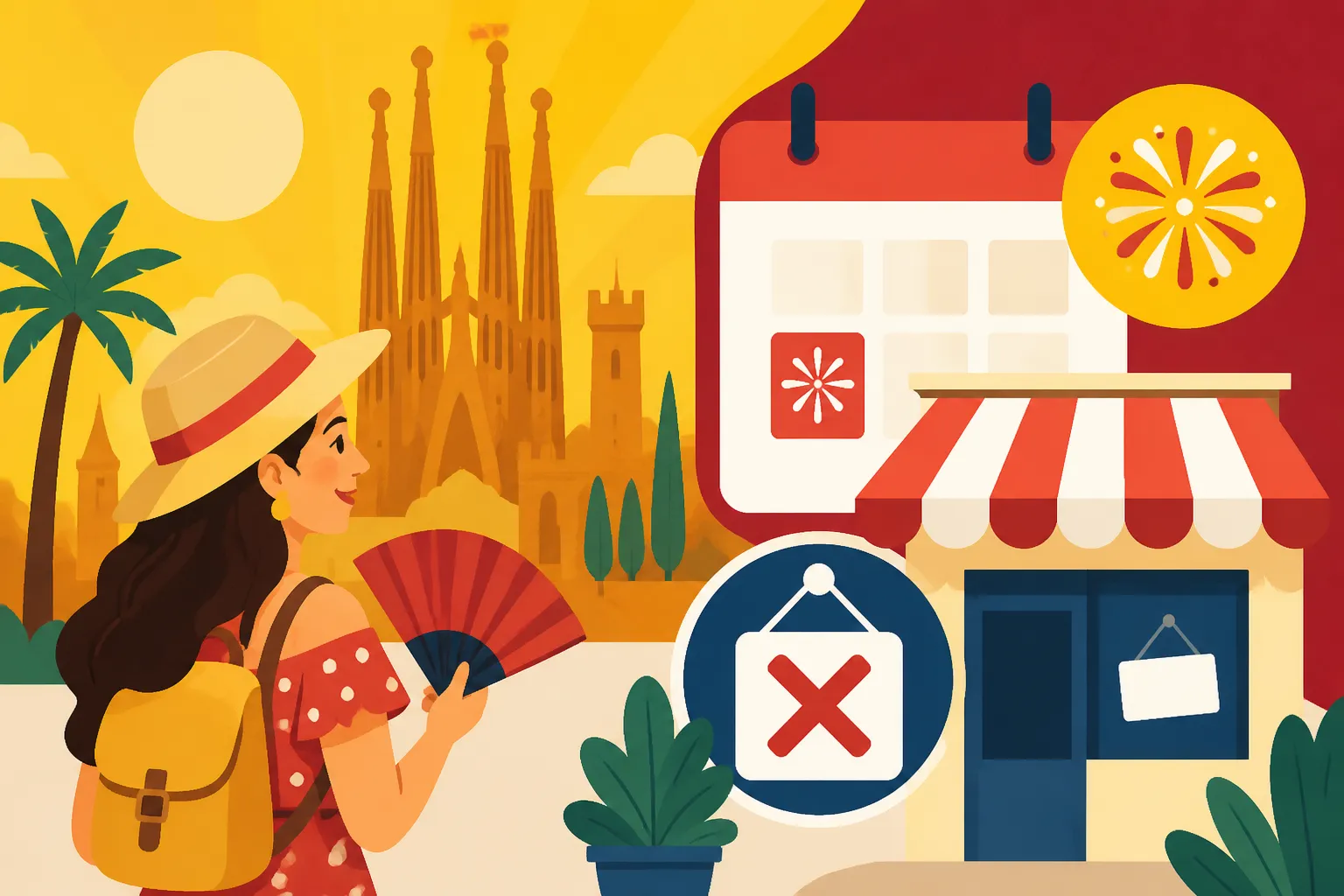
One of the most confusing aspects of the Spanish calendar is that a holiday isn't always a holiday for everyone. Spain operates on a three-tier system: national holidays, regional holidays, and local municipal holidays. Understanding which one is currently in effect is the difference between a successful errands day and a wasted trip to the city center. National holidays are the "Big Ones" like Christmas or New Year’s, where almost the entire country grinds to a halt. However, even these can be subject to the "substitution rule," where a holiday falling on a Sunday might be moved to the following Monday in some regions but not others.
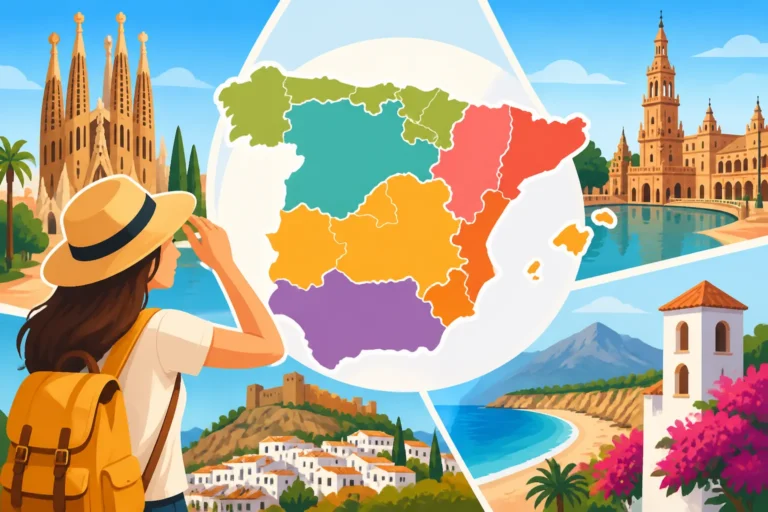
Regional holidays are determined by the seventeen Autonomous Communities. For example, the Day of Andalusia or the Diada in Catalonia will see everything closed in those specific regions, while life continues as normal in Madrid or Galicia. This creates a patchwork of availability that can be a nightmare for those traveling across regional borders. You might depart from a city where everything is open and arrive in a neighboring province where even the cafes are closed. To stay ahead of these shifts, it is essential to look at Spanish Holidays and Public Closures: Planning Errands in 2026 to ensure your week is planned correctly.
Finally, there are local holidays. Each town and village in Spain is entitled to two local holidays per year, usually dedicated to a patron saint. On these days, the local town hall, small shops, and municipal services will close, but the neighboring village five kilometers away might be fully operational. If you are living in a smaller pueblo, these local dates are often the most disruptive because they aren't always listed on major national calendars. I’ve personally been caught out by a local saint’s day in a small village where even the only gas station was closed for the afternoon procession.
National Red Days and Their Impact
National holidays, often called "Festivos Nacionales," are the backbone of the Spanish holiday system. These dates are generally non-negotiable and see the most significant closures. Major dates like January 6th (Día de Reyes), May 1st (Labor Day), and October 12th (Hispanic Heritage Day) are observed across the board. During these times, the "Red Day" status means that almost all commercial activity stops. Even in major tourist hubs, you will find that the rhythm of the city changes significantly.
The impact on transport is also substantial. While public transport usually continues to run, it often operates on a "Sunday schedule," which means fewer frequencies and longer wait times. If you are planning to move between cities on these dates, using platforms like Omio can help you see which train and bus routes are still operating and at what times, as the schedule shifts can be dramatic. National holidays also tend to see a surge in domestic travel, as Spaniards take advantage of the time off to visit family or head to the coast.
Regional Autonomy and the Calendar Patchwork
Spain’s decentralized government means that regional authorities have a lot of power over their specific calendars. Each year, the official state bulletin publishes the calendar, but the regions have the right to swap certain national holidays for their own regional celebrations. For instance, San José (March 19th) might be a holiday in Valencia and Murcia but a regular working day in the rest of Spain. This is a crucial detail for expats to remember when How to Plan Travel Around Spanish Public Holidays becomes a priority for your weekend trips.
This regional variation also affects school calendars and healthcare appointments. If you have a residency appointment or a medical check-up, you must verify that your specific region isn’t observing a local feast day. Always double-check the regional calendar of your specific "Comunidad Autónoma" at the start of every year.
The Hyper-Local Village Fiestas
Local holidays are perhaps the most charming but also the most frustrating for the uninitiated. These are often centered around a "Fiesta Mayor" or a patron saint celebration. In places like Valencia during Las Fallas or Seville during the Feria, the entire city’s commercial infrastructure might effectively disappear for several days. Even if it is not an official "Red Day" for the whole week, the practical reality is that many local businesses will simply close their doors to participate in the festivities.
In smaller towns, the local holiday might involve a parade, a communal meal in the plaza, and a complete shutdown of all "non-essential" services. While this is a wonderful time to experience authentic Spanish culture, it is a terrible time to try and get your internet installed or fix a plumbing issue. Local tradespeople will almost certainly be unavailable. It is part of the "I've-been-there" reality of Spanish life: you learn to check the town hall’s social media pages or the local "bando" (announcement) to know when the bread shop will actually be open.
How Holidays Affect Opening Hours and Daily Life
When a public holiday hits Spain, the "everything is closed" rule is much stricter than in many other Western countries. Unlike the UK or the US, where major retailers might simply reduce their hours, many Spanish regions have laws that strictly limit the number of Sundays and holidays that large stores can open. This means that if you haven't stocked up on essentials by the evening before a holiday, you might be out of luck until the day after.
This cultural approach to holidays emphasizes rest and family time over consumerism. While this is one of the things I’ve come to love about living here, it requires a significant shift in mindset for those used to 24/7 convenience. You will find that on a major holiday, the only places open are small "convenience" stores (often run by immigrant families who choose to stay open), some gas stations, and restaurants in high-traffic tourist areas. To understand the full scope of what stays open and what doesn't, you should read What Closes During Spanish Holidays and Long Weekends for a detailed breakdown.
Supermarkets and Grocery Shopping
In most parts of Spain, major supermarkets like Mercadona, Lidl, and Aldi are strictly closed on Sundays and public holidays. There are some exceptions in "Zones of Great Tourist Influx," such as parts of Madrid city center or the coastal areas during the summer months, but you should never rely on this. Some smaller Carrefour Express or SuperCOR locations might remain open, but they often have significantly higher prices and a more limited selection.
The day before a major holiday is often chaotic in Spanish supermarkets. Locals will swarm the aisles to ensure they have enough fresh produce and meat to last through the closure. If a holiday falls on a Thursday and people take the Friday off (a "Puente"), the supermarket might be closed on Thursday, open Friday, and then closed again on Sunday. This creates a "feast or famine" situation for your pantry. My advice is to always have a two-day buffer of essentials in your cupboard to avoid the holiday rush.
Pharmacies and Healthcare Services
Healthcare availability changes drastically during holidays. While emergency rooms (Urgencias) are always open, your local "Centro de Salud" (health center) will be closed on any red day. This means you cannot book routine appointments or get non-emergency prescriptions filled. If you find yourself in need of care, understanding the difference between Urgent Care vs Emergency Room in Spain: When to Use Each is vital.
For medications, Spain uses a "Farmacia de Guardia" (on-call pharmacy) system. Every town has a rotating schedule where one pharmacy remains open 24 hours a day, even on Christmas or local holidays, to handle urgent needs. You can usually find the name and address of the current "Guardia" pharmacy posted on the door of any closed pharmacy or via a local online tracker. For more practical advice on this, check out How to Find a ‘Farmacia de Guardia’ Near You in Spain.
Banks and Administrative Offices
If you have any pending bureaucracy, forget about getting it done on a holiday. Banks, post offices (Correos), and government buildings like the Extranjería (Immigration Office) or the Town Hall (Ayuntamiento) will be closed. This includes the days that are "regional" holidays; even if the bank is a national chain like Santander or BBVA, the local branch will follow the local calendar.
This closure often extends to the telephone customer service for these institutions. If you need to report a lost card or have a banking issue, you may still be able to use the automated lines, but speaking to a human becomes nearly impossible. It is also worth noting that online bank transfers might be delayed if the holiday falls on a banking business day. If you are expecting a salary payment or need to pay rent, always account for the Spanish holiday calendar to avoid late fees or "frozen" funds during a long weekend.
Navigating Travel Logistics During Long Weekends (Puentes)
The "Puente" (bridge) is a sacred Spanish tradition. When a holiday falls on a Tuesday or a Thursday, many people will take the Monday or Friday off to create a four-day weekend. During these times, the entire country seems to move at once. Whether it is people from Madrid heading to the coast or locals from the north heading south for sun, the travel infrastructure is pushed to its limit.
If you are planning to travel during a Puente, you need to book everything well in advance. Spontaneity during a Spanish long weekend often results in significantly higher costs or simply finding that all trains and hotels are sold out. Using sites like Booking.com early in your planning phase is the only way to secure a reasonably priced room in popular destinations like Seville, Granada, or San Sebastián during a major holiday.
High-Speed Trains and Bus Availability
The RENFE train network, especially the high-speed AVE, is incredibly popular during holidays. Tickets for peak times—usually the Friday afternoon before a long weekend and the Sunday evening of the return—sell out weeks in advance. If you wait until the last minute, you might find that only the most expensive "Premium" seats are left, or worse, no seats at all.
Buses are a great alternative, but companies like Alsa also see a massive spike in demand. I highly recommend using Omio to compare different modes of transport during these windows. Sometimes, a slightly longer bus journey is the only way to reach your destination when the trains are full. Additionally, keep in mind that on the actual day of the holiday, the frequency of local commuter trains (Cercanías) and city buses will be reduced, so leave plenty of extra time to get to the station.
Road Traffic and Car Rentals
Driving during a major Spanish holiday requires patience and a full tank of gas. The "Operación Salida" (Exit Operation) and "Operación Retorno" (Return Operation) are televised events in Spain, with the DGT (Traffic Authority) issuing constant warnings about jams on major motorways like the A-6 or the A-1. Traffic jams leaving major cities can last for hours, turning a three-hour drive into a six-hour ordeal.
Car rental prices also skyrocket during these periods. If you are an expat who doesn't own a car, you might find that the daily rate for a rental during Easter week (Semana Santa) is triple what it would be in mid-November. If you must drive, try to leave a day earlier or very late at night to avoid the peak congestion. Also, be aware that parking in your destination city will be much harder to find, as locals who usually use their cars for work will have them parked for the duration of the holiday.
Accommodation Surges and Booking Windows
The demand for hotels and tourist apartments during "Puentes" is immense. Not only do prices rise, but many places will enforce a "minimum stay" of three or four nights. If you are looking for a quick one-night getaway, you might find your options very limited.
Popular coastal areas and historic city centers become incredibly crowded. If you prefer a quieter experience, holidays are actually a great time to visit "business" cities like Madrid or Bilbao, as many locals leave, and the atmosphere can be slightly more relaxed—provided you don't mind some shops being closed. For those planning to visit major landmarks, it is essential to use GetYourGuide to book tickets for places like the Alhambra or the Sagrada Família months in advance, as holiday slots are the first to disappear.
| Holiday Scope | Typical Impact on Shops | Impact on Transport | Recommended Action |
|---|---|---|---|
| National (Red Day) | Almost all closed | Sunday Schedule | Stock up 2 days prior |
| Regional Holiday | Closed in specific region | Local reductions | Check regional calendars |
| Local (Municipal) | Small shops/Admin closed | Usually normal | Confirm local town hall dates |
| The "Puente" | Normal hours (except red day) | High demand/High prices | Book trains 4-6 weeks early |
Cultural Nuances and the "Lunes de Pascua" Effect
Beyond the closures, Spanish holidays have a deep cultural rhythm that can be fascinating to observe. Many holidays are religious in origin, even if the modern celebration feels secular. Events like Holy Week (Semana Santa) are not just holidays; they are massive cultural spectacles that involve processions, specific traditional foods (like torrijas), and a complete change in the city's atmosphere.
One quirk that often catches foreigners out is the "Lunes de Pascua" (Easter Monday). In some regions, like Catalonia, Valencia, and the Basque Country, Easter Monday is a major holiday where everything is closed. In Madrid or Andalusia, however, it is a normal working day. This is a prime example of why you cannot rely on a single national calendar if you are moving between regions.
The Substitution Rule (Sundays Move to Mondays)
In Spain, if a national holiday falls on a Sunday, the regional government has the option to move the day off to the following Monday. This is known as "lunes festivo." Not all regions choose to do this every time, which can lead to a bizarre situation where people in Toledo are at work on a Monday while their neighbors in Madrid are enjoying a holiday.
This substitution is designed to ensure workers don't "lose" a holiday, but for expats, it adds another layer of checking. Always look for the term "trasladado al lunes" on your local calendar. If you see this, expect all the "Red Day" rules—closed supermarkets and Sunday transport schedules—to apply to that Monday instead of the Sunday.
Seasonal Closures in Non-Tourist Areas
It is also important to distinguish between official holidays and "seasonal closures." In many parts of Spain, especially in smaller towns or non-tourist neighborhoods of big cities, businesses may close for the entire month of August or during the Christmas-to-Three-Kings period. While these aren't "public holidays" in the legal sense, the effect on your life is the same.
The local "carnicería" or "peluquería" might simply put a handwritten sign on the door saying "Cerrado por vacaciones" (Closed for vacation) and disappear for three weeks. This is very common in August when the heat makes working in central and southern Spain difficult. You’ll find the same during the week of the local "Fiesta Mayor." It is a reminder that in Spain, the quality of life and the right to rest are often prioritized over the convenience of the customer.
Religious vs. Secular Celebrations
While Spain is increasingly secular, its holiday calendar remains heavily influenced by the Catholic liturgical year. Dates like the Assumption of Mary (August 15th) or All Saints' Day (November 1st) are national holidays. On these days, you will often find that while the shops are closed, the churches are very busy, and local cemeteries become places of vibrant community activity as families visit their departed loved ones.
Secular holidays, like Constitution Day (December 6th), tend to be less about public spectacle and more about the "Puente." Since the Feast of the Immaculate Conception is just two days later on December 8th, the entire week of early December often becomes one long holiday period. This is a very popular time for Spaniards to start their Christmas shopping or head to the mountains for the first ski trips of the season.
Practical Tips for Surviving a Spanish Holiday
After several years of living here, I have developed a "holiday survival kit" approach. It isn't just about knowing the dates; it’s about changing your habits. The first step is to sync your digital calendar with the specific regional and local holidays of your province. Many "Ayuntamientos" (town halls) provide a downloadable PDF of the "Calendario Laboral" on their websites.
Another tip is to get to know your local "tienda de alimentación" (neighborhood convenience store). These are often the only places open when the big supermarkets fail you. While they might not have your specific brand of almond milk, they will have bread, milk, eggs, and basic cleaning supplies. Building a rapport with the owners of these small shops is a vital part of expat integration and a lifesaver during a long holiday weekend.
The Stockpiling Strategy
Don't wait until the night before a holiday to shop. The queues at the checkout will be long, and the fresh produce shelves will be picked clean. I usually do my "holiday shop" two full days before the red day. Focus on things that keep well: long-life milk, canned goods, and frozen vegetables.
Also, remember that "Día de Reyes" (January 6th) is a massive family day. If you need a specific cake or a "Roscón de Reyes," you often need to pre-order it at the bakery days in advance. The same applies to booking a table at a restaurant on a holiday; if you don't have a reservation, be prepared to wait a long time or settle for a fast-food chain that might stay open in the tourist zones.
Digital Tools for Real-Time Info
While the official calendars are great, real-time information is often found on social media. Follow your local town hall (Ayuntamiento) on X (formerly Twitter) or Facebook. They often post reminders about upcoming holidays and changes to trash collection or public transport.
For transport, apps like Citymapper or Google Maps are generally good, but they don't always catch every local holiday frequency change. Checking the official RENFE or local bus company website directly is safer. If you are looking for things to do during a holiday, GetYourGuide is excellent for seeing which museums and tours have adjusted their hours, as they often stay open to accommodate the influx of tourists even when other things are closed.
Finding "Guardia" Services
Always keep a screenshot or a printed list of the "Farmacias de Guardia" and the nearest "Urgencias" on your fridge. If you are new to the country and haven't fully mastered the language yet, trying to find an open pharmacy at 11 PM on a rainy holiday Tuesday is much harder if you are stressed. Knowing that Emergency Healthcare in Spain: 112, Urgent Care, and What to Expect is your primary resource for serious issues will give you peace of mind.
For non-medical emergencies, like a burst pipe or a lockout, you should look for "servicios 24 horas" in your area before the holiday hits. Most insurance companies in Spain provide a 24-hour emergency line for home repairs, which is often the only way to get a technician to your house on a "Red Day." Make sure you have your policy number saved in your phone. Dealing with a household disaster is much easier when you know exactly who to call in a system that is otherwise taking a well-deserved nap.
Disclaimer
This guide is intended for informational purposes only. While every effort has been made to ensure the accuracy of the information provided regarding Spanish public holidays and their impacts, calendars are subject to change by national, regional, and municipal authorities. Always verify specific dates and opening hours with local official sources or the relevant service providers before making travel or administrative plans.