What Is the Best Order to See Madrid’s Art Museums?
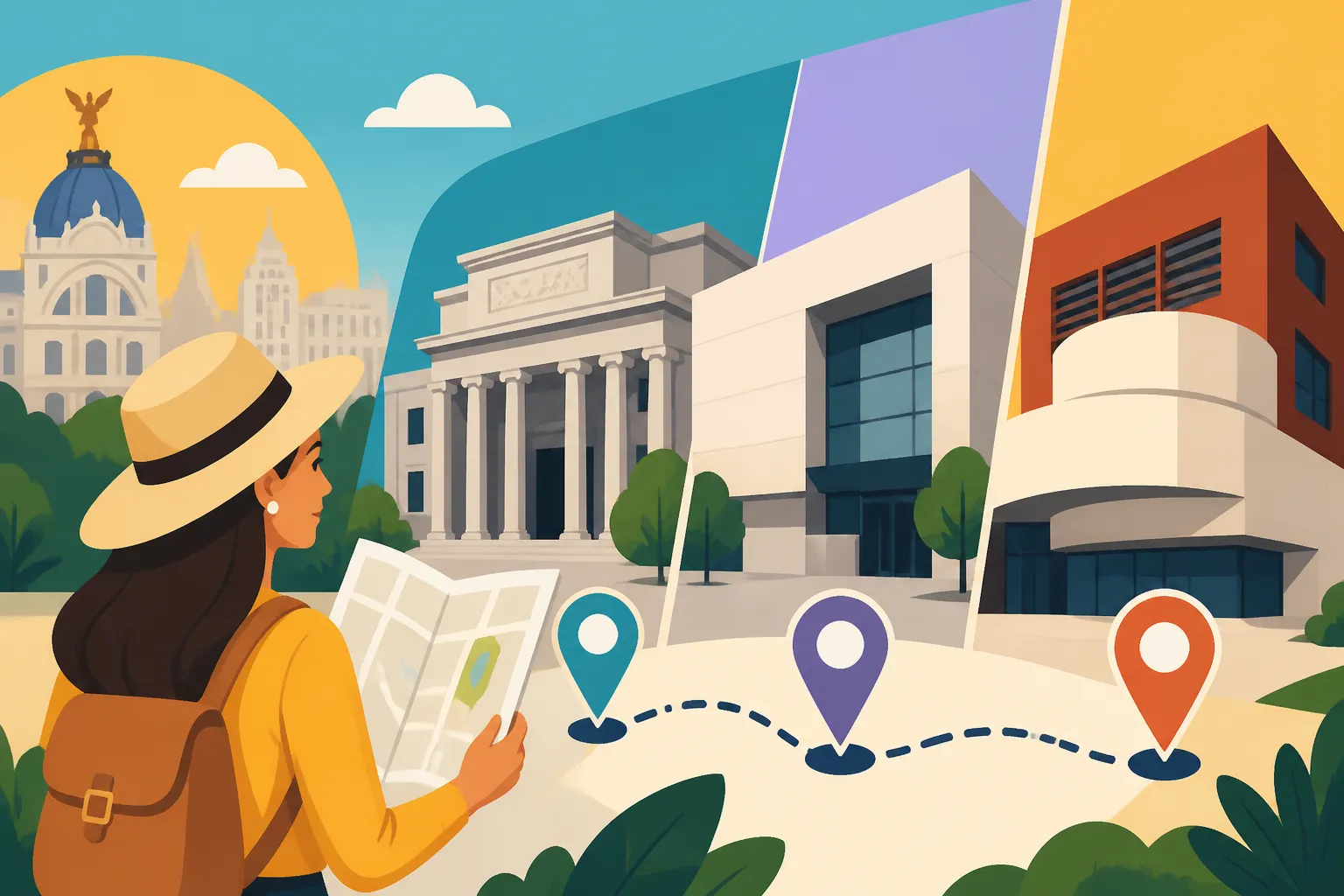
Walking into Madrid’s "Golden Triangle of Art" without a plan is the fastest way to develop a severe case of museum fatigue. Many visitors try to tackle the big three—the Prado, the Reina Sofía, and the Thyssen-Bornemisza—in a single, chaotic weekend, only to end up with sore feet and a blurred memory of masterpieces. This guide provides a strategic, expert-tested order for navigating these world-class institutions to ensure you actually enjoy the art rather than just surviving the hallways.
Disclosure: This post may contain affiliate links. We may earn a commission at no extra cost to you if you make a purchase through these links. Read full disclosure.
The Golden Triangle: Understanding the Big Three
Madrid’s art scene is anchored by three massive institutions located along the Paseo del Prado, a stunning boulevard that has earned its place as a UNESCO World Heritage site. However, just because they are geographically close doesn't mean they should be treated as a single to-do list item. Each museum has a distinct personality, a different layout, and a specific "cognitive load" that it demands from you as a visitor.
The Museo del Prado is the titan. It focuses on European art from the 12th century to the early 19th century. This is where you find the heavyweights: Velázquez, Goya, El Greco, Rubens, and Titian. It is dense, regal, and physically exhausting. If you are staying nearby, perhaps in a rental you found through Booking.com in the Literary Quarter, you’ll realize the Prado isn't a museum you "finish"; it’s one you inhabit.
The Museo Nacional Centro de Arte Reina Sofía picks up where the Prado leaves off, focusing on 20th-century and contemporary art. It is housed in a sprawling former hospital and a sharp, modern extension. This is the home of Picasso’s Guernica, but it also houses deep dives into Dalí and Miró. The vibe here is more political, experimental, and often surreal.
The Museo Nacional Thyssen-Bornemisza is often the favorite of veteran expats because it acts as the perfect bridge. It’s a private collection that covers everything from the 13th century to the late 20th century. It’s smaller than the others, easier to navigate, and offers a bit of everything, from Impressionism to Pop Art. When you are planning Madrid for First-Time Visitors: Neighborhoods and Highlights, placing the Thyssen as your starting point is often the wisest move.
The Chronological Path: A Walk Through Time
If you are a history buff or someone who likes a linear narrative, the best order is undoubtedly chronological. This allows you to see the evolution of Western art as it happened, moving from the religious and royal patronage of the Renaissance into the fractured, rebellious world of modernism.
Start your first morning at the Prado. I recommend entering through the Puerta de Jerónimos. You want to hit the Prado when your brain is freshest because the level of detail in works like Bosch’s Garden of Earthly Delights or Velázquez’s Las Meninas requires significant mental energy. Spend about three hours here, focusing on the Spanish, Italian, and Flemish schools. Don't try to see every room; it is literally impossible.
After the Prado, you’ll be starving. This is a great time to learn What Time Do Spaniards Eat Lunch and Dinner? because if you wait until 3:00 PM, you might find the best local kitchens in the Barrio de las Letras are winding down. After a long lunch, head to the Thyssen-Bornemisza. Because the Thyssen covers such a broad spectrum, you can pick up the "middle of the story"—the transition into Impressionism and Expressionism—which the Prado mostly lacks.
On your second day, dedicate your morning to the Reina Sofía. By separating the Reina Sofía from the Prado, you give yourself room to process the shift into the 20th century. Seeing Guernica is a visceral experience that shouldn't be rushed between other viewings. If you are traveling from other Spanish hubs like Barcelona or Seville, you might use Omio to check the train schedules, ensuring you arrive in Madrid with a full day ahead of you to dedicate to this modern giant.
The Energy-Management Strategy: Avoiding Burnout
For most people, the "Chronological Path" is too much. If you aren't an art historian, the best order is often dictated by your own stamina. In this case, I recommend starting with the Thyssen-Bornemisza on your first afternoon in the city. It is the most "user-friendly" of the three. The galleries are organized in a way that feels logical, the lighting is excellent, and it’s rarely as crowded as the Prado. It’s a great way to "warm up" your museum eyes.
The following morning, head to the Prado. By doing the Prado as your only major activity for the day, you can take it slow. If you want to save a bit of money, you can look into How to Get Into the Prado Museum for Free, though be warned that the free hours (usually 6:00 PM to 8:00 PM) are incredibly crowded and not ideal for a first-time visit. For a better experience, it is worth using GetYourGuide to book a skip-the-line ticket or a small-group tour. Having a guide point out the "hidden" details in Goya’s Black Paintings makes the experience much less overwhelming.
Finish your trip with the Reina Sofía. The modern art in the Reina Sofía is often more "open" and less dense than the Baroque and Renaissance works in the Prado. The building itself has wonderful courtyards and glass elevators that offer a mental break from the art. It’s a great way to wind down your cultural tour of Madrid before perhaps heading back to the station for Best Day Trips From Madrid by Train if you have extra days in your itinerary.
| Museum | Focus Period | Estimated Time Needed | Best Entry Time |
|---|---|---|---|
| Museo del Prado | 12th – early 19th Century | 3-4 Hours | 10:00 AM (Opening) |
| Thyssen-Bornemisza | 13th – 20th Century | 2-2.5 Hours | 1:00 PM or Late Afternoon |
| Reina Sofía | 20th Century – Contemporary | 2.5-3 Hours | 10:00 AM or 7:00 PM (Free hours) |
Practical Logistics for Your Museum Marathon
Managing the logistics is just as important as the order of the museums. First, let’s talk about your feet. Madrid is a walking city, and these galleries are massive. Wear your most comfortable shoes and don't be afraid to use the folding stools provided in many galleries. Also, be mindful of your belongings. While Madrid is generally safe, you should always keep Staying Safe in Spain: Practical Safety Tips for New Residents in mind; crowded museum entrances are prime spots for opportunistic pickpockets.
Hydration and caffeine are your best friends. Between museums, stop for a "café con leche." Understanding the local Coffee Culture in Spain: How to Order Like a Local will save you from the tourist-trap cafeterias inside the museums, which are often overpriced and lacking in character. Instead, step out into the side streets near the Botanical Garden or Atocha.
If you are arriving in the city for the first time, make sure you know How to Get From Madrid Airport to the City Center so you don't waste your "museum energy" haggling with taxis or getting lost on the Metro. Most of the art triangle is easily accessible from the Banco de España or Atocha stations. If you find the bureaucracy of tickets and times annoying, remember that many people use platforms like GetYourGuide to bundle their entries, which can simplify the process significantly.
Beyond the Big Three: Lesser-Known Gems
If you have already seen the Golden Triangle or if you find the crowds at the Prado too daunting, Madrid has incredible "house museums" that offer a much more intimate experience. The Museo Sorolla is my personal favorite. It is the former home and studio of Joaquín Sorolla, the "painter of light." It feels like walking into a private oasis, complete with a lush Andalusian-style garden. It’s the perfect antidote to the high-pressure atmosphere of the big galleries.
Another gem is the Museo Lázaro Galdiano. It’s a stunning mansion filled with an eclectic private collection that rivals the Thyssen in quality but with 10% of the crowds. When you’re visiting these smaller spots, you’ll find that What Should You Not Do in Spain as a Visitor? often includes being too loud or rushing through these contemplative spaces. Take your time.
If you're an expat living here, these smaller museums are often where you’ll go to find peace. They don't require the same level of planning as the Prado. You can just show up, pay a few euros, and enjoy Goya and Bosch in near-total silence. It’s a side of Madrid’s art world that most tourists completely miss because they are too focused on the "must-see" lists.
Maximizing the Experience: Final Veteran Tips
My biggest piece of advice after years of living in Madrid is this: do not do more than one major museum per day. I know it's tempting if you only have a weekend, but the "art hangover" is real. If you must combine them, do the Thyssen in the morning and the Reina Sofía free hours in the evening, but leave the Prado for its own dedicated day.
Also, pay attention to the temporary exhibitions. Often, the Thyssen or the Reina Sofía will have a guest collection that is more interesting than the permanent works. Check their websites or use a service like GetYourGuide to see what's currently showing. Sometimes a rare collection of jewelry or photography can be the highlight of your trip.
Lastly, remember that the art is only part of the experience. The walk between the museums, the light hitting the fountains on the Paseo del Prado, and the late-night discussions over tapas are what make a trip to Madrid special. Don't spend so much time looking at the walls that you forget to look at the city itself. If you've been doing a lot of museum hopping, you might want to balance it out with some fresh air by exploring the Outdoor Activities in Spain: Safe Hiking, Swimming, and Sun Care options available in the nearby Guadarrama mountains once your art fix is satisfied.
Disclaimer
The information provided in this guide is for educational and informational purposes only. While every effort has been made to ensure the accuracy of museum hours, ticket prices, and logistics, these details can change frequently. Visitors are encouraged to verify specific details on the official museum websites or through reputable booking platforms before their visit. The author is a long-term resident sharing personal experiences and tips, which may not reflect the preferences of every traveler. Always prioritize your personal safety and health while traveling.