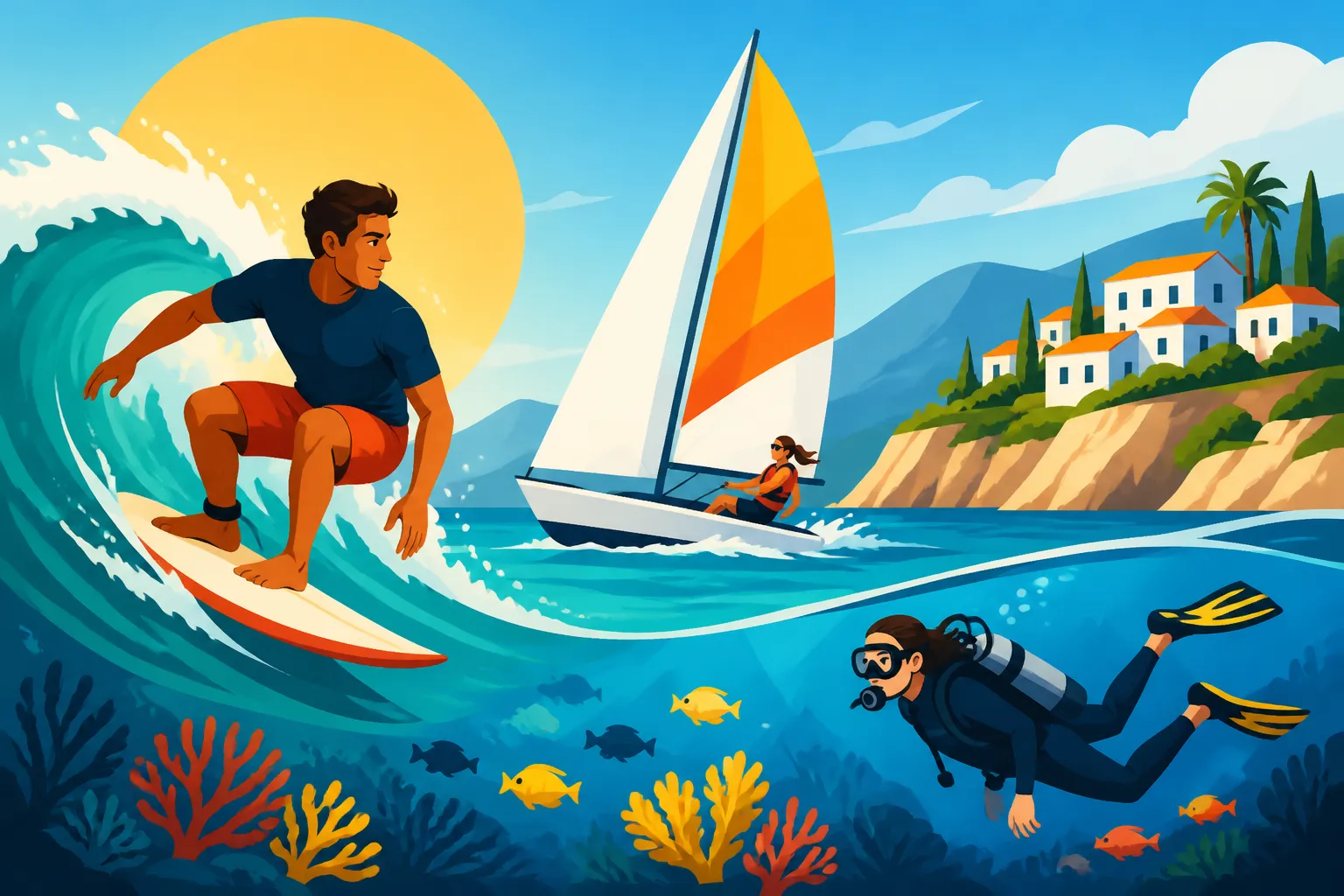
Water Sports in Spain: Where to Surf, Sail, and Dive
Finding reliable information on water sports in Spain often feels like navigating a sea of tourist brochures that promise the world but fail to mention the practical hurdles like local permits or the brutal reality of winter Atlantic swells. I remember my first season in Cantabria, completely underestimated the power of the Bay of Biscay and ended up with a snapped leash and a very bruised ego. This guide solves the confusion by providing a realistic breakdown of the best spots for surfing, sailing, and diving, tailored for those living in or visiting Spain who want to go beyond the basic beach day.
Disclosure: This post may contain affiliate links. We may earn a commission at no extra cost to you if you make a purchase through these links. Read full disclosure.
Surfing the Spanish Coastline: From the Wild Atlantic to the Mediterranean
Surfing in Spain is a tale of two very different coastlines. The northern coast, stretching from the Basque Country to Galicia, is the undisputed heart of the country’s surf culture. Here, the Atlantic Ocean provides consistent, powerful swells that work almost year-round. If you are serious about catching waves, this is where you will spend most of your time. However, the Mediterranean also has its moments, particularly in the winter months when low-pressure systems create rideable waves in places like Valencia and Catalonia, though they lack the raw power of the north.
The culture around surfing in the north is deeply rooted. In towns like Zarautz or Mundaka, surfing isn't just a hobby; it is a way of life that dictates the local economy and social schedule. When the swell is up, you’ll see people of all ages heading to the water. It’s important to understand that while the north is consistent, it’s also challenging. The water is colder, the currents are stronger, and the local lineups can be competitive. If you’re traveling between these northern hubs, using a platform like Omio can help you compare bus and train routes, as hauling a 7-foot board on a regional Renfe train requires a bit of logistical gymnastics and often a dedicated ticket.
The Rugged North: Cantabria, Asturias, and the Basque Country
The Basque Country is home to the legendary Mundaka, often cited as one of the best left-hand breaks in the world. It’s a hollow, fast wave that breaks over a sandbar at the mouth of the Gernika estuary. But be warned: Mundaka is not for beginners. The "localism" here is real, and the wave itself is extremely technical. For those still finding their feet, Zarautz is a much better option. It offers a massive stretch of beach with various peaks that accommodate different skill levels. It’s a fantastic place to integrate into the community, and you’ll find plenty of English-speaking instructors who understand the Outdoor Adventures and Nature in Spain that draw people to this region.
Moving west into Cantabria, Somo and Ribamontán al Mar offer some of the most consistent surf in the country. Somo is particularly accessible because you can take a small ferry from the city of Santander directly to the beach. The vibe here is slightly more relaxed than in the Basque Country, making it ideal for expats who are just starting their surfing journey. Asturias, further west, provides a more "wild" experience. Beaches like Playa de Rodiles are breathtakingly beautiful but can be fickle. The scenery is unbeatable, with green mountains often meeting the grey-blue Atlantic, fitting perfectly into the broader context of Beaches, Islands, and Coastal Escapes in Spain.
Southern Swells: Tarifa and the Cádiz Coast
While Tarifa is world-famous for wind-based sports, the surrounding Cádiz province is actually a hidden gem for traditional surfing, especially during the autumn and winter. El Palmar is the go-to spot for most surfers in the south. It’s a long beach break that can handle a variety of swells and is famous for its "clean" waves when the Levante wind isn't blowing too hard. The atmosphere in El Palmar is incredibly laid back, with many "chiringuitos" (beach bars) offering the perfect spot for a post-surf drink.
The challenge with surfing in the south is the wind. Tarifa is the wind capital of Europe, which is great for kitesurfing but can often ruin a traditional surf session by creating "choppy" conditions. However, when the conditions align—usually a solid West swell with a light offshore wind—it’s magic. For those staying in the area, using Booking.com to find a place in nearby Conil or Vejer de la Frontera allows you to be close to the surf while enjoying the white-village charm of Andalusia. Just keep an eye on the forecast; southern surfing requires a lot of patience and a car to chase the best conditions.
Canary Islands: The Hawaii of Europe
If you are looking for world-class waves during the European winter, the Canary Islands are your best bet. Lanzarote and Fuerteventura are the two heavy hitters. Lanzarote’s "El Quemao" is often compared to Pipeline in Hawaii due to its power and the fact that it breaks over a sharp volcanic reef. This is strictly for experts. However, Famara beach on the same island offers a massive sandy bay where beginners can learn safely. The landscape is otherworldly—stark, volcanic, and dramatic.
Fuerteventura, particularly the "North Shore" around Corralejo, offers a variety of reef breaks that work on different tides. The water here remains warm enough for a thin wetsuit even in January, which is a massive draw for expats living on the mainland. If you’re planning a trip here, check out The Canary Islands: A Traveler's Overview to understand the logistical differences between the islands. The surf culture in the Canaries is very international, and you’ll find surfers from all over the world congregating in the local surf hostels and cafes.
Sailing and Yachting: Navigating the Mediterranean Waters
Spain’s sailing scene is dominated by the Mediterranean, where the calmer waters and predictable summer breezes make for ideal cruising conditions. Whether you are interested in day-charters or long-term yachting, the infrastructure is top-tier. Major marinas in Barcelona, Valencia, and Palma de Mallorca offer everything from basic moorings to luxury concierge services. For many expats, joining a local sailing club ("Club Náutico") is the best way to get on the water without the massive overhead of owning a boat.
The Mediterranean coast is divided into several "Costas," each with its own micro-climate and sailing challenges. For example, sailing around the Costa Brava involves navigating rocky headlands and dealing with the "Tramuntana," a fierce northern wind that can whip up suddenly. Conversely, the Costa del Sol offers much more stable, albeit sometimes lighter, winds. If you're looking to book a guided sailing experience or a sunset cruise, GetYourGuide has a wide range of options in almost every major Spanish port.
The Balearic Islands: A Sailor's Paradise
The Balearic Islands—Mallorca, Menorca, Ibiza, and Formentera—are arguably the best sailing destination in the Mediterranean. The distances between islands are manageable for day trips, but there is enough coastline to explore for weeks. Mallorca, the largest island, has deep bays like Palma and Pollença that provide excellent shelter. The Cabrera National Park, a small archipelago off the south coast of Mallorca, is a must-visit, though you need a special permit to anchor there.
Menorca offers a much more rugged and quiet experience. The northern coast is battered by the wind and features dramatic cliffs, while the south is filled with "calas" (coves) with turquoise water that looks like the Caribbean. Navigating these waters requires a good understanding of The Balearic Islands: Choosing Between Mallorca, Menorca, and Ibiza to ensure you’re picking the right island for your sailing style. In Ibiza and Formentera, the scene is more social, with many boats "rafting up" in the crystal-clear waters of Ses Illetes during the summer months.
The Costa Brava: Hidden Coves and Technical Sailing
Sailing the Costa Brava is a more technical experience due to the irregular coastline and the potential for the Tramuntana wind. Starting from Palamós or L’Estartit, you can explore the Medes Islands or the stunning Cap de Creus. This region is famous for its deep blue water and pine-covered cliffs that drop straight into the sea. It’s incredibly beautiful but requires a vigilant eye on the weather report.
One of the highlights of sailing here is the ability to drop anchor in tiny coves that are inaccessible by land. Places like Cala Sa Tuna or Cala Pola are magical when viewed from the deck of a boat. However, because this area is so popular, you’ll want to be mindful of Visiting Spain in Summer: Heat, Crowds, and Coastal Escapes, as the best moorings fill up by midday in July and August. Local sailing schools in Roses or Empuriabrava are excellent for those looking to improve their coastal navigation skills.
The Costa del Sol: Glamour and Mediterranean Calm
The Costa del Sol, centered around Marbella and Málaga, offers a very different sailing vibe. It’s less about hidden coves and more about wide-open bays and high-end marinas like Puerto Banús. The winds here are generally lighter, making it a great place for beginners or those who prefer "gin-palace" style cruising over active racing. The views of the Sierra Nevada mountains from the sea are spectacular, especially in the spring when the peaks are still capped with snow.
Sailing from the Costa del Sol also offers the unique opportunity to cross the Strait of Gibraltar. This is a bucket-list item for many sailors but requires careful planning due to the heavy commercial shipping traffic and the intense currents. If you are staying in the area, Renting a Car in Spain: Requirements, Insurance, and Driving Tips is essential, as the marinas are spread out along a vast stretch of coastline. The sailing community in Marbella is very international, and many of the bigger yachts are crewed by English speakers, making it easy to network.
Scuba Diving and Snorkeling: Exploring Spain’s Submerged Secrets
Spain’s underwater world is surprisingly diverse, ranging from the colorful Mediterranean reefs to the dramatic volcanic tunnels of the Atlantic. The country has a vast network of Marine Protected Areas (MPAs), which has allowed fish populations to thrive even in high-traffic areas. For the best experience, you’ll want to head to the reserves, where commercial fishing is banned and the biodiversity is staggering.
The diving infrastructure in Spain is excellent, with PADI and SSI centers located in every major coastal town. Most centers offer boat dives, and "shore dives" are common in places like the Canary Islands. If you are a resident, it is worth getting your own insurance (which is mandatory for diving in Spain) through a provider like DAN Europe or a local federated license. When booking your dives, GetYourGuide often features packages that include equipment rental and a guide, which is a great way to test out a new dive center.
Medes Islands: Marine Biodiversity and Groupers
Located just off the coast of L'Estartit in Catalonia, the Medes Islands are often called the "Mecca" of Mediterranean diving. Because they have been protected since 1983, the marine life here is exceptionally unafraid of divers. You will see massive Dusky Groupers, schools of barracuda, and intricate coral walls. The visibility is usually excellent, ranging from 15 to 30 meters.
Diving the Medes is strictly regulated to protect the environment. There is a limit on the number of divers allowed per day, so booking well in advance is essential. Most dives are around the perimeter of the islands, with depths ranging from 10 to 40 meters. It’s a fantastic spot for underwater photography. If you are planning a trip, be sure to account for Spanish Holidays and Public Closures: Planning Errands in 2026, as the local dive shops often close or run reduced schedules during national feast days.
Cabo de Gata: Volcanic Formations and Pristine Waters
In the southeast corner of Spain lies the Cabo de Gata-Níjar Natural Park. This is a semi-desert landscape that extends underwater into some of the most pristine environments in the country. The volcanic origins of the park have created fascinating underwater topography, including caves, tunnels, and dramatic rock formations. The "Isleta del Moro" and "San José" are the main hubs for divers in this area.
What makes Cabo de Gata special is the lack of development. The water is exceptionally clean, and the Posidonia oceanica (seagrass) meadows are healthy and full of life. You’ll find octopuses, moray eels, and a variety of Mediterranean reef fish. It’s a great place for those who prefer a more quiet, nature-focused experience. Just be aware that this area can be prone to strong surface currents, so it’s always best to dive with a local guide who knows the conditions.
El Hierro: Volcanic Tunnels and Atlantic Giants
For those willing to travel further afield, the island of El Hierro in the Canaries offers world-class diving that rivals anything in the tropics. The "Mar de las Calmas" (Sea of Calms) on the south side of the island is protected from the prevailing winds, providing exceptionally clear water and calm conditions. The underwater landscape is dominated by volcanic craters and deep drop-offs.
Because of its location in the Atlantic, El Hierro attracts "pelagic" species—large open-ocean animals. It’s not uncommon to see manta rays, whale sharks, and various types of tuna. The "Bajón" is a famous dive site here, an underwater volcano that rises to within 10 meters of the surface. To get the most out of a trip here, consult Staying Safe in Spain: Practical Safety Tips for New Residents regarding travel to remote areas, as El Hierro is the most secluded of the Canary Islands and requires a bit of extra planning.
Practical Logistics for Water Sports Enthusiasts in Spain
Engaging in water sports in Spain requires more than just showing up at the beach with a board or a boat. There are specific administrative and seasonal realities that you need to be aware of. For instance, if you plan to spearfish or even use certain types of kayaks in protected waters, you may need a permit from the local "Consejería de Medio Ambiente." Always check the local regulations, as they can vary significantly between autonomous communities.
Transporting equipment is another major factor. While Renting a Car in Spain: Requirements, Insurance, and Driving Tips is the most common solution, ensure the rental agency allows roof racks, as many modern fleets do not have the mounting points for them. If you are using public transport, Omio is a great tool to find larger buses (like ALSA) that often have dedicated bays for surfboards or bicycles, provided you book the "extra luggage" option in advance.
Seasonal Considerations: When to Hit the Water
The best time for water sports depends entirely on what you want to do. For surfing, the autumn (September to November) is the "Golden Season." The water is still relatively warm from the summer, but the Atlantic storms start pushing solid swells toward the coast. In contrast, summer is often "flat" in the north, making it better for stand-up paddleboarding (SUP) or swimming.
For sailing and diving, the window is generally from May to October. The Mediterranean is most welcoming during these months, though July and August can be oppressively hot and crowded. Many experienced sailors prefer June or September, when the winds are more reliable and the marinas have more space. If you are diving in the winter, you will definitely need a 7mm wetsuit or a drysuit for the mainland, though the Canary Islands remain comfortable in a 5mm year-round.
Gear Rentals and Local Certifications
If you aren't bringing your own gear, don't worry—Spain is flooded with rental shops. However, the quality can vary. In high-traffic tourist areas, gear is often overworked. It’s worth looking for shops that are affiliated with official federations or schools. For sailing, you will need to prove your competency. If you have an ICC (International Certificate of Competence) or an RYA certification, most charter companies will accept it. If not, you’ll need to hire a "patrón" (skipper) for your trip.
For divers, always bring your certification card and your logbook. Spanish law requires you to have diving insurance, and if you don't have your own, the dive center will sell you a daily or weekly policy for a small fee (usually around 5-10 euros). Booking through a platform like Booking.com often gives you access to "Genius" discounts on nearby activities or hotels that have partnerships with local gear shops.
Navigating Spanish Water Sports Regulation
One thing that surprises many expats is the level of regulation surrounding water activities. For example, if you want to sail your own boat in Spanish waters for more than six months, you may need to register it locally and pay "Matriculation Tax." Similarly, certain popular beaches have "zones" marked by yellow buoys; staying inside these zones is mandatory for swimmers, while motorized craft must stay outside to avoid heavy fines.
Local police (Guardia Civil del Mar) do patrol popular areas, especially in the summer. They check for life jackets on boats, proper signaling on dive buoys, and valid permits for fishing. It might seem a bit bureaucratic, but these rules are in place because of the sheer volume of people on the water. Being respectful of these regulations and the local environment will ensure you have a smooth experience.
Comparative Table: Top Regions for Water Sports
| Region | Primary Activity | Best Skill Level | Peak Season | Water Temp (Avg) |
|---|---|---|---|---|
| Basque Country | Surfing | Intermediate – Pro | Sept – March | 12°C – 21°C |
| Balearic Islands | Sailing | All Levels | May – Sept | 18°C – 26°C |
| Costa Brava | Diving | Intermediate | June – Oct | 14°C – 24°C |
| Canary Islands | Surfing / Diving | All Levels | Oct – April | 19°C – 23°C |
| Tarifa (Cádiz) | Kitesurfing | Intermediate | Year-round | 15°C – 22°C |
| Costa del Sol | Yachting | Beginner | May – Oct | 16°C – 24°C |
Disclaimer
The information provided in this guide is for informational purposes only. Water sports involve inherent risks, and conditions in the ocean can change rapidly. Always check local weather and maritime forecasts before heading out. Ensure you have the appropriate certifications, insurance, and safety equipment required by Spanish law. The author and publisher are not responsible for any accidents or legal issues arising from the use of this information.