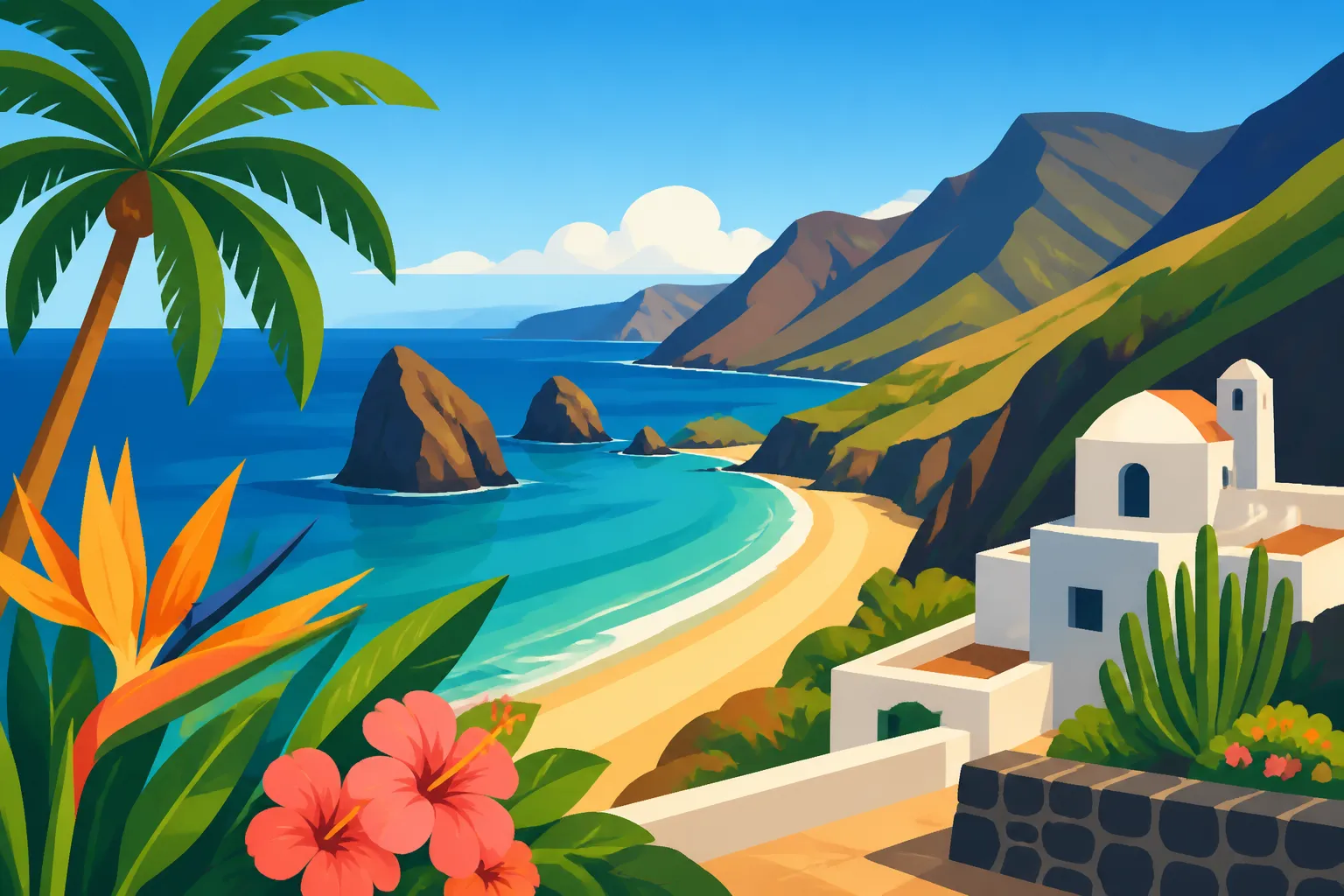
The Canary Islands: A Traveler’s Overview
Staring at a map of the Canary Islands and feeling like you need a PhD in geography just to pick a beach is a rite of passage for every expat. I remember my first time trying to book a flight and realizing I had no idea if Lanzarote was for hikers or party-goers, or why everyone kept talking about a "guagua" instead of a bus. This guide breaks down the archipelago so you don't waste your vacation—or your sanity—on the wrong island.
Disclosure: This post may contain affiliate links. We may earn a commission at no extra cost to you if you make a purchase through these links. Read full disclosure.
Understanding the Canary Islands Archipelago
The Canary Islands are often marketed as a singular tropical paradise, but the reality is far more complex and rewarding. Located off the coast of Africa but fiercely Spanish in soul, these eight main islands (Tenerife, Gran Canaria, Lanzarote, Fuerteventura, La Palma, La Gomera, El Hierro, and La Graciosa) offer everything from snow-capped volcanoes to Saharan-style sand dunes. As someone who has spent years navigating the jump from the Iberian Peninsula to the Macaronesian region, I can tell you that the "eternal spring" climate is real, but it comes with microclimates that can catch you off guard.
Choosing the Right Island for Your Vibe
Each island has a distinct personality, and picking the wrong one is the most common mistake newcomers make. Tenerife and Gran Canaria are the "Big Two," acting as the economic and administrative hubs. They offer the most infrastructure, nightlife, and shopping. If you want the convenience of a city paired with a beach, Las Palmas de Gran Canaria or Santa Cruz de Tenerife are your best bets. However, if you are looking for something more raw and volcanic, Lanzarote offers a landscape that feels like another planet, largely thanks to the architectural legacy of César Manrique.
Fuerteventura is the go-to for water sports enthusiasts, particularly those into windsurfing and kitesurfing, due to its consistent trade winds. Meanwhile, the western islands—La Palma, La Gomera, and El Hierro—are the "Green Canaries." These are for the hikers, the solitude-seekers, and those who want to see what Spain looked like fifty years ago. It is often suggested that if you want to disappear for a week with nothing but a pair of boots and a notebook, La Gomera is your sanctuary.
The Microclimate Reality Check
Don't let the "24 degrees all year" slogan fool you. The Canary Islands are mountainous, and the "Alisios" (trade winds) create massive variations in weather. In Tenerife, for example, it can be pouring rain and foggy in the lush green north (La Orotava) while people are getting sunburned in the arid south (Los Cristianos) just 45 minutes away. When packing, think layers. I’ve made the mistake of heading to the Teide National Park in a t-shirt in January, only to find the temperature hovering near freezing at the summit.
The Big Two: Tenerife and Gran Canaria
Tenerife and Gran Canaria are the heavyweights, and for most expats or first-time travelers, they are the gateway to the archipelago. They host the largest airports and the most diverse range of activities. Choosing between them is often a matter of "miniature continent" (Gran Canaria) versus "volcanic drama" (Tenerife).
Tenerife – The Island of Eternal Contrast
Tenerife is dominated by Mount Teide, the highest peak in Spain. The island is split into two very different worlds. The South is where you find the massive resorts, golden sand (often imported), and a high concentration of English speakers. It is convenient, sunny, and perfect for families. The North, however, is where the "real" Tenerife lives. Towns like Puerto de la Cruz and the capital, Santa Cruz, offer a more authentic Spanish experience with colonial architecture and black sand beaches.
One of my favorite "insider" tips for Tenerife is to seek out a "guachinche." These are traditional, often rustic, home-style restaurants located mostly in the north, serving local wine and heavy plates of meat or chickpeas. It is the antithesis of the tourist trap. For those coming from the mainland, checking Domestic Flights in Spain: When They Beat the Train is useful because while you can't take a train to the Canaries, the flight from Madrid is often cheaper and faster than you’d expect for such a long distance.
Gran Canaria – A Miniature Continent
Gran Canaria is called a miniature continent because you can drive through alpine forests, desert dunes, and rocky canyons all in the span of two hours. The capital, Las Palmas, is one of the most underrated cities in Spain. It has a gritty, cosmopolitan energy, a world-class urban beach (Las Canteras), and a historic Vegueta district that feels like a film set.
In the south, the Maspalomas dunes are a sight to behold—massive mountains of sand that make you feel like you've stepped into the Sahara. For those planning a stay here, using a platform like Booking.com is essential for finding the right balance between the high-rise hotels of Playa del Inglés and the boutique cave houses in the island's interior. The diversity of Gran Canaria makes it a favorite for long-term expats who want the comforts of a major city without sacrificing nature.
The Volcanic East: Lanzarote and Fuerteventura
Lanzarote and Fuerteventura are the oldest islands in the chain and are significantly more arid than their western neighbors. They are defined by lava, wind, and vast horizons.
Lanzarote – Where Art Meets Lava
Lanzarote is a masterpiece of environmental preservation. You won't find high-rise buildings or neon billboards here, thanks to the influence of artist César Manrique, who insisted that the island’s development respect its volcanic roots. The result is a stunning aesthetic of white houses with green or blue shutters against a backdrop of black lava rock.
A visit to Timanfaya National Park is non-negotiable. You can see geothermal demonstrations where water poured into the ground turns instantly to steam. For booking tours like these, GetYourGuide is a useful option because they often have skip-the-line options for the most popular volcanic sites, which can get incredibly crowded during the high season. If you are a wine lover, the Geria region is fascinating; vines are grown in individual pits shielded by stone walls to protect them from the wind, producing some of the best Malvasía wine in the world.
Fuerteventura – The Land of Endless Dunes
If Lanzarote is about art and geology, Fuerteventura is about the ocean. It has the best beaches in the archipelago, hands down. The Corralejo dunes in the north and the Jandia peninsula in the south offer kilometers of white sand and turquoise water. It feels much more "wild" than Tenerife.
Because of its length, renting a car is almost mandatory here. You can find detailed advice on Renting a Car in Spain: Requirements, Insurance, and Driving Tips to ensure you are covered for the sandy secondary roads you might encounter. Fuerteventura is also famous for its goats—there are actually more goats than people on the island. Be sure to try the Queso Majorero, a goat cheese that is a staple of Regional Spanish Dishes Every Visitor Should Try.
The Green West: La Palma, La Gomera, and El Hierro
For those who find the crowds of the bigger islands exhausting, the western Canaries are a revelation. These islands are steep, rugged, and dripping with prehistoric laurel forests.
La Palma – The Pretty Island
La Palma, known as "La Isla Bonita," recently made headlines due to the 2021 volcanic eruption in the Cumbre Vieja range. While the eruption caused heartbreak for many locals, the island has remained resilient and open for tourism. It is perhaps the best island for stargazing in the world, as it is a designated Starlight Reserve with strict light pollution laws.
The hiking here is elite. The Caldera de Taburiente is a massive erosion crater that offers some of the most challenging and beautiful trails in Spain. When planning your arrival, you can check How to Reach the Canary Islands From Mainland Spain to see the ferry and flight combinations that get you to this more remote outpost.
La Gomera – The Prehistoric Jungle
La Gomera is just a short ferry ride from Tenerife, but it feels like a different century. It is the only island without a major international airport, which has preserved its quiet, mystical atmosphere. The center of the island is the Garajonay National Park, a cloud forest that looks like something out of a fantasy novel.
The island is also famous for "Silbo Gomero," a whistled language used by inhabitants to communicate across the deep ravines (barrancos). It is a UNESCO-recognized piece of intangible cultural heritage. If you are coming from Tenerife for a day trip, using How to Travel Between Spanish Islands by Ferry is a great way to understand the schedules of Naviera Armas and Fred Olsen, the two main operators.
| Island | Primary Vibe | Top Activity | Accessibility |
|---|---|---|---|
| Tenerife | Diverse / Dramatic | Mount Teide Summit | High (2 Airports) |
| Gran Canaria | Cosmopolitan / Desert | Maspalomas Dunes | High (1 Airport) |
| Lanzarote | Artistic / Volcanic | Timanfaya National Park | Medium |
| Fuerteventura | Beach / Surf | Corralejo Dunes | Medium |
| La Palma | Nature / Stars | Caldera de Taburiente | Low / Medium |
| La Gomera | Mystic / Hiking | Garajonay Forest | Low (Ferry only) |
| El Hierro | Remote / Sustainable | Diving in La Restinga | Low |
Travel Logistics and Island Hopping
Getting to the Canaries is easy; getting between them requires a bit more planning. Many expats find that the inter-island flights are the most efficient, but the ferries offer a sense of adventure (and the ability to bring a car) that shouldn't be overlooked.
Arriving and Moving Between Islands
The archipelago is served by two local airlines: Binter Canarias and Canaryfly. These flights are short (usually 30–45 minutes) and function like a bus service. For booking these, I often use Omio because it aggregates both the flights and the ferry options in one view, making it much easier to compare prices and times if you are trying to reach a smaller island like El Hierro.
If you have the time, taking the ferry is a quintessentially Canarian experience. The Fred Olsen expresses are fast catamarans that can handle the often-choppy waters of the Atlantic. It’s worth noting that if you are a legal resident of the islands, you get a 75% discount on all travel to the mainland and between islands, which is a massive perk of residency. For visitors, however, booking in advance is key to avoiding high last-minute prices.
Navigating the "Guagua" System
In the Canaries, a bus is called a "guagua." Each island has its own public transport company (Titsa in Tenerife, Global in Gran Canaria). While the systems in the big islands are excellent and can get you to most tourist spots, the frequency in the smaller islands like La Gomera can be sparse. For excursions that the bus doesn't reach—like the hidden "charcos" (natural tide pools)—booking a guided tour through GetYourGuide is often more practical than trying to navigate the local bus schedules, which can be baffling even for those who speak Spanish.
Cultural Nuances and Practical Survival
Living or traveling in the Canaries requires a shift in mindset. The pace is slower ("más tranquilo"), and the culture is a unique blend of Spanish tradition and Latin American influence (many Canarians have family in Venezuela or Cuba).
Canarian Cuisine and Dining Rhythms
The food here is simpler than on the mainland but incredibly fresh. You must try "Papas Arrugadas con Mojo"—small, salty potatoes boiled in sea water and served with a spicy red or green garlic sauce. It is the national dish of the islands. For a deeper dive into the culinary landscape, our guide on Spanish Food and Drink: A Practical Culture Guide offers a great baseline, though the islands have their own specific quirks.
Seafood is, of course, king. Look for "Cherne" (wreckfish) or "Vieja" (parrotfish) on the menu. Dining times follow the typical Spanish schedule: lunch at 2:00 PM and dinner no earlier than 8:00 PM or 9:00 PM. In the smaller villages, many places might close on Mondays or Tuesdays, so always call ahead if you are venturing off the beaten path.
Safety, Health, and the Calima
The Canary Islands are remarkably safe, with low crime rates. However, the biggest "danger" is often the sun and the "Calima." The Calima is a weather phenomenon where dust from the Sahara is blown over the islands, causing high temperatures and poor air quality. If a Calima is forecasted, stay hydrated and limit outdoor exercise.
You should also be aware of Sun Safety in Spain: UV Index Basics and Habits, as the sun at this latitude is much stronger than in Madrid or Barcelona. Regarding health, if you are a visitor, ensure you understand Healthcare for Visitors vs Residents in Spain: Key Differences. While the public healthcare (Seguridad Social) is excellent, having private travel insurance is always recommended to handle any emergency repatriations or private clinic visits.
Final Thoughts for the Island Bound
Whether you choose the bustling streets of Las Palmas or the silent forests of La Gomera, the Canary Islands will challenge your perceptions of what Spain is. It is a region of resilient people, incredible landscapes, and a climate that truly does soothe the soul. If you’re still torn between the Atlantic and the Mediterranean, you might want to compare your options by reading Which Balearic Island Is Best for a Quiet Holiday? to see how the two Spanish archipelagos stack up against each other.
If you are lucky enough to be here during February, don't miss the Carnival of Santa Cruz de Tenerife or Las Palmas. They are second only to Rio de Janeiro in scale and are a vital part of Festivals, Fiestas, and Public Holidays in Spain. Just remember to book your accommodation months in advance through Booking.com, as the islands reach 100% occupancy during these weeks.
Disclaimer
The information provided in this guide is for informational purposes only. While we strive to provide the most up-to-date and accurate advice, travel regulations, ferry schedules, and local laws in the Canary Islands can change. Always verify specific details with official government or transport websites before making travel arrangements.