How to Donate Blood in Spain as a Foreign Resident
Bureaucracy in Spain is notorious for making even the simplest tasks feel like a marathon, and unfortunately, trying to give back through blood donation is no exception. I remember my first attempt in Valencia, standing in line for forty minutes only to be turned away because I didn't have my physical residency card on me. This guide simplifies the entire process so you can navigate the rules and successfully contribute to your new community.
Disclosure: This post may contain affiliate links. We may earn a commission at no extra cost to you if you make a purchase through these links. Read full disclosure.
Navigating the Administrative Side of Donation
When you decide to donate blood in Spain, you are stepping into a system that is highly organized but also strictly regulated by regional health authorities. Unlike some countries where a central organization handles everything, Spain’s blood donation is decentralized, meaning the experience in Madrid might differ slightly from that in Andalusia. However, the core requirement remains the same: the system needs to know exactly who you are to ensure the safety of both the donor and the recipient.
The primary hurdle for many foreigners is identification. If you are a resident, the system ideally wants your TIE (Tarjeta de Identidad de Extranjero) because it contains your unique NIE number, which is the key to all your medical records. Even if you haven't yet mastered How to Get a Spanish Health Card (Tarjeta Sanitaria): Step‑by‑Step, your NIE is often enough to register you in the donor database. If you are a student or a temporary visitor, a passport is usually accepted, though you may find that some smaller mobile units are more hesitant to process non-resident IDs because they cannot easily link them to a permanent address.
If you find that your documentation is causing delays, or if you are still waiting for your formal residency to be finalized, don't let it discourage you. The health staff are generally incredibly grateful for donors. I've found that having a copy of your Empadronamiento can sometimes help bridge the gap if your TIE is still in process. For those who are concerned about how their residency status impacts their overall access to care, understanding the broader Spain Healthcare System for Expats: Public vs Private can provide some peace of mind.
Health Prerequisites and Exclusions for Foreigners
Eligibility is where many expats run into unexpected walls. The general rules in Spain require you to be between 18 and 65 years old (though some regions allow regular donors to continue until 70 with a doctor’s note) and to weigh at least 50 kilograms. This weight requirement is non-negotiable; applicants who are just a kilo under are kindly asked to come back when they've had a few more tortillas.
One of the most significant changes for the expat community involves the "Mad Cow Disease" (vCJD) restriction. For decades, anyone who had lived in the UK for a cumulative period of one year or more between 1980 and 1996 was permanently banned from donating blood in Spain. This was a source of great frustration for many British expats who wanted to help. However, as of late 2023, Spain has followed international trends and lifted this ban. If you were previously told you couldn't donate for this reason, the doors are now open to you. This is a perfect example of why Staying Healthy in Spain: Preventive Care, Vaccines, and Wellness involves keeping up with changing local health regulations.
Beyond residency history, you must also be in good health at the time of donation. If you have a common cold, are taking certain medications, or have recently traveled to specific tropical regions, you may be deferred. The medical interview will cover these details in depth. If you have private insurance through a provider like Cigna Global or Innoinsure, you might be used to a different style of medical intake, but in the public donation centers, the process is standardized and focuses strictly on the safety of the blood supply.
The Day of Donation: A Practical Walkthrough
Once you’ve confirmed you meet the basic criteria, the actual process is relatively straightforward but involves several distinct phases. First, you will be asked to fill out a health questionnaire. This is usually available only in Spanish, so it helps to be familiar with Spanish Medical Terminology: Common Words Expats Should Know before you go. The questions cover everything from your recent dental work to your history of tattoos or piercings (which typically require a 4-month wait).
After the questionnaire, you’ll have a brief private interview with a doctor or a specialized nurse. They will check your blood pressure and perform a quick finger-prick test to check your hemoglobin levels. This is to ensure that donating won't leave you anemic. If you’re nervous about the language barrier during this part, you might look into Medical Interpreters in Spain: Where to Find Help, though for a standard blood donation, a translation app or a basic phrase guide is usually sufficient.
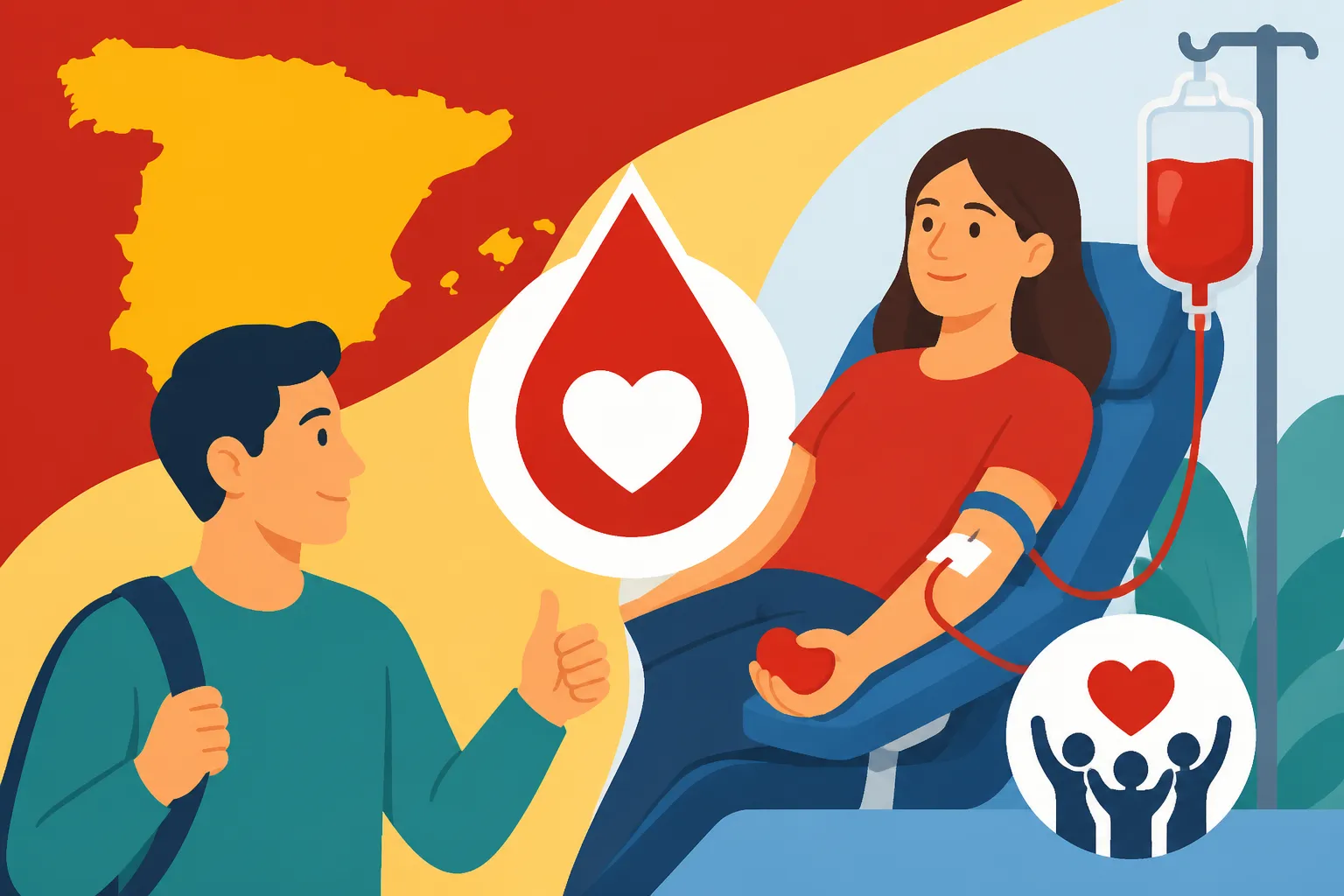
The donation itself takes about 10 to 15 minutes. You’ll be seated in a comfortable reclining chair, and the staff will keep a close eye on you. One of the best parts of the Spanish system is the "merienda" or snack provided afterward. In Spain, this isn't just a stale cracker; you’re often given a juicebox, water, and a sandwich (bocadillo) or some pastries. It’s a cultural ritual to sit and eat for at least 15 minutes to ensure you don't feel faint before leaving. If you ever find yourself needing more urgent medical attention unrelated to donation, remember the protocols for Emergency Healthcare in Spain: 112, Urgent Care, and What to Expect.
Where to Donate: From Hospitals to Mobile Units
Finding a place to donate is quite easy once you know what to look for. Every major public hospital has a "Centro de Transfusión." These centers have the most stable hours and are usually better equipped to handle international IDs. If you are living in a city like Madrid, Barcelona, or Valencia, these centers are often open from early morning until late evening.
Additionally, Spain uses "Unidades Móviles"—large, brightly colored buses that park in plazas, near universities, or outside shopping centers. These are incredibly convenient. You can usually find their schedules on the regional health department’s website (such as the Comunidad de Madrid's "Dona Sangre" app). For those who are still settling in and figuring out NIE, TIE & Empadronamiento: Essential IDs and Registrations in Spain, these mobile units are a common sight and a great way to integrate into the local rhythm of life.
| Factor | Public Hospital Center | Mobile Donation Bus (Unidades Móviles) |
|---|---|---|
| Wait Times | Generally shorter, more staff available. | Can vary; peak times in plazas can be busy. |
| ID Requirements | Very strict; TIE/Passport preferred. | Usually strict, but occasionally more flexible with local addresses. |
| Accessibility | Located within hospital complexes. | Moves daily; check local schedules online. |
| Equipment | Full facilities, including plasma donation. | Usually limited to whole blood donations. |
| Snacks | Standardized cafeteria-style snacks. | Often high-quality local bocadillos. |
Essential Spanish Phrases for Blood Donors
Walking into a medical environment in a foreign country is intimidating, even if you’re there for a noble cause. While many doctors in big cities speak English, the nursing staff and receptionists at donation centers might not. Being prepared with a few key phrases can make the experience much smoother. It’s all part of the preparation, much like knowing What to Bring to Your First Doctor Visit in Spain (Documents Checklist) for a regular check-up.
Start with the basics: "Quiero donar sangre" (I want to donate blood). If you have a specific blood type, you can say, "Mi grupo sanguíneo es O positivo" or whatever your type may be. During the medical interview, they will ask if you have eaten recently ("¿Has comido algo hoy?"). Remember, you should never donate on an empty stomach in Spain; they actually prefer that you have had a light, non-fatty meal.
If you feel dizzy at any point, do not hesitate to speak up. Say, "Me siento mareado" (I feel dizzy). The staff are experts at handling this and will immediately adjust your chair and give you extra fluids. If you have insurance through SafetyWing or Cigna Global, you might be accustomed to a high level of concierge service, but the care and attention you receive from the Spanish public donation teams are truly top-tier. They treat every donor like a hero because, in the context of the Spanish health system, you are.
Common Questions and Concerns for Expats
A frequent question from the international community is whether donating blood in the public system will somehow interfere with their private insurance or residency status. The answer is a resounding no. Blood donation is anonymous and voluntary. It does not cost you anything, and it does not affect your premiums with providers like Innoinsure or SafetyWing. In fact, many people find that the quick health check involved in donation acts as a nice, informal "mini-checkup" between their regular doctor visits.
Another concern is the frequency of donation. In Spain, men can donate four times a year and women three times a year, with a minimum of two months between each donation. This is slightly different from some other countries, so it's worth keeping a small log or using one of the local health apps to track your dates. If you are ever unsure about your health status before a donation, a quick consultation with a professional can help, and you can learn more about finding the right provider in Choosing a Private Health Insurer in Spain: What to Compare.
Finally, don't forget the social aspect. Blood donation centers often run campaigns during the summer months or around major holidays when supplies run low. These campaigns often involve local businesses giving out small vouchers or gifts to donors. It’s a wonderful way to feel like a true part of your Spanish neighborhood. By participating, you aren't just a "foreign resident"; you are a vital contributor to the health and safety of everyone living in Spain.
Disclaimer
This guide is for informational purposes only and does not constitute medical or legal advice. Eligibility criteria for blood donation can change based on regional health authority updates and individual medical history. Always consult with the medical staff at a certified Spanish donation center and follow their specific instructions. If you have underlying health conditions, consult your primary care physician before attempting to donate.