Emergency Contraception in Spain: High-Level Access Guide
Needing emergency contraception in a foreign country is a unique kind of terror, especially when you do not speak the language and every clinic seems closed. I remember frantically sprinting through Barcelona on a Sunday, completely terrified I needed a doctor’s prescription for a broken condom. This guide explains exactly how to legally and quickly access the morning-after pill in Spain.
Disclosure: This post may contain affiliate links. We may earn a commission at no extra cost to you if you make a purchase through these links. Read full disclosure.
How to Buy the Morning After Pill in Spain
When a contraceptive accident happens, the absolute last thing you want to do is navigate a maze of foreign medical bureaucracy. The anxiety of potentially having to explain a highly intimate mishap to a judgmental doctor in broken Spanish is enough to make anyone spiral. Fortunately, Spain has incredibly progressive and accessible laws regarding emergency reproductive care.
No Prescription Required
The most important thing you need to know right now is that you do not need a doctor’s prescription to buy the morning-after pill in Spain. Since 2009, emergency contraception—known locally as the píldora del día después or píldora postcoital—has been strictly over the counter (venta libre). You do not need to be a resident, you do not need to show a public health card, and you do not need to present your passport.
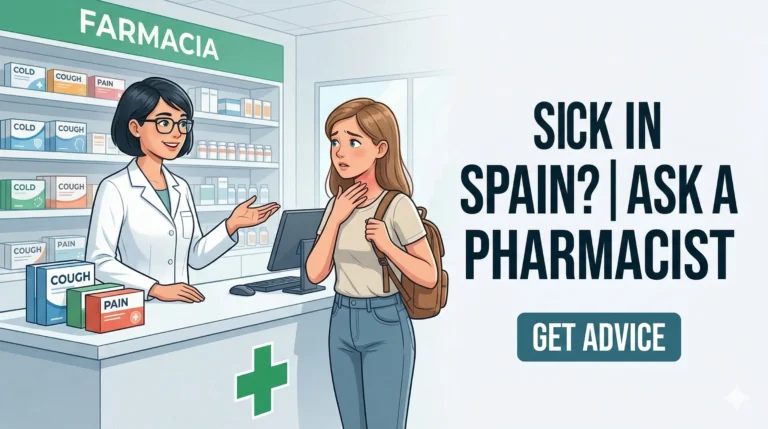
You literally just walk into any licensed pharmacy and ask for it. However, unlike in some countries where emergency contraception is placed on a self-serve aisle next to the condoms, Spanish pharmacies keep all medications securely behind the main counter. You will have to speak directly to the pharmacist to request it. If you are anxious about interacting with local chemists, our guide on Can a Pharmacist in Spain Help With Minor Illness? What to Expect explains their highly professional, non-judgmental triage role in the Spanish healthcare system.
The Cost and Types Available
When you are standing at the counter, the pharmacist will usually ask you how many hours have passed since the unprotected encounter. This is not them being nosy; they need to determine which active ingredient will actually work for you. There are two primary types of emergency contraception legally sold in Spain, and you will pay for them entirely out of pocket at the register.
I highly recommend opting for the Ulipristal acetate option (ellaOne) if you are anywhere near your ovulation window or if a few days have already passed, even though it costs slightly more. When you are panicked about an unplanned pregnancy, spending an extra ten euros for a wider efficacy window is absolutely worth the peace of mind. To understand how these out-of-pocket pharmacy costs compare to other standard medical expenses, you can review our breakdown on Health Costs in Spain: Typical Co-Pays and Out-of-Pocket Fees.
| Medication Type | Brand Names in Spain | Efficacy Window | Average Out-of-Pocket Cost |
| Levonorgestrel | Norlevo, Postinor | Up to 72 hours (3 days) | €20 – €25 |
| Ulipristal acetate | ellaOne | Up to 120 hours (5 days) | €30 – €35 |
Finding an Open Pharmacy When You Need It
The “morning after” doesn’t always conveniently happen on a Tuesday morning. More often than not, contraceptive emergencies happen late on a Saturday night or during a long bank holiday weekend. This is where the famous Spanish lifestyle directly clashes with your medical panic.
Navigating Weekend and Night Emergencies
If you step out of your apartment at 3:00 PM on a Sunday, or during the sacred afternoon siesta hours, you will find that almost every standard business in Spain is shuttered tight. Do not panic. The Spanish government legally mandates that every neighborhood must have at least one pharmacy open 24/7 to handle emergencies. This rotating system is known as the Farmacia de Guardia (on-duty pharmacy).
If you walk up to your local pharmacy and the metal grates are pulled down, look closely at the glass door or the adjacent wall. There will always be a printed piece of paper taped there listing the exact addresses of the pharmacies that are on duty that day. Alternatively, look for the iconic neon green cross; if it is flashing brightly in the middle of the night, that pharmacy is open and operating. For a detailed, step-by-step walkthrough of this system, read How to Find a ‘Farmacia de Guardia’ Near You in Spain.
What to Say to the Pharmacist
The fear of freezing up and forgetting your Spanish vocabulary while a line of locals waits behind you is a very real, very valid expat fear. You must have your exact phrasing ready before you walk through the automatic doors.
Keep it incredibly simple and direct. When it is your turn, politely say: “Hola, necesito la píldora del día después, por favor.” (Hello, I need the morning-after pill, please).
The pharmacist will likely ask: “¿Cuántas horas han pasado?” (How many hours have passed?). Simply reply with the number, such as “Doce horas” (twelve hours) or “Dos días” (two days). They will hand you the box, ring you up, and you can leave. Spanish pharmacists are legally obligated to provide this medication without moral judgment or gatekeeping. If you want to better understand your overall reproductive rights in the country, our guide on How to Access Women’s Health Clinics in Spain as a Foreigner offers deep, empowering context.
Follow-Up Care and Private Health Options
Taking the pill is the immediate priority, but the anxiety surrounding a contraceptive failure often lingers long after you swallow the medication. Knowing what to do next is critical for your long-term health and sanity.
When to See a Doctor
The morning-after pill is highly effective, but it is not a magic bullet. You must monitor your body closely over the next few weeks. If you vomit within three hours of taking the pill, you must go back to the pharmacy immediately and buy another dose, as the medication did not have time to absorb into your bloodstream.
Furthermore, if you experience severe, stabbing abdominal pain in the weeks following the emergency, or if your next period is more than seven days late, you must see a doctor to rule out an ectopic pregnancy or a contraceptive failure. If you rely on the state-funded system, navigating this urgent need can be infuriatingly slow. You must book an appointment with your general practitioner just to get a referral to a specialist. If you are a new arrival trying to figure out how local public clinics operate in a pinch, reviewing our breakdown on What Is a ‘Centro de Salud’ in Spain and How Do You Register? is highly recommended.
Skipping the Public Queue with Private Insurance
If the terrifying scare of needing emergency contraception makes you realize you need a proper, reliable daily birth control prescription—or a comprehensive STD screening—waiting four to six months for a public gynecologist is completely unacceptable. The bureaucracy of the state system is exactly why the vast majority of expat women eventually switch to the private sector, a divide we explore deeply in the Spain Healthcare System for Expats: Public vs Private.
By securing your policy through Innoinsure, you bypass the referral gatekeepers entirely. You can literally open an app, find a highly rated specialist, and book an appointment for the very next week to get your reproductive health fully secured. If you are tired of the anxiety of public waitlists and want the peace of mind that Innoinsure provides, understanding the financial structure of these private contracts is your next step; we detail this comprehensively in How to Compare Private Health Plans: Deductibles, Co-Pays, Networks.
Supporting Your Body After Emergency Contraception
Emergency contraception is a massive, sudden dose of synthetic hormones. It effectively shocks your reproductive system to prevent ovulation. While it is incredibly safe, the physical hangover from this hormonal spike can be intense, and you need to proactively support your biology in the aftermath.
Dealing with Side Effects
In the days following the dose, it is entirely normal to experience severe nausea, breast tenderness, abdominal cramping, and profound, unexplainable fatigue. Your next menstrual cycle will also likely be heavily disrupted; it may arrive a week early, a week late, or be significantly heavier than usual. If you already manage complex hormonal issues like PCOS or endometriosis, this sudden shock can temporarily worsen your baseline symptoms, a reality we address in Chronic Conditions in Spain: Managing Ongoing Care as an Expat.
Holistic Recovery and Supplements
You will want to aggressively support your body’s recovery during this hormonal crash. However, trying to find specific, high-grade holistic supplements in a local Spanish farmacia is often deeply frustrating. While they are brilliant for dispensing clinical medication, local pharmacies frequently lack premium wellness products, and when they do stock specific herbal remedies, the retail markup for international brands is usually staggering.
To bypass this financial frustration, the international community in Spain relies heavily on iHerb. By ordering your post-pill recovery supplements—such as highly absorbable magnesium glycinate to calm severe uterine cramping, ginger root capsules to fight off the lingering nausea, or hormone-balancing herbal teas—directly through iHerb, you gain access to the trusted international brands that actually calm your biology.
Having your specific wellness routine delivered directly to your Spanish door via iHerb ensures that your physical body is fully supported without draining your bank account. Dealing with a contraceptive emergency abroad is already stressful enough; relying on iHerb to effortlessly restock your self-care arsenal allows you to focus entirely on resting and recovering your peace of mind.
References
Primary sources (official)
- Ministerio de Sanidad (Ministry of Health Spain) – Anticoncepción de Urgencia: https://www.sanidad.gob.es/ciudadanos/proteccionSalud/mujeres/anticoncepcionUrgencia.htm
- Sociedad Española de Ginecología y Obstetricia (SEGO) – Protocolos: https://sego.es/
Other helpful sources
- Expatica – Women’s healthcare in Spain: https://www.expatica.com/es/healthcare/womens-health/womens-healthcare-in-spain-161131/
- World Health Organization (WHO) – Emergency Contraception Fact Sheet: https://www.who.int/news-room/fact-sheets/detail/emergency-contraception
Disclaimer
The information provided in this article is for educational and informational purposes only and does not constitute formal medical or pharmaceutical advice. Emergency contraception is not 100% effective and does not protect against sexually transmitted infections (STIs). Always consult directly with a licensed Spanish pharmacist (farmacéutico) or a registered medical doctor regarding your specific health situation, severe side effects, or long-term contraceptive planning.