How to Check a Spanish Used Car’s History Before Buying
Handing over a massive stack of euros for a used car in Spain only to discover the government is seizing it next week is a devastating expat initiation. I nearly bought a beautiful Volkswagen Golf until I realized it carried a three-thousand-euro tax embargo. This guide explains exactly how to run a background check on a Spanish vehicle before buying.
Disclosure: This post may contain affiliate links. We may earn a commission at no extra cost to you if you make a purchase through these links. Read full disclosure.
The Trap of the Spanish Used Car Market
Expats arriving from the United States or Northern Europe generally assume that when a car changes hands, the legal slate is wiped clean. This is a fatal assumption in the Iberian Peninsula. The Spanish legal framework treats vehicles as taxable physical assets, meaning that legal liabilities, outstanding traffic fines, and municipal tax debts stick directly to the license plate, not to the individual who previously drove the car.
Why Debts Stick to the Car
If a seller failed to pay their annual municipal road tax (Impuesto sobre Vehículos de Tracción Mecánica or IVTM), the town hall registers a debt against the car’s physical registration. If you purchase that vehicle, the Spanish government considers you the new owner of that debt. If you do not pay it, the government can embargo the vehicle and literally tow it away from your apartment. The Dirección General de Tráfico (DGT) will legally block any attempt to transfer the vehicle’s title into your name until every single pending municipal tax and traffic fine is cleared. This administrative nightmare is the primary reason foreigners must meticulously verify the vehicle’s background, a broader process deeply explored in Buying Used Cars in Spain: Paperwork Checklist for Foreigners.
Common Embargoes and Financing Blocks
The absolute most common trap foreigners fall into is a concept known as the Reserva de Dominio (Title Reservation). In Spain, when someone buys a car using bank financing or a dealership loan, the financial institution places a Reserva de Dominio on the title. This means the bank technically owns the car until the final payment is made.
The danger arises when a seller finishes paying off their car loan but fails to execute the agonizing bureaucratic paperwork required to officially remove the Reserva de Dominio from the Property Register (Registro de Bienes Muebles). The seller might genuinely believe they own the car free and clear because they made their last payment three years ago. However, if the block remains active in the government database, the DGT will absolutely refuse to transfer the title to you. Unraveling a forgotten Reserva de Dominio can take weeks, during which your cash is tied up and the car is legally frozen.
Pulling the Official DGT Vehicle Report
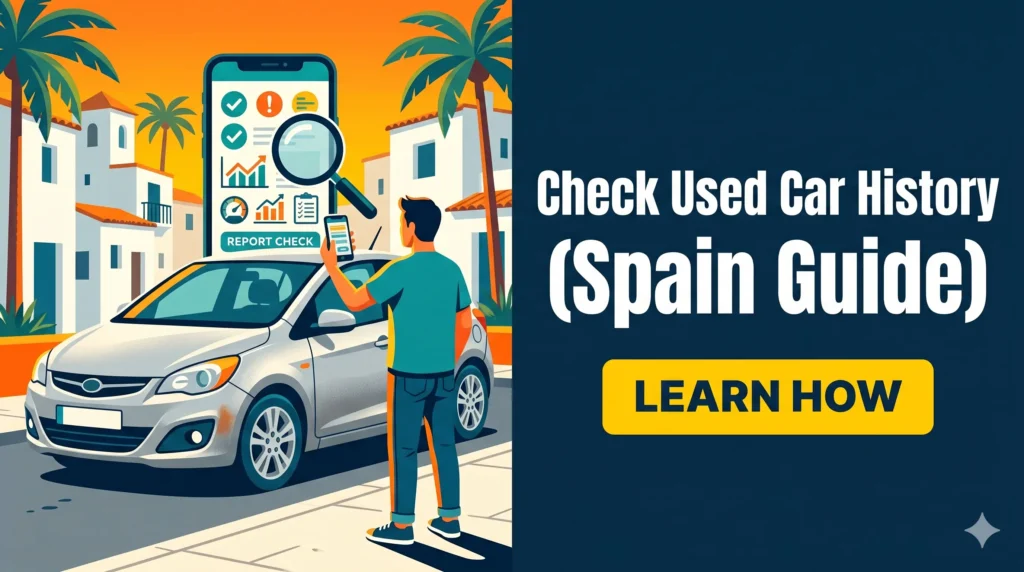
To protect yourself from these invisible legal traps, the Spanish government provides a transparent, highly accessible database. Accessing this database before you negotiate the price is the single most important step in your car-buying journey.
The Free Basic Check
The DGT offers a free, high-level background check online. By entering the vehicle’s license plate (matrícula) or chassis number (VIN), the system generates a simple color-coded result. A green light means the vehicle is completely free of administrative blocks and is clear to be transferred. A red light means there is a legal, mechanical, or administrative issue currently attached to the car.
However, the free report is intentionally vague. If the car returns a red light, the system will not tell you if the issue is a massive 10,000-euro bank embargo or simply an unpaid 50-euro speeding ticket. To find out exactly why the car is flagged, you must pay for the comprehensive data.
Upgrading to the Informe Detallado
The Informe Detallado (Detailed Report) is the official, comprehensive background check issued by the DGT. It costs a minor administrative fee of approximately 8.60 euros, and it is worth its weight in gold.
You can download this detailed report instantly via the DGT Sede Electrónica (Electronic Headquarters) using your Spanish Digital Certificate or the Cl@ve PIN system. Because you frequently need to run this check at the very last minute—often while physically standing in the seller’s driveway inspecting the car—you must ensure your smartphone has an absolutely flawless internet connection. The government authentication portals are incredibly fragile and will time out if your signal wavers. Relying on an expat-centric mobile provider like Tiekom ensures you have the stable, uninterrupted 5G data required to securely authenticate your identity and download the heavy PDF report on the spot.
Decoding the Critical Sections of the Report
Once you download the report, you must aggressively scan three highly specific sections. First, look immediately for the section titled Cargas y Gravámenes (Charges and Encumbrances). If you see the words Embargo, Precinto, or Reserva de Dominio, you must walk away from the sale immediately.
Second, review the Historial de ITVs (Inspection History). This section is your ultimate weapon against odometer fraud. In Spain, every time a car passes its mandatory technical inspection, the mechanic records the exact mileage (kilometraje). The DGT report lists these historical mileage entries chronologically. If the car showed 180,000 kilometers during its 2023 inspection, but the dashboard currently reads 90,000 kilometers, the seller has illegally rolled back the odometer.
Finally, check the Historial de Titulares (Ownership History). Be highly skeptical of a car that has had four different owners in the past three years, or a vehicle that was previously registered as a rental fleet car (coche de alquiler), as these vehicles are notoriously abused. Understanding the vehicle’s administrative past also helps you anticipate hidden costs, a survival concept covered in Speed Cameras in Spain: How Fines Are Notified to Residents.
| DGT Report Type | Cost | Information Provided | Best Used For |
| Informe Básico | Free | Green/Red light indicator | Initial screening of online classified ads |
| Informe Detallado | ~€8.60 | Full history, ITV mileage, embargoes | Mandatory download before final negotiation |
| Nota Simple | ~€15.00 | Deep financial liens from Property Registry | Investigating a confirmed Reserva de Dominio |
Verifying the Mechanical and Physical History
Legal clearance is only half the battle. You must also verify that the vehicle is mechanically sound and physically matches the paperwork the seller is presenting.
The ITV Document Trail
The Inspección Técnica de Vehículos (ITV) is the mandatory Spanish roadworthiness test. You must physically inspect the car’s Ficha Técnica (Technical Sheet). The seller must provide the original green document, heavily stamped on the back with the dates of previous inspections, alongside the most recent Hoja de Inspección (the actual mechanic’s report).
Do not simply accept the seller’s verbal assurance that the car “just passed the ITV.” You must read the inspection report. It will explicitly list any Defectos Leves (minor defects). While minor defects do not legally fail the inspection, they reveal exactly what components are beginning to wear down—such as weeping oil seals or degrading suspension bushings. You can use these documented minor defects as massive leverage to negotiate the price down. If you plan to park this car on the street, you also need to check the emissions rating listed on the documents to ensure the car is legally allowed in the city center, a complex municipal maze detailed in How to Get a Resident Parking Permit in Spain (ZBE/Zones).
DIY Diagnostic Tools
Hiring a professional Spanish mechanic to accompany you to a car viewing is incredibly expensive and logistically difficult. Veteran expats bypass this by bringing their own digital diagnostics.
Before you begin shopping for cars, you should order a Bluetooth OBD2 scanner directly from Amazon Spain. This small, inexpensive device plugs directly into the port under the car’s steering wheel and pairs with your smartphone. It instantly scans the vehicle’s internal computer for hidden engine fault codes. Dishonest sellers frequently use cheap tools to temporarily wipe the “Check Engine” light from the dashboard right before you arrive. An OBD2 scanner cuts through the deception and reveals exactly what is failing inside the engine. If you bring a mechanic friend with you who needs to research a specific Spanish engine code on the fly, having a strong mobile hotspot powered by your Tiekom data plan is a brilliant logistical safeguard.
Final Preparations Before Handing Over Money
Once the DGT report is clean and the car is mechanically verified, you must manage the actual transaction securely. Spain has strict anti-money laundering laws that heavily regulate how you can legally buy a vehicle.
Digital Infrastructure for the Sale
Spanish law prohibits cash transactions exceeding 1,000 euros if one of the parties is acting in a professional business capacity. Even if you are buying from a private individual (particular), carrying large sums of cash is highly dangerous and leaves you with a weak paper trail. You should execute the purchase via a traceable digital bank transfer. Ensuring your local financial infrastructure is properly set up before you shop is critical; review Opening a Bank Account in Spain as a Non-Resident to secure an agile local IBAN.
Furthermore, it is a severe criminal offense to drive a car in Spain without active third-party liability insurance. The insurance is strictly tied to the driver and the vehicle; you cannot legally drive the car home under the previous owner’s policy. Before you sign the final contract, you must sit in the car and use your smartphone to run online insurance quotes and purchase a policy instantly. Having a rapid, uninterrupted mobile data connection from Tiekom ensures you can bind your new insurance policy digitally and receive the PDF confirmation before you put the key in the ignition. Factoring these immediate insurance premiums into your overall budget is essential, as detailed in Cost of Living in Spain: Budgeting for Expats.
Equipping Your New Vehicle
Spanish traffic police (Guardia Civil) are infamous for pulling over newly transferred cars to check for mandatory safety equipment. By law, every vehicle must carry specific emergency items inside the cabin.
Do not assume the seller is leaving their safety gear in the trunk. Before you finalize the purchase, you should order a multipack of highly reflective warning vests from Amazon Spain, as well as the newly mandated V-16 flashing emergency beacon from Amazon Spain. Having these delivered to your apartment before you buy the car guarantees you are legally compliant the moment you drive away.
Finally, touching your mobile phone while driving in Spain carries a devastating 200-euro fine and a massive deduction of license points. You must secure a high-quality dashboard phone mount from Amazon Spain so you can safely utilize your GPS navigation. Because relying on real-time traffic apps like Waze or Google Maps is critical to navigating unfamiliar Spanish highways on the drive home, utilizing the robust mobile data network provided by Tiekom guarantees your directions will not fail at a crucial highway interchange. Properly managing your telecommunications, banking, and municipal obligations transforms the terrifying prospect of a foreign car purchase into a seamless transition, a holistic integration concept explored in Utility Costs in Spain: Electricity, Gas, Water, and Internet.
References
Primary sources (official)
- Dirección General de Tráfico (DGT) – Informe de Vehículo: https://sede.dgt.gob.es/es/vehiculos/informe-de-vehiculo/
- Dirección General de Tráfico (DGT) – Sede Electrónica: https://sede.dgt.gob.es/es/
- Registro de Bienes Muebles de España – Nota Simple: https://www.registradores.org/registroVirtual/bienesMuebles.do
Other helpful sources
- RACE – Informe de vehículo de segunda mano: https://www.race.es/informe-vehiculo-segunda-mano
- RO-DES – Cómo verificar el estado administrativo de un coche: https://www.ro-des.com/dar-de-baja-un-coche/verificar-baja-de-un-vehiculo-en-la-dgt/
Disclaimer
The information provided in this article is for educational and informational purposes only and does not constitute formal legal, mechanical, or financial advice. The administrative protocols for pulling DGT Informes de Vehículo, the legal implications of a Reserva de Dominio, and Spanish anti-money laundering limits on cash transactions are highly complex and subject to frequent updates by the Dirección General de Tráfico and the Agencia Tributaria. Always personally verify a vehicle’s legal and financial status through official government portals and strongly consider hiring an independent mechanic and a certified administrative agent (Gestor Administrativo) before executing a legally binding vehicle purchase in Spain.