Booking Multiple Spanish Cities: Sequencing Around Rail Routes
Ah, the dream of seeing Spain! You picture yourself sipping sangria in Seville, marveling at Gaudí in Barcelona, and soaking in the history of Madrid, all in one glorious trip. But then reality hits: how on earth do you connect all those dots without spending half your vacation on a bus or train, or worse, making a logistical nightmare out of it? This guide is here to walk you through the practical art of sequencing your Spanish city adventures, especially around Spain's fantastic rail network, helping you plan efficiently.
Disclosure: This post may contain affiliate links. We may earn a commission at no extra cost to you if you make a purchase through these links. Read full disclosure.
The Lure and Logistics of Multi-City Spain Trips
There's something incredibly romantic about a multi-city tour of Spain. One day you're strolling through the ancient streets of Córdoba, the next you're on a high-speed train, watching the landscapes blur as you head towards the vibrant coasts of Valencia. This country is a kaleidoscope of cultures, climates, and culinary delights, and it's absolutely natural to want to experience as much of it as possible. However, the sheer variety can quickly turn into overwhelming logistics if you're not careful.
Why Multi-City Travel is So Appealing and Challenging
Spain’s diverse regions offer a smorgasbord for travelers. From the sunny beaches of Andalucía to the green mountains of the Basque Country, and the buzzing metropolises like Madrid and Barcelona, each destination promises a unique flavor. You want to see the flamenco in Seville, the art in Madrid, the architecture in Barcelona, and perhaps even a castle in Segovia. It’s a wonderful ambition, but it also means constant movement, packing and unpacking, and navigating unfamiliar transport systems. The challenge lies in transitioning smoothly between these distinct experiences. Without thoughtful planning, those travel days can eat into your precious vacation time, leaving you more exhausted than invigorated.
Initial Considerations: Time, Budget, and Pace
Before you even start looking at train schedules or hotels, take a moment to be realistic about your trip. How much time do you truly have? A common mistake is trying to cram too many cities into a short timeframe. Remember, every travel day is essentially a lost day for sightseeing. You’ll spend time checking out of one place, traveling, checking into another, and probably a few hours just getting oriented.
Consider your budget as well. While trains are efficient, costs can add up, especially for high-speed routes if not booked in advance. Are you comfortable with a faster pace, moving every two or three nights, or do you prefer to settle in for longer? A relaxed pace often allows for deeper immersion in a place, rather than a frantic dash between major sights. Think about what you want to get out of each city. Is it a quick cultural hit, or a chance to unwind and explore at leisure? This initial reflection will save you a lot of grief later on. For finding good value accommodation that fits your budget and travel style in each city, platforms like Booking.com can be incredibly helpful with their extensive filtering options.
Mastering Spain's Rail Network for Seamless Journeys
Spain's train network, primarily operated by Renfe, is generally excellent and often the best way to travel between major cities. Forget the stress of airport security or navigating traffic; trains offer comfort, speed, and often stunning views. Traveling Around Spain: Trains, Buses, Flights, and Car Hire covers these modes in broader strokes, but here, we'll dive into the specifics of planning your rail journey.
The Wonders of High-Speed AVE Trains
If you're planning a multi-city trip in Spain, the high-speed AVE (Alta Velocidad Española) trains will be your best friend. These modern marvels whisk you across the country at incredible speeds, connecting major hubs like Madrid, Barcelona, Seville, and Valencia in just a few hours. The comfort is leagues above budget airlines, with spacious seating, quiet carriages, and often on-board services.
For example, the journey from Madrid to Seville takes about 2.5 hours, making a significant chunk of the country easily accessible. Barcelona to Madrid is around the same, and you can even zip from Madrid to Málaga on the southern coast in under 3 hours. These routes form the backbone of many popular multi-city itineraries, allowing you to maximize sightseeing time rather than travel time. They often depart from and arrive into city-center stations, saving you additional transfer time compared to flying. It's truly a game-changer for covering large distances efficiently. For detailed routes and booking strategies, you might find High-Speed Trains in Spain (AVE): Routes, Booking, and Savings useful.
Regional and Long-Distance Trains: Beyond the AVE
While AVE trains hog the spotlight, don't overlook Renfe's other services like Media Distancia (medium distance) and Cercanías (commuter trains). These trains fill the gaps, connecting smaller towns and cities that aren't on the high-speed network. They might be slower, but they can be more cost-effective and offer a chance to see more of the local landscape. For instance, if you're exploring the white villages of Andalucía or the coastal towns of Catalonia, a Media Distancia train might be the perfect, relaxing way to reach your destination.
Cercanías trains are great for day trips from major cities. While you won't cover vast distances, these services are essential for exploring the nuances of a region once you've arrived at your main hub. They're often frequent and cheap, allowing spontaneous exploration. The key is to understand which type of train serves your chosen destinations.
Planning Your Rail Itinerary Strategically
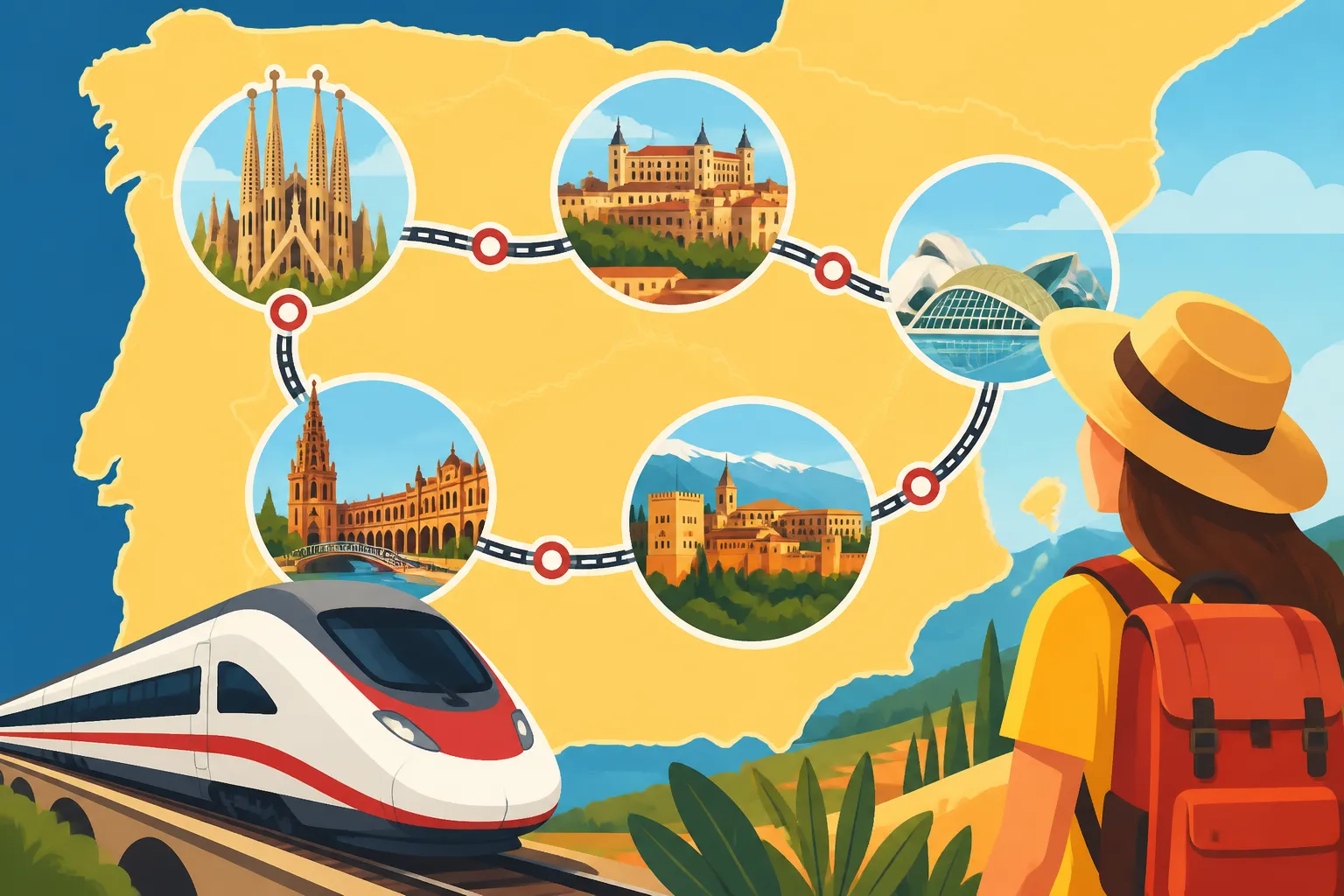
The secret to a successful multi-city train trip lies in smart sequencing. Instead of zig-zagging across the map, think about a logical geographical flow. For example, if you start in Madrid, you could create a loop down to Andalucía (Córdoba, Seville, Granada), then perhaps head east towards Valencia, and finally up to Barcelona. Or, if you begin in Barcelona, you could sweep down the Mediterranean coast before heading inland towards Madrid.
Here’s a general strategy:
- Map it Out: Visually plan your route. See which cities connect easily by high-speed rail.
- Linear Progression: Aim for a linear path. If you travel Madrid -> Seville -> Valencia -> Barcelona, you're always moving forward. Don't go Madrid -> Seville -> back to Madrid -> Barcelona, unless there’s a compelling reason.
- Prioritize Key Connections: Book your major AVE legs in advance, especially during peak season. You'll often find significant savings compared to last-minute purchases. Platforms like Booking.com can sometimes offer integrated travel options or link you to reliable rail booking sites directly. How to Buy AVE Train Tickets in Spain and Save Money has more booking insights.
- Factor in Travel Time: Even a 2.5-hour train ride means getting to the station, waiting, boarding, and then getting from the arrival station to your accommodation. Always allocate a half-day for travel between cities.
- Consider Overnight Stays: For finding great places to stay near train stations, making early morning departures or late-night arrivals easier, Booking.com is an invaluable resource.
Here’s a simplified table illustrating common multi-city connections and recommended transport:
| Starting City | Destination City | Recommended Transport | Travel Time Estimate | Notes |
|---|---|---|---|---|
| Madrid | Seville | AVE Train | 2.5 – 3 hours | Fast, frequent, connects city centers. Often part of an Andalucía loop. |
| Madrid | Barcelona | AVE Train | 2.5 – 3 hours | Direct, high-speed, connects Spain's two largest cities. |
| Madrid | Valencia | AVE Train | 1.5 – 2 hours | Quick connection to the Mediterranean coast. |
| Barcelona | Valencia | Euromed Train | 3 – 3.5 hours | Connects the Mediterranean corridor. |
| Seville | Granada | Bus (ALSA) | 3 hours | Direct bus is often the most convenient, as the train route can be slower or require changes. |
| Madrid | Toledo | Avant Train | 30 minutes | Frequent regional train, perfect for a day trip. |
| Madrid | Segovia | Avant Train | 30 minutes | Another excellent day trip option by regional high-speed. |
| Barcelona | Girona | AVE / Regional Train | 40 min – 1.5 hours | Fast by AVE, more scenic by regional. |
The Role of Booking Platforms in Simplifying Your Route
Navigating the multitude of websites for trains, buses, and accommodation can be a Herculean task. This is where a robust booking platform can become your unsung hero, especially for managing the accommodation side of your multi-city adventure. While it might not book every single obscure bus route, it can serve as your central command for keeping track of your stays.
Why a Centralized Booking Tool is Your Best Friend
Imagine having all your hotel confirmations, check-in details, and even some transport information consolidated in one place. A centralized booking tool like Booking.com provides exactly that convenience. When planning a multi-city tour, you’re not just booking one room; you’re booking several, potentially in different types of accommodation – a boutique hotel in Barcelona, a charming guesthouse in Seville, an apartment rental in Valencia. Keeping these organized across various providers can quickly lead to a jumbled mess of emails and scattered PDFs.
Booking.com allows you to search, compare, and book accommodations in each of your chosen cities. Its user-friendly interface means you can easily see what’s available near major train stations, filter by budget, amenities, or even specific neighborhoods you've heard are well-connected. This streamlines the accommodation side of your planning, letting you focus more energy on the transport logistics. Plus, having a single app or website for all your stays provides a comforting layer of organization while you're on the move.
Integrating Accommodation and Transport Bookings
While Booking.com is primarily known for accommodation, its strength in a multi-city scenario comes from its ability to help you strategize your stays around your transport plans. You can easily scout for hotels or apartments that are a short walk or quick metro ride from the main train or bus stations in each city. This might seem like a small detail, but after a long train journey, the last thing you want is a convoluted transfer to your hotel.
For instance, after deciding your train from Madrid will arrive at Santa Justa station in Seville, you can then open Booking.com and search for "Seville hotels near Santa Justa." You can then compare prices, read reviews, and see photos, all tailored to your logistical needs. This integration of transport awareness into your accommodation search is invaluable. It transforms fragmented planning into a more cohesive, less stressful experience. Many travelers also use Booking.com to compare flight options for longer internal travel legs, especially for destinations like the Balearic or Canary Islands. This ability to consider both hotels and broader travel options makes it a powerful tool for your Spanish adventure.
Crafting Logical City Sequences: Examples and Pitfalls
Once you understand the transport options and how to use booking platforms, the next step is to actually design your itinerary. This isn't just about picking cities you like; it's about connecting them in a way that makes sense geographically and logistically.
Classic Routes for First-Timers
For those new to Spain, some routes naturally lend themselves to smooth multi-city travel. These often utilize the high-speed rail network effectively:
- The Golden Triangle (Madrid – Seville – Granada): This is a fantastic introduction to central and southern Spain. You'd typically fly into Madrid, spend a few days, then take the AVE to Seville. After exploring Seville and perhaps a day trip to Córdoba, you’d then take a bus or train to Granada to see the Alhambra. From Granada, you can fly out of Málaga, or take a train/bus back to Madrid for your departure. This loop minimizes backtracking and covers iconic sights. Madrid, Barcelona, and Spain's Great Cities: Explorer's Guide is a great starting point for these major hubs.
- East Coast Charm (Barcelona – Valencia – Madrid): Begin in Barcelona, soaking in its unique Catalan culture. Then, take a comfortable train down the coast to Valencia, known for its futuristic architecture and paella. Finally, head inland to Madrid, the bustling capital, for your last leg. This offers a mix of coastal vibes and urban exploration.
- Northern Delights (Madrid – Bilbao – San Sebastián): While a bit more rugged, this path is rewarding for foodies and nature lovers. Start in Madrid, then fly or take a long-distance train to Bilbao. From Bilbao, it’s a short bus or regional train hop to the gastronomic paradise of San Sebastián. This journey showcases a very different side of Spain.
When planning these routes, remember that platforms like Booking.com can help you find suitable accommodation in each of these distinct cities, allowing you to filter for specific neighborhoods that are well-located for either sightseeing or onward travel. Spain's Regions and Where to Go: A Traveler's Overview can give you even more inspiration.
Avoiding Common Sequencing Mistakes
It's easy to get caught up in the excitement and try to squeeze in too much, which leads to burnout and less enjoyment. Here are some pitfalls to avoid:
- The "Pinball" Effect: Don't zig-zag across the country. Going Madrid -> Seville -> Barcelona -> back to Seville -> then Málaga is inefficient and wastes valuable travel time. Aim for a flow that moves generally in one direction. Check the map on Booking.com for each city to see where the train and bus stations are relative to your chosen accommodation.
- Underestimating Travel Time: A 2-hour train ride often means a 4-hour chunk of your day is gone when you factor in packing, check-out, transit to the station, waiting, the journey itself, arrival, and transit to your next accommodation. Don't plan major activities on your travel days.
- Ignoring Local Transport: Even within cities, think about how you'll get around. Is your accommodation on Booking.com conveniently located near public transport, or will you be spending a lot of time (and money) on taxis?
- Too Many One-Night Stays: While tempting, packing and unpacking every day is exhausting. Try to allocate at least 2-3 nights per major city to truly experience it, rather than just tick off sights. This also gives you a buffer in case of minor travel delays.
By carefully considering these sequencing tips, you'll build an itinerary that maximizes your enjoyment and minimizes stress, allowing you to truly savor each unique Spanish experience.
Beyond Trains: Buses, Flights, and Practical Tips
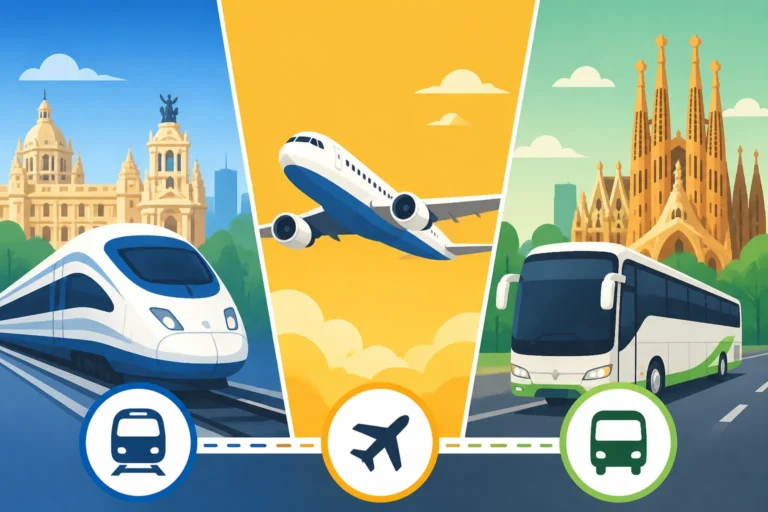
While Spain's rail network is fantastic, it's not always the optimal choice for every journey. Sometimes, other modes of transport or specific booking strategies can save you time, money, or simply offer a more direct route.
When Buses Make Sense
Spain has an extensive and efficient long-distance bus network, with companies like ALSA being prominent. Buses often fill the gaps where trains don't go, or where train journeys are indirect or much more expensive.
Here's when to consider buses:
- Connecting Smaller Towns: Many charming smaller towns and villages, especially in regions like Andalucía's Pueblos Blancos or the Picos de Europa, are simply not on the main rail lines. Buses are your go-to here.
- Direct Routes: Sometimes a bus offers a more direct route than a train, even between medium-sized cities, especially if the train connection requires multiple changes. A classic example is Seville to Granada, where the bus is often preferred due to more direct service.
- Cost-Effectiveness: Buses are generally cheaper than high-speed trains, making them a good option for budget travelers or if you're booking last minute when train prices have soared.
- Scenic Routes: Some bus routes, particularly through mountainous or coastal regions, can be incredibly scenic, offering views you wouldn't get from a train or plane.
Remember that bus stations are often separate from train stations, so factor this into your transfers when booking accommodation. Intercity Buses in Spain: Networks, Booking, and Tips can provide more specific guidance on this mode of transport.
Domestic Flights for Long Distances
While trains are excellent for mainland travel, sometimes a domestic flight makes perfect sense:
- Mainland to Islands: If you're dreaming of the Balearic Islands (Mallorca, Menorca, Ibiza) or the Canary Islands, flying is almost always the quickest and most practical option from the mainland. The Balearic Islands: Choosing Between Mallorca, Menorca, and Ibiza might be helpful if you plan to visit.
- Extreme Distances: For very long hauls, like flying from Seville to a city in Northern Spain like Santiago de Compostela, a flight can save you many hours compared to an all-train journey that might involve multiple connections.
- Time-Sensitive Travel: If your itinerary is extremely tight and you absolutely need to maximize every minute, a short domestic flight might shave off a few hours of travel time compared to a train.
Be sure to factor in airport transfer times and costs when deciding if flying is truly faster or cheaper. Sometimes a longer train journey from city center to city center still comes out ahead once you add in airport hassle. When searching for flights, remember you can often compare prices right on Booking.com, giving you a comprehensive view of your travel options. How to Get From Madrid Airport to the City Center and How to Get From Barcelona Airport to the City Center are good resources for initial arrival/departure planning.
Essential Booking Hacks and Considerations
No matter how you travel, a few universal tips will make your multi-city booking experience smoother:
- Book in Advance: This is especially true for AVE trains and popular flights. Prices tend to rise closer to the departure date. For accommodation, Booking.com often has "early bird" deals or better availability further out. How Early Should You Book High-Speed Trains in Spain? provides more context on this for trains.
- Be Flexible with Dates: If your schedule allows, traveling on weekdays or outside of peak holiday periods can lead to significant savings on both transport and accommodation.
- Digital Copies are Your Friend: Keep all your tickets and confirmations (train, bus, flight, hotel) stored digitally on your phone, whether in an app, cloud storage, or email. A physical backup is always a good idea too.
- Check Luggage Rules: If flying, be mindful of baggage allowances and potential extra fees. Trains and buses are generally more lenient but still have limits.
- Consider a Travel Pass (sometimes): For extensive train travel, investigate if a Renfe Spain Pass makes sense for your itinerary. Often, individual advance tickets are cheaper, but it's worth checking if you're doing many long journeys.
- Read the Fine Print: Especially with accommodation on Booking.com, check cancellation policies, breakfast inclusions, and check-in/out times for each booking.
By combining these strategies, you'll be well-equipped to navigate Spain's diverse transport landscape and stitch together a fantastic multi-city adventure.
Making Your Bookings with Confidence
Booking a multi-city trip can feel like a high-stakes game of Tetris, where every piece needs to fit perfectly. But with the right tools and a clear strategy, you can move from overwhelmed to organized, ensuring a smooth and enjoyable Spanish adventure.
Leveraging Filters and Features
When you're trying to piece together a complex itinerary involving several different cities, the features offered by comprehensive platforms like Booking.com become incredibly powerful. Don't just type in a city name and hit search; really dive into the filters:
- Location, Location, Location: This is paramount for multi-city travel. Use the map feature on Booking.com to see accommodation options relative to the major train station (e.g., Atocha in Madrid, Sants in Barcelona, Santa Justa in Seville). Being a 5-10 minute walk or a quick metro ride from your arrival/departure point saves immense time and stress. Filter by "neighborhood" or use the interactive map to pinpoint areas near transport hubs.
- Budget & Amenities: Stick to your budget by using the price filters. Looking for a pool to cool off after a hot day of sightseeing in Andalucía? Filter for it. Need strong Wi-Fi for remote work? There's a filter for that too. These options allow you to tailor each stay to the specific needs of that leg of your journey.
- Accommodation Type: Are you looking for a bustling hostel in Madrid, a quiet boutique hotel in a historic quarter of Seville, or a self-catering apartment in Valencia? Booking.com offers filters for hotels, apartments, hostels, guesthouses, and more, allowing you to choose the perfect fit for each city.
By judiciously applying these filters, you're not just booking a room; you're booking the right room in the right place for that specific part of your multi-city journey.
Reading Reviews and Location Insights
The real goldmine on Booking.com, beyond the filters, is the wealth of user reviews and their specific insights. When planning your route, pay close attention to comments related to:
- Proximity to Transport: Many reviewers will explicitly mention how easy it was to get to the train station, bus stop, or airport from the property. Look for phrases like "convenient for AVE," "near metro," or "easy airport access." These real-world anecdotes are invaluable.
- Neighborhood Vibe: Reviews often describe the surrounding area. Is it quiet or lively? Are there good restaurants nearby? Is it safe to walk around at night? This helps you gauge if the location, even if near a station, fits your preferences.
- Ease of Check-in/Check-out: For quick transitions between cities, a smooth check-in and check-out process is key. Reviews often highlight efficiency (or lack thereof), which can be a deciding factor for a single-night stay.
- Staff Helpfulness: Sometimes, you just need to ask for directions to the nearest bus stop or clarification on how to get to a specific attraction. Friendly, knowledgeable staff can make a huge difference in how smoothly your transitions go.
By combining the powerful search capabilities of platforms like Booking.com with careful attention to user reviews and logistical details, you can craft a multi-city Spanish itinerary that is as seamless as it is memorable. This thoughtful approach minimizes surprises and maximizes your enjoyment, letting you truly immerse yourself in each unique destination.
Disclaimer
This article is for general informational purposes only and does not constitute professional advice. Laws, prices and regulations vary by location and change over time. Consult a qualified professional for guidance on your specific situation.