Moving to Spain from Chile and Peru: Pacific-Side Shipping Considerations
Moving your entire life across an ocean, especially from a continent as far-flung as South America to Europe, can feel like you're trying to move a mountain with a spoon. If you're pondering the logistics of shipping your household goods from Chile or Peru to Spain, you're not alone in feeling overwhelmed. The sheer distance, the difference in regulations, and the myriad of paperwork can quickly turn exciting dreams into administrative nightmares. This guide is here to walk you through the nitty-gritty of transatlantic shipping, validating those frustrations while offering solid, actionable advice to make your move smoother.
Disclosure: This post may contain affiliate links. We may earn a commission at no extra cost to you if you make a purchase through these links. Read full disclosure.
The Unique Challenges of Shipping from Latin America to Spain
Let's be honest, moving internationally is never just a walk in the park. But when you're talking about shipping your precious belongings from Chile or Peru to Spain, you're not just dealing with distance; you're navigating a labyrinth of unique logistical and bureaucratic hurdles. It's a journey that demands patience, meticulous planning, and a deep understanding of what lies ahead.
Geographical Distance and Transit Times
The vast expanse of the Atlantic Ocean is the first, and most obvious, challenge. We're talking about thousands of kilometers, which directly translates to significant transit times. Sea freight, which is the most common and cost-effective method for household goods, can take anywhere from 4 to 8 weeks or even longer, depending on the specific ports, shipping lines, and potential delays. Imagine your carefully packed boxes sitting in a container, traversing oceans, making stops in various ports. This isn't like a quick hop across the border; it's a marathon.
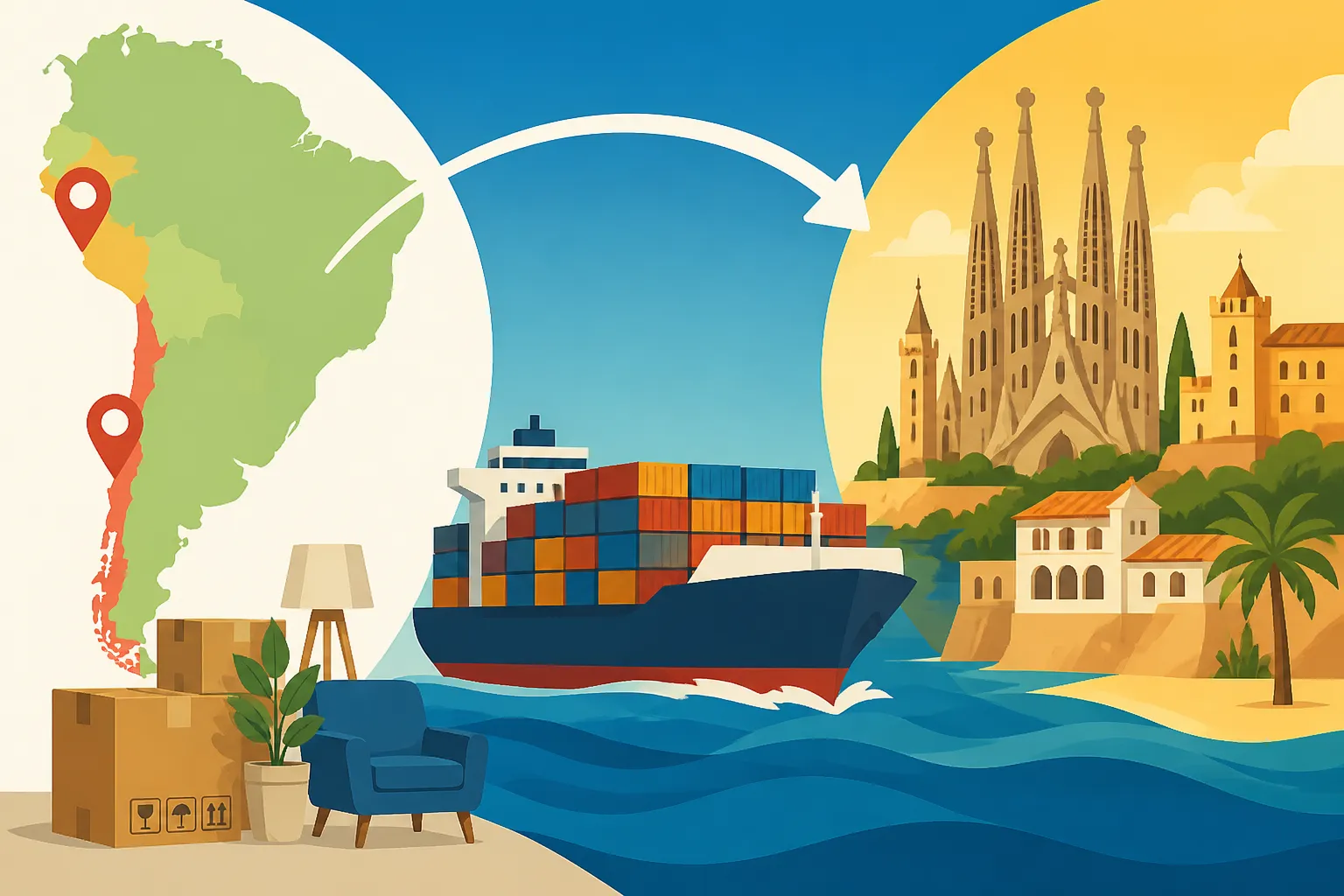
Consider a typical journey: your items are picked up in Santiago or Lima, transported to the nearest major port (Valparaíso or Callao), loaded onto a container ship, and then begin their long voyage. They'll pass through the Panama Canal, cross the Atlantic, and eventually arrive at a Spanish port like Valencia, Barcelona, or Algeciras. Each leg of this journey comes with its own potential for delays – weather, port congestion, customs clearance in both countries, or even just routine administrative hold-ups. It’s crucial to mentally prepare for these extended timelines and plan your personal travel accordingly. You definitely don't want to arrive in Spain and spend weeks without your essential items. That's why many expats opt for a small air freight shipment of immediate necessities and send the bulk via sea.
Customs Regulations and Bureaucracy: A Double Hurdle
This is where things can get truly tricky. You're not just dealing with one country's customs; you're dealing with two. First, your items must be cleared for export from Chile or Peru, which involves their own specific sets of documentation and regulations. Then, they must successfully navigate the import process in Spain, an EU member state, which adheres to strict European Union customs laws. The rules for importing household goods are quite specific, designed to distinguish between personal effects and commercial goods, which helps avoid import duties for those genuinely relocating.
The paperwork required can feel endless and often varies slightly depending on your nationality and specific residency status in Spain. You’ll need proof of your new Spanish residency, like your TIE or NIE number, your Empadronamiento, and robust evidence that you've been living in Chile or Peru for at least the past 12 months. Any discrepancies or missing documents can lead to significant delays, storage fees, and even fines. It's a bureaucratic dance, and one wrong step can trip you up. A single missing stamp can cause considerable frustration. This is precisely why working with experienced professionals who understand both sides of the customs process is invaluable.
Cultural Nuances and Communication
While Spanish is the common language, the administrative culture, the pace of work, and even the approach to problem-solving can differ significantly between Chile, Peru, and Spain. What might be a standard operating procedure in Lima could be completely unheard of in Madrid, and vice versa. Expectations around communication, response times, and flexibility can vary. You might find that inquiries that would be swiftly resolved in your home country take a more circuitous route here.
Having a shipping partner who is fluent not just in the language but also in the cultural context of shipping operations in both regions can prevent misunderstandings and smooth over potential bumps. They can anticipate issues before they arise and navigate conversations with local authorities or logistics partners more effectively. This cultural bridge is often overlooked but plays a huge role in reducing stress and ensuring a seamless process.
Essential Shipping Options and What to Consider
When you decide to move your belongings across continents, you're faced with a few fundamental choices about how those items will travel. These decisions significantly impact cost, speed, and convenience. Getting a handle on these options early will help you make the best choice for your personal situation and budget.
Full Container Load FCL vs. Less Than Container Load LCL
This is one of the first big decisions you'll encounter. Do your belongings fill an entire shipping container, or will they share space with other people's goods?
-
Full Container Load (FCL): If you have a large home, a significant amount of furniture, or perhaps a car you're bringing, an FCL might be for you. You get a dedicated container, typically 20-foot or 40-foot.
- Pros: Your belongings are the only ones in the container, meaning less handling, potentially faster transit (as there’s no need to consolidate or deconsolidate other shipments), and a lower risk of mix-ups. The container is sealed at your home and only opened at your destination (after customs).
- Cons: It's significantly more expensive, as you're paying for the entire container space, even if you don't fill it completely. It's only cost-effective for larger moves.
- Scenario: Imagine you're moving a three-bedroom house with all its contents, including large appliances and bulky furniture. FCL would be the logical, albeit more costly, choice for peace of mind and efficiency.
-
Less Than Container Load (LCL): For smaller moves, where you're bringing select furniture pieces, boxes, and personal effects, LCL is usually the go-to. Your items are consolidated with other shipments heading to Spain into one container.
- Pros: Much more cost-effective as you only pay for the volume your goods occupy. This is ideal for those downsizing or starting fresh with fewer possessions.
- Cons: Increased handling risk as your items are loaded and unloaded from various consolidation points. Transit times can be longer due to the extra logistics involved in grouping shipments. There's a slightly higher (though still low with reputable movers) chance of items getting misplaced, though professional packers mitigate this.
- Scenario: You're moving from a one-bedroom apartment, planning to buy new furniture in Spain, and only want to bring sentimental items, books, and smaller belongings. LCL is your budget-friendly hero.
Air Freight vs. Sea Freight: Speed, Cost, and Necessity
The battle of speed versus cost is real in international shipping.
-
Sea Freight: This is the workhorse for international household moves.
- Pros: By far the most economical option for bulky or heavy shipments. It's also the only viable way to send large items like furniture or vehicles. Environmentally, it has a lower carbon footprint per ton-mile compared to air freight.
- Cons: Slow. As mentioned, expect weeks, not days. This means a long wait for your belongings.
- Best for: Almost all your main household goods, non-urgent items, and anything too large or heavy for air cargo.
-
Air Freight: When time is of the essence, air freight swoops in.
- Pros: Fast. Your items could be in Spain in a matter of days (usually 5-10 business days, factoring in customs). This is perfect for those immediate necessities.
- Cons: Expensive. Very expensive. Costs are calculated by weight or volumetric weight, whichever is greater, making it prohibitive for large or heavy shipments. It's also more restrictive on what can be shipped (e.g., no aerosols, certain batteries).
- Best for: Essential documents, critical medical supplies, a small selection of clothes, children's favorite toys, or work tools you need immediately upon arrival. Think of it as your "survival kit" while you wait for the main shipment. Remember to research What to Bring to Your First Doctor Visit in Spain (Documents Checklist) if you need vital medical records.
Many expats choose a hybrid approach: a small air freight package for immediate needs and sea freight for the bulk.
Door-to-Door vs. Port-to-Port Services: The Convenience Factor
Understanding the scope of your shipping service is vital to avoid nasty surprises.
-
Door-to-Door Service: This is the gold standard for stress-free moves, and what most expats truly need.
- What it includes: The shipping company handles everything from packing your items at your home in Chile or Peru, transporting them to the port, managing all export and import customs, shipping across the ocean, receiving at the Spanish port, clearing customs in Spain, and finally delivering and often unpacking (if agreed upon) at your new Spanish address.
- Pros: Maximum convenience and minimal hassle for you. The shipping company acts as your single point of contact and navigates the complexities. This is especially valuable given the bureaucratic hurdles you'll face trying to get your NIE, TIE & Empadronamiento: Essential IDs and Registrations in Spain sorted.
- Cons: More expensive than port-to-port, but for good reason – you're paying for expertise and convenience.
-
Port-to-Port Service: This is a more hands-on approach.
- What it includes: The shipping company transports your goods from the origin port (e.g., Callao) to the destination port (e.g., Valencia). You are responsible for getting your items to the origin port, handling all export paperwork, dealing with all import customs clearance in Spain, and arranging transportation from the Spanish port to your new home.
- Pros: Cheaper upfront.
- Cons: Can be incredibly stressful and time-consuming. Navigating Spanish customs and transport from a major port can be a nightmare if you don't speak fluent Spanish or aren't familiar with local logistics. You could incur unexpected storage fees at the port if you're not quick with clearance.
- Consideration: Unless you have extensive experience in international logistics and speak excellent Spanish, this is generally not recommended for personal household moves. The potential savings rarely outweigh the stress and hidden costs of delays or errors.
When looking for a moving company, ensure they offer comprehensive door-to-door service, ideally through a platform like Sirelo, which connects you with reputable movers experienced in these specific routes. Sirelo makes it easy to compare offers and ensure you're getting the services you need.
Navigating Spanish Customs and Import Requirements
The Spanish customs process can feel like a riddle wrapped in an enigma, especially when you're already exhausted from the move. But with the right information and preparation, you can glide through it. The key is understanding what Spain requires and having your ducks in a row.
Key Documents You'll Need for Import
This is where your organizational skills truly shine. Gather these documents well in advance and make multiple copies. Original documents will always be required.
- Valid Passport: A copy of your passport's main page and any entry/exit stamps.
- Spanish Foreigner Identification Number (NIE): This is your essential identification number in Spain. You absolutely cannot do anything official without it. If you're still working on getting yours, you'll want to read up on How to Get a Spanish NIE Number: In Spain vs Abroad.
- TIE Card (Tarjeta de Identidad de Extranjero): If you are a non-EU citizen and have already processed your residency, this card proves your legal status. For specific visa pathways, understanding the general Spain Visas & Residency: Complete Guide for Foreigners helps clarify when you'll get this.
- Proof of Residency in Spain (Certificado de Empadronamiento): This document confirms you are registered at a specific address in Spain. It's crucial for almost all administrative processes, including importing goods. Remember to register your address as soon as you can. For more info, check out Empadronamiento in Spain: How to Register Your Address.
- Proof of Residency in Chile/Peru: Documents like utility bills, bank statements, or rental contracts from your previous address that clearly show you've lived there for at least 12 consecutive months before your move. This is critical for proving your goods are "used personal effects" and thus exempt from import duties.
- Comprehensive Inventory List: A detailed, itemized list of everything you are shipping. Each box should be numbered and correspond to items on this list. It should be written in Spanish (or a sworn translation if done by you). The more specific, the better (e.g., "Box 1: 5 books, 2 shirts, 1 pair jeans" instead of "Box 1: clothing and books").
- De-registration Certificate from Chile/Peru (if applicable): Some countries require proof that you've officially moved your residency. Check the specific requirements for your departure country.
- DNI (Chile) or Carné de Extranjería (Peru): Copy of your national ID from your country of origin.
- Duly Completed Customs Forms: Your moving company will provide these, such as the DUA (Documento Único Administrativo) or specific declarations for household goods.
- Proof of Employment/Study/Retirement in Spain: Your work contract, university enrollment, or proof of pension, depending on your residency status. This further solidifies your intent to reside in Spain.
- Purchase Agreement/Rental Contract for Spanish Home: Shows you have a place to live. Renting in Spain: Contracts, Deposits, and Tenant Rights gives a good overview of what your rental contract entails.
Keep all these documents organized in a dedicated folder, both physical and digital.
Prohibited and Restricted Items
This is not a suggestion; it's a strict rule. Spain, like all EU countries, has clear guidelines on what cannot enter the country or requires special permission. Ignorance is not an excuse, and attempting to smuggle prohibited items can lead to confiscation, fines, and even legal trouble.
-
Prohibited Items (Do NOT ship):
- Illegal drugs or narcotics.
- Firearms, ammunition, explosives.
- Offensive weapons (e.g., switchblades, certain martial arts weapons).
- Counterfeit goods.
- Pornographic material.
- Endangered species (CITES-protected plants, animals, or products made from them).
- Certain plant and animal products that could carry pests or diseases.
-
Restricted Items (Require special permits/declarations):
- Alcohol and Tobacco: While small quantities for personal use might be acceptable, large amounts can incur heavy duties or require special licenses. It's often easier and cheaper to buy these in Spain.
- Food Items: Fresh produce, meats, dairy, and some processed foods are generally restricted or prohibited due to biosecurity risks. Certain non-perishable, commercially packaged items might be allowed in small quantities, but check with your mover. Better safe than sorry.
- Medications: Prescription medications for personal use usually require a doctor's prescription translated into Spanish, and should only be in quantities for personal consumption for a reasonable period. Over-the-counter medications are generally fine, but if in doubt, consult your moving company or a Spanish medical professional once you're here.
- Antiques and Art: Items of significant value or cultural importance may require special declarations, appraisals, and potentially export/import licenses.
- Pets: Shipping pets is a complex process with stringent health and documentation requirements (EU Pet Passport, vaccinations, microchip). This is an entirely separate journey, and you'll definitely need to read our guide on Bringing Pets to Spain: EU Pet Passport and Entry Requirements.
Always err on the side of caution. If you're unsure about an item, declare it or ask your moving company. A good company, like those partnered with Sirelo, will have customs experts who can advise you specifically.
Understanding Duties and Taxes: Exemption for Household Goods
Here's the good news: if you are genuinely moving your principal residence to Spain and can prove it, your used household goods and personal effects should be exempt from import duties and VAT (Value Added Tax). This exemption is generally for non-EU citizens moving to Spain for the first time.
Key conditions for duty-free import of household goods:
- Proof of Residency: You must establish residency in Spain (e.g., through a visa, TIE, and Empadronamiento) within 12 months of arriving in Spain and generally within 6 months of shipping your goods.
- Prior Ownership: You must have owned and used the goods for at least 6 months in your country of origin (Chile or Peru) before shipping them. This is why proof of prior residency is so important.
- No Commercial Intent: The goods must be for your personal use and not intended for sale, rent, or commercial purposes in Spain. You cannot transfer, sell, or dispose of the goods for at least 12 months after their import.
- Comprehensive Inventory: A detailed, translated inventory helps customs verify the nature of your shipment.
What happens if you don't meet these conditions or ship new items?
- New Items: Any brand-new items (still in packaging, with tags, or recent receipts) that you acquired shortly before moving might be subject to import duties and VAT, as they are not considered "used personal effects."
- Insufficient Proof: If you can't prove prior ownership or residency, customs may treat your shipment as a commercial import, applying duties and VAT.
- Restricted Items: If you ship restricted items without proper permits, they may be held, returned, or confiscated, incurring fees.
This is why transparent communication with your mover is essential. They can help you prepare your documentation correctly to maximize your chances of a duty-free import. Using a platform like Sirelo helps you find movers who are well-versed in these international regulations, reducing the risk of unexpected costs.
Choosing the Right Shipping Partner (and Why Sirelo Shines)
When you're entrusting your entire life's possessions to a company for an international journey, choosing the right partner isn't just important—it's paramount. A bad choice can lead to lost items, damaged goods, hidden fees, and endless headaches. A good choice, however, makes the whole process feel almost… easy.
What to Look for in a Mover
Finding a reliable international mover from Chile or Peru to Spain requires diligence. Don't just pick the first company you find online. Here's what to prioritize:
- Experience with LatAm-Spain Routes: This is non-negotiable. A company that regularly handles shipments between South America and Spain will be intimately familiar with the specific ports, customs procedures on both ends, and common logistical challenges. They'll have established relationships with local agents and understand the nuances of the journey.
- Comprehensive Insurance Options: Accidents happen, even with the best movers. Ensure they offer comprehensive transit insurance that covers your goods from the moment they are packed until they arrive in your new home. Understand the terms, coverage limits, and deductible. This is crucial for protecting your investment. You might also want to look into Home and Contents Insurance in Spain: What to Compare for once your items are safely in your new Spanish home.
- Transparent and Detailed Pricing: Get a clear, itemized quote. Beware of quotes that seem too good to be true, or those that lack detail. Ask about all potential charges: packing, materials, transport, customs clearance fees, port charges, delivery fees, and any potential storage. A reputable company will provide a breakdown and explain any variables. Hidden fees are a nightmare, and the best way to avoid them is to ask questions upfront.
- Customs Expertise: Your mover should have dedicated customs brokers or a team that specializes in international moves to Spain. They should be able to advise you on all required documentation, prohibited items, and how to correctly declare your goods for duty-free import. They should also understand the specific Spain Immigration Forms Explained: EX‑15, EX‑17, EX‑18, EX‑01 if those are relevant to your circumstances.
- Professional Packing Services: Proper packing is key to preventing damage during transit. Look for movers who use high-quality materials and employ trained packers who know how to protect fragile items, disassemble furniture, and pack efficiently for long-distance travel.
- Customer Service and Communication: Throughout the weeks your items are in transit, you'll want to know what's happening. A good moving company will offer a single point of contact, regular updates, and be responsive to your queries.
- Positive Reviews and References: Check independent review platforms and ask for references. What do other expats say about their experience with this company on similar routes? This provides real-world insights into their reliability and service quality.
The Sirelo Advantage: Simplifying Your Complex Move
This is where Sirelo truly shines and becomes your invaluable partner in this daunting process. Think of Sirelo not just as a moving directory, but as a smart, unbiased comparison platform specifically designed to help international movers like you.
Here's how Sirelo makes a difference:
- Vetted Network: Sirelo doesn't just list any moving company. They have a curated network of reputable international movers, many with proven experience in the intricate routes from Chile and Peru to Spain. This pre-vetting saves you hours of research and helps you avoid less-than-stellar providers.
- Effortless Comparisons: Instead of contacting dozens of movers one by one, repeating your details endlessly, you simply enter your moving information once on the Sirelo platform. You'll then receive multiple, obligation-free quotes from different, qualified moving companies. This allows you to easily compare services, prices, and customer reviews side-by-side, empowering you to make an informed decision.
- Customer Reviews and Ratings: The platform features honest customer reviews and ratings for each mover, giving you transparent insights into past clients' experiences. This social proof is incredibly helpful when you're trying to gauge reliability from afar.
- Expert Resources: Beyond just connecting you with movers, Sirelo offers a wealth of free resources, guides, and checklists to help you understand every aspect of your international move. They’re a true partner in preparing you for this big leap, even offering a Spain Relocation Checklist: First 30 Days for New Residents and a comprehensive Moving to Spain in 2027: Step-by-Step Immigration Checklist.
- Cost Savings: By providing multiple quotes, Sirelo fosters competition among movers, often leading to more competitive pricing for you. You get to choose the best value for your budget and needs.
Using Sirelo takes the guesswork and much of the legwork out of finding a reliable shipping partner. It's about bringing transparency and trust to a process that can often feel opaque and overwhelming. You can focus on the excitement of your new life in Spain, knowing that your belongings are in capable hands.
Preparing for Your Shipment's Arrival in Spain
Once your container sets sail, the waiting game begins. But your job isn't entirely done. Here’s what to expect and how to prepare for the grand arrival in Spain:
- Tracking Your Shipment: Most reputable movers (which you'll find via Sirelo) offer online tracking. Stay updated on its progress. Your moving coordinator will also keep you informed of estimated arrival dates at the Spanish port.
- Customs Clearance in Spain: Your chosen moving company (or their local agent in Spain) will handle the official customs clearance on your behalf. They'll submit your documentation and inventory to the Spanish customs authorities. Be prepared for them to contact you if any additional information or clarification is needed. Prompt responses are key here to avoid delays.
- Delivery and Unpacking: Once cleared, your shipment will be scheduled for delivery to your new home. Be present for the delivery. Carefully check the condition of all boxes and furniture as they arrive.
- Inventory Check: As items are brought into your home, cross-reference them with your detailed inventory list. Note any missing boxes or items.
- Reporting Damage: If you notice any damage to boxes or items, document it immediately. Take photos from multiple angles, describe the damage in detail, and inform the delivery crew and your moving company without delay. This is crucial for any potential insurance claims. Having comprehensive insurance (as discussed earlier) will be a huge relief if anything unfortunate occurs.
The journey from Chile or Peru to Spain is an adventure, and moving your belongings is a big part of that. With careful planning, the right support from a platform like Sirelo, and a good understanding of the process, you can ensure your treasured possessions arrive safely, ready to make your new house in Spain feel like home.
Disclaimer
Please remember that immigration and customs regulations are subject to change without notice. While we strive to provide the most accurate and up-to-date information, this guide is for informational purposes only and does not constitute legal or professional advice. Always verify current requirements with official government sources in Spain and your home country, and consult with your chosen moving company and immigration professionals for personalized guidance.