Bridge Accommodation: Where to Stay Between Landing and Getting Keys
Disclosure: This article contains affiliate links. If you buy through them, we may earn a commission at no extra cost to you. Read our full disclosure.
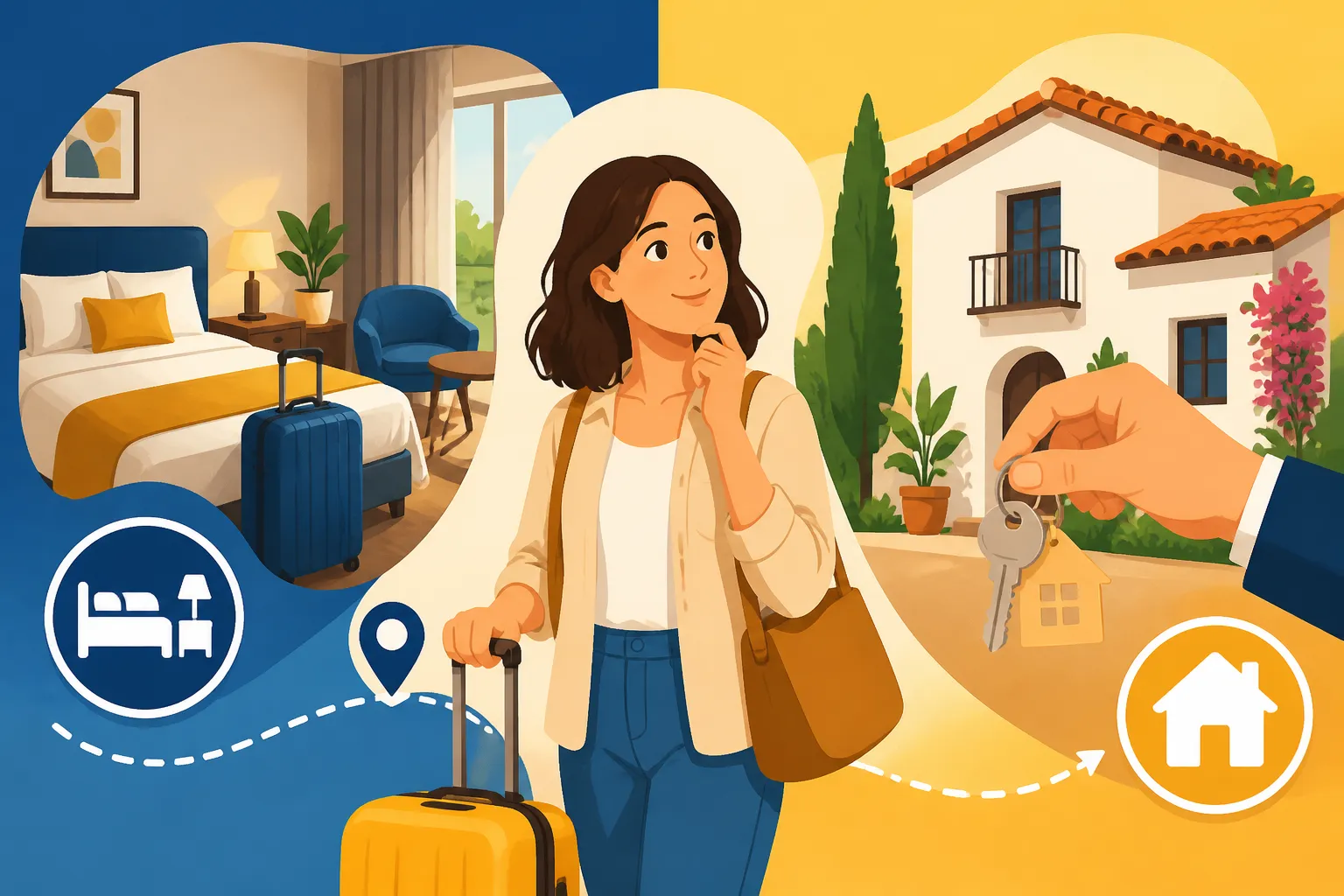
That moment you land in Spain, bags in hand, full of excitement but also a healthy dose of pure, unadulterated anxiety about where you're really going to sleep for the next few weeks – it's a rite of passage for every expat. You've got your visa, maybe even a job offer, but your permanent apartment isn't ready, or you're still hunting for it. This in-between period, where you need a comfortable, safe, and temporary place to call home, is what we seasoned expats lovingly call the "bridge accommodation" phase. This guide is all about navigating that crucial first step, helping you understand your options and secure a suitable spot while you get your long-term setup sorted, with a strong focus on how platforms like Booking.com can be your absolute lifeline.
Why Bridge Accommodation is Absolutely Essential for Expats
Let's be real: moving to Spain isn't just about sunshine and tapas. There's a mountain of paperwork, appointments, and general "getting settled" chaos that happens before you can truly unpack and breathe. That's where bridge accommodation comes in. It's not just a place to sleep; it's your temporary base camp, your administrative hub, and your sanity saver during the intense first few weeks or months. Trying to navigate bureaucracy or hunt for an apartment from a cramped hostel dorm, or worse, feeling rushed into a long-term rental you haven't properly vetted, is a recipe for expat burnout.
The Inevitable Gap Between Arrival and Permanent Settling
It's rare for an expat to land in Spain and walk straight into their permanent home. There's almost always a gap. Maybe your long-term rental lease doesn't start for a few weeks, or perhaps you've decided to find your long-term rental once you're physically on the ground, which is often a wise move. The administrative wheels in Spain can turn at their own pace, and things like securing your NIE, opening a bank account, or even getting your Empadronamiento in Spain: How to Register Your Address sorted can take precious time. You need a place that understands this transition.
Imagine arriving, jet-lagged, only to realize you have an appointment at the Extranjería (Immigration Office) first thing Monday morning, and your long-term apartment isn't available until Friday. Where do you put your luggage? Where do you print documents? Having a reliable temporary home allows you to tackle these initial hurdles without the added stress of constantly moving or feeling like you're imposing on friends. It provides a stable address for initial deliveries or urgent mail, and a consistent Wi-Fi connection to schedule all those critical appointments and hunt for your dream pad.
Providing Stability During Initial Bureaucracy
Spain, bless its heart, loves its paperwork. And quite often, one piece of paperwork depends on another. You'll need an address to get your NIE, and you'll need your NIE for almost everything else. While you might use your temporary address for some initial registrations, it's more about having a stable platform from which to manage all the administrative chaos. A good bridge accommodation gives you a place to store your growing stack of documents, make phone calls, and process information without distractions. It's invaluable for those times you need to deep-dive into things like Spain Visas & Residency: Complete Guide for Foreigners or figure out How to Get a Spanish Health Card (Tarjeta Sanitaria): Step‑by‑Step.
Having a consistent base also helps immensely with the mental load of relocating. The culture shock, the language barrier, the sheer volume of new information – it can all be overwhelming. Retreating to a private, comfortable space at the end of a long day of appointment-hopping or apartment viewing can make all the difference to your mental well-being. It allows you to regroup, cook a simple meal if you have kitchen access, and just feel at home even when you're technically still in limbo. Many expats find great flexibility and a wide range of choices through platforms like Booking.com, which offer everything from hotels to full apartments, catering specifically to these transitional needs.
Types of Bridge Accommodation in Spain
When you're looking for that perfect temporary spot, Spain offers quite a few options, each with its own charm and drawbacks. Your choice will largely depend on your budget, your need for space, and how long you anticipate needing a "bridge" before settling into your permanent place.
Hotels and Aparthotels: Comfort and Convenience
Hotels are often the first thought for temporary stays, and for good reason. They offer immediate comfort, professional services, and usually have staff on hand who can speak English or at least assist with basic queries. For expats, especially those arriving solo or without extensive Spanish language skills, this can be a huge relief. You don't have to worry about utilities, cleaning, or setting up anything – it's all handled.
Aparthotels, a fantastic hybrid, take this a step further. They offer the amenities of a hotel (reception, cleaning, sometimes breakfast) but provide apartment-style living with kitchenettes and more living space. This is a game-changer if you're staying for more than a few days, allowing you to cook some of your own meals and save on dining out. This can be especially important if you're trying to manage your Cost of Living in Spain: Realistic Budgets and Savings Tips right from the start. Many reputable platforms, including Booking.com, feature an extensive selection of both hotels and aparthotels across Spain, making it easy to filter by amenities like a kitchen or laundry service, which are gold for a temporary stay. They offer a sense of privacy and independence, without the hassle of a traditional long-term rental agreement that requires a ton of initial paperwork.
Short-Term Apartment Rentals: The Homely Vibe
For many expats, a short-term apartment rental offers the best balance of comfort, space, and a feeling of home during the bridge period. These are typically fully furnished apartments available for anything from a few days to several months. You'll often find a proper kitchen, separate living areas, and sometimes even a washing machine – amenities that can make a world of difference when you're trying to live a somewhat normal life while navigating a new country.
The biggest advantage here is the immersion. You get to experience daily life in a residential neighborhood, shop at local supermarkets, and generally settle into a routine that feels more authentic than a hotel room. This is particularly appealing for families or those moving with pets. Platforms like Booking.com have a vast inventory of such apartments, often with flexible cancellation policies, which is essential when your long-term plans might shift. However, be mindful of minimum stay requirements, as some apartments might not be available for just a few nights. Always read the terms carefully, including check-in procedures, which can sometimes be less streamlined than a hotel.
Guesthouses and Hostels: Budget-Friendly and Social Options
If you're on a tighter budget or looking for a more social introduction to Spain, guesthouses (pensiones or hostales – often more like budget hotels than traditional hostels with dorms) and actual hostels can be excellent choices. Guesthouses typically offer private rooms, sometimes with shared bathrooms, and are often family-run, providing a more local and personal experience. They are usually more affordable than hotels and can be found in charming, central locations.
Hostels, especially boutique or "poshtel" options, can be a fantastic way to meet other travelers and expats, making them perfect if you're moving alone and keen to build a network quickly. Many now offer private rooms with en-suite bathrooms, bridging the gap between a traditional hostel and a budget hotel. While they might lack the extensive amenities of a hotel or the space of an apartment, their community aspect and lower price point can be very attractive for shorter bridge stays. Booking.com lists a wide array of these options, allowing you to compare reviews and locations to find a spot that feels right for your budget and social preferences.
Here’s a quick comparison of common bridge accommodation types:
| Accommodation Type | Pros | Cons | Key Features | Best For |
|---|---|---|---|---|
| Hotel | Full services, daily cleaning, easy check-in/out | Higher cost, less space, no kitchen | Reception, room service, often central locations | Short stays, stress-free arrival, minimal cooking needs |
| Aparthotel | Hotel services with apartment amenities, more space | Can be pricier than apartments, limited cooking facilities | Kitchenette, living area, sometimes laundry, reception | Mid-length stays, desire for convenience and some self-catering |
| Short-Term Apartment | Full kitchen, living space, "homely" feel | Less service, check-in can be complex, utility concerns | Full kitchen, washing machine, privacy, residential areas | Longer bridge stays, families, those wanting to self-cater and immerse |
| Guesthouse/Hostal | Budget-friendly, local feel, often central | Shared facilities, less privacy, fewer amenities | Private rooms (sometimes shared bath), basic, local owner | Budget travelers, shorter stays, authentic local experience |
| Hostel (Dorm/Private) | Very budget-friendly, social atmosphere | Shared dorms (unless private room), noise, less privacy | Dorms or private rooms, common areas, budget activities | Solo travelers, short stays, networking, very tight budget |
Key Considerations When Choosing Your Temporary Home
Making the right choice for your bridge accommodation can significantly impact your initial experience in Spain. It's not just about finding any bed; it's about finding the right base that supports your needs during a potentially stressful transition. Think strategically about what matters most to you in those first few weeks.
Location, Location, Location: Proximity and Connectivity
This is probably the most critical factor. While you might be tempted by a cheaper option on the outskirts of town, consider the time and cost you'll spend commuting to appointments, apartment viewings, or language classes. Being centrally located, or at least very well-connected by public transport, can save you immense hassle. Look for places near centros de salud (health centers), comisarías (police stations for NIE), and main transport hubs.
If you already know where your job or your children's school will be, try to find temporary accommodation in that vicinity or along a direct public transport route. This gives you a taste of the daily commute and helps you understand the neighborhood dynamics before committing to a long-term rental. For example, if you're moving to Madrid, staying near a major metro line like Line 1 (blue) or Line 10 (dark blue) gives you incredible flexibility. Booking.com's map view feature is incredibly useful for this, allowing you to see exactly where properties are located relative to specific addresses or transport links, helping you compare options like those in Choosing a Neighborhood in Spain: How to Research Before You Move.
Duration and Flexibility: Planning for the Unknown
How long do you really need bridge accommodation? This is the million-dollar question, and the honest answer is often "I don't know." Bureaucracy can take longer than expected, apartment hunting might yield slow results, or you might simply fall in love with a different neighborhood once you've arrived. Therefore, flexibility in your booking is paramount. Look for options with generous cancellation policies or the ability to extend your stay without penalty.
Booking a longer initial period (e.g., 2-4 weeks) with a free cancellation option up to a few days before arrival is often a smart strategy. This gives you peace of mind that you have a place, while also allowing you to adjust if your plans solidify faster or slower than anticipated. When browsing Booking.com, always check the "free cancellation" filter and read the fine print on changes and extensions. This adaptability is key to minimizing stress when you're still figuring out your Spain Immigration Timeline: Realistic Processing Times by Permit.
Essential Amenities: What You Can't Live Without
Beyond a bed and a roof, think about the practicalities that will make your transition smoother.
- Reliable Wi-Fi: Non-negotiable. You'll need it for video calls with family, researching apartments, checking emails, and navigating maps. Ensure the Wi-Fi is strong and stable, especially if you plan to work remotely even for a few days.
- Kitchen Access: Even a basic kitchenette can save you a fortune and help you maintain healthy eating habits. Being able to make your own breakfast or a simple dinner means you're not constantly eating out, which can quickly drain your budget. This is where aparthotels and short-term apartment rentals shine.
- Laundry Facilities: If you're staying for more than a week, access to a washing machine (either in-unit or communal) is a huge plus. Otherwise, factor in the cost and time of using laundromats.
- Air Conditioning/Heating: Depending on the season you arrive, this isn't a luxury, it's a necessity. Spain's summers can be brutally hot, and winters, especially inland, can be surprisingly chilly. Always check for adequate heating and cooling systems. More insights on this can be found in Heating and Cooling a Spanish Home: Costs and Practical Tips.
- Pet-Friendly Options: If you're bringing a furry friend, finding pet-friendly bridge accommodation is crucial. This often narrows down your choices, so start looking early. Many properties on Booking.com specify whether they allow pets, often with an additional fee.
- Accessibility: If you or a family member has mobility needs, ensure the accommodation has elevators, ramps, and accessible bathrooms.
By prioritising these features based on your personal circumstances, you can select bridge accommodation that truly supports your first steps in Spain.
Booking Your Temporary Stay: Mastering the Search
Once you have a clear idea of your needs, it's time to dive into the actual booking process. This is where a reliable platform can make all the difference, helping you navigate the vast array of choices efficiently. For many expats, and for good reason, Booking.com stands out as a top contender due to its extensive inventory and user-friendly features.
Leveraging Booking.com for Expat Needs
Booking.com is an absolute powerhouse when it comes to finding temporary accommodation in Spain, particularly for expats. What makes it so good? Its sheer volume of listings, from bustling city hotels to quiet rural apartments, means you're almost guaranteed to find something that fits your criteria. But it's not just about quantity; it's about the tools it provides to refine your search.
Start by entering your arrival and estimated departure dates – remember to build in that flexibility we talked about! Then, the magic begins with the filters. You can narrow down your search by:
- Property Type: Easily select "Apartments," "Aparthotels," "Hotels," or "Guesthouses" to match your preference for space and amenities.
- Amenities: Crucially, filter for "Kitchen," "Washing Machine," "Air Conditioning," "Free Wi-Fi," or "Pet-friendly." These are the details that truly matter for an expat settling in.
- Review Score: Always check the review scores. Expats often leave detailed reviews that highlight what's important for a longer stay, not just a tourist trip. Pay attention to comments about cleanliness, Wi-Fi reliability, and host responsiveness.
- Location on Map: As discussed, location is vital. Use the map view to see properties relative to landmarks, metro stations, or specific neighborhoods you're targeting for your permanent home. This visual aid is invaluable.
- Price Range: Set a budget. While you might be spending more than you would on a long-term rental, remember this is a temporary investment in your comfort and peace of mind during a critical phase.
The platform also provides clear information on cancellation policies, which is a lifesaver. Look for options with "Free cancellation" where possible. This is particularly useful given the often unpredictable nature of settling into a new country and managing tasks like getting your NIE, TIE & Empadronamiento: Essential IDs and Registrations in Spain.
Understanding Payment and Cancellation Policies
Navigating payment and cancellation policies is crucial, especially when your moving timeline might be a bit fluid. Most platforms, including Booking.com, offer a range of options:
- Pay at Property: This can be convenient as it means less money upfront, but check if a deposit is required upon booking.
- Pre-payment: Often comes with a slightly lower rate but less flexibility.
- Free Cancellation: This is your best friend. It typically means you can cancel up to a certain point (e.g., 24-48 hours before check-in) without charge. Always double-check the exact terms, as some "free cancellation" might still incur a small fee or be limited to a specific timeframe.
- Non-Refundable Rates: These are usually the cheapest but offer zero flexibility. Avoid these unless your arrival date is absolutely set in stone and you're confident in your long-term plan.
For longer bridge stays (e.g., several weeks), some apartment rentals might require a more substantial deposit or have stricter cancellation terms than a standard hotel. Read every detail before committing. It's also wise to check what credit cards are accepted, as some smaller establishments might prefer cash or specific payment methods. Having access to funds for this initial period is key, so familiarise yourself with How Much Cash Should You Bring for Your First Month in Spain? and your options for managing Spanish IBAN, SEPA, and SWIFT: Sending and Receiving Money Explained.
Communicating with Hosts and Property Managers
Before and after booking, clear communication with your host or the property manager is essential. If you have specific needs – a late arrival, a pet, or require details about local transport – don't hesitate to ask. Most properties listed on major platforms like Booking.com have messaging systems that allow you to communicate directly.
If your Spanish isn't fluent yet, try to communicate in English first. Many hosts in tourist areas or larger cities will have some English proficiency. If not, use a translation app for key questions. Be polite, concise, and provide all necessary information, such as your estimated arrival time or any special requests. A good relationship with your temporary host can sometimes provide invaluable local tips or even leads on longer-term housing. Remember, they are often your first point of contact in a new country, and their assistance can be incredibly helpful when you're trying to figure out things like Spanish Medical Terminology: Common Words Expats Should Know or simply where to find the nearest farmacia.
Making Your Temporary Stay Feel Like Home
Even though it's not your permanent pad, your bridge accommodation is your home for a significant period. Making it feel comfortable and functional will greatly reduce stress and allow you to focus on the bigger tasks of settling in. A little effort goes a long way in turning a temporary space into a sanctuary.
Basic Groceries and Supplies: Stocking Your Sanctuary
One of the quickest ways to feel more settled is to stock your temporary kitchen (if you have one!) with basic groceries. On your first day or two, hit a local supermarket like Mercadona, Carrefour, or Lidl. You don't need to do a full shop, just enough to cover breakfasts, snacks, and perhaps a simple dinner. Think: coffee, tea, milk, bread, butter, eggs, fruit, and some basic cooking essentials like oil and salt. This means you won't be reliant on restaurants for every meal, saving money and giving you a sense of routine.
Don't forget toiletries that might not be provided, like your preferred shampoo or body wash. A small bottle of all-purpose cleaner and a sponge can also be handy for keeping your space tidy, especially in an apartment rental. If you’re staying longer, consider a small plant or a few decorative items to personalize the space – even a colorful scarf draped over a chair can make a difference. Many of these items are easily found at local bazares (like small discount stores) or larger supermarkets, and you can even explore options for Second‑Hand Shopping in Spain: Apps and Tips for Expats for longer stays.
Getting Connected: SIM Cards and Local Services
Having a reliable phone connection is crucial from day one. You'll need it for navigation, communicating with potential landlords, booking appointments, and staying in touch with family. As soon as you can, pick up a Spanish SIM card. You can often buy prepaid SIMs at phone stores like Vodafone, Orange, or Movistar, or even at some kiosks and supermarkets. This is usually a quick process and doesn't require a long-term contract, making it perfect for your bridge period.
For your temporary accommodation, ensure the Wi-Fi is robust. If you're struggling, consider a portable Wi-Fi device or using your phone's hotspot feature as a backup. While you won't be setting up utilities like electricity or water in your temporary spot (that's for your permanent home!), having your own mobile data plan will keep you connected wherever you go. Find out more about your options in Mobile Phone Plans in Spain: Prepaid vs Contract for Foreigners.
Exploring Your Immediate Neighborhood: Orientation and Comfort
Take some time to walk around your immediate neighborhood. Locate the nearest supermarket, pharmacy (farmacia), bus stops or metro station, and a few local cafes or restaurants. This not only helps you get your bearings but also makes the area feel more familiar and less daunting. Pop into a cafe, order a café con leche, and observe local life.
Understanding your surroundings is a huge step towards feeling comfortable. Find out where the local centro de salud is, just in case you need it. Discovering a small park or a pleasant walking route nearby can also provide a much-needed escape from the stress of settling in. This initial exploration can be genuinely fun and give you insights into potential areas for your long-term housing, making the eventual hunt for Finding Long‑Term Rentals in Spain: Best Websites and Strategies much easier. Don't be afraid to ask locals for recommendations (even with a translation app if needed) – Spaniards are generally very friendly and happy to help.
Seamless Transitioning to Permanent Housing
The goal of bridge accommodation is, of course, to bridge the gap to your permanent home. Planning this transition carefully can save you a lot of headaches and logistical nightmares, ensuring that your move into your long-term rental or purchased property is as smooth as possible.
Managing Logistics: Moving Your Belongings
If you arrived with just luggage, moving from your temporary spot to your permanent home might involve a simple taxi ride. However, if you brought more substantial belongings, or if you plan to buy furniture, you'll need a plan. For larger items, you might consider hiring a small furgoneta (van) or a local moving service. Always get a quote in advance, and confirm if they speak English if your Spanish isn't strong.
If you're furnishing a new place from scratch, think about delivery times. Many furniture and appliance stores in Spain offer delivery, but it can sometimes take days or even weeks. Coordinate these deliveries to coincide with when you have the keys to your permanent place, not your temporary one! It's worth looking into Buying Furniture and Appliances in Spain: Delivery, Warranties, Returns as part of your overall budgeting and planning. Keeping your bridge accommodation for a few extra days after getting your keys can provide a buffer for deliveries and allows you to clean out the temporary space properly.
Updating Your Address: Bureaucracy Round Two
Once you have your permanent address, you'll need to update it with various authorities. The most critical step is getting your Empadronamiento for your new address. This registers you with your local town hall (Ayuntamiento) and is essential for many administrative processes, including healthcare and school enrollment. This will replace any temporary padrón you might have obtained, or be your first official one.
You'll also need to update your address for your NIE/TIE card (though this usually only happens during renewal), your bank, your mobile phone provider, and any other services you've set up. Missing this step can lead to important mail going to your old temporary address. It sounds like a pain, but tackling it systematically will prevent future problems. Understanding the process for Registering a Change of Address in Spain: Who to Notify is vital.
Settling In: Making Your Permanent House a Home
Finally, you're in your long-term home! But the work isn't quite done. Now it's time to truly settle in. This includes setting up all your utilities like electricity, gas, water, and internet, which can be a process in itself. For more detailed guidance, check out our articles on Utilities Setup in Spain: Electricity, Gas, and Water Basics and Internet in Spain: Choosing Fiber, Mobile, and Bundles.
Take your time to unpack, arrange your furniture, and make the space truly yours. The bridge accommodation served its purpose, providing a safe harbor during the initial storm. Now, with a solid foundation beneath your feet, you can fully embrace your new life in Spain, knowing that all the logistical hurdles of those first few weeks are behind you. And remember, Booking.com is always there for your next visitor or if you need a quick getaway to explore more of this incredible country!
Disclaimer
This article is for general informational purposes only and does not constitute professional advice. Laws, prices and regulations vary by location and change over time. Consult a qualified professional for guidance on your specific situation.