Spanish IBAN, SEPA, and SWIFT: Sending and Receiving Money Explained
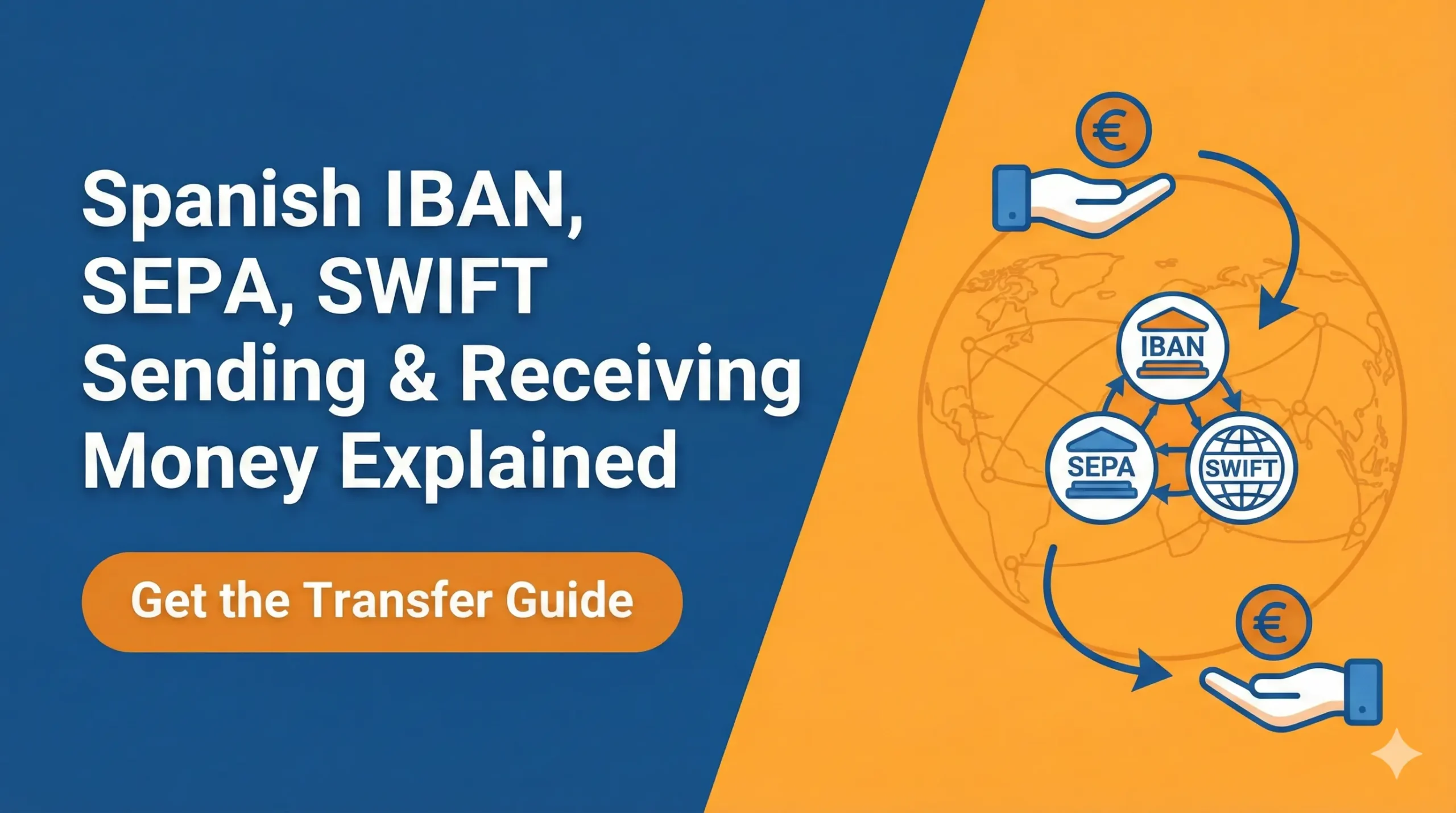
Mastering the Spanish banking system requires understanding its foundational acronyms. This comprehensive guide decodes the 24-character Spanish IBAN, explains the speed and low cost of SEPA transfers, and reveals how to avoid expensive hidden fees when using the SWIFT network.
Disclosure: This post may contain affiliate links. We may earn a commission at no extra cost to you if you make a purchase through these links. Read full disclosure.
Understanding the Spanish IBAN Structure
The International Bank Account Number (IBAN) is the absolute core of the modern European banking system. Before the widespread adoption of the IBAN, international transfers were notoriously error-prone, as every country utilized its own localized numbering system. Today, the IBAN acts as a universal, standardized format that allows financial institutions worldwide to identify the exact country, bank, branch, and individual account involved in a transaction.
If you are opening an account, which is a process thoroughly explained in our guide on Opening a Bank Account in Spain: Step-by-Step for Foreigners, your new bank will immediately assign you a unique IBAN.
In Spain, an IBAN always consists of exactly 24 alphanumeric characters. The sequence is not random; it is highly structured to provide a complete map to your funds.
Here is the exact breakdown of a Spanish IBAN (using the format ESXX EEEE OOOO DC CCCCCCCCCC):
- Country Code (ES): The first two characters are always letters representing the country. For Spain, this is “ES” (España).
- Check Digits (XX): The next two numbers are mathematically generated control digits used by the banking software to instantly validate the IBAN and prevent typos.
- Bank Code / Entidad (EEEE): A four-digit code identifying the specific Spanish bank (e.g., 2100 for CaixaBank, 0182 for BBVA).
- Branch Code / Oficina (OOOO): A four-digit code identifying the specific local branch where the account was registered.
- National Control Digits (DC): Two internal check digits used by the Spanish banking system.
- Account Number (CCCCCCCCCC): The final ten digits represent your unique, personal bank account number.
Why Your Spanish IBAN is Vital
Your Spanish IBAN is required for almost every domestic financial interaction. In Spain, you do not pay your electricity, internet, or water bills by manually logging into a portal each month with a credit card. Instead, you provide your IBAN to the utility company, and they automatically pull the funds from your account via a system called domiciliación (direct debit). You can learn more about how this billing cycle works in our article on Setting Up Utilities in Spain: Electricity, Gas, and Water Basics.
Furthermore, Spanish employers will exclusively require your IBAN to deposit your monthly salary. Without it, you cannot be integrated into the local payroll software.

SEPA Transfers: The European Standard
If your financial life exists entirely within Europe, you will primarily interact with the SEPA network. SEPA stands for the Single Euro Payments Area.
Initiated by the European Central Bank and the European payments industry, SEPA was created with a singular, revolutionary goal: to make cross-border electronic payments in euros as fast, secure, and inexpensive as domestic payments. Thanks to SEPA, transferring money from a bank in Madrid to a bank in Berlin is virtually identical to transferring money between two accounts within Madrid.
The SEPA zone currently consists of 36 countries. This includes all 27 member states of the European Union, the European Economic Area countries (Iceland, Liechtenstein, and Norway), and several non-EEA nations with strong geographic and economic ties to Europe, such as the United Kingdom, Switzerland, and Monaco.
Types of SEPA Transactions
There are three primary instruments utilized within the SEPA framework:
- SEPA Credit Transfer (SCT): This is the standard, everyday bank transfer initiated by the payer. If you are sending your portion of the rent to your flatmate’s Spanish bank account, you are executing an SCT. By law, a standard SEPA Credit Transfer must be credited to the recipient’s account within one business day.
- SEPA Instant Credit Transfer (SCT Inst): Spain has been a massive early adopter of the SEPA Instant scheme. If your bank supports it, you can send funds up to €100,000, and the money will arrive in the recipient’s account in under 10 seconds. This system operates 24 hours a day, 365 days a year, meaning transfers are not delayed by weekends or national bank holidays.
- SEPA Direct Debit (SDD): This is a “pull” payment. You sign a mandate authorizing a company (like a gym or an insurance provider) to automatically withdraw recurring payments from your account. If an unauthorized charge occurs, SEPA rules give you the right to request a “no-questions-asked” refund from your bank within eight weeks of the debit.
The Cost of SEPA
European Union regulations strictly prohibit banks from charging more for a cross-border SEPA transfer in euros than they would charge for a standard domestic transfer. Because domestic transfers in Spain are largely free for standard consumer accounts, receiving and sending standard SEPA transfers is generally entirely free of charge.
SWIFT Transfers: Sending Money Globally
When you need to send or receive money outside of the 36-country SEPA zone—for example, transferring funds from the United States, Canada, India, or Australia—you must rely on the SWIFT network.
SWIFT stands for the Society for Worldwide Interbank Financial Telecommunication. Unlike SEPA, SWIFT is not a payment clearing system that actually moves money. Instead, it is a highly secure messaging system used by over 11,000 financial institutions globally to send payment orders to one another.
The BIC / SWIFT Code
To execute a SWIFT transfer to Spain, you will need the recipient’s IBAN, but you will also need their bank’s BIC (Bank Identifier Code), commonly referred to as the SWIFT code.
A SWIFT code consists of 8 to 11 characters that identify the specific bank and its location. For example, a code might look like BSCH ES MM XXX.
- Bank Code: 4 letters (e.g., BSCH for Banco Santander).
- Country Code: 2 letters (ES for Spain).
- Location Code: 2 letters or numbers (MM for Madrid).
- Branch Code: 3 optional characters identifying the specific branch.
How SWIFT Transfers Work
Because SWIFT spans different currencies and regulatory zones, transfers cannot happen instantly. If your bank in the United States does not have a direct relationship with your bank in Spain, the SWIFT message (and the funds) must “hop” through a series of intermediary, or correspondent, banks until it reaches its final destination.
This process typically takes anywhere from 1 to 5 business days, depending on the time zones, the currencies involved, and the number of intermediary banks required to complete the chain.
The Hidden Costs of International Transfers
While SEPA transfers are frictionless and free, SWIFT transfers are notorious for being slow, opaque, and highly expensive. If you are funding your relocation to Spain, you must be acutely aware of how traditional banks drain your capital during cross-border transactions.
When you send a SWIFT transfer from a non-Euro account to your Spanish IBAN, you will face three distinct layers of fees:
- Upfront Wire Fees: Your sending bank will charge a flat fee simply for initiating the SWIFT message (often ranging from $15 to $45). Additionally, the intermediary banks that process the transaction along the way may take a cut of the principal amount, meaning the final amount that arrives in Spain is less than what you sent.
- Receiving Fees: Your Spanish bank may charge you a fee for processing the incoming international wire.
- The Exchange Rate Markup (The Hidden Fee): This is where traditional banks make massive profits. Banks rarely give consumers the real, mid-market exchange rate (the rate you see when you search currency pairs on Google). Instead, they add a hidden markup—often between 2% and 5%—to the exchange rate.
If you transfer $50,000 to Spain to cover living expenses or a property down payment, a 3% hidden exchange rate markup will cost you $1,500 in invisible fees, not including the flat wire charges.
Using FX Brokers and Neobanks to Save Money
To protect your wealth, expatriates should avoid using traditional high-street banks for international currency conversions. Instead, utilize specialized Foreign Exchange (FX) brokers or multi-currency digital accounts like Wise or Revolut.
These modern fintech platforms operate by holding local bank accounts in countries around the world. When you want to send US Dollars to Spain, you deposit the dollars into their US account, and their European account simultaneously pays out the equivalent in Euros to your Spanish IBAN via the SEPA network. Because the money never actually crosses a border via SWIFT, the process is incredibly fast, and these platforms offer the real mid-market exchange rate with a tiny, transparent upfront fee.
Managing your capital efficiently using these tools is essential for staying within your budget, a topic we explore comprehensively in our Cost of Living in Spain: Realistic Budgets and Savings Tips.
Comparison Summary: SEPA vs. SWIFT in Spain
To help clarify which system you will be utilizing based on your financial needs, review the following comparison table.
| Feature | SEPA (Single Euro Payments Area) | SWIFT (Worldwide Network) |
| Geographic Scope | 36 European nations | Global (Over 200 countries) |
| Primary Currency | Euro (EUR) | All global currencies |
| Required Details | Recipient Name, Spanish IBAN | Recipient Name, IBAN, SWIFT/BIC Code |
| Transfer Speed | 1 business day (or under 10 seconds via SEPA Instant) | 1 to 5 business days |
| Standard Cost | Usually free (regulated by EU law) | High (Sender fees, receiving fees, intermediary fees) |
| Exchange Rate Risk | None (if transferring EUR to EUR) | High (Subject to bank markups) |
Step-by-Step: How to Receive Money in Spain
Whether you are receiving a gift from family back home, invoicing a freelance client, or waiting for your monthly salary, ensuring the sender has the correct information is vital to prevent payment delays.
If you are expecting money, you must provide the sender with the following details exactly as they appear on your bank statements:
- Your Full Legal Name: This must match the name registered to your Spanish bank account. Using nicknames can cause the receiving bank’s compliance software to flag and reject the transfer.
- Your Spanish IBAN: The full 24-character alphanumeric string, beginning with “ES”.
- Your Bank’s BIC / SWIFT Code: Even for domestic SEPA transfers, some older banking portals still require the user to input the BIC.
- Purpose of Payment (Concepto): While not technically required to route the money, including a clear reference (like “January Rent” or “Invoice #104”) helps both you and the sender track the transaction for accounting purposes.
Tax Implications of Receiving Large Sums
A final, crucial consideration when moving money into your Spanish bank account is the watchful eye of the Agencia Tributaria (the Spanish Tax Agency).
Spain has strict anti-money laundering regulations. If you receive an international transfer exceeding €10,000, your Spanish bank is legally obligated to automatically report the transaction to the Bank of Spain and the tax authorities. The bank will likely freeze the funds and request that you provide documentation proving the origin of the money (such as a property sale contract from your home country, an inheritance document, or tax returns).
Furthermore, if you are a tax resident in Spain, routinely moving foreign income into a Spanish account can trigger personal income tax liabilities. It is imperative that you understand your global tax exposure before executing massive financial transfers. You can find detailed guidance on managing these obligations in our comprehensive breakdown of Spanish Taxes for Foreign Residents: Practical Guide to Staying Compliant.
Conclusion
Navigating the financial logistics of moving to Spain does not have to be an intimidating experience. While the terminology—IBANs, BICs, SEPA, and SWIFT—can initially seem complex, these systems are simply the standardized rails upon which the global economy runs.
By understanding the exact 24-character structure of your Spanish IBAN, you ensure your domestic bills and payroll are processed flawlessly. By leveraging the speed and efficiency of the SEPA network, you can manage your European financial life without incurring unnecessary fees. Most importantly, by recognizing the hidden costs embedded within traditional SWIFT transfers and opting for transparent FX platforms instead, you protect your hard-earned capital from predatory exchange rate markups. Taking the time to master these financial mechanisms will provide you with the stability and peace of mind necessary to fully enjoy your new life in Spain.
References
Primary sources (official)
- Banco de España (Bank of Spain – Consumer Banking and SEPA Information): https://www.bde.es/
- European Central Bank (ECb – Single Euro Payments Area Overview): https://www.ecb.europa.eu/paym/retail/sepa/html/index.en.html
- SWIFT (IBAN Registry and Technical Standards): https://www.swift.com/
Other helpful sources
- Wise (What are SEPA transfers?): https://wise.com/help/articles/2956754/what-are-sepa-transfers
- Remitly (Spain IBAN number format and examples): https://www.remitly.com/us/en/iban/spain
Disclaimer
The information provided in this article is for educational and informational purposes only and does not constitute formal financial, banking, or tax advice. Transfer fees, processing times, and exchange rate markups are subject to change by individual banking institutions. Furthermore, receiving large international transfers in Spain may trigger mandatory anti-money laundering reporting and complex tax residency implications. We strongly recommend consulting with a certified financial advisor or tax professional (Asesor Fiscal) to address your specific international currency strategies and reporting obligations.