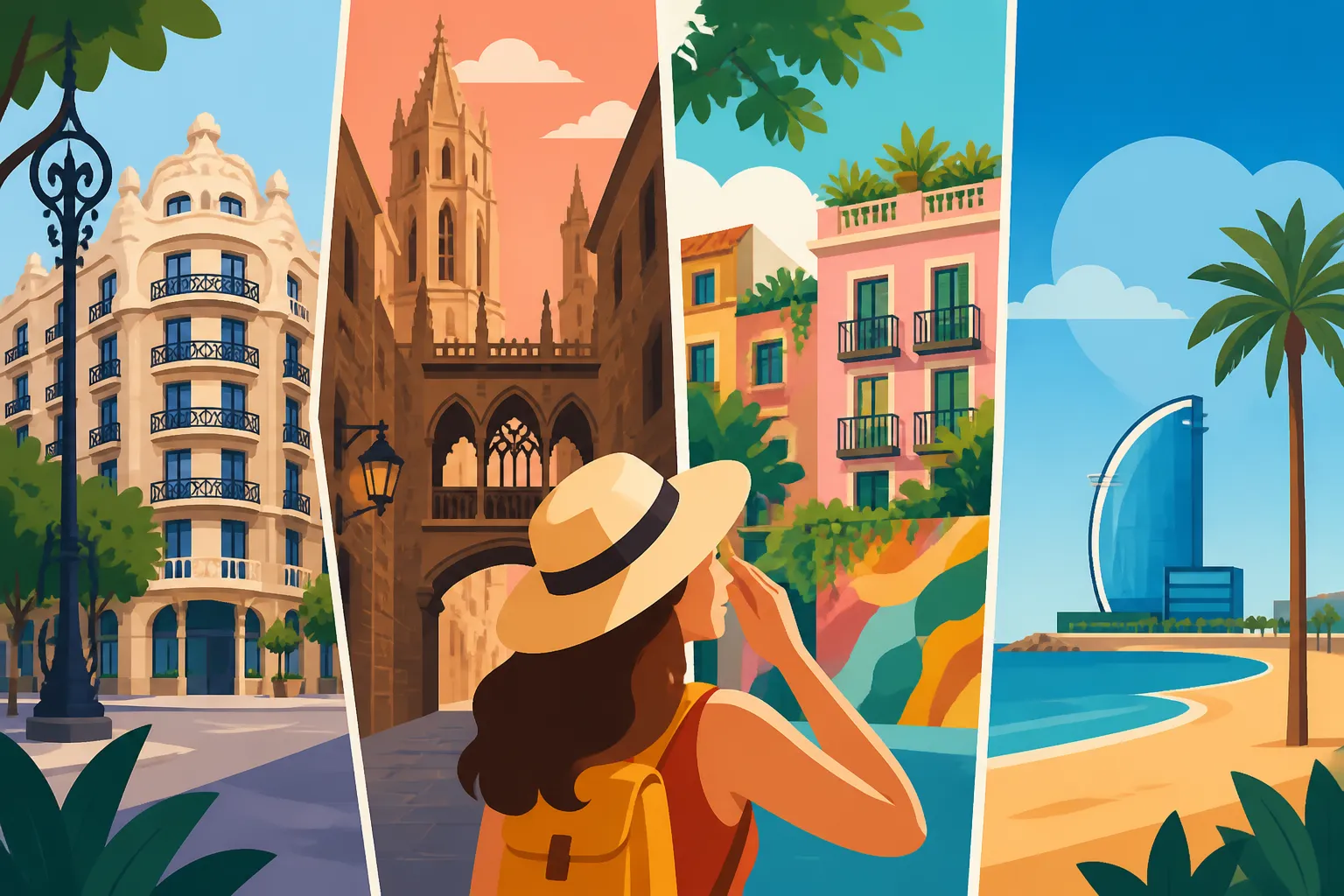
Where to Stay in Barcelona: Eixample, Gotic, Gracia, and Barceloneta
Disclosure: This article contains affiliate links. If you buy through them, we may earn a commission at no extra cost to you. Read our full disclosure.
Deciding where to lay your head in Barcelona is probably one of the most agonizing, yet exciting, first steps to truly embracing life in this vibrant city. It's not just about finding a place to sleep; it's about finding your rhythm, your tribe, and your daily dose of barrio magic. Whether you're here for a whirlwind visit or planning a longer stay, getting this choice right can make or break your Barcelona experience, and believe me, the options can be utterly overwhelming. This guide will cut through the noise, offering an insider's look at the quintessential neighborhoods of Eixample, El Gòtic, Gràcia, and Barceloneta, helping you pinpoint the perfect spot for your adventure.
Navigating Barcelona's Neighborhood Maze: Why Choosing is Tough
When you first arrive in Barcelona, especially if you're fresh off the plane, the sheer variety of its neighborhoods can feel like trying to decipher a secret code written in Catalan. Each barrio has such a distinct personality, a different heartbeat, that what looks good on a map might feel completely different on the ground. It’s not just a matter of aesthetics; it's about aligning your daily life, your preferred pace, and your personal interests with the soul of the place.
The Initial Overwhelm for Newcomers
Imagine spending hours trawling through gorgeous apartment listings online, each picture more enticing than the last. You see stunning modernist balconies in Eixample, charming exposed brick walls in El Gòtic, serene plazas in Gràcia, and sea views in Barceloneta. The problem isn't a lack of options; it's an abundance of incredibly appealing options, each promising a slice of the Mediterranean dream. For many, this leads to decision paralysis. You read reviews, you look at maps, but without having actually walked those streets, breathed that air, or experienced the midnight rhythm, it’s hard to truly know where you’ll feel at home. It’s a common expat lament – the fear of picking the "wrong" place and regretting it later.
Factors Expats Consider Beyond Tourism
Tourists often prioritize proximity to major sights, ease of transport, or famous landmarks. While these are certainly valid, expats and those planning a longer stay have a different set of criteria. We're thinking about things like access to good schools, quiet streets for sleeping, reliable internet, a diverse supermarket scene, and a sense of community. We want to know where the closest centro de salud is, if the local market is genuinely local, and whether we'll be constantly jostling with selfie sticks on our morning coffee run. It’s about integrating into the fabric of daily Spanish life, which often means seeking out areas that are less about the 'highlight reel' and more about authentic, comfortable living. When it comes to finding a place to call home, even temporarily, the insights from real residents far outweigh any glossy brochure. This is why tools like Booking.com, with their extensive user reviews and diverse property listings, become invaluable for comparing real experiences and ensuring you're seeing the full picture beyond just pretty pictures.
Eixample: The Grand Boulevard Life
Ah, Eixample! If you've ever gazed at an aerial view of Barcelona and admired its iconic grid pattern, those perfectly octagonal blocks, you're looking at Eixample. This district, meaning "The Extension," was designed by Ildefons Cerdà in the mid-19th century to expand the city beyond its cramped medieval walls. It's the epitome of planned urban elegance, boasting wide boulevards, stunning Modernista architecture, and a generally calmer, more ordered atmosphere than some of the older, denser parts of the city.
Why Expats and Families Love Eixample: Modernist Elegance & Practicality
Eixample is a fantastic sweet spot for many, particularly families and professionals, who are looking for a balance between urban vibrancy and a touch of everyday tranquility. The apartments here are often larger, with high ceilings, intricate tiled floors, and those famous long balconies that are just perfect for an evening caña or a morning coffee. You’re less likely to feel cramped than in a tiny flat in the Gòtic, which can be a huge relief for anyone used to more spacious living.
Beyond the aesthetics, Eixample is incredibly practical. The wide, tree-lined streets make it easy to walk, cycle, or push a stroller without feeling overwhelmed. It’s home to an abundance of essential services: excellent schools, private medical clinics (which are a boon for many expats navigating the Spanish healthcare system for expats), and a wide array of shops, from high-end boutiques on Passeig de Gràcia to local bakeries and supermarkets. The logical grid system also makes navigation a breeze, a stark contrast to the labyrinthine alleys of the old city. For those setting up a longer life here, whether you're navigating school health requirements in Spain or simply finding a good local park, Eixample offers a smooth transition.
Key Characteristics and Vibe: Left vs. Right
Eixample isn't a monolith; it’s divided into two main sections by Passeig de Gràcia: Eixample Esquerra (Left Eixample) and Eixample Dreta (Right Eixample). Each has its own subtle flavour.
Eixample Dreta tends to be the more glamorous and historic of the two. This is where you'll find Gaudí's masterpieces like Sagrada Família, Casa Batlló, and Casa Milà (La Pedrera), along with a higher concentration of luxury shopping and upscale restaurants. It feels more polished, with grander buildings and a slightly more formal atmosphere. The streets here hum with a sophisticated energy, attracting visitors and residents alike who appreciate architectural beauty and a refined urban experience. If you’re looking to be surrounded by iconic sights and a touch of grandeur, Eixample Dreta is your spot.
Eixample Esquerra, on the other hand, is often described as more residential and authentically local, while still retaining Eixample's characteristic elegance. It's particularly popular with younger families and LGBTQ+ residents, giving it a vibrant, inclusive feel. This side is known for its excellent dining scene, particularly around the areas of Sant Antoni and Raval (though Raval itself isn't Eixample, its influence is felt nearby), and a more relaxed, neighborhood-y vibe. You’ll find more local bars, independent shops, and a strong sense of community here. It’s still very central and well-connected, but often feels a little less tourist-centric than its right-hand counterpart, offering a more genuine glimpse into daily Barcelona life.
Pros and Cons of Staying in Eixample
Choosing Eixample means balancing its many advantages against a few considerations.
Pros:
- Architectural Beauty: You're surrounded by stunning Modernista buildings, making every walk a feast for the eyes.
- Spacious Accommodation: Apartments tend to be larger, brighter, and often come with those lovely balconies.
- Excellent Connectivity: Multiple metro lines (L1, L2, L3, L4, L5) and bus routes crisscross the district, making it easy to get around Barcelona. The main train station, Sants Estació, is also easily accessible.
- Convenience & Amenities: Abundant supermarkets, pharmacies, schools, and medical facilities are readily available. It’s also easier to find English-speaking doctors in Spain here than in some more secluded areas.
- Relatively Quieter: While it's a city, the wider streets and less concentrated nightlife mean Eixample generally offers a calmer environment for sleeping compared to the old city.
- Dining & Shopping: From high-end dining to charming local eateries, and from designer boutiques to practical shops, Eixample has it all.
Cons:
- Higher Price Point: Accommodation and general cost of living in Spain, including rent, tend to be more expensive than in other areas of the city due to its desirability and quality.
- Less "Old World" Charm: If you're dreaming of narrow, winding medieval streets and hidden squares, Eixample's grid layout might feel too modern or 'European' for your taste.
- Parking: Finding parking is notoriously difficult and expensive, so having a car isn't really an advantage unless you have a dedicated parking space.
- Tourist Presence: Especially in Eixample Dreta, popular landmarks mean you'll encounter a fair share of tourists, though it's less intense than in the Gothic Quarter.
Overall, Eixample offers a comfortable, elegant, and well-connected base in Barcelona. If you appreciate beautiful architecture, a slightly more structured urban environment, and excellent amenities, this could be your ideal barrio. For a longer stay, booking platforms such as Booking.com are a common starting point to filter for apartments in Eixample. The reviews there often speak volumes about the specific block, which can be crucial for assessing noise levels or local amenities.
El Gòtic (Gothic Quarter): Historic Charm and Bustle
Stepping into Barcelona's El Gòtic, or Gothic Quarter, feels like travelling back in time. It’s the city’s oldest and most atmospheric neighborhood, a labyrinth of narrow, winding streets and hidden plazas, where Roman ruins rub shoulders with medieval churches and bustling artisan shops. This is where Barcelona’s heart truly beats with history, offering a completely different kind of experience than the wide avenues of Eixample.
Stepping Back in Time: Narrow Streets & Hidden Plazas
The Gòtic is a sensory overload in the best possible way. Every corner you turn reveals something new: a fragment of the ancient Roman wall, a grand Gothic cathedral, a tiny tapas bar tucked away in a shadowed alley. The buildings here are centuries old, often reaching high into the sky, creating a charmingly enclosed feeling. You’ll find yourself constantly looking up to admire the architectural details, the clotheslines strung between buildings, and the small balconies overflowing with plants.
It’s a neighborhood that demands to be explored on foot, and getting lost is part of the charm. Forget about cars; these streets are mostly pedestrian, and even a scooter can feel too large. This allows for a delightful sense of discovery, leading you to beautiful squares like Plaça Reial with its palm trees and Gaudí-designed lampposts, or the secluded Plaça Sant Felip Neri, a poignant and beautiful spot. For many, this is the quintessential Barcelona experience they envision – the very soul of the city, steeped in stories and history.
The Reality of Living in a Historic Center
While the charm is undeniable, living or staying long-term in the Gòtic comes with its own set of realities that aren’t always immediately apparent to the casual visitor. The historic buildings, while beautiful, often mean smaller apartments with less natural light and sometimes less modern amenities. Think creaky floors, older plumbing, and a lack of elevators in many buildings. Noise can also be a significant factor. The narrow streets amplify sounds, so whether it's late-night revelers, early morning street cleaners, or the constant chatter from outdoor cafes, absolute quiet is a rare commodity.
Safety can also be a concern in some parts of the Gòtic, particularly late at night in less frequented alleys. While generally safe during the day, like any busy tourist area, pickpocketing is prevalent. It’s an energetic, bustling place, but this energy can, at times, tip into overwhelming, especially during peak tourist season or if your apartment is above a popular bar. It’s a trade-off: the unparalleled historical atmosphere versus the practicalities of modern living. Still, if you crave that unique, historical immersion, the Gòtic is hard to beat. Just remember to brush up on your Spanish social etiquette to truly blend in with the local crowd in these ancient streets.
Pros and Cons of Staying in El Gòtic
Deciding on the Gòtic means embracing its unique character, warts and all.
Pros:
- Unrivaled History and Atmosphere: You are literally living within Barcelona's historical heart. Every walk is a journey through centuries.
- Central Location: You’re within walking distance of many major attractions, the port, Las Ramblas, and great metro connections.
- Vibrant Nightlife: Countless bars, restaurants, and hidden spots ensure there’s always something happening after dark.
- Endless Exploration: The winding streets guarantee you’ll discover something new every day, from artisan shops to secret courtyards.
- Cultural Hub: Proximity to cultural centers, museums, and the Barcelona Cathedral.
Cons:
- Noise Levels: Can be very noisy, especially at night, due to bars, restaurants, and general street activity. Light sleepers beware!
- Smaller Apartments: Accommodation tends to be smaller, older, and often lacks modern conveniences like elevators or abundant natural light.
- Crowds: As a major tourist magnet, the Gòtic can get incredibly crowded, particularly during high season, making simple errands a challenge.
- Safety Concerns: While not inherently dangerous, petty crime like pickpocketing is common, and some areas can feel less safe at night. You might want to review staying safe in Spain: practical safety tips for new residents.
- Limited Vehicle Access: Very few streets allow cars, so taxis or private transport can only get you so far, meaning more walking with luggage or groceries.
- Higher Prices for Value: You might pay a premium for the location, but the actual living space might offer less value per square meter compared to Eixample.
Despite the challenges, many expats absolutely adore the Gòtic for its immersive historical experience and unparalleled vibrancy. If you thrive on constant activity, don't mind a bit of grit with your grandeur, and want to feel truly embedded in old Barcelona, then the Gothic Quarter could be an unforgettable base. When browsing for short-term stays, it is wise to check Booking.com and paying close attention to recent reviews about noise – it’s a genuine concern here.
Gràcia: Bohemian Village Spirit in the City
Venturing slightly north of Eixample, you’ll discover Gràcia, a neighborhood that feels less like a district of a major city and more like an independent village that was gracefully swallowed by Barcelona’s expansion. For years, Gràcia was indeed a separate municipality, and it fiercely retains that unique, independent spirit and close-knit community vibe. It’s a refreshing contrast to the grandeur of Eixample and the ancient density of the Gòtic.
The Unique Vibe of Gràcia: Independent Spirit & Local Life
Gràcia immediately sets itself apart with its charming narrow streets, leafy squares, and a distinct artistic, bohemian flair. Unlike the strict grid of Eixample, Gràcia’s layout is organic, fostering a more intimate, pedestrian-friendly atmosphere. You’ll find independent boutiques, artisan workshops, organic food stores, and a thriving cafe culture that spills out onto the numerous plazas. It’s the kind of place where locals linger over coffee, kids play freely in the squares, and impromptu guitar sessions aren't uncommon.
The pace of life here is noticeably slower and more relaxed. While it attracts a diverse crowd – from young creatives and artists to long-term expat families and older Catalan residents – everyone seems to appreciate its distinct sense of identity and community. It’s a place where you quickly become a 'regular' at your favorite bakery or bar, and friendly nods and greetings become part of your daily rhythm. It's truly one of the most beloved neighborhoods for those seeking a genuine immersion into Spanish customs, etiquette, and social life.
What to Expect: Festivals, Squares, and Community
Gràcia is famous for its vibrant street life, particularly centered around its many beautiful squares. Plaça del Sol, Plaça de la Vila de Gràcia, Plaça de la Revolució, and Plaça de la Virreina are just a few, each with its own character, surrounded by bustling terraces perfect for people-watching. These squares act as the social hubs of the neighborhood, hosting everything from local markets to live music and, most famously, the Festa Major de Gràcia.
The Festa Major de Gràcia, held every August, is one of Barcelona's most spectacular festivals, fiestas, and public holidays in Spain. Residents compete to elaborately decorate their streets, transforming them into fantastical works of art, accompanied by concerts, parades, and general merriment. It's a testament to the neighborhood's strong community spirit and its unique identity. Even outside of festival season, the sense of community is palpable. You’ll find local cultural centers, independent cinemas, and a strong emphasis on sustainability and local produce. For anyone hoping to truly feel part of a community, Gràcia offers a warm embrace.
Pros and Cons of Staying in Gràcia
Gràcia offers a wonderfully authentic experience, but it’s not without its particularities.
Pros:
- Village Atmosphere: Feels like a small town within a big city, fostering a strong sense of community and local life.
- Bohemian Charm: Filled with independent shops, artisan studios, unique cafes, and a vibrant cultural scene.
- Beautiful Squares: Numerous lively plazas are perfect for relaxing, dining al fresco, and soaking up the local atmosphere.
- Pedestrian-Friendly: Narrow, winding streets are mostly pedestrianized, making it a joy to explore on foot.
- Excellent Dining: A fantastic array of restaurants, from traditional Catalan eateries to innovative international cuisine.
- Strong Identity: Residents are proud of their barrio, creating a distinctive and welcoming environment.
Cons:
- Hilly Terrain: Some parts of Gràcia, especially as you head further north, can be quite hilly, which might be a consideration for those with mobility issues or families with strollers.
- Limited Direct Metro Access: While well-connected by L3 (Fontana, Lesseps) and L4 (Joanic, Verdaguer) from its edges, getting directly into the heart of Gràcia sometimes requires a bit more walking or bus travel compared to Eixample.
- Can Be Noisy: While not as consistently noisy as some parts of the Gòtic, the squares can be very lively (and loud) late into the night, especially during summer and weekends.
- Smaller Accommodation: Apartments here can also be smaller and older, though many have been charmingly renovated.
- Less Tourist-Centric: While a pro for many, if you're looking for super-easy access to all the major tourist sites, it requires a bit more travel time.
- Popularity: Its charm means it's incredibly popular, and finding good, affordable long-term rentals in Spain can be competitive.
Gràcia is a beloved choice for those who want a more authentic, community-focused experience without sacrificing the city's amenities. If you envision leisurely afternoons in sunny plazas, discovering unique local businesses, and becoming a part of a vibrant neighborhood, then Gràcia is definitely worth considering. When I searched for my current apartment, Booking.com was a great resource even for longer-term options, as it provided a good feel for the general atmosphere of specific blocks through photos and reviews, before committing to a formal rental search.
Barceloneta: Beach Life and Seafood
For those whose ideal Barcelona involves the rhythmic sound of waves and the salty tang of the sea air, Barceloneta is the undeniable champion. This triangular-shaped barrio juts out into the Mediterranean, a former fishing village that has transformed into Barcelona's primary beach district. It’s a neighborhood that lives and breathes the coast, offering a completely different atmosphere from the historic core or the bohemian charm of Gràcia.
The Call of the Sea: Beach Access & Waterside Living
Barceloneta’s main draw is, without a doubt, its immediate access to the beach. Step out of your door, and within minutes, you can be digging your toes into the sand, taking a dip in the Mediterranean, or strolling along the Passeig Marítim. This is a huge perk for anyone who loves water sports, sunbathing, or simply enjoying the calming presence of the ocean. The beachfront is dotted with chiringuitos (beach bars), seafood restaurants, and spaces for jogging, cycling, and rollerblading, making it a hub of outdoor activity.
Beyond the main beach, the neighborhood is flanked by the city's port, offering views of yachts and cruise ships, adding to its maritime character. Living in Barceloneta means embracing a more relaxed, sun-kissed lifestyle, where beach days are a regular occurrence and evenings often involve fresh seafood. It’s an irresistible choice for those seeking an active, outdoor-oriented life with the Mediterranean as their backyard.
Understanding the Local Character: Fisherman's Quarter & Tourism
Barceloneta has a rich history as a fisherman's quarter, and despite its modern transformation into a tourist hotspot, glimpses of that heritage remain. You'll still see clothes hanging out to dry from tiny balconies, older residents chatting on doorsteps, and small, traditional seafood restaurants (though many have been replaced by more modern, international offerings). The apartments here are typically smaller, narrower, and often arranged in tall, slender buildings – a unique architectural style reflecting its working-class origins.
However, it’s impossible to talk about Barceloneta without acknowledging the heavy presence of tourism. During the day, the beach is packed, and the streets are bustling with visitors. At night, it becomes a popular destination for dining and nightlife, especially around the port and along the beach promenade. This means a constant buzz, which can be exciting for some but overwhelming for others. While the local character endures, it's often interwoven with the demands and realities of being a prime tourist destination. Finding a good local spot that isn't primarily catering to tourists takes a bit of local knowledge and exploration. You'll definitely want to know a few Spanish emergency phrases in case you get into trouble at the beach, or just to navigate basic interactions.
Pros and Cons of Staying in Barceloneta
Choosing Barceloneta means prioritizing proximity to the sea above all else, and accepting the trade-offs that come with its popularity.
Pros:
- Unbeatable Beach Access: Direct access to Barcelona’s main beach, perfect for sunbathing, swimming, and water sports.
- Vibrant Outdoor Lifestyle: Ideal for those who love jogging, cycling, or simply strolling along the promenade.
- Seafood Galore: An abundance of seafood restaurants, from traditional arrocerías to more modern establishments.
- Lively Atmosphere: Always something happening, day and night, from beach volleyball to late-night drinks.
- Good Transport: Well-connected by metro (L4, Barceloneta station) and several bus lines, making other parts of the city accessible.
Cons:
- High Tourist Density: Can be overwhelmingly crowded, especially during peak season, making it feel less like a residential area and more like a resort.
- Noise Levels: Constant activity from beach-goers, restaurants, and bars can lead to significant noise, especially at night.
- Small Apartments: Accommodation here typically consists of smaller, older flats, often lacking modern amenities and space.
- Higher Prices: Despite the smaller size, demand for beachside living often drives up rental costs.
- Petty Crime: Like other tourist hotspots, petty theft and pickpocketing can be an issue, especially on the beach and in crowded areas.
- Less "Authentic" Feel: While it retains some local charm, the heavy tourist presence means it can feel less genuinely "Spanish" compared to Gràcia or certain parts of Eixample.
Barceloneta is perfect for beach lovers and those who thrive on constant energy and activity. If waking up to the sound of gulls and having the sand practically on your doorstep sounds like paradise, then the trade-offs might be well worth it. When looking for accommodation, especially for a shorter stay, make sure to check out Booking.com and use its map feature to see how close you actually are to the beach versus the busier main streets.
| Neighborhood | Vibe/Character | Typical Accommodation | Pros | Cons | Best For |
|---|---|---|---|---|---|
| Eixample | Elegant, Modernist, Planned, Busy (Dreta), Local (Esquerra) | Spacious apartments, high ceilings | Beautiful architecture, great transport, good amenities, generally quieter | Higher cost, less "old world" charm | Families, professionals, luxury seekers, those valuing comfort |
| El Gòtic | Historic, Labyrinthine, Atmospheric, Bustling | Old, smaller flats, limited light | Central, historical immersion, vibrant nightlife, endless exploration | Noisy, crowded, smaller flats, petty crime | History buffs, nightlife lovers, adventurous solo travelers |
| Gràcia | Bohemian, Village-like, Independent, Community | Charming renovated flats, some older | Strong community, unique shops, cultural events | Hilly in parts, less direct central metro, can be lively (squares) | Creatives, long-term expats, those seeking local community |
| Barceloneta | Beachy, Lively, Maritime, Touristy | Small, narrow flats | Beach access, outdoor activities, seafood, vibrant atmosphere | Very crowded, noisy, smaller flats, higher prices, tourist-centric | Beach lovers, party-goers, short-term visitors |
Beyond the Big Four: Other Notable Neighborhoods to Consider
While Eixample, El Gòtic, Gràcia, and Barceloneta are often the first neighborhoods people consider, Barcelona is a city of countless barrios, each with its own unique flavour. Sometimes, stepping slightly outside the main tourist bubble can unlock a more authentic, perhaps even more affordable, experience. It's worth briefly mentioning a couple of other gems that might pique your interest, offering different facets of Barcelona life.
Poble Sec & Sant Antoni: Emerging Cool & Local Hangouts
Just south of Plaça d'Espanya and Montjuïc, you'll find Poble Sec, a traditional working-class neighborhood that has experienced a significant renaissance in recent years. It's shed its old skin to become a buzzing hub of culture, gastronomy, and alternative nightlife. The highlight here is undoubtedly Carrer de Blai, a pedestrian street famous for its pintxos bars – small skewers of delicious food, often just €1-2 each, making it a fantastic spot for an affordable and social evening meal.
Poble Sec retains a down-to-earth, local feel, yet offers incredible amenities like the beautiful Teatre Grec (Greek Theatre) on Montjuïc, various cultural centers, and easy access to the mountain's parks and panoramic views. It's well-connected by metro (L2, L3) and offers a good balance of local life and urban convenience. Accommodation here can often be a bit more spacious and slightly less expensive than in the absolute center, making it appealing for those looking for value and a genuine neighborhood vibe.
Adjacent to Poble Sec, and stretching towards Eixample Esquerra, is Sant Antoni. This neighborhood, centered around its impressive, recently renovated Sant Antoni Market, is a true local favourite. It's known for its beautiful Art Nouveau architecture, wide sidewalks, and a bustling array of cafes, bakeries, and traditional shops. Sant Antoni has become particularly popular for its brunch scene and independent eateries, attracting a cool, youthful crowd while still maintaining a strong sense of community. It’s cleaner and more manicured than Poble Sec, perhaps a little more gentrified, but still very much a living, breathing Barcelona neighborhood with less tourist traffic than the Gòtic. Both Poble Sec and Sant Antoni offer a fantastic glimpse into how locals truly live, work, and play in Barcelona, providing a great base for those who want to integrate deeper into the city's rhythms. If you're pondering the cost of living in Spain: realistic budgets and savings tips, these areas might offer slightly better value.
El Born: Chic Boutiques and Culture Next to Gòtic
Nestled right next to the Gòtic, but with a distinctly different flair, is El Born. This neighborhood often gets lumped in with the Gothic Quarter due to its proximity and medieval origins, but it truly has its own character. Historically the home of artisans and merchants, El Born today is known for its narrow, winding streets filled with chic boutiques, trendy bars, gourmet restaurants, and a vibrant artistic scene.
It's a neighborhood that effortlessly blends history with modernity. Here you’ll find the magnificent Santa Maria del Mar Basilica and the Picasso Museum. The Passeig del Born, a wide boulevard that was once a medieval jousting field, now hosts bustling terraces and street performers. El Born is undeniably stylish, attracting a fashionable crowd and offering a more polished, less gritty experience than some parts of the Gòtic. However, like its neighbor, it can be very busy with tourists, especially in the evenings, and accommodation can be pricey. It offers a sophisticated urban experience, perfect for those who appreciate culture, fashion, and a lively social scene, right on the doorstep of the city’s historic core.
Making Your Choice: Practical Tips for Booking Your Barcelona Stay
Choosing the right neighborhood in Barcelona is a deeply personal decision, influenced by your travel style, budget, and what you envision for your daily life. With so many fantastic options, it’s easy to get lost in analysis paralysis. But don't fret; there are practical ways to narrow down your search and ensure you pick a spot that truly resonates with you.
Matching Your Lifestyle to a Neighborhood
Before you even start looking at specific apartments, take a moment to reflect on what you truly want out of your Barcelona experience. Are you a night owl who thrives on late-night dining and bustling streets? Then the Gòtic or El Born might be your jam. Do you prioritize peace, quiet, and spacious living close to good schools for your family? Eixample could be your haven. Are you a free spirit who dreams of artisan markets and spending afternoons in sun-drenched plazas? Gràcia might just steal your heart. Or perhaps, the call of the sea is too strong to ignore, making Barceloneta your undisputed winner.
Consider your daily routine:
- Commute: Where will you be working or studying? How important is quick access to specific metro lines or bus routes? You'll want to review getting around Spanish cities: metro, bus, tram, and bikes for transport options.
- Social Scene: Do you want to be in the thick of the nightlife, or prefer a quieter spot for evening strolls? Are you looking to find making friends in Spain: clubs, meetups, and language exchanges?
- Amenities: Do you need easy access to specific types of shops, gyms, or green spaces?
- Pace of Life: Do you prefer a lively, energetic buzz, or a more relaxed, village-like pace?
Being brutally honest about your preferences will save you a lot of disappointment later. Sometimes, what sounds romantic in theory isn't practical for daily life.
The Importance of Advance Booking & Using Reliable Platforms
Barcelona is an incredibly popular destination, year-round. If you're planning a visit, especially during peak season (summer, major festivals like Semana Santa in Spain: what to expect as a visitor, or public holidays), booking your accommodation well in advance is not just a good idea, it's essential. Waiting until the last minute will severely limit your options and likely inflate prices.
When it comes to finding accommodation, whether it’s a short-term rental or a hotel, reliable platforms are your best friend. I always start my search with Booking.com. It's a powerhouse for a reason:
- Extensive Inventory: You'll find everything from boutique hotels to apartments, hostels, and even guesthouses.
- Detailed Filters: You can filter by neighborhood, price range, amenities (like AC, Wi-Fi, kitchen facilities), guest rating, and even specific landmarks, which is incredibly helpful when comparing areas.
- Genuine Reviews: Real guest reviews are invaluable. Pay attention to comments about noise levels, cleanliness, and the accuracy of the listing's description – these often give you the true pulse of a place.
- Map View: The map feature on Booking.com is a game-changer. It allows you to visualize exactly where a property is located in relation to attractions, metro stations, and other points of interest.
- Flexible Options: Many listings offer free cancellation, which is a lifesaver if your plans shift.
Don't be afraid to cross-reference with other sites, but Booking.com provides a comprehensive starting point. For longer-term stays or finding long-term rentals in Spain: best websites and strategies, platforms like Idealista, Fotocasa, and local real estate agents become more relevant, but for initial orientation and shorter visits, Booking.com is usually my first port of call.
Essential Questions Before You Book
Once you've narrowed down a few neighborhoods and potentially a couple of properties, dig a little deeper with these questions:
- Read Recent Reviews (Very Carefully): Don't just look at the overall score. Read the most recent written reviews, especially those from people with similar travel styles or family configurations to yours. Look for consistent complaints or praises about noise, cleanliness, or amenities.
- Check the Exact Location on a Map: Zoom in! Is it on a quiet side street or directly above a bustling plaza? How far is the nearest metro station or bus stop? How close are essential services like a pharmacy or supermarket?
- Understand the Building Type: Is it a historic building (which might mean no elevator and older amenities) or a more modern construction? This affects everything from noise insulation to accessibility.
- Verify Amenities: Is air conditioning included and working? (Crucial for summer in Spain!) Is Wi-Fi reliable? Are there laundry facilities if you need them? What about hot water capacity?
- Consider Accessibility: Are there stairs? Is it suitable if you have mobility issues or are travelling with young children and strollers?
- Safety and Security: Does the property or area have any specific security features (e.g., concierge, secure entry)? How do reviews speak to the general feeling of safety in the immediate vicinity, especially at night? While Barcelona is generally safe, it's always good to be prepared and read up on specific advice like avoiding pickpockets in Spain's tourist areas.
By taking the time to ask these questions and leveraging the detailed information available on platforms like Booking.com, you'll be well-prepared to make an informed decision and ensure your stay in Barcelona is everything you dreamed of.
Final Thoughts on Settling into Barcelona
Choosing where to stay in Barcelona is more than just picking a spot on a map; it's about finding the backdrop to your unforgettable memories. Each of these neighborhoods – the elegant grid of Eixample, the historical labyrinth of El Gòtic, the bohemian heart of Gràcia, and the sun-drenched shores of Barceloneta – offers a distinct personality and a different way to experience this magnificent city. There's no single "best" place, only the best place for you.
Many expats agonize over this decision, but the key is to really listen to your gut, understand your priorities, and not be afraid to adapt. Barcelona has a way of enchanting you, no matter where you land. What starts as a temporary stay in one barrio might evolve into a long-term love affair with another. The beauty of this city is its endless capacity for surprise and discovery.
So, take a deep breath, weigh your options, and trust that you'll find your perfect corner. And when you're ready to dive into the options, Booking.com is usually my first port of call for its comprehensive filters and honest reviews, giving you a real sense of what to expect. After all this research, you'll be well-prepared to find your perfect spot on Booking.com, kick off your shoes, and truly begin your Barcelona adventure. ¡Disfruta!
Disclaimer
The information provided in this guide is for general informational purposes only and does not constitute professional advice. While we strive to keep the information up-to-date and correct, we make no representations or warranties of any kind, express or implied, about the completeness, accuracy, reliability, suitability, or availability with respect to the website or the information, products, services, or related graphics contained on the website for any purpose. Any reliance you place on such information is therefore strictly at your own risk. It is advisable to conduct your own thorough research and consult with local experts (e.g., real estate agents, legal advisors) for specific situations.