Barcelona to Seville: The Long Route Priced Out
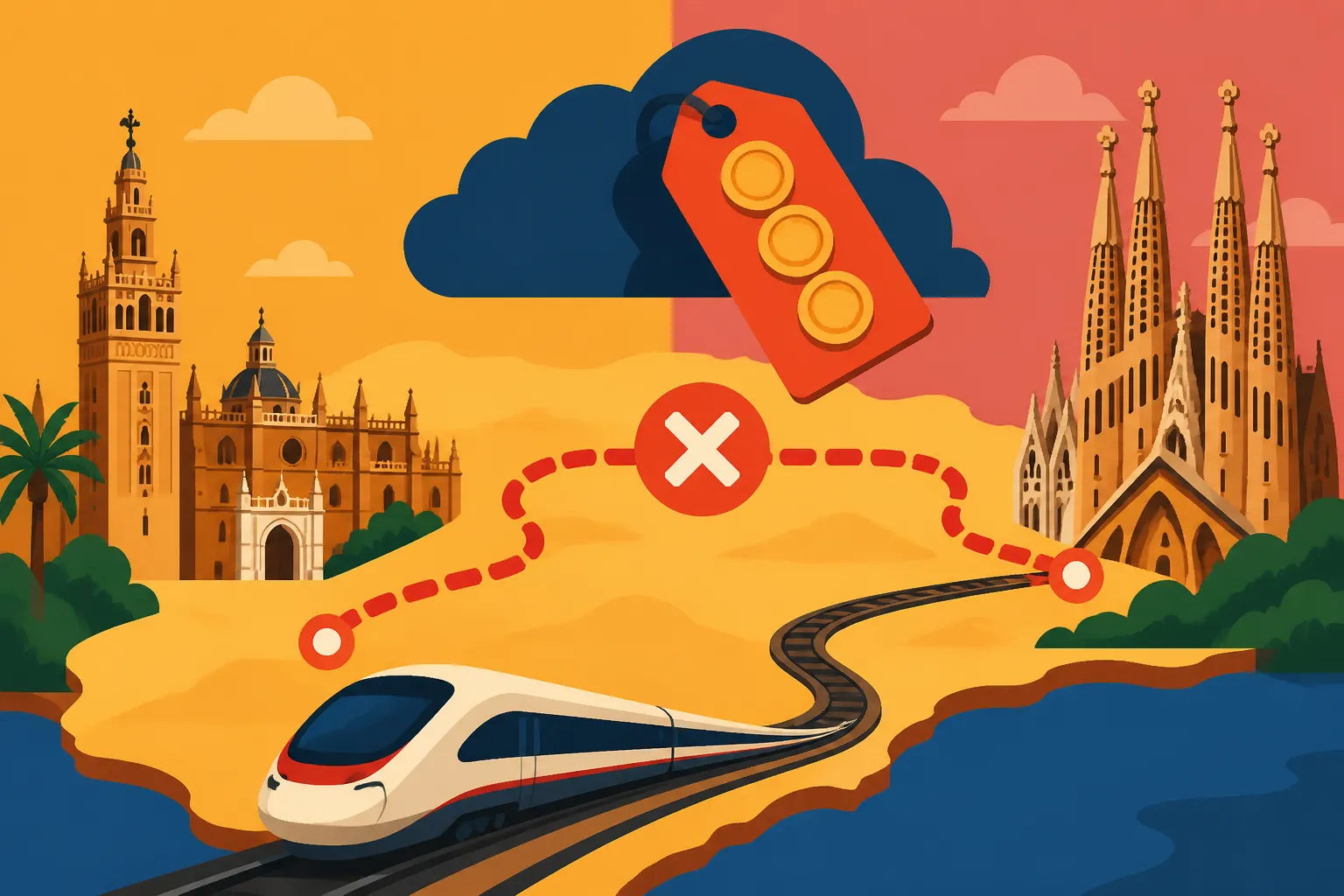
Traveling from Barcelona to Seville truly feels like crossing a country, not just moving between two cities. The sheer distance can be daunting, leaving many expats and tourists scratching their heads about the best way to get there without breaking the bank or losing an entire day (or two!). This guide will break down the labyrinthine options, deconstruct the real costs, and show you how to price out this long route effectively, with a special focus on how a platform like Omio can simplify this complex journey.
Disclosure: This post may contain affiliate links. We may earn a commission at no extra cost to you if you make a purchase through these links. Read full disclosure.
The Great Iberian Divide: Understanding the Journey from Barcelona to Seville
When you look at a map, Barcelona on the Mediterranean coast and Seville nestled in Andalusia feel worlds apart, and in many ways, they are. This isn't a quick hop; it's a genuine journey across diverse landscapes and regions. For many of us who've navigated Spain's fantastic transport networks, this particular route often sparks a moment of contemplation, because it requires a bit more planning than, say, a trip from Madrid to Seville.
Why This Route Feels Like a Herculean Task
Spain is a pretty big country, and Barcelona to Seville covers roughly 1,000 kilometers (about 620 miles) if you're going by road. That's a serious distance! It means you can't just jump on a regional train or a quick bus and be there in a couple of hours. This journey demands either significant travel time or a higher financial outlay, which is often the biggest frustration for those trying to plan a multi-city trip across the Iberian Peninsula. You're essentially traversing the entire eastern flank of the country and then cutting west. It's a proper cross-country adventure, but one that needs careful budgeting and scheduling to truly enjoy it.
The Main Modes of Transport: A Quick Overview
Before we dive into the nitty-gritty of pricing, let's briefly look at your primary options for making this trek. Each mode of transport offers a different balance of speed, comfort, and, crucially, cost. Understanding these basics is the first step in deciding which route is best for your budget and patience.
- High-Speed Train (AVE): Spain boasts one of Europe's most impressive high-speed rail networks, and the AVE train is often the darling of long-distance travel. It's fast, efficient, and surprisingly comfortable.
- Bus: The bus network is extensive and generally the most budget-friendly option. However, for a journey of this magnitude, it's a serious commitment of time.
- Flight: Domestic flights are an obvious choice for covering long distances quickly, but they come with their own set of considerations beyond just the ticket price.
- Car (Driving): While not typically chosen for purely pricing out the route, driving offers flexibility. However, when factoring in fuel, tolls, and parking in major cities, it can quickly become more expensive than you might initially think, especially if you're renting a car for the trip. For the purpose of pricing out the route from a traveler's perspective, we'll focus on public transport options that don't involve renting a vehicle.
Comparing these can be a headache, which is precisely where a tool like Omio comes in handy, letting you see all options side-by-side.
Deconstructing the Costs: Train, Bus, and Flight Options
Now, let's talk numbers. The cost of your journey from Barcelona to Seville can fluctuate wildly based on which mode of transport you choose, how far in advance you book, and even the time of day you travel. It's not just about the ticket price; it's about the overall value, considering your precious time and comfort.
High-Speed Train (AVE): Speed, Comfort, and Price Tags
The AVE train journey from Barcelona to Seville is undeniably the most comfortable and fastest land option. You'll typically depart from Barcelona Sants station and arrive at Sevilla Santa Justa, both conveniently located in the city centers. The journey usually takes around 5.5 to 6 hours, which, for nearly 1,000 km, is pretty impressive.
When it comes to pricing, Renfe (Spain's national rail company) uses dynamic pricing, much like airlines. This means flexibility is your friend.
- Booking in Advance: If you snag tickets a month or two out, you might find fares as low as €40-€60 for a single journey during off-peak times. These are usually "Promo" or "Promo+" tickets, which come with restrictions on changes or cancellations.
- Standard Fares: More common "flexible" or "standard" tickets, especially if booked closer to the travel date or during popular times, can range from €80-€120.
- Peak Travel: For last-minute bookings, weekends, or major holidays like Semana Santa, you could be looking at €130-€180 or even more for a one-way ticket.
Don't forget, Spain has some excellent High-Speed Trains in Spain (AVE): Routes, Booking, and Savings options, and knowing how to navigate them can save you a pretty penny. It's worth noting that the direct routes are often the most expensive. Sometimes, a slightly longer route with a transfer in Madrid can be cheaper, so always check different options on a booking platform like Omio. The key is truly to book as far ahead as possible if you're aiming for those lower fares.
The Bus Journey: A Budget Traveler's Marathon
If your budget is tighter and you have time to spare, the bus is almost always the cheapest option for this route. Major bus companies like ALSA operate services between Barcelona and Seville. Be warned, though: this is a long, long ride.
- Journey Time: Expect the bus journey to take anywhere from 12 to 15 hours, sometimes even longer depending on the route, stops, and traffic. Some services run overnight, which can save you a night's accommodation, but sleeping on a bus for that long isn't for everyone.
- Pricing: Bus tickets can be incredibly affordable if booked in advance. You might find fares as low as €30-€50 for a single journey. Even closer to the travel date, prices typically hover around €50-€70.
- Comfort: While modern buses are generally quite comfortable with air conditioning and sometimes even Wi-Fi, 12+ hours in a seat is a test of endurance. Remember to pack snacks, water, and entertainment. For insights into bus travel, check out our guide on Intercity Buses in Spain: Networks, Booking, and Tips.
If you're really pinching pennies, the bus is the way to go. Just prepare yourself mentally for the long haul. Omio allows you to easily compare these bus routes and see which ones fit your schedule and budget best.
Flying Between Cities: Quickest, But Not Always Cheapest
For many, a domestic flight seems like the obvious solution for such a long distance. It's certainly the quickest in terms of pure travel time, but don't let that fool you into thinking it's always the cheapest or most convenient overall.
- Flight Time: The actual flight itself is usually around 1.5 to 2 hours.
- Overall Journey Time: This is where the "quickest" claim gets tricky. You need to factor in getting to Barcelona-El Prat Airport (BCN) and from Seville Airport (SVQ) to the city center, check-in, security, and waiting times. Realistically, you're looking at a total travel time of 4-6 hours door-to-door, which is comparable to, or sometimes even longer than, the AVE train.
- Pricing: Low-cost carriers like Vueling or Ryanair often offer incredibly cheap base fares, sometimes as low as €20-€40. However, these prices rarely include checked luggage, seat selection, or priority boarding. Once you add these "extras," the price can quickly climb to €60-€100+.
- Hidden Costs: Airport transfers (taxis, buses, metro) can add another €10-€30 each way. Plus, the environmental impact of flying is a consideration for some travelers.
For more on choosing wisely, read our guide on Domestic Flights in Spain: When They Beat the Train. When considering flying, it’s crucial to look at the total cost, not just the advertised fare. Platforms like Omio are fantastic here because they integrate these flight options directly into your search alongside trains and buses, giving you a full picture.
Here’s a quick comparison to help you visualize the trade-offs:
| Transport Mode | Estimated Journey Time (City Center to City Center) | Estimated Cost Range (One-Way, Advance Booking) | Pros | Cons |
|---|---|---|---|---|
| AVE Train | 5.5 – 6 hours | €40 – €120 (can be higher last minute) | Fast, comfortable, city-center access | Can be expensive, dynamic pricing |
| Bus | 12 – 15 hours | €30 – €70 | Cheapest, often overnight options | Very long journey, less comfortable |
| Flight | 4 – 6 hours (door-to-door) | €50 – €100+ (with extras) | Fastest air travel time | Airport transfers, hidden fees, security time |
The Hidden Costs and Smart Savings
It's easy to just look at the ticket price, but seasoned expats know that the true cost of travel often lies in the details. When planning your Barcelona to Seville trip, you need to think beyond the sticker price of your ticket.
Beyond the Ticket: Luggage, Transfers, and Meal Breaks
Let's talk about those sneaky add-ons that can inflate your budget.
- Luggage: This is especially relevant for flights. While AVE trains and buses generally allow a decent amount of luggage within your ticket price, low-cost airlines will charge you for anything beyond a small personal item. If you're traveling with a suitcase, those €20 base fares can quickly become €50 or €60. Always factor in your baggage needs when comparing flight prices.
- Transfers to/from Airports/Stations: As mentioned, getting to Barcelona's El Prat Airport or from Seville's San Pablo Airport can add significant costs and time. Barcelona has good public transport links, but a taxi will still cost you. Seville's airport bus is efficient, but again, it's an extra cost. Train stations, on the other hand, are typically right in the city center, easily accessible by local metro or bus, cutting down on these additional transfer fees and hassle. Knowing how to navigate Getting Around Spanish Cities: Metro, Bus, Tram, and Bikes can help save a few euros here.
- Meal Breaks: A 6-hour train journey or a 15-hour bus ride means you'll need to eat! While trains often have dining cars or snack services (usually overpriced), and buses make rest stops, bringing your own snacks and drinks can save a fair bit. Plan for at least one or two meals on a long bus journey, and maybe a coffee and snack on the train. Consider packing a bocadillo (sandwich) and some fruit to keep costs down. You might also want to familiarise yourself with Spanish Meal Times and Dining Etiquette Explained to know when to grab your grub before embarking on a long journey.
These small additions can quietly push your "budget" option into the realm of a mid-range one.
Timing is Everything: Booking in Advance and Off-Peak Travel
This cannot be stressed enough: flexibility and advance booking are your superpowers for saving money on this route.
- Trains (AVE): Renfe releases tickets in batches, typically 60-90 days in advance. The cheapest "Promo" fares are snapped up quickly. If you know your travel dates, book as soon as possible. Traveling mid-week (Tuesday, Wednesday, Thursday) and avoiding early morning or late afternoon rush hours will also yield better prices.
- Buses: While less volatile than train prices, booking bus tickets a few weeks out can still get you better deals, especially on popular routes or during high season.
- Flights: For budget airlines, the general rule is to book several weeks or even months ahead. Prices tend to rise sharply in the last few weeks before departure. Also, consider flying at less convenient times (very early morning or late night) for cheaper fares.
- Seasonal Fluctuations: Spain's travel seasons play a huge role. Summer (June-August), Christmas, Easter (Semana Santa), and major national holidays will almost always see higher prices across the board. If you can travel during the shoulder seasons (spring and autumn, outside of specific holidays), you'll likely find better deals.
Always check a platform like Omio for various dates and times. Sometimes, shifting your travel by just a day can make a substantial difference in price. For general budgeting tips on your grand Spanish adventure, our article on Money for Travel in Spain: Cards, Cash, and ATMs might be useful.
Leveraging Platforms like Omio for the Best Deals
Trying to compare train, bus, and flight options across multiple websites, dealing with different booking interfaces, and potentially missing out on a hidden deal can be incredibly time-consuming and frustrating. This is where Omio truly shines as your ultimate travel companion for a complex route like Barcelona to Seville.
Instead of jumping between Renfe's site, ALSA's portal, and various airline pages, Omio brings all these options together in one place. You simply input your departure (Barcelona) and arrival (Seville) cities, your dates, and Omio instantly pulls up all available trains, buses, and flights from various providers. It's like having a super-powered travel agent at your fingertips, but one that’s completely transparent about pricing and options. You can easily sort by price, duration, or departure time, allowing you to tailor your search precisely to your priorities, whether that's the absolute cheapest ticket or the quickest route. This eliminates the guesswork and ensures you're seeing the most comprehensive picture of what's available for your long route.
Making Your Decision and Booking Your Trip
Now that you've got a clearer picture of the costs and hidden factors, it's time to make the tough decision. This is where your personal travel style and budget really come into play.
Weighing Up Your Priorities: Time vs. Money vs. Experience
Choosing how to travel from Barcelona to Seville isn't just about the lowest number; it's about what you value most for this particular leg of your Spanish adventure.
- If Time is Your Top Priority: You need to get there fast and efficiently. The AVE train is often the winner here, offering a comfortable, productive (many trains have Wi-Fi), and direct journey. While actual flight time is shorter, the total door-to-door time is often comparable once you factor in airports. For business travelers or those with very limited vacation time, the AVE is usually the most practical choice for getting right into the heart of Seville quickly.
- If Money is Your Top Priority: You're on a shoestring budget and every euro counts. The bus will be your best friend. Yes, it's a long journey, but the savings can be significant. Embrace the journey as part of the adventure, pack a good book, and download some podcasts. Consider an overnight bus to save on accommodation. You can also explore options for Public Transport Discounts in Spain: Youth, Senior, and Resident Options if you qualify.
- If Experience/Comfort is Your Priority: This often leans towards the AVE train. The comfort of spacious seats, the ability to walk around, the scenic views (especially through rural Spain), and arriving directly into a city-center station often make it a superior experience compared to the cramped confines of a plane or the long endurance test of a bus. If you're easily stressed by airport security, delays, or the general chaos of flying, the train offers a much more serene journey.
Ultimately, there's no single "best" option. It truly depends on what matters most to you for this specific trip. When you're traveling such a long route, especially if you have sensitive electronics or valuables, it's always good to keep safety in mind. Our general tips on Staying Safe in Spain: Common-Sense Tips for Travelers can apply even to your journey itself. And don't forget to consider how staying connected with Mobile Data and eSIMs for Travel in Spain can enhance your travel planning and on-the-go entertainment.
Step-by-Step with Omio: Finding and Booking Your Ideal Route
This is where all that comparison work gets consolidated into a seamless booking experience. Using Omio transforms a potentially multi-tab, hour-long research session into a straightforward few clicks.
- Start Your Search: Head over to Omio's website or open their app. Enter "Barcelona" as your departure city and "Seville" as your destination. Select your preferred travel dates, and if you have flexibility, try searching a few days before and after to spot better deals.
- Compare Options Instantly: Omio will immediately present you with a clear, easy-to-read list of all available trains, buses, and flights for your chosen dates. You'll see the journey duration and the price for each option. This is the magic! No more switching between different providers' websites.
- Filter and Sort: Use the filters to narrow down your choices. You can sort by price (cheapest first), duration (quickest first), departure time, or even specific transport providers if you have a preference. If you're trying to hit a specific budget, this is incredibly helpful.
- Review Details and Hidden Costs: Before selecting, click on each option to see more details. For flights, Omio often shows you what's included in the base fare (e.g., hand luggage only) so you can anticipate potential extra charges. For trains, it will show you the different fare types (Promo, Flexible, etc.) and their conditions.
- Select and Book: Once you've found the option that perfectly balances your time, budget, and comfort priorities, simply select it. Omio streamlines the booking process, allowing you to purchase your tickets directly on their platform. You'll receive your tickets electronically, often directly to your email or within the Omio app, making it super convenient.
Omio simplifies the entire process, making the long route from Barcelona to Seville manageable and transparent. It's truly a game-changer for international travelers navigating the complexities of European transport. So, whether you're starting your Spanish journey from Barcelona for First-Time Visitors: What to See and Skip or heading straight to explore Seville, Granada, and Córdoba: Andalusia's Great Cities – Omio can help you get there.
Embarking on a long route across Spain, like Barcelona to Seville, doesn't have to be a source of stress. By understanding the different transport options, anticipating hidden costs, and leveraging powerful booking platforms like Omio, you can make an informed decision that suits your budget and travel style. Omio provides that all-in-one glance, taking the headache out of comparing dozens of options across multiple providers. So, go ahead, plan your Spanish adventure with confidence, knowing you've priced out the long route intelligently and efficiently using Omio.
Disclaimer
Please note that travel information, including prices, schedules, and specific requirements, can change rapidly. While we strive to provide the most accurate and up-to-date advice, it is always recommended to double-check all details with the respective transport providers or official sources before making any travel arrangements. This guide is for informational purposes only and does not constitute professional advice.