Delivery Day in a Spanish Building: Narrow Streets, Lifts, and Permits
Disclosure: This article contains affiliate links. If you buy through them, we may earn a commission at no extra cost to you. Read our full disclosure.
Ah, delivery day in Spain! The thought alone can send shivers down an expat's spine. You've navigated the visa process, found your dream piso, but then comes the colossal task of getting your belongings (or new furniture) through labyrinthine narrow streets, into miniscule lifts, and past bewildered neighbours. This guide is here to commiserate and, more importantly, equip you with the knowledge and tools to conquer this uniquely Spanish challenge, especially with a service like Sirelo as your trusted guide.
The Unavoidable Truth: Spain's Unique Delivery Challenges
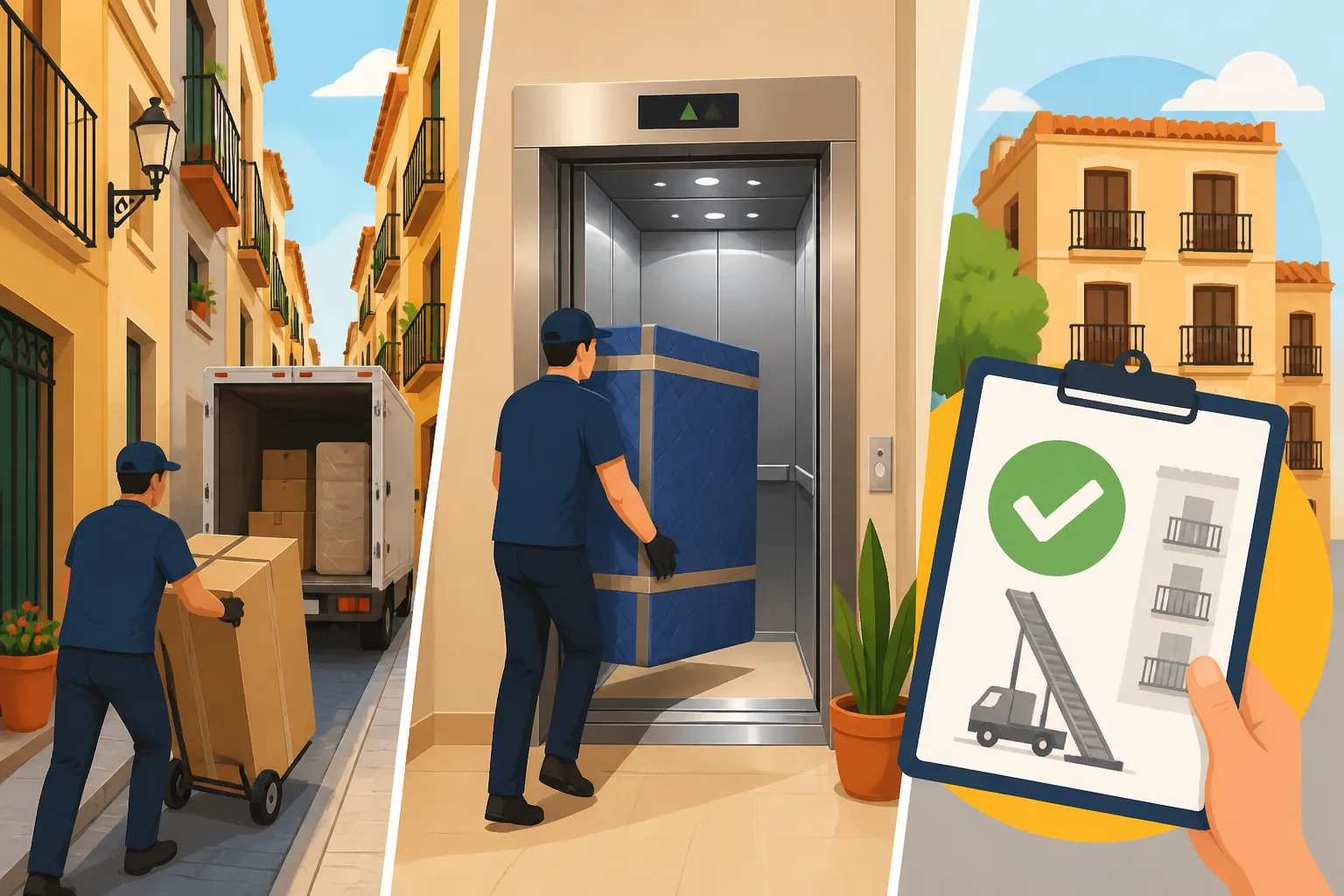
You might have fallen in love with a charming apartment nestled in the casco antiguo (old town) of Seville, Barcelona, or Valencia. The cobblestone streets, the quaint balconies, the sense of history – it's all part of the allure. But let's be honest, those ancient architects weren't thinking about IKEA delivery trucks or international moving vans. Many Spanish cities, especially their historic cores, were built long before cars, let alone large articulated lorries, were even a concept. These streets are often barely wide enough for a compact car, let alone a moving truck.
I remember when my own moving truck tried to navigate a street in Granada's Albaicín. The driver, bless his heart, had to reverse for what felt like an eternity, causing a chorus of horn honks and bewildered glances from locals. It's not just the width, either; pedestrian zones, strategically placed bollards (pivotes), and even street markets can make access utterly impossible during certain hours or days. You think you've planned everything, but then you encounter a Monday morning market setting up right outside your building! This is where local knowledge, often found through services like Sirelo, becomes absolutely invaluable. They can help connect you with movers who actually understand these hyper-local nuances.
Restricted Access and Urban Logistics Nightmares
Beyond mere narrowness, many areas in Spain have strict vehicle access rules. Central areas, environmental zones (like Madrid's ZBE – Zona de Bajas Emisiones), and pedestrian-only streets often prohibit large vehicles or limit entry to residents or specific hours. Delivering furniture to an apartment in Madrid's La Latina or Malasaña, for example, often means the delivery truck has to park blocks away, leaving you to wonder how on earth that king-sized bed is going to make it.
This isn't just an inconvenience; it can lead to significant delays, extra costs from movers, and even fines if a driver unknowingly violates local regulations. Imagine the stress of seeing your precious belongings stuck on a palette 500 meters from your door, with no clear path forward. This is precisely why thorough research and, often, a professional moving coordinator who understands these permits and restrictions, can save your sanity. Finding a reliable company through a platform like Sirelo ensures you're partnering with professionals who've tackled these challenges before. They truly understand the complexities of Spain Relocation Checklist: First 90 Days.
Navigating the Labyrinth: Lifts, Stairs, and Large Items
Once you've managed to get your items to the building, the real fun often begins. Spanish apartment buildings are notorious for their compact lifts, often referred to as ascensores. These are designed for people, not prodigious pieces of furniture. A typical two-person lift might fit a small suitcase or a couple of grocery bags, but forget about your American-sized fridge or that beautiful rustic dining table you painstakingly chose.
Sometimes, the problem isn't just the lift size but the doorways leading to it, or even the small patio de luces (inner courtyard) that the lift opens into. This means many large items, from washing machines to wardrobes, will end up being carried up multiple flights of narrow, winding stairs. This isn't just hard work; it significantly increases the time and effort for your movers, potentially adding to your bill. It’s a reality check that moving in Spain isn't always as straightforward as it might seem in other countries, and anticipating these hurdles is key.
Staircase Sagas and the Balcony Maneuver
If the lift is a no-go, you're looking at the stairs. And Spanish staircases, particularly in older buildings, often come with their own set of architectural quirks: tight turns, narrow steps, and sometimes even charming but utterly impractical spiral designs. Trying to maneuver a bulky mattress or a flat-pack wardrobe up four flights of such stairs can feel like an Olympic sport. Breakages are a real risk, not just to your items but to the walls and banisters of your new home. This is definitely a factor to consider, whether you're Renting in Spain: Contracts, Deposits, and Tenant Rights or even Buying Property in Spain as a Foreigner: Process and Costs.
In some extreme cases, or for truly oversized items, movers resort to the infamous "balcony maneuver." This involves hoisting items up the outside of the building, often with specialised equipment like a grúa elevadora (furniture lift). While effective, this is a highly skilled operation, requires additional equipment (and thus cost), and crucially, almost always needs a special permit from the local Ayuntamiento (city council). It's not something you can just decide to do on the fly. Planning this with experienced international movers, perhaps found through a platform like Sirelo, is essential to ensure safety and legality.
Paperwork Predicament: Permits and Bureaucracy
Remember those narrow streets and potential balcony maneuvers? Well, they come with a bureaucratic price tag: the ocupación de vía pública permit, or permit for occupying public space. This little piece of paper is often required if your moving truck needs to block a street, if you're bringing in a grúa elevadora, or even if your movers will be taking up pavement space for an extended period. Applying for this isn't a quick WhatsApp message; it means a trip to your local Ayuntamiento or applying through their online portal, if available.
The process involves specific forms, providing details about the duration and precise location of the occupation, and, of course, a fee. Lead times can vary wildly from city to city, and even within different districts of the same city, ranging from a few days to several weeks. Failing to secure the correct permit can result in hefty fines, having your delivery truck towed (yes, it happens!), and, at best, a very stressed and delayed delivery day. It's another layer of complexity that expat movers often don't anticipate, making a strong case for using a service that can guide you through the local intricacies, much like what Sirelo offers by connecting you to experienced local movers. Sometimes, a good Gestor or Tax Advisor in Spain: What to Look For might even be able to assist with general bureaucratic hurdles.
Parking Restrictions, Notifications, and Community Courtesy
Beyond the formal permits, you also have to contend with everyday parking restrictions. Many streets in Spain have loading/unloading zones (carga y descarga) which are time-limited or only for commercial vehicles with specific permits. Parking a large moving truck, even briefly, outside these designated areas can lead to immediate fines. You'll often see small, plastic caballetes (barriers) placed by locals to "reserve" a spot for a delivery, but this informal system isn't always legally binding and can cause disputes.
Then there's the community aspect. While not strictly legal, it's considered good etiquette, and often necessary, to inform your building administrator (presidente de la comunidad) and neighbours about your delivery. A notice in the communal entrance or a quick chat can preempt complaints about noise, blocked access, or the temporary inconvenience of a lift being out of action. Ignoring this can lead to frustrated neighbours, calls to the policía local, and generally make your transition into your new Spanish home a little less welcoming. Remember, in Spain, community matters, and being a good neighbour from day one goes a long way, reflecting broader Spanish Customs, Etiquette, and Social Life. This is something a good local moving company can advise you on, and you can find such trusted partners through platforms like Sirelo.
Making Delivery Day Smooth: Your Action Plan
The single most crucial step for a smooth delivery day in Spain is meticulous planning and choosing the right moving partner. Don't assume that a generic international moving company will automatically understand the Spanish quirks. Look for companies with demonstrable experience in Spain, especially in your specific city or region. This is where a platform like Sirelo really shines; it helps you compare quotes from vetted movers, many of whom are intimately familiar with the local landscape and its logistical challenges. They can advise you on permits, assess access routes, and even suggest the best time of day for delivery to avoid peak traffic or market hours.
Think of it this way: a good moving company isn't just about transporting boxes; it's about navigating an obstacle course. They should be asking you detailed questions about your building's street access, lift dimensions, and staircase layout. If they don't, that's a red flag. Be prepared to provide photos or even a video walk-through of your building's entrance and communal areas. This upfront communication can prevent costly surprises on delivery day. Consider discussing potential grúa elevadora costs as part of your initial quote, just in case.
Here's a quick comparison of what different approaches might entail:
| Aspect | DIY/Generic International Mover | Specialist Spanish Mover (often found via Sirelo) |
|---|---|---|
| Street Access | May face unexpected fines/delays, lack of local permits. | Knows local restrictions, applies for permits, understands alternative routes. |
| Building Access | May struggle with small lifts/stairs, potential damage. | Experienced with hoisting, dismantling, and careful manual carrying. |
| Permits | Requires you to research and apply for all ocupación permits. | Often handles permit applications for you, saving time and stress. |
| Cost Transparency | Hidden fees for unexpected issues, extra labour. | More upfront about potential surcharges for difficult access. |
| Local Knowledge | Minimal or none regarding specific city regulations/customs. | Deep understanding of local bureaucracy, peak hours, and community norms. |
| Stress Level | High, due to unforeseen obstacles and communication barriers. | Significantly lower, as challenges are anticipated and managed. |
Pre-Delivery Preparations and Communication
Once you've selected your mover through a trusted resource like Sirelo, it's time for some proactive prep work. First, get that ocupación de vía pública permit sorted well in advance if your movers aren't handling it. Check with your local Ayuntamiento for specific requirements and lead times. Next, contact your building administrator (presidente de la comunidad) and let them know the exact date and estimated time of your delivery. Ask if there are any specific rules or times for deliveries in the building. A polite heads-up, perhaps a note on the community board (tablón de anuncios), can make a world of difference.
On the day itself, ensure someone who speaks at least basic Spanish is present to communicate with the movers and any local authorities or neighbours. Have water and snacks ready for the crew – a small gesture of hospitality can go a long way. Clear pathways inside your apartment, protect vulnerable floorings or furniture with old sheets or cardboard, and have an unboxing kit (box cutter, tape, rubbish bags) at hand. Remember, this is a marathon, not a sprint. Take deep breaths, stay flexible, and trust the process, especially if you've chosen a reputable company through a service like Sirelo. They are equipped to handle these unique situations, making sure your new Home and Contents Insurance in Spain: What to Compare isn't immediately put to the test.
Post-Delivery Follow-Up and Settling In
The boxes are in, the heavy lifting is done – congratulations, you've survived delivery day in Spain! But your work isn't quite over. Do a thorough check of all your items for any damage before the movers leave. Document anything amiss with photos and note it on the delivery receipt. If your movers helped with permit applications, ensure any temporary street signs or barriers are removed as agreed.
After the initial chaos, take some time to settle into your new Spanish home. You've conquered a significant hurdle, which is a big win for any expat. Now you can focus on the exciting parts of living here, like exploring your neighbourhood, understanding the local rhythm, and perhaps even finding an English-Speaking Doctor in Spain (Practical Guide). Remember that platforms like Sirelo aren't just for the move itself; they offer a wealth of resources and connections that continue to be useful as you get comfortable. Enjoy your new life, knowing you've successfully navigated one of Spain's trickiest administrative adventures! Don't forget to update your official address with various authorities once you're fully moved in, like updating your Empadronamiento in Spain: How to Register Your Address and then potentially changing the address on your TIE Card After Moving in Spain.
Disclaimer
The information provided in this guide is for general informational purposes only and does not constitute legal, financial, or professional advice. While we strive to offer accurate and up-to-date information based on typical expat experiences and publicly available data in Spain, regulations and procedures can change. Always consult with relevant Spanish authorities, legal professionals, or experienced moving companies (such as those found via Sirelo) for advice tailored to your specific situation before making any decisions related to your relocation or delivery in Spain.