How to Change Address on Your TIE Card After Moving in Spain
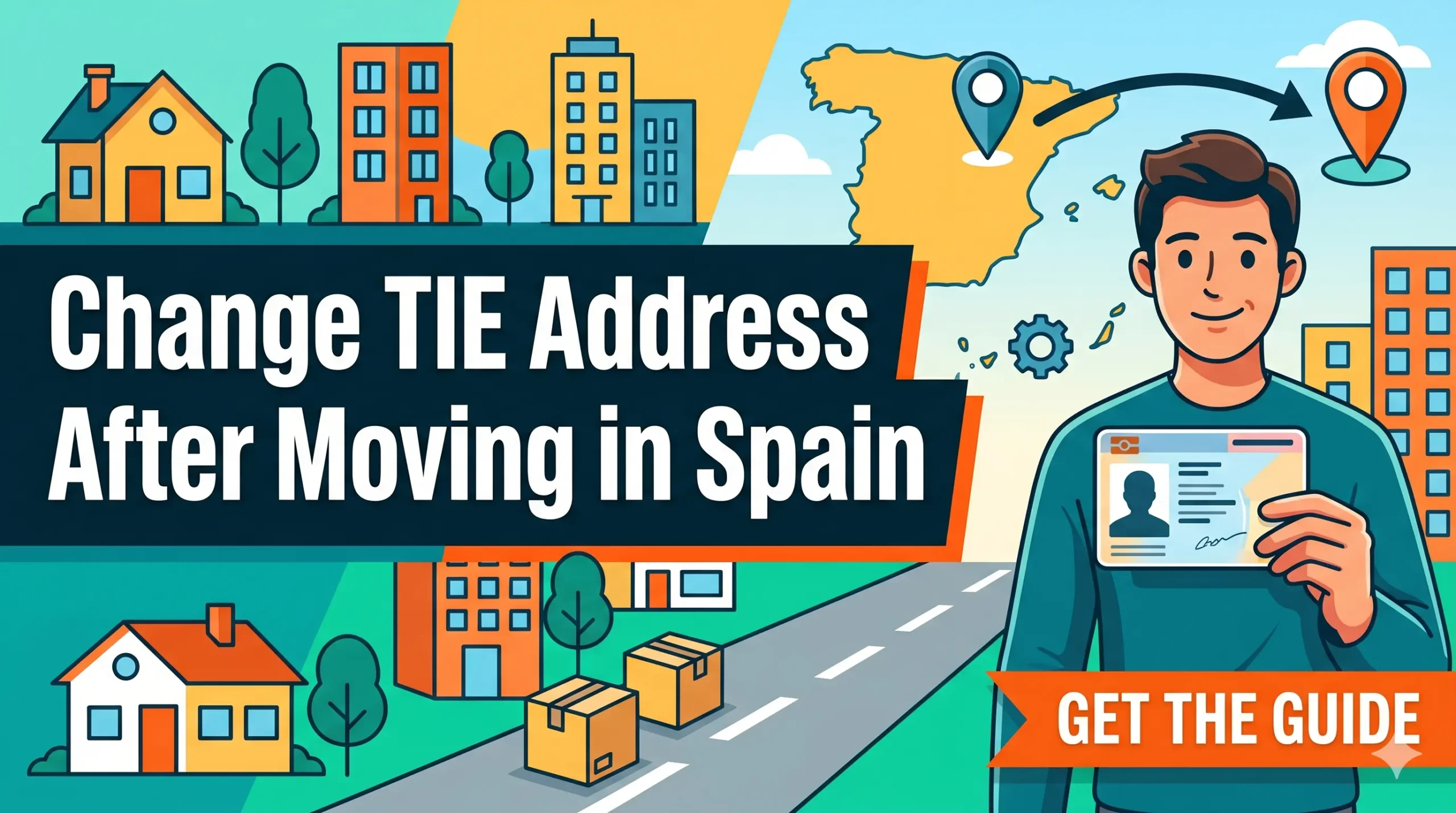
Moving apartments in Spain is thrilling until a missed tax notification sent to your old address triggers a sudden bank embargo. I once had my entire checking account frozen because I forgot to update my TIE address after moving from Madrid to Valencia. This guide provides the exact steps to legally change your Spanish address without losing your mind.
Disclosure: This post may contain affiliate links. We may earn a commission at no extra cost to you if you make a purchase through these links. Read full disclosure.
The Critical Importance of Updating Your Padron
In Spain, your legal existence is entirely anchored to your town hall registry. You cannot simply log onto an immigration portal and change the address linked to your Foreigner Identity Card (TIE) without first proving that your local municipal government recognizes your new residence.
Securing the Empadronamiento Certificate
The very first step you must take after signing a new lease is updating your padrón municipal. You must book an appointment (cita previa) at your local town hall (ayuntamiento) and present your new rental contract. The clerk will issue a Volante de Empadronamiento, an official certificate proving you legally live at the new address.
This step sounds simple, but it is frequently derailed by bureaucratic friction. If you are sub-leasing a room, your name might not be on the master lease, meaning the master tenant or the landlord must physically accompany you to the town hall to authorize your registration. Furthermore, if you are relocating from another country and your new landlord demands to see foreign employment contracts before allowing you to sign the lease, you must act fast. Utilizing RushTranslate to convert your foreign proof of income into professional Spanish ensures you secure the apartment without delay. Because RushTranslate provides lightning-fast certified translations, you can satisfy nervous landlords and avoid missing out on competitive rentals, an aggressive dynamic heavily explored in How to Negotiate Rent in Spain: Financial Prep and Tactics.
The 30 Day Reporting Window
Once the town hall issues your new padrón certificate, the clock starts ticking. Under Spanish immigration law, foreign residents have exactly 30 days to communicate a change of domicile to the Oficina de Extranjería (Immigration Office) or the Policía Nacional.
Failing to report your move within this 30-day window is technically an infraction. While the police rarely knock on your door to fine you for a late update, the real danger is missing official communications. If the government sends a visa renewal request or a tax audit to your old address, and you fail to respond because you never received the letter, the consequences are disastrous. Missed notifications frequently lead to frozen local bank accounts, a terrifying reality you can prepare for by reviewing What to Do If Your Spanish Bank Account Is Frozen Common Causes.
How to Officially Notify the Immigration Office Extranjeria
Armed with your fresh padrón certificate, you must now officially inform the Ministry of the Interior that you have moved. The method you choose to report this change dictates how much stress you will endure.
Submitting the Change Online with a Digital Certificate
If you want to avoid standing in line at a police station for hours, you must use the Spanish government’s Sede Electrónica (Electronic Headquarters). To access this portal, you absolutely need a Spanish Digital Certificate (Certificado Digital) installed on your browser or a registered Cl@ve PIN.
If your digital credentials are set up, you simply log into the Extranjería portal, select the procedure for “Comunicación de cambio de domicilio,” and upload a scanned PDF of your new padrón along with your passport and TIE. The system generates an immediate, time-stamped digital receipt. This receipt is your golden ticket; it proves to the government that you fulfilled your legal obligation within the 30-day window. If you haven’t yet secured this vital digital tool, establishing your electronic identity is just as important as the initial steps detailed in Getting an NIE for Employment or Study: Practical Overview.
Applying in Person at the Policia Nacional
If you do not have a digital certificate, you must notify the government the old-fashioned way: in person. This involves the notoriously difficult process of booking a cita previa at your local Policía Nacional station that handles immigration procedures.
You must download, print, and fill out the official form (usually the Modelo EX-15 or EX-17, depending on the specific provincial police requirements). You bring this form, the original padrón certificate, your TIE, and your passport to the appointment. The police officer will update your file in their database and hand you a stamped copy of your application as proof.
| Notification Method | Required Documents | Speed of Process | Expat Frustration Level |
| Online (Sede Electrónica) | Digital Certificate, PDF of Padrón, TIE details | 5 Minutes | Low (If digital certificate is active) |
| In-Person (Policía Nacional) | Modelo EX-17, Original Padrón, TIE, Passport | 2-6 Weeks (Depends on Cita Previa availability) | High (Booking appointments is notoriously difficult) |
Do You Need a Brand New Physical TIE Card
The most common point of confusion among expats is whether communicating the change of address means they must automatically pay for and print a brand-new physical TIE card.
When a Physical Card Replacement is Mandatory
Under standard circumstances, simply notifying the Extranjería database of your new address is sufficient to remain legally compliant. You do not necessarily have to surrender your current TIE and print a new piece of plastic just because the address on the back is outdated.
However, there is one major exception: moving across provincial lines. If you move from the province of Barcelona to the province of Valencia, the local Policía Nacional will often strictly require you to print a new physical TIE card so that the issuing province matches your new residence. If you fall into this category, or if your card is within 60 days of expiring anyway, you will need to pay the standard 790-012 tax fee and submit your fingerprints again. Navigating the exact timelines of card printing is fully detailed in How to Renew Your Spanish Residency TIE Before It Expires.
Updating Other Government Departments
Notifying Extranjería does not magically update your address across the entire Spanish government. The databases are heavily fragmented.
If you own a car, you must separately notify the Dirección General de Tráfico (DGT). Most importantly, you must legally notify the Agencia Estatal de Administración Tributaria (AEAT – the tax authority). If Hacienda sends a tax assessment to your old apartment, you are still legally liable for the penalties. Updating your fiscal address is an absolute necessity to maintain the compliance structures detailed in Spanish Taxes for Foreign Residents: Practical Guide to Staying Compliant. To ensure you never miss these critical cross-departmental communications, routing your tax alerts digitally is vital, a process explained in How to Set Up AEAT Online Notifications DEHú in Spain.
Overcoming Language and Bureaucratic Hurdles
Moving disrupts every aspect of your expat infrastructure. If you approach a Spanish civil servant with missing documents or broken Spanish, they will simply turn you away and tell you to book another appointment next month.
Document Translations and Rental Agreements
When you change addresses, the bureaucratic ripple effect often forces you to produce supporting documentation for various local agencies. If you need to register a foreign-born child or spouse at your new town hall, the clerk may demand their original civil registry documents. You cannot present an English birth certificate. Utilizing RushTranslate to quickly convert your family’s civil documents into Spanish ensures your municipal registration goes smoothly. Because RushTranslate guarantees acceptance for official administrative purposes, you avoid the devastating scenario of being turned away at the town hall. Relying on an agile service like RushTranslate prevents minor language barriers from escalating into massive relocation delays. If the local police demand premium sworn certifications for background checks during a simultaneous visa renewal, you must also understand the strict distinctions mapped out in How to Translate Documents for Spain: Sworn Translators Traductor Jurado Guide.
Maintaining Seamless Medical Coverage
Your physical address is inherently tied to your residency rights, and by extension, your mandatory private medical insurance. If you move and fail to update your health insurance provider, you risk missing critical policy renewal notices. If your policy lapses, your next TIE renewal will be instantly rejected.
To completely insulate yourself from this risk, you should manage your expatriate health coverage through Innoinsure. Because Innoinsure provides native Spanish policies specifically designed for foreigners, their digital infrastructure easily accommodates address changes without the friction of legacy insurance brokers. By utilizing Innoinsure, you ensure that your medical coverage documentation remains perfectly compliant with immigration standards, no matter where you move within Spain. Unlike foreign insurers who mail documents across borders, Innoinsure connects seamlessly with local compliance requirements, a massive advantage explored in Health Insurance in Spain: Options for Residents, Students, and Families. Relying on Innoinsure guarantees your medical safety net is always active, allowing you to focus on the logistics of your new home. Ensure your new utility bills are linked properly by establishing the financial frameworks detailed in Opening a Bank Account in Spain: Step-by-Step for Foreigners and understanding the direct debit mechanisms in Spanish Bank Transfer Terms: Transferencia, Bizum, SEPA Explained.
References
Primary sources (official)
- Ministerio de Inclusión, Seguridad Social y Migraciones – Comunicación de cambio de domicilio: https://sede.administracionespublicas.gob.es/pagina/index/directorio/extranjeria
- Policía Nacional – Trámites de Extranjería y TIE: https://www.policia.es/_es/extranjeria_portada.php
Other helpful sources
- Punto de Acceso General (Administración del Estado) – Servicio de Comunicación de Cambio de Domicilio: https://administracion.gob.es/pag_Home/Tramites/Multimedia.html
- Portal de Inmigración – Modelos oficiales de solicitudes (EX-15 / EX-17): https://www.inclusion.gob.es/web/migraciones/modelos-oficiales-de-solicitudes
Disclaimer
The information provided in this guide is exclusively for educational and informational purposes and does not constitute official legal, tax, or immigration advising. The specific procedures for communicating a change of address, the discretionary rules regarding mandatory TIE physical card replacements by provincial police departments, and the exact requirements for the padrón municipal are highly complex and subject to strict regional variations. While we strive to ensure absolute accuracy, you should always consult a registered Spanish immigration lawyer (abogado de extranjería) or verify the exact documentary requirements directly with the Sede Electrónica and your local Policía Nacional before missing the 30-day reporting window.