When Do Spanish Beach Towns Get Busy?
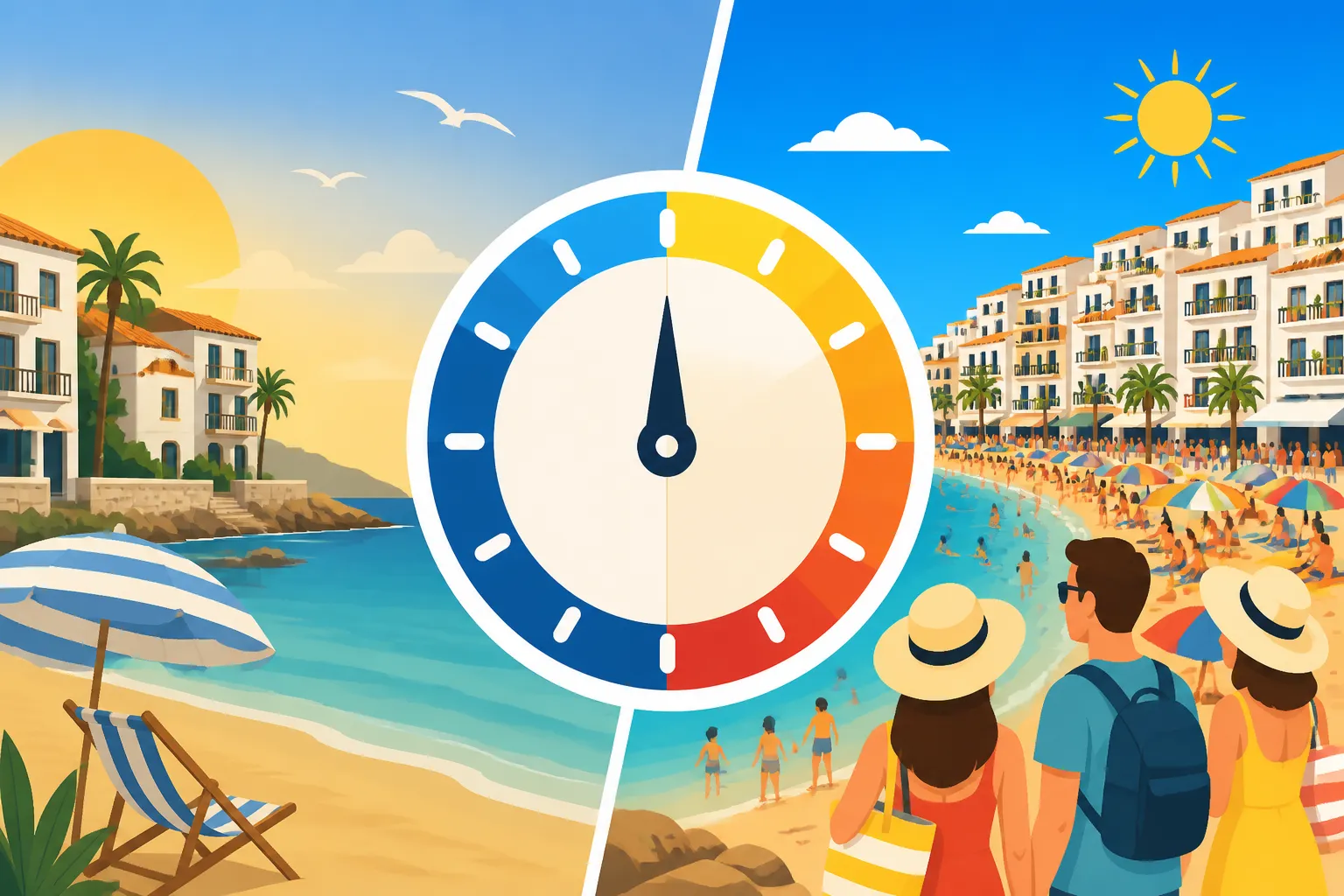
Finding yourself stuck in a sea of umbrellas on a Spanish beach when you were dreaming of a secluded cove is a common frustration for newcomers. Many tourists arrive in July or August expecting a typical summer holiday, only to be overwhelmed by the sheer volume of local crowds and skyrocketing prices. This guide breaks down exactly when Spanish beach towns hit their peak capacity so you can plan a trip that balances vibrant atmosphere with actual breathing room.
Disclosure: This post may contain affiliate links. We may earn a commission at no extra cost to you if you make a purchase through these links. Read full disclosure.
The August Exodus and the Reality of Spanish Summer Peaks
If there is one thing you must understand about Spanish culture, it is the sacred nature of the August vacation. Unlike many other countries where holidays are spread throughout the year, Spain traditionally operates on a collective shutdown. During the month of August, especially the middle two weeks, major cities like Madrid and Seville practically empty out as residents flee the inland heat for the coast. This creates a "perfect storm" of international tourists and domestic vacationers all competing for the same square meter of sand.
During this period, beach towns from the Costa Brava down to the Costa de la Luz reach 100 percent occupancy. You will find that even basic services become strained. Restaurants that usually welcome walk-ins will require reservations days in advance, and the "chiringuitos" (beach bars) will have waiting lists just for a plastic chair in the shade. If you are planning to travel during this peak, using platforms like Booking.com well in advance is not just a suggestion; it is a survival tactic for your budget.
Beyond the crowds, the "Puente" or bridge holidays also play a massive role in how busy a beach town feels. If a public holiday falls on a Tuesday or Thursday, Spaniards will often take the Monday or Friday off to create a four-day weekend. During these windows, coastal towns near major cities—such as Gandia near Valencia or Sitges near Barcelona—will suddenly swell with visitors. It is essential to check the local calendar for the specific region you are visiting, as regional holidays can differ significantly from national ones. For a deeper look at these specific dates, you might want to check our guide on Public Holidays in Spain: How They Affect Travel and Opening Hours.
Regional Variations in Crowd Density and Timing
Not all Spanish coasts experience the "busy" season in the same way. The Mediterranean coast, including the Costa Blanca and the Costa del Sol, tends to have a much longer peak season due to its reliably warm weather. These areas start getting busy as early as late May and remain crowded well into late September. Because the infrastructure is so heavily geared toward tourism, these towns can feel like "tourist machines" during the height of summer, which is something many expats find draining after the first few months of living here.
In contrast, the northern coast—the Costa Verde in Asturias or the beaches of Galicia—has a much shorter and more intense peak. Because the weather is more temperamental, the crowds really only descend during late July and August. You might find a beach in Cantabria almost empty in June, only to find it impossible to park a car there by August 1st. If you are looking for a quieter experience, understanding When to Visit Each Spanish Region for the Best Weather is crucial, as the "busy" window in the north is far tighter than in the south.
| Region | Peak Crowds Start | Peak Crowds End | Character of the Crowd |
|---|---|---|---|
| Costa del Sol | Late June | Mid-September | International & Madrid locals |
| Costa Brava | Early July | Late August | European families & Catalans |
| Atlantic North | Late July | Mid-August | Mostly Spanish domestic tourists |
| Balearic Islands | June | September | High-volume international tourism |
| Costa Cálida | July | August | Heavily domestic (Murcian/Madrileño) |
For those heading to the southern hotspots, it helps to know the layout before you arrive. Reading about The Costa del Sol and Málaga Province: Visitor Highlights can help you identify which specific towns are more prone to overcrowding and which might offer a slightly more "local" and less frantic pace.
The Shoulder Season: The Veteran Expat's Secret
If you ask any veteran expat when the best time to visit a Spanish beach town is, they will almost universally say September or June. June is particularly magical because the days are at their longest, and the "San Juan" festivities on June 23rd bring a wonderful, local energy to the beaches with bonfires and midnight swims. While it is certainly "busy" during San Juan, it feels like a cultural celebration rather than a commercial crush.
September, however, is the true gold mine. By the second week of September, Spanish children are back in school, and the frantic energy of August has evaporated. The Mediterranean Sea is at its warmest point of the year, having been baked by the summer sun for three months. You can often find great deals on accommodation through Booking.com during this time, as hotels look to fill rooms that were double the price just two weeks prior.
Another often overlooked window is late spring, specifically May. While the water might still be a bit "crisp" for some, the weather is perfect for long lunches on the sand without the oppressive humidity of July. During these shoulder months, the service in restaurants improves drastically because the staff aren't as overwhelmed. You'll have a much better chance of finding How to Find Authentic Restaurants in Spain (Not Tourist Traps) when the owners have the time to actually talk to you rather than just ushering you to the next available table.
Navigating Logistics During Busy Periods
When the beach towns are busy, the logistics of getting there and moving around become a significant hurdle. Train tickets on the AVE (high-speed rail) to coastal hubs like Málaga, Alicante, or Barcelona sell out weeks in advance during August and major holiday weekends. If you haven't booked your seat through a service like Omio at least a month out, you might find yourself stuck with the much slower, albeit cheaper, bus routes. To save yourself the headache, review our tips on High-Speed Trains in Spain (AVE): Routes, Booking, and Savings before you commit to a summer itinerary.
Parking is the other major "busy" factor. In many white-walled Andalusian villages or rugged Costa Brava towns, the streets were never designed for modern car volume. In August, finding a parking spot can take upwards of an hour of circling blue zones. If you are planning to drive, it is vital to ensure your accommodation includes a dedicated parking space. Even then, you might want to leave the car parked and use local buses or bikes. If you are new to the country's roads, familiarize yourself with Renting a Car in Spain: Requirements, Insurance, and Driving Tips to avoid unnecessary fines that often catch tourists during the high season.
For those who want to escape the gridlock entirely, booking tours and water activities through GetYourGuide can sometimes provide access to boat trips or guided hikes that take you to beaches inaccessible by car. This is often the only way to see the famous "Calas" of Menorca or the hidden gems of the Costa Brava during the peak of summer without dealing with the 7:00 AM rush to claim a spot on the sand.
Safety and Comfort in the Crowds
Living in Spain as an expat teaches you that "busy" doesn't just mean a lot of people; it also means a change in the environment. Heatwaves often coincide with the busiest weeks of the year. When the beach towns are at capacity, the "urban heat island" effect makes the nights much warmer. Always check that your rental has functioning air conditioning, as many older coastal apartments rely solely on ceiling fans which struggle when the Levant winds blow.
Crowds also bring out opportunistic petty crime in high-traffic areas. While Spain is generally very safe, the crowded boardwalks of Benidorm or the busy sands of Barceloneta are prime spots for pickpockets. It is a classic expat tip never to leave your belongings unattended while you go for a swim; always have someone stay with the bags or use a waterproof pouch for your essentials. For a broader perspective on staying protected, take a look at Staying Safe in Spain: Practical Safety Tips for New Residents.
Finally, if you find yourself in a town that is just too busy for your liking, don't be afraid to move inland just a few kilometers. Often, a ten-minute drive away from the shore reveals a completely different world where you can enjoy a quiet "menu del día" at a fraction of the price. Exploring Spain's Best Mainland Beaches by Region will show you that even in the busiest provinces, there are often less-popular stretches of coastline that remain relatively peaceful even when the main hubs are bursting at the seams.
Summary of Peak Periods to Watch Out For
To help you visualize the year, keep these specific "red zones" in mind when planning your coastal visits:
- Semana Santa (Holy Week): The first major surge of the year. If the weather is good, beach towns will be packed with families.
- The July Transition: The first half of July is busy, but the second half sees a massive uptick as the first wave of August vacationers starts to arrive early.
- The August Lockdown: August 1st to August 20th is the absolute peak. This is when the "no vacancy" signs are most common.
- The October Long Weekend (Puente del Pilar): Around October 12th, there is often one last "last hurrah" for the beach season, especially in the south where the weather is still pleasant.
By timing your visit around these windows, or at least arriving prepared for the madness, you can ensure your Spanish beach experience is memorable for the right reasons. Whether you're using Omio to secure your transport or Booking.com to find that last-minute sanctuary, a little bit of veteran knowledge goes a long way in navigating the ebb and flow of Spain's coastal crowds.
Disclaimer
This guide is intended for informational purposes only. Travel seasons, local regulations, and crowd patterns in Spain can change due to economic factors, climate shifts, or local government decisions. Always verify specific dates and booking requirements with official sources or service providers before making travel arrangements.