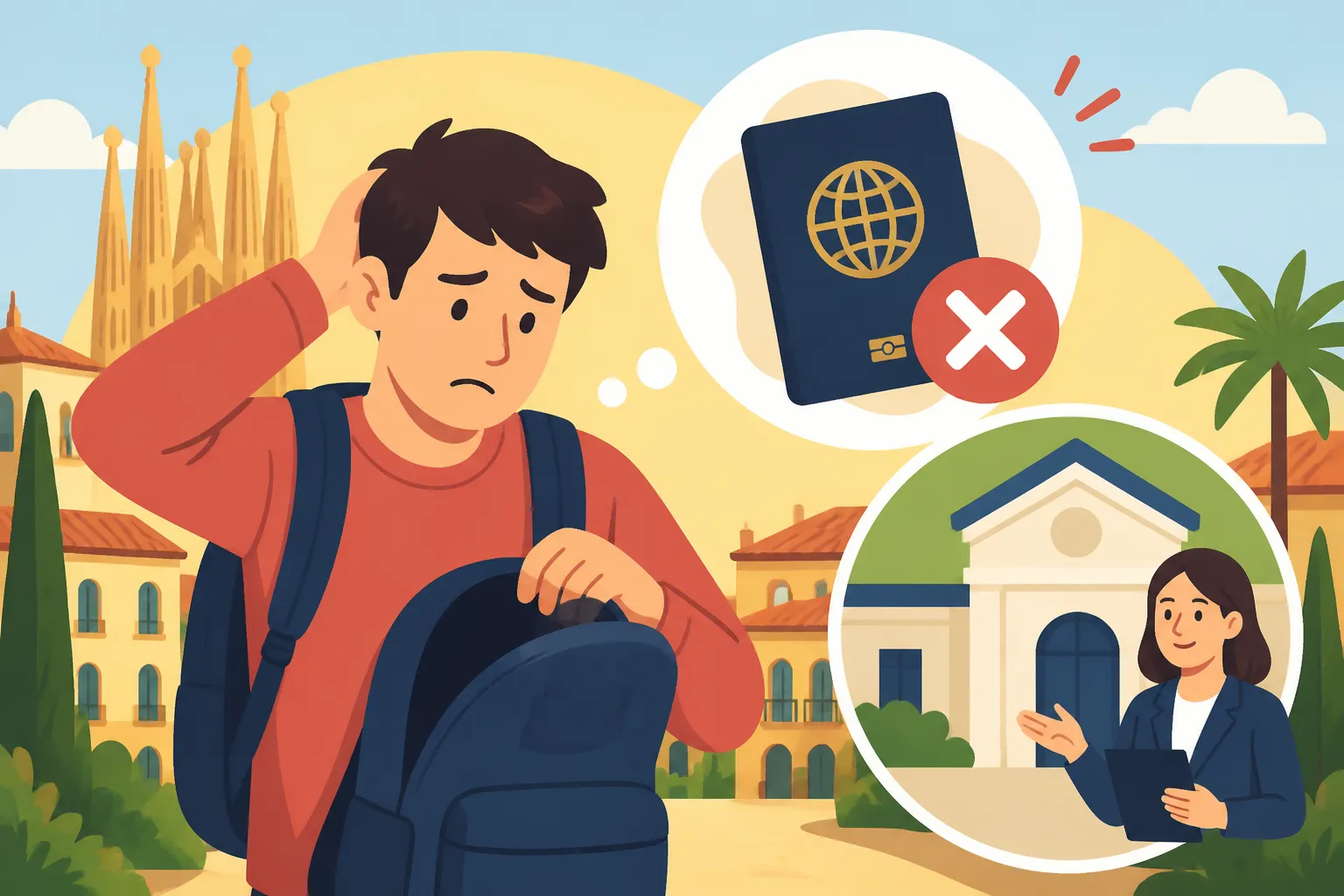
What to Do If You Lose Your Passport in Spain
There is a specific, cold dread that washes over you when you reach for your passport in a busy Spanish plaza only to find an empty pocket. Whether it was a clever pickpocket in Barcelona or simply a misplaced bag during a hectic check-out, the loss of your primary ID is a major crisis. This guide solves that panic by providing a clear, step-by-step roadmap to reporting the loss, securing emergency travel documents, and managing your logistics so you can get back to enjoying Spain or head home safely.
Disclosure: This post may contain affiliate links. We may earn a commission at no extra cost to you if you make a purchase through these links. Read full disclosure.
Immediate Steps: Don't Panic, but Act Fast
The first hour after realizing your passport is gone is the most critical. While your instinct might be to spiral into a "what if" loop about your flight or your residency status, you need to switch into administrative mode. Spain is a wonderful country, but its bureaucracy can be uncompromising. If you are a resident, losing your passport often means you will also need to revisit the process for Lost or Stolen TIE/NIE Documents: Replacement Steps in Spain because your residency card is often tied to that specific passport number in the system.
Start by retracing your steps. If you were just at a cafe, go back and ask the staff if a "pasaporte" was turned in. Check the "objetos perdidos" (lost and found) at the local Metro station or the Renfe train station. If you were traveling between cities and used a service like Omio to book your bus or train, check your seat area if you are still near the terminal. Spaniards are generally very honest, and it is not uncommon for lost items to be handed over to staff. However, if a quick search yields nothing, you must assume it is stolen or permanently lost and move to the formal reporting phase.
You should also immediately notify your bank if your passport was in a wallet with your credit cards. Losing your ID is one thing, but identity theft or fraudulent charges are another layer of stress you don't need. While you are sorting this out, it is worth reviewing Money for Travel in Spain: Cards, Cash, and ATMs to understand how to access backup funds without your primary physical documents.
Filing the Police Report (La Denuncia)
In Spain, a police report—known as a denuncia—is not just a piece of paper; it is your temporary legal identity. You cannot get an emergency passport from your embassy without one. You need to find the nearest Policía Nacional station. Note that there are three types of police in Spain, but for a lost or stolen passport, the Policía Nacional (usually in blue uniforms) is the authority that handles immigration and international ID issues. If you are in a remote village, you might find the Guardia Civil, who can also take the report, but in cities like Madrid or Barcelona, head straight to the national police.
In Madrid, the station at Calle de Leganitos is famous for handling tourist reports, while in Barcelona, you might head to the station on Nou de la Rambla. Be prepared for a wait. You will need to describe exactly what happened. If your Spanish is rusty, you can try to find a translator, or use the online denuncia system, though you will still have to go to the station in person to sign the document. Having this report is essential for your insurance claim later and for proving to airlines or hotels who you are. While you wait, you can brush up on some Spanish Emergency Phrases: How to Describe Symptoms Quickly or basic terms to help you navigate the conversation with the officer.
Contacting Your Bank and Insurance
Once the police report is in your hand, call your travel insurance provider. Many high-quality policies cover the cost of embassy fees for emergency passports and even the extra nights of Accommodation in Spain: Hotels, Hostels, and Rentals you might incur while waiting for documents. If you booked your trip through various platforms, check your confirmation emails. For instance, if you used Booking.com for your hotel, you might need to extend your stay by a night or two. Having a record of your police report will make these modifications much easier to justify to the hotel management.
Contacting Your Embassy or Consulate
The police can help you document the loss, but only your home country's embassy or consulate can give you the document that lets you leave the country. Most major embassies are located in Madrid, but many countries have consulates in Barcelona, Seville, Malaga, and Alicante. For example, the US, UK, and Irish governments have robust consular networks in the coastal areas to handle the high volume of tourists.
You will need to check the specific website of your embassy for "Emergency Citizen Services." Do not just show up; most require an appointment, though they usually make exceptions for "life and limb" emergencies or imminent travel. If you have a flight in less than 48 hours, you are generally considered an emergency case. Be prepared to pay a fee, usually between €100 and €150, for an Emergency Travel Document (ETD). This is often a single-page document or a temporary passport with very few pages that is only valid for your journey home.
Required Documentation for the Embassy
To make the process as smooth as possible, you should gather any secondary identification you have left. If you still have a driver’s license, a photocopy of your lost passport (this is why you should always keep a digital scan in your email), and the original police report, the process will go much faster. If you have nothing else, the embassy will have to conduct a more thorough identity check, which can take days.
| Document Needed | Why It Is Important |
|---|---|
| Police Report (Denuncia) | Proves the loss was reported and is required by all embassies. |
| Passport Photos | Most embassies require 2-3 specific gloss photos; find a "Foto Carnet" booth. |
| Proof of Travel | Your flight or train confirmation (e.g., from Omio) showing your departure date. |
| Secondary ID | Driver’s license, national ID card, or a birth certificate scan. |
| Application Fee | Usually payable by credit card; cash is rarely accepted at modern consulates. |
Navigating the Cita Previa System
The biggest hurdle for expats in Spain is the "Cita Previa" (prior appointment) culture. This applies to your own embassy as well. If you are a resident and this loss affects your ability to travel back into Spain, you should consult the Spain Visas & Residency: Complete Guide for Foreigners to see how a new passport number must be updated with the Spanish authorities. For tourists, the embassy will likely issue an ETD. If you are stuck in a city waiting for this appointment, you might use GetYourGuide to find a walking tour or a museum entry to kill time and lower your stress levels while the bureaucracy grinds away.
Navigating Travel Logistics and the Journey Home
Once you have your emergency document, you aren't quite out of the woods yet. An Emergency Travel Document (ETD) is not a full passport. It has limitations. Some countries will not let you transit through their airports with an ETD; they require you to fly directly to your home country. You must check the transit requirements for every stop on your itinerary. If your original flight had a layover in a country with strict transit visa rules, you might need to book a new, direct flight.
This is where platforms like Omio can be lifesavers. If you cannot find a direct flight that accepts your temporary papers, you might find that taking a high-speed train or a cross-border bus is a more viable option to get to a major hub like Paris or London where more direct flights are available. Always call the airline before heading to the airport with an ETD. While the law says they should accept it, individual check-in agents can sometimes be confused by temporary documents, and having the police report handy is your best defense.
Managing Your Accommodation and Bookings
If you are stranded for a few days, you will need to find a place to stay. If your original hotel is fully booked, searching on Booking.com for a nearby "hostal" or apartment can provide a cheaper alternative while you wait for the consulate to print your papers. Most hotels in Spain are required by law to take a scan of your ID upon check-in. If you don't have your passport, the police report and the embassy's confirmation of your appointment are usually sufficient, but it is best to be polite and explain the situation clearly. You might find that Staying Safe in Spain: Practical Safety Tips for New Residents provides some context on why these strict ID laws exist in the first place.
Rescheduling Tours and Activities
If you had a packed itinerary, you’ll likely need to cancel or move your plans. If you booked tickets through GetYourGuide, many of their activities offer 24-hour cancellation. It’s worth reaching out to their customer support immediately to see if you can get a refund or a voucher for a future trip. Dealing with a lost passport is an all-day job; you will likely spend hours in police stations and consulates, so don't try to keep your 2:00 PM tour of the Alhambra if you're still waiting for a police officer at 1:00 PM.
Preventing Future Passport Loss in Spain
After you have survived the ordeal, you will never want to go through it again. Veteran expats in Spain usually follow a "Double Digital" rule. This involves having a scanned copy of your passport on your phone and another in a secure cloud storage folder. While a copy isn't a legal travel document, it makes the police report and embassy process ten times faster. You should also look into How to Get a Digital Certificate in Spain Without a Spanish ID if you are a resident, as this can help you manage many administrative tasks online without needing to present physical documents every time.
When walking through high-traffic areas like the Puerta del Sol in Madrid or the Gothic Quarter in Barcelona, keep your passport in a hotel safe or a locked bag at your Accommodation in Spain: Hotels, Hostels, and Rentals. Unless you are opening a bank account or signing a lease, a high-quality photocopy or a driver's license is usually enough to carry for daily identification. Be especially wary in crowded places; Avoiding Pickpockets in Spain's Tourist Areas is an essential read for anyone spending time in the major cities, as these professionals often target bags specifically for IDs and cash.
Finally, keep a list of emergency numbers saved in your phone. Knowing How to Call 112 in Spain: What to Say and What Happens Next is a basic safety requirement. While 112 is for medical or fire emergencies, they can also direct you to the correct police dispatch if you are a victim of a crime. A little bit of preparation and some Spanish Slang and Everyday Expressions for Visitors to help build rapport with locals can make even the most stressful administrative nightmare feel a little more manageable.
Disclaimer
This guide is for informational purposes only and does not constitute legal advice. Passport and visa regulations in Spain can change frequently. Always consult with your national embassy or a qualified legal professional for the most current requirements regarding lost travel documents and residency status.