What Are Spain’s Most Important Historic Sites?
When you first move to Spain or plan a long-term trip, the sheer density of history can feel paralyzing. You want to see every Roman arch and Moorish palace, but the logistics of navigating regional travel and booking elusive tickets often lead to burnout. This guide settles the "what should I see first" debate by detailing Spain's most vital historic sites and how to actually visit them without the typical tourist headaches.
Disclosure: This post may contain affiliate links. We may earn a commission at no extra cost to you if you make a purchase through these links. Read full disclosure.
The Moorish Legacy: Andalusia’s Crown Jewels
The southern region of Andalusia holds the keys to nearly 800 years of Al-Andalus history. For many of us who have lived here for years, these sites never lose their magic, but they are notorious for selling out weeks in advance. You cannot simply "show up" at the heavy hitters in Granada or Córdoba and expect to get in.
The Alhambra in Granada
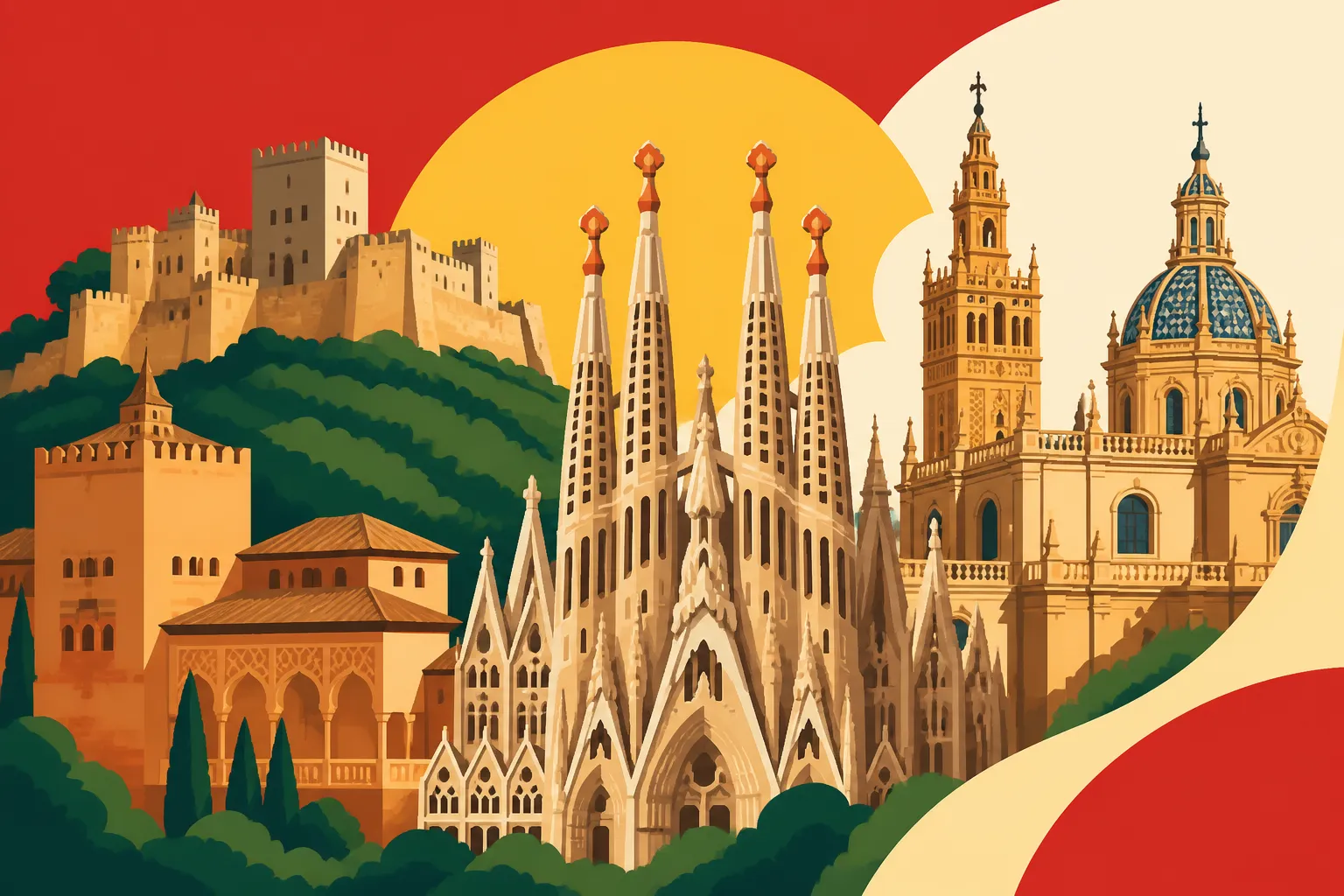
The Alhambra is not just a palace; it is a sprawling fortress complex that represents the pinnacle of Nasrid art and architecture. When you walk through the Nasrid Palaces, the intricate stucco work and the reflective pools of the Court of the Myrtles make you realize why the last Moorish king wept when he lost it. However, the ticketing system is a major point of frustration for newcomers. You need to book your Nasrid Palace time slot precisely, and if you miss it by even five minutes, the guards will not let you in.
Beyond the palaces, the Generalife gardens offer a glimpse into the leisure life of the sultans. The sound of running water is everywhere, designed to mimic the descriptions of paradise in the Quran. To make the most of a trip here, we suggest staying at least two nights in Granada. You can find excellent boutique hotels in the Albaicín district through Booking.com, which gives you the best views of the fortress lit up at night. For getting to Granada from other hubs like Seville or Madrid, using Omio is the most efficient way to compare the high-speed AVE trains against the more budget-friendly ALSA buses.
The Mezquita-Catedral of Córdoba
The Mezquita of Córdoba is perhaps the most unique religious building in the world. It began as a mosque in the 8th century, characterized by its iconic red-and-white striped arches that seem to go on forever. Following the Reconquista, a Renaissance cathedral was literally built right in the middle of the prayer hall. It is a jarring, beautiful, and deeply complex architectural metaphor for Spanish history.
Visiting here is generally easier than the Alhambra, but the "soul of Córdoba" night tour is a fantastic way to see the building without the mid-day crowds. If you are coming from Seville, it is a short 45-minute train ride. You can find more details on the historical context in our guide on Moorish Spain: Alhambra, Mezquita, and Al-Andalus Heritage. Understanding the transition from the Umayyad Caliphate to Christian rule is essential before you step foot under those arches.
The Royal Alcázar of Seville
Seville's Alcázar is the oldest royal palace still in use in Europe. While it shares many aesthetic qualities with the Alhambra, its Mudéjar style—Islamic-style architecture built for Christian kings—is distinct. The Patio de las Doncellas is the centerpiece, but the sprawling gardens are where you can truly escape the city's heat. If you’re a fan of "Game of Thrones," you’ll recognize this as the Water Gardens of Dorne. Because the queue for tickets can wrap around the cathedral, I strongly recommend using GetYourGuide to book a skip-the-line tour with an official guide who can explain the complex layers of Castilian history.
The Roman Footprint: Engineering Marvels of the Ancient World
Long before the Moors arrived, the Romans turned Hispania into one of the empire's most prosperous provinces. If you love the idea of standing where gladiators once fought or seeing infrastructure that still functions 2,000 years later, you have to head to Extremadura and Castile and León.
Segovia’s Roman Aqueduct
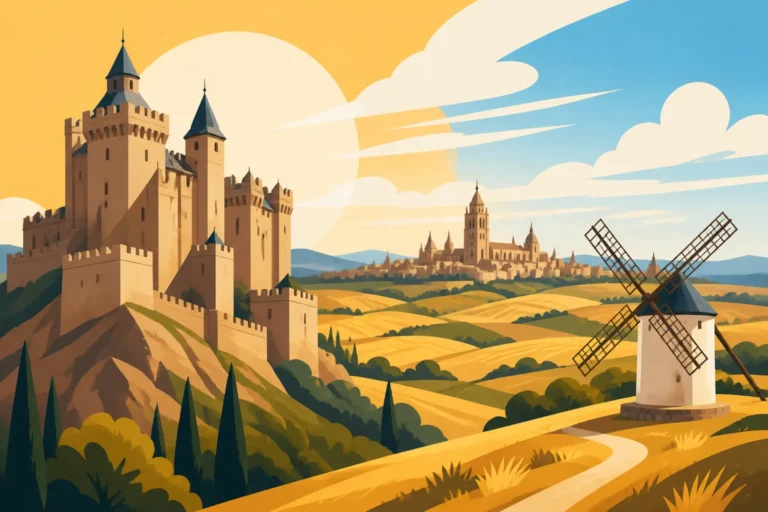
The Aqueduct of Segovia is one of those sites that doesn't feel real until you are standing under it. It consists of over 160 arches made of granite blocks held together by nothing but gravity—no mortar at all. It slices through the center of the city and was used to carry water from the Frío River 17 kilometers away until recently.
Most people visit Segovia as a day trip from the capital. If you are staying in Madrid, How to Visit Segovia From Madrid by Train is a great resource to help you navigate the Chamartín station and the high-speed connection. Once there, after you’ve marveled at the stones, walk toward the Alcázar of Segovia, the castle that supposedly inspired Walt Disney’s Cinderella castle.
The Roman Theatre and Amphitheatre of Mérida
Mérida is the "Rome of Spain." As the former capital of the Lusitania province, it contains more Roman ruins than any other city in the country. The Roman Theatre is still used today for the International Festival of Classical Theatre, and sitting on those stone benches at sunset is a surreal experience. The nearby amphitheatre, where gladiators once fought, is equally well-preserved.
Because Mérida is a bit further off the beaten path in the Extremadura region, it feels much more authentic and less "touristy" than Barcelona or Madrid. For a deeper dive into these ancient sites, check out How to See Roman Ruins in Spain (Mérida and Beyond). The city also features a stunning Roman bridge over the Guadiana River and a temple dedicated to Diana, which sits right in the middle of a modern street.
Gothic Grandeur and the Spanish Golden Age
As the Reconquista moved south, the Catholic Monarchs built massive structures to project power and piety. These sites are often found in the heart of Spain’s oldest cities and are essential for understanding the transition to the Spanish Empire.
Seville Cathedral and the Giralda
The Seville Cathedral is the largest Gothic church in the world. It was built on the site of a former mosque to demonstrate the city's wealth and status after it became a major port for the "New World." Inside, you will find the tomb of Christopher Columbus—held aloft by four statues representing the kingdoms of Spain—and an altar made of solid gold.
The Giralda, the cathedral’s bell tower, was originally the minaret of the mosque. Instead of stairs, it has 34 ramps so that the Sultan could ride his horse to the top for the call to prayer. Today, it offers the best panoramic views of the city. To see how this fits into a broader Andalusian itinerary, see our guide on Seville, Granada, and Córdoba: Andalusia's Great Cities.
The Monastery of El Escorial
Located in the mountains outside Madrid, El Escorial is a somber, massive complex that served as a palace, monastery, and royal mausoleum for Philip II. It is the architectural embodiment of the Spanish Golden Age—rigid, powerful, and deeply religious. The Panteón de los Reyes contains the tombs of almost all Spanish monarchs from the last five centuries.
Visiting El Escorial can be an emotional experience because of its scale and the cold, grey stone architecture. It is a sharp contrast to the colorful palaces of the south. If you are based in Madrid, you can take a regional C-3 train line from Atocha or Sol. It is a great way to escape the city heat and see the rugged Sierra de Guadarrama landscape.
The Modernist Revolution in Catalonia
History in Spain didn't stop in the 1700s. In the late 19th and early 20th centuries, Barcelona underwent a transformation that produced some of the most iconic and strange historic sites in the world, primarily through the genius of Antoni Gaudí.
La Sagrada Família
No list of Spanish historic sites is complete without the Sagrada Família. It has been under construction since 1882 and is still not finished. It is a forest of stone, with columns that branch like trees and stained glass that creates a kaleidoscope of light inside. This isn't just a church; it's a testament to the Catalan Modernism movement.
Because it is the most visited site in Spain, the crowds can be overwhelming. Knowing How to Avoid Crowds at the Sagrada Família is vital—usually, this means booking the first time slot of the morning or visiting during the off-season. Tickets are only sold online, so don't bother walking to the gates without a reservation.
Park Güell and Casa Batlló
While the cathedral is Gaudí's masterpiece, Park Güell shows his ability to integrate nature with architecture. The gingerbread-style houses and the mosaic-covered lizard are world-famous. Similarly, Casa Batlló on the Passeig de Gràcia looks like it was made of bones and dragon scales. For a structured way to see all these in one go, refer to How to See Gaudí's Buildings in Barcelona in One Day.
| Site | Location | Primary Era | Essential Tip |
|---|---|---|---|
| Alhambra | Granada | Moorish (Nasrid) | Book Nasrid Palace tickets 2-3 months in advance. |
| Mezquita | Córdoba | Islamic / Renaissance | Visit for free between 8:30 AM and 9:30 AM (Mon-Sat). |
| Roman Theatre | Mérida | Roman | Attend a play during the summer festival for the full experience. |
| Sagrada Família | Barcelona | Modernist | Use the official app for the audio guide; it's better than the headsets. |
| El Escorial | San Lorenzo | Spanish Golden Age | Bring a jacket; it's much cooler in the mountains than in Madrid. |
| Seville Cathedral | Seville | Gothic | Book online to avoid the 2-hour queue in the sun. |
Practical Advice for Your Historic Journey
Navigating Spain’s history requires more than just a map. It requires patience with the bureaucracy of ticketing and an understanding of the regional differences. For example, getting from Madrid to the historic center of Toledo is a breeze by train, and you can find out how in How to Visit Toledo From Madrid in a Day.
However, traveling between regions like Catalonia and Andalusia is a different story. For long distances, it is best to take the AVE or the newer low-cost high-speed trains like Ouigo or Iryo. You can compare all these options on Omio to save a significant amount of money. Once you arrive in these historic cities, try to stay within the "Casco Antiguo" (Old Town) to be within walking distance of the monuments. Booking.com is generally the most reliable for finding apartments in these narrow, winding streets where cars often can't go.
When you're taking a break from sightseeing, remember that many restaurants near these monuments are "tourist traps." To find a meal that actually reflects the local culture, check out our tips on How to Find Authentic Restaurants in Spain (Not Tourist Traps).
Finally, if you are planning a trip that hits multiple cities on this list, organization is your best friend. Spain is a country that rewards those who plan ahead but leaves the spontaneous traveler standing in very long lines. For a comprehensive look at how to string these destinations together, our guide on How to Plan a Multi-City Trip Across Spain will help you map out the most logical route.
Disclaimer
This guide is intended for informational purposes for expats and tourists in Spain. While we strive for accuracy, opening hours, ticket prices, and booking requirements for historic sites change frequently. We recommend checking the official website of each monument before your visit. This site is not affiliated with the Spanish government or any official tourism board. Information is based on local expertise and current travel trends in 2026.