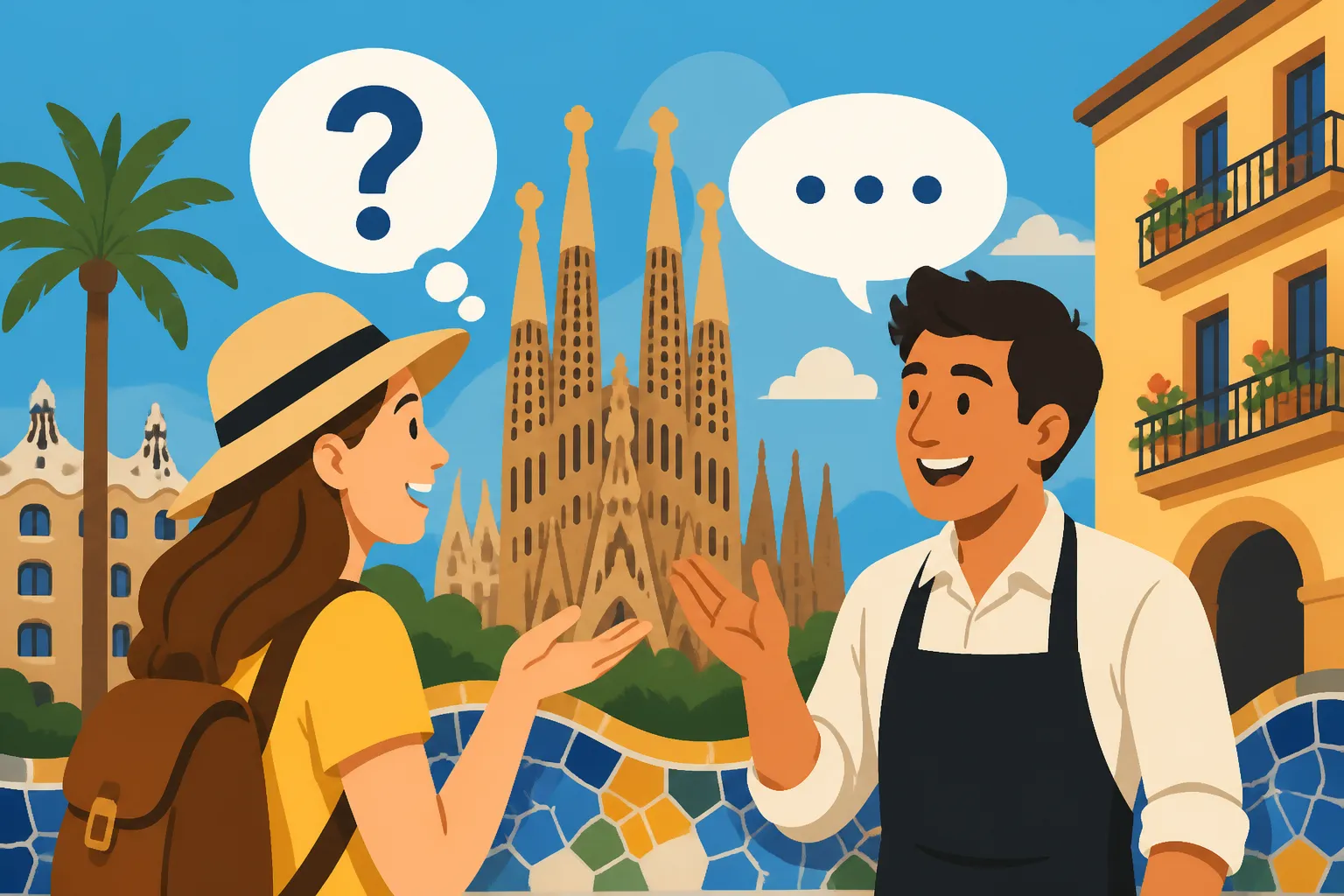
Do People Speak English in Spain’s Tourist Areas?
One of the most common worries I hear from new expats and eager tourists heading to Spain is, "Will I be able to get by with just English?" It's a completely valid concern, especially when you're navigating a new country, trying to order a coffee, or just asking for directions. The answer isn't a simple yes or no, but a nuanced "it depends," and understanding where and when you can rely on English will make your Spanish adventure much smoother and less stressful.
Disclosure: This post may contain affiliate links. We may earn a commission at no extra cost to you if you make a purchase through these links. Read full disclosure.
The Reality of English in Spain's Tourist Hubs
Let's cut to the chase: while English is increasingly common, especially among younger generations and those in the tourism industry, it's far from universally spoken across Spain. It's not like visiting, say, the Netherlands or Scandinavia where English fluency is practically a given. Spain has its own rhythm, and language plays a big part in that.
Big Cities and Coastal Resorts: A Mixed Bag
When you land in major metropolitan areas like Madrid, Barcelona, Valencia, or cities along the popular Costas (del Sol, Blanca, Brava), you'll definitely find more English speakers than elsewhere. This is where the tourist dollar flows, and businesses have adapted. You'll likely encounter English-speaking staff at hotel receptions, major attractions, and some restaurants catering specifically to an international crowd. However, even in these bustling hubs, "common" doesn't equate to universal fluency. You might walk into a local farmacia (pharmacy) or a small, family-run tapas bar just a block from a major square, and find yourself needing to dust off some basic Spanish. The younger population, especially those who've studied abroad or work in sectors with international exposure, are more likely to have a good grasp of English. But relying solely on it, even in these areas, can lead to moments of frustration and missed opportunities to truly connect with the local culture.
Beyond the Beaten Path: Less English, More Charm
Venture outside the big cities and well-trodden tourist routes, and the prevalence of English drops significantly. If your itinerary includes charming smaller towns in Andalusia, the historic villages of Castile-La Mancha, or the quiet beauty of rural Galicia, you should anticipate that English will be a rarity. This is where the true essence of Spanish life often shines, but it also means that communication will largely be in Spanish. Don't let this deter you, though! These are often the places where you'll have the most authentic experiences, savoring incredible local cuisine, and witnessing centuries-old traditions. It simply means you'll need to be prepared with a few Spanish phrases yourself, or rely more heavily on translation tools and good old-fashioned charades. Embracing this challenge can be incredibly rewarding, forcing you out of your comfort zone and into deeper interactions.
Where You Can Expect English to Be Spoken
While it's wise not to expect English everywhere, there are specific situations and locations where you have a much higher chance of finding someone who can communicate with you in English.
Hospitality Sector: Hotels, Major Attractions, and Tour Operators
When it comes to your accommodation, especially larger hotels or international chains you might find on platforms like Booking.com, you can almost always count on English-speaking staff at the reception desk. Many tourist-oriented hotels even have multilingual staff members to assist guests from various countries. Similarly, at Spain's world-famous attractions, such as the Sagrada Familia in Barcelona, the Prado Museum in Madrid, or the Alhambra in Granada, you'll find that ticket booth operators, information staff, and many official tour guides (particularly those booked via services like GetYourGuide) will be proficient in English. These institutions are well-versed in catering to an international audience, and providing information in English is standard practice.
Booking guided tours in advance, especially those specifically advertised in English, is a fantastic way to ensure you have a smooth experience and can ask all your questions without a language barrier. This extends to many organized excursions, wine tasting tours, or cooking classes that specifically target international visitors.
International Transport Hubs: Airports and Major Train Stations
Getting into and out of Spain, or traveling between its major cities, usually poses fewer language challenges. Staff at major international airports like Madrid-Barajas (MAD) or Barcelona-El Prat (BCN) typically have a good command of English, particularly at information desks, airline counters, and immigration. Similarly, at the main train stations in big cities, such as Madrid Atocha or Barcelona Sants, you'll often find that ticket agents, especially those dealing with high-speed AVE routes, can assist you in English. For purchasing train tickets, services like Omio often allow you to book in English, streamlining the process even before you arrive at the station. This is particularly helpful when navigating the sometimes complex Spanish rail system.
However, once you move to smaller regional train or bus stations, the level of English spoken by staff might be much lower, so be prepared for that transition.
Retail and Dining: Varies Greatly
This is where the biggest discrepancies lie. In popular shopping districts in cities, especially in larger department stores like El Corte Inglés, you might find some staff members who speak English, particularly in the electronics or international fashion sections. Boutique shops or smaller, local businesses, however, are far less likely to have English speakers.
Dining is a similar story. Restaurants that cater heavily to tourists, especially those in central squares or near major hotels, often have menus translated into English and some English-speaking staff. However, step into a traditional Spanish taberna or a local bar de tapas a few blocks away, and you might find yourself pointing at items on the menu or relying on pictures. Many menus, thankfully, now feature clearer descriptions or even small icons to help you identify dishes, but direct conversation about ingredients or specific requests might require some linguistic creativity on your part.
Practical Strategies for Communicating Without Fluent Spanish
Even if you're venturing into areas where English is scarce, or if you just want to feel more confident, there are plenty of strategies to help you communicate effectively and enjoy your trip.
Learn Key Spanish Phrases: Your Best Ally
Honestly, making even a tiny effort to speak some Spanish goes an incredibly long way. Spaniards are generally very appreciative when foreigners try to speak their language, no matter how broken it is. Learning a few polite phrases is your absolute best tool. Things like Hola (hello), Gracias (thank you), Por favor (please), Lo siento (I'm sorry), ¿Hablas inglés? (Do you speak English?), La cuenta, por favor (The bill, please), and ¿Cuánto cuesta? (How much does it cost?) will open doors and smooth over countless interactions. Don't be shy! Most people will understand you're a tourist and be patient. For a more comprehensive guide, check out our post on Survival Spanish for Travelers: Key Phrases to Learn First.
Translation Apps and Tools: Your Digital Lifeline
In today's connected world, your smartphone is your secret weapon. Apps like Google Translate or DeepL can be incredibly helpful. You can type in phrases, use the voice translation feature for simple back-and-forth conversations, or even use the camera function to instantly translate menus or signs. It's truly a game-changer when you're faced with a menu full of unfamiliar dishes. Just remember to download the Spanish language pack for offline use, especially if you're heading to areas with patchy internet. Our guide on Using Translation Apps in Spain: What Works Best offers more detailed tips.
Body Language and Patience: The Universal Language
Never underestimate the power of non-verbal communication! Pointing, gesturing, and drawing pictures can convey a surprising amount of information. A smile and a patient attitude are also universal. There might be moments of misunderstanding, and that's okay. Take a deep breath, try another approach, and remember that most people are genuinely trying to help you, even if they don't speak your language. A bit of humor and a willingness to laugh at yourself can also diffuse potentially awkward situations.
Pre-planning and Booking in English
One of the easiest ways to mitigate language concerns is to do some strategic planning. As mentioned, booking accommodations through international platforms like Booking.com often provides English interfaces and customer support. Many major tour operators also offer English-language tours that you can reserve in advance, sometimes through sites like GetYourGuide, ensuring a seamless experience. If you're particularly concerned about dining, research restaurants online that explicitly state they have English menus or that cater to international guests. For domestic travel, booking train tickets through English-friendly platforms like Omio can save you a headache at the ticket counter. Planning your travel through the Accommodation in Spain: Hotels, Hostels, and Rentals guide can help ensure your stay is comfortable, and our article on How to Buy AVE Train Tickets in Spain and Save Money will help you book trains stress-free.
Regional Nuances: Beyond Just Spanish
Spain is a country rich in cultural diversity, and that extends to its languages. While Castilian Spanish (what most people refer to simply as "Spanish") is the official language nationwide, several regions have their own co-official languages, which can add another layer to the linguistic landscape.
Catalan, Basque, and Galician: More Layers to the Onion
In regions like Catalonia (Barcelona, Girona), the Basque Country (Bilbao, San Sebastián), and Galicia (Santiago de Compostela), you'll encounter signs, official documents, and local conversations in Catalan, Euskera (Basque), and Galician, respectively. While this might seem daunting, rest assured that Castilian Spanish is still widely understood and spoken by almost everyone in these regions. However, a local might prefer to speak their regional language. In tourist areas, especially in Barcelona, many people will still speak English due to the high volume of international visitors. For a deeper dive into this, our article on Regional Languages in Spain: Catalan, Basque, and Galician provides a fantastic overview. This doesn't necessarily mean more English will be spoken, but it does mean that even attempting a few Castilian Spanish phrases can be seen as respectful.
The Canaries and Balearics: A Different Vibe
The Spanish islands, particularly the Canary Islands (Tenerife, Gran Canaria, Fuerteventura) and the Balearic Islands (Mallorca, Ibiza, Menorca), have a unique linguistic situation. Due to decades of heavy tourism from Northern Europe, you'll often find a higher prevalence of English and German speakers, especially in the major resorts and coastal towns. Many businesses cater directly to British, Irish, and German tourists, so you might even hear English spoken as much as, if not more than, Spanish in some areas. Our guides to The Balearic Islands: Choosing Between Mallorca, Menorca, and Ibiza and The Canary Islands: A Traveler's Overview can give you a better idea of what to expect in these popular island destinations.
Embracing the Challenge: It's Part of the Adventure
Look, traveling to a new country and stepping outside your linguistic comfort zone can feel intimidating. I've been there! But I promise you, it's often where the most memorable and rewarding experiences happen.
Overcoming Language Barriers Enriches the Experience
When you push through a language barrier, even with just a few words and a lot of gestures, you're not just communicating; you're connecting. You're showing respect for the local culture, and that effort is almost always met with warmth and a genuine desire to help. Some of my favorite memories from my early days in Spain involve hilarious misunderstandings that ended with everyone laughing and a new friend made. Don't be afraid to try, to make mistakes, and to embrace the adventure of it all. It’s part of the rich tapestry of living and traveling abroad. You might even find yourself picking up some Spanish Medical Terminology: Common Words Expats Should Know if you are here for a long term stay, purely out of necessity! Learning about Spanish Etiquette for Expats: Greetings, Invitations, and Daily Life can also help in non-verbal communication.
Safety and Emergencies: When English is Critical
It's natural to worry about emergencies when you don't speak the local language. The good news is that in Spain, emergency services are well-equipped to handle international visitors. If you dial 112 (the pan-European emergency number), operators often have access to English speakers or translation services. While it's always good to have important information written down (like your accommodation address or any allergies), you can generally expect assistance in English during critical situations. For more detailed information on emergency procedures, consult our guide on Emergency Numbers in Spain: 112 and When to Use It and How to Handle Medical Emergencies If You Don’t Speak Spanish. Our article on Ordering Food and Drinks in Spanish: A Practical Phrasebook can help alleviate daily stress.
Here’s a quick overview to help set your expectations:
| Situation/Location | English Prevalence (Likelihood) | Communication Tips |
|---|---|---|
| Major Cities (Madrid, Barcelona) | High in tourist areas/hotels | Learn basic phrases, use apps. |
| Coastal Tourist Resorts | High, especially with UK/German visitors | Often very easy to find English speakers. |
| Smaller Towns/Rural Areas | Low | Essential to use Spanish phrases/apps, patience is key. |
| Hotels (International Chains) | High | Staff almost always speak English. |
| Major Museums/Attractions | High (staff, audio guides) | Guided tours often available in English (e.g., via GetYourGuide). |
| Airports/Major Train Stations | Medium to High | Information desks, ticket counters often have English speakers. Booking platforms like Omio help. |
| Local Restaurants/Bars | Low to Medium | Menus often translated; point, use apps, try Spanish phrases. |
| Shops (Local) | Low | Body language, simple Spanish, be patient. |
| Emergency Services (112) | High (access to translators) | Explain location clearly, state emergency type. |
| Balearic/Canary Islands | Very High in tourist zones | Many locals/staff accustomed to English, German speakers. |
Disclaimer
The information provided in this guide is for general informational purposes only and is subject to change. While we strive to offer accurate and up-to-date advice, travel regulations, local customs, and language proficiency levels can vary. Always exercise caution and verify critical information with official sources.