Bullfighting in Spain: Context and Visitor Considerations
Standing before a vibrant bullfighting poster in Seville, I felt the heavy conflict that almost every newcomer in Spain eventually faces. I remember feeling torn between cultural curiosity and a deep discomfort with the ethical reality of the event. This guide navigates the history, the controversy, and the visitor logistics to help you decide how to approach this polarizing tradition.
Disclosure: This post may contain affiliate links. We may earn a commission at no extra cost to you if you make a purchase through these links. Read full disclosure.
The Cultural Roots and Evolution of the Corrida de Toros
To understand why bullfighting still exists, you have to look past the blood and into the ancient psyche of the Mediterranean. It is not considered a "sport" in Spain; you won't find it in the sports section of the newspaper. Instead, it is found in the culture pages, filed alongside opera, theater, and fine art. This distinction is vital for any expat trying to grasp the local mindset. The roots of the corrida stretch back to Roman venationes and even earlier Minoan bull-leaping, evolving through the Middle Ages into a noble pastime where knights fought bulls from horseback.
By the 18th century, the spectacle moved from the aristocracy to the common people. The figures we recognize today—the matador on foot with a cape and sword—emerged as symbols of the Enlightenment’s struggle to dominate nature through reason and grace. For many Spaniards, the bull is not a victim but a respected adversary, a representative of the wild, primordial forces of the earth. The matador’s job is not simply to kill, but to perform a ritualized "dance" that demonstrates courage in the face of death. This historical weight is why the event is often referred to as a "liturgy."
When you explore the History, Art, and Architecture in Spain, you see the influence of the bull everywhere. From the sketches of Goya to the prose of Hemingway, the corrida has been framed as a tragic play in three acts. In 2026, the Spanish government continues to protect bullfighting under the umbrella of "Cultural Heritage," a legal status that makes it very difficult for animal rights groups to implement a total nationwide ban. For a visitor, recognizing this depth doesn't mean you have to like it, but it helps explain why a simple "just ban it" argument often falls flat in traditional circles.
Understanding the Structure of a Traditional Bullfight
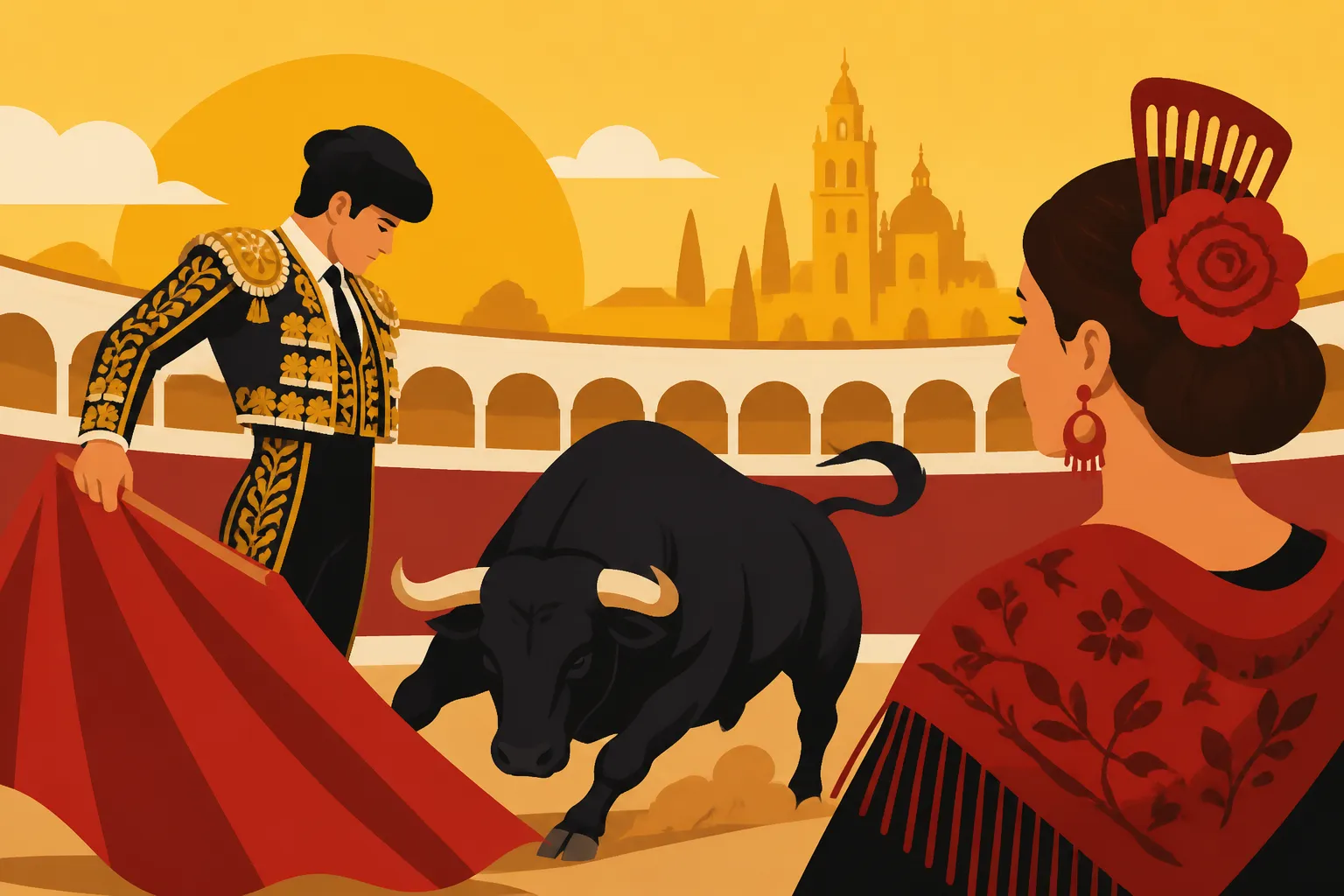
If you do choose to attend, or even if you are just watching a broadcast in a local bar, you will notice a rigid, unwavering structure. A standard corrida involves three matadors, each fighting two bulls, for a total of six encounters. The event begins with the paseíllo, a ceremonial parade where the participants enter the ring to the swell of a brass band playing a pasodoble. This is the most photogenic moment, but the atmosphere quickly shifts into a tense, focused silence.
The First Stage: Tercio de Varas
The fight is divided into three parts, or tercios. The first is the Tercio de Varas (the third of spears). The bull enters the ring, and the matador observes its behavior by using a large gold and purple cape called a capote. This isn't just for show; the matador is looking at how the bull charges, which horn it favors, and its overall strength. Then, the picadors enter on horseback. Their role is to use a long lance to weaken the bull’s massive neck muscles. This causes the bull to lower its head, which is technically necessary for the matador to perform the final kill safely later on.
For many expats, this is the hardest part to watch. The horses are armored, but the physical impact is visceral. It is a moment of raw power that sets the tone for the rest of the event. If you are staying in a hotel nearby, perhaps one you found via Booking.com in the historic center of Seville or Madrid, you might even hear the echoes of the crowd's reaction to a particularly brave bull during this stage.
The Second Stage: Tercio de Banderillas
The second act is the Tercio de Banderillas. In this stage, three assistants called banderilleros attempt to plant three pairs of "banderillas" (barbed sticks) into the bull's shoulders. They do this without a cape for protection, relying entirely on their agility to sprint toward the charging bull and leap out of the way at the last second. The purpose is to stimulate the bull, keeping its energy high after the lancing in the first stage.
The crowd often cheers loudly here for the athleticism involved. It is a fast-paced, high-stakes game of chicken. You will notice that the crowd’s behavior is highly regulated by unwritten rules of Spanish Social Customs: Greetings, Kisses, and Personal Space. There are times to be silent, times to whistle in disapproval, and times to roar "¡Olé!" Understanding these cues is essential for not standing out as a "clueless" tourist.
The Final Stage: Tercio de Muerte
The final third is the Tercio de Muerte (the third of death). This is the climax where the matador enters the ring alone with a small red cape called a muleta and a sword. This is the "faena," the series of passes where the matador attempts to get as close to the bull’s horns as possible. The goal is to create a sense of aesthetic beauty and "templar"—the act of slowing down the bull’s charge to match the matador’s movement.
The event ends with the estocada, the final sword thrust. If done correctly, it is instantaneous. If not, it can be a prolonged and distressing sight. If the matador has performed exceptionally well, the crowd will wave white handkerchiefs to petition the President of the plaza to award "trophies"—one ear, two ears, or the highest honor, two ears and a tail. In extremely rare cases, if a bull has shown incredible bravery, the crowd may demand an indulto (pardon), where the bull is spared and sent back to the ranch to live out its days as a stud.
Regional Differences and Legality Across Spain
One of the biggest mistakes newcomers make is assuming bullfighting is equally popular everywhere in Spain. The country is a patchwork of differing attitudes, and the legality of the practice is a constant legal tug-of-war. For example, if you are planning your trip using the How to Use the Renfe App to Plan Train Travel in Spain, you might notice that the atmosphere changes significantly as you move between regions.
In Andalusia and Madrid, bullfighting remains a powerhouse of culture and tourism. The Feria de Abril in Seville and the San Isidro festival in Madrid are the peaks of the season. In these areas, the corrida is deeply intertwined with local identity and the economy. However, if you head north to Catalonia, the story is very different. Catalonia famously banned bullfighting in 2010, though the Spanish Constitutional Court later overturned the ban, claiming the region had overstepped its authority regarding national heritage. Despite this, there have been no regular bullfights in Barcelona for years; the demand simply isn't there, and the local government has no interest in facilitating them.
The Canary Islands were the first to move away from the practice, having effectively ended bullfights in the early 1990s. In the Balearic Islands, they attempted a "bullfighting without blood" law, which was also contested by the central government. The trend is moving toward a generational decline. While the "big" events still sell out, smaller village bullfights are becoming rarer as younger Spaniards pivot toward animal rights and modern entertainment. Before you visit a specific city, it is worth checking Public Holidays in Spain: How They Affect Travel and Opening Hours to see if a local festival involves bull-related events, as this can drastically affect your experience of the town.
| Region | Status of Bullfighting | Popularity/Atmosphere |
|---|---|---|
| Madrid | Legal & Protected | Very high; home to Las Ventas, the "Cathedral" of bullfighting. |
| Andalusia | Legal & Protected | Deeply traditional; major social event during spring fairs. |
| Catalonia | Legal (but inactive) | Virtually non-existent; strong local opposition. |
| Basque Country | Legal | Moderate; famous fairs in Bilbao and San Sebastián. |
| Canary Islands | Inactive | Effectively ended decades ago; no local interest. |
Practical Considerations for the Curious Visitor
If you decide that you want to see a bullfight for yourself, there are several logistical hurdles to clear. This is not like buying a cinema ticket; it requires a bit of strategy to ensure you don't end up uncomfortable, overheated, or overcharged.
Choosing Your Seat: Sol vs. Sombra
This is the most important decision you will make. Spanish bullrings are circular, and the price of the ticket is determined by the sun.
- Sol (Sun): These are the cheapest tickets. You will be sitting in the direct, blazing Spanish heat for two to three hours. Unless you are on a very tight budget, I generally advise against this. The heat can be dizzying, and it’s hard to focus on the event.
- Sombra (Shade): These are the most expensive but provide a much more comfortable experience. You will be able to see the details of the matador’s "Suit of Lights" without squinting.
- Sol y Sombra: These seats start in the sun but eventually move into the shade as the evening progresses.
You can often find tickets through official plaza websites or at the box office (taquilla). Be wary of third-party resellers outside the ring; it’s better to book through trusted platforms or directly. If you are traveling between cities like Madrid and Seville to catch specific fights, platforms like Omio can help you coordinate your high-speed train tickets to ensure you arrive in time for the evening start.
What to Expect and Etiquette
Expect a long evening. A full corrida usually lasts about two and a half hours. It is also important to dress appropriately. While there is no formal dress code for general seating, many locals dress up for the major festivals—think "smart casual" or "Sunday best."
Keep your voice down during the actual passes. The silence in a bullring can be deafening, and it is considered disrespectful to shout or talk loudly when the matador is facing the bull. However, when the music starts or the act ends, feel free to join the applause or the waving of handkerchiefs if you feel moved to do so. If you find the experience too intense, it is perfectly acceptable to leave between bulls. Do not try to leave in the middle of a fight; wait for the interval when the dead bull is being dragged out by the team of mules.
For those who want to understand the history without seeing a live fight, I highly recommend booking a tour of the arena. Many plazas, such as Las Ventas in Madrid or the Maestranza in Seville, offer excellent museum tours that you can book via GetYourGuide. These tours walk you through the history, the art, and even the chapel where matadors pray before entering the ring, providing a deep dive into the culture without the blood.
Navigating the Ethical Controversy as an Expat
Living in Spain means you will eventually have to talk about bullfighting with your Spanish friends, colleagues, or neighbors. This is a minefield, and how you navigate it will define your "integration" experience. My advice? Listen more than you speak.
The debate in Spain is not just about animals; it’s about politics, identity, and the divide between "Traditional Spain" and "Modern Spain." For many conservatives, bullfighting is a pillar of the national soul. For many progressives, it’s a barbaric relic of a past they want to leave behind. When you discuss it, avoid being the "judgmental foreigner." Instead of saying "This is cruel and should be banned," you might ask, "How do people in your family feel about the tradition?" You’ll find that even within a single Spanish family, opinions are often split down the middle.
Be aware of What Should You Not Do in Spain as a Visitor. One of those things is lecturing locals on their culture. Even Spaniards who hate bullfighting often resent foreigners coming in and telling them how to run their country. It’s a nuanced topic that requires a high level of empathy. If you find yourself in a heated debate, remember that the Staying Safe in Spain: Practical Safety Tips for New Residents often include knowing when to bow out of a political argument in a crowded bar.
Alternatives to the Corrida: Experiencing Bull Culture Differently
If you’ve decided that a live bullfight is not for you, but you’re still fascinated by the "bull culture" of Spain, there are plenty of ways to engage with the theme that don't involve the tercios. Spain has a wealth of traditions centered around the bull that are more focused on running, agility, or historical celebration.
The Running of the Bulls (Encierros)
The most famous, of course, is the San Fermín festival in Pamplona. Here, the bulls run through the streets to the ring. While the bulls are still fought in the evening, the morning "encierro" is more about the human participants' bravery and speed. It is a chaotic, adrenaline-fueled event that is quite different from the choreographed "art" of the bullring. If you visit Pamplona, make sure you have your Madrid for First-Time Visitors: Neighborhoods and Highlights guide handy if you're connecting through the capital, as the trains to the north during San Fermín are incredibly crowded.
Recortadores: The Bloodless Alternative
For a truly impressive and "bloodless" experience, look for Concursos de Recortadores. In these events, young men and women face the bull with nothing but their bodies. They perform incredible acrobatic feats—leaping over the bull, somersaulting across its back, or swerving at the very last millisecond. The bull is not harmed, and the focus is entirely on the athleticism and nerves of the participants. It is a fantastic way to see the power of the animal and the courage of the humans without the lethal conclusion of a traditional corrida.
Visiting a Dehesa (Bull Ranch)
Finally, consider a trip to a dehesa, the expansive oak-shaded ranches where the toros bravos are raised. These animals live like royalty for four to five years, roaming free in some of Spain's most beautiful landscapes. Many ranches in Andalusia for Travelers: Cities, Coast, and Culture offer tours where you can see the bulls from the safety of a tractor or a 4×4. It provides a fascinating look at the breeding process and the ecological importance of these ranches, which preserve vast tracts of Spanish wilderness that might otherwise be turned into housing developments or intensive farms.
Disclaimer
The information provided in this guide is for educational and cultural purposes only. Bullfighting is a highly controversial topic, and the decision to attend or support these events is a personal one. We do not endorse any specific viewpoint but aim to provide the necessary context for visitors to make their own informed choices while respecting local laws and customs.