Shopping in Spain: Markets, Boutiques, and Department Stores
Walking down a beautiful Spanish cobblestone street at 3:00 PM, you might find yourself staring at a wall of closed metal shutters and wondering where everyone went. I remember my first week in Seville, standing outside a clothing boutique with a credit card in hand and a very confused expression; it took me months to truly master the logic of the Spanish retail landscape. This guide solves the mystery of Spanish shopping by breaking down the cultural rhythms, the best local spots, and the administrative quirks you need to know.
Disclosure: This post may contain affiliate links. We may earn a commission at no extra cost to you if you make a purchase through these links. Read full disclosure.
Understanding the Spanish Shopping Rhythm
The first thing you have to accept about shopping in Spain is that the clock is your most important tool. Unlike the 24/7 convenience culture prevalent in North America or Northern Europe, Spain operates on a split-shift system known as the horario partido. This isn't just about people taking a nap; it is a deep-rooted social structure that dictates when you can buy bread and when you can buy a designer handbag.
The Siesta Factor and Business Hours
Small boutiques and traditional markets typically open around 9:00 AM or 10:00 AM and close sharply at 2:00 PM. This four-hour window is high-energy and productive. Then, the shutters come down. Between 2:00 PM and 5:00 PM, the streets of smaller towns and even many neighborhoods in major cities go quiet. This is the time for the main meal of the day and family rest. Shops then reopen from 5:00 PM until 8:00 PM or 9:00 PM.
If you are planning a day of intensive retail therapy, do not make the mistake I made early on: trying to run errands during your lunch break. You will find yourself standing in front of a closed door every single time. Large department stores and international chains in city centers are the exception, usually staying open through the afternoon, but if you want the authentic local experience, you have to sync your watch to the local pulse.
Sunday Shopping Realities
In most of Spain, Sunday is a day of rest, and the law strictly regulates which shops can open. If you are in a major tourist hub like Madrid, you have more flexibility, but in cities like Valencia or Seville, finding anything beyond a small convenience store or a pharmacy can be a challenge. Understanding Sunday Shopping in Spain: What’s Open and Where is vital for avoiding a weekend with an empty fridge or a missed opportunity for a gift.
In Madrid, the regional government has liberalized hours, meaning many shops in the center are open 365 days a year. However, in regions like Catalonia, restrictions remain tight. Always check the local calendar for festivos (public holidays). If a holiday falls on a Thursday, many shops might also close on Friday for a puente (bridge), effectively creating a four-day shutdown. Planning your travel between these cities using Omio can help you arrive when the shops are actually alive.
Exploring Traditional Spanish Markets
For an expat or a savvy tourist, the municipal market is the heart of the community. These are not just places to buy food; they are social hubs where you learn the names of the local cheeses and hear the latest neighborhood gossip. Every major district in a Spanish city will have its own Mercado de Abastos.
Mercados de Abastos and Food Halls
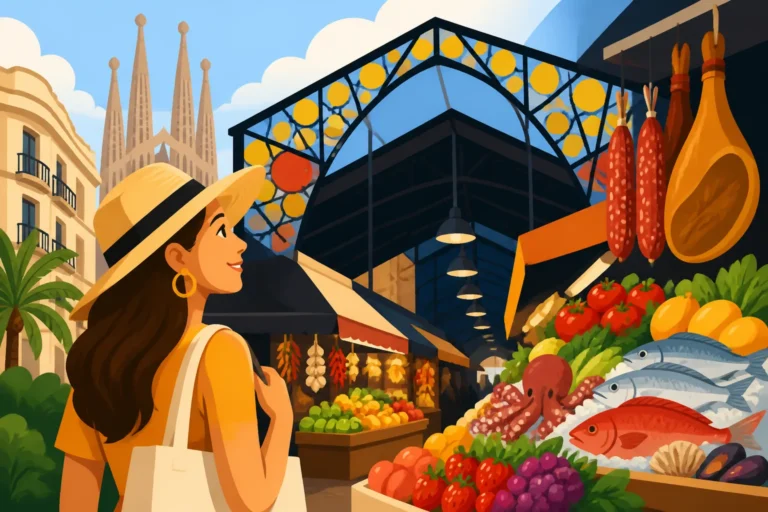
Walking into a place like the Mercado de San Miguel in Madrid or the Mercado de la Boquería in Barcelona is a sensory overload. You will see legs of jamón hanging from the ceiling, mounds of glistening olives, and seafood that was in the Mediterranean only hours ago. For the best experience, you should learn How to Visit La Boquería and Other Famous Food Markets before you go, as these popular spots can be overwhelming during peak tourist hours.
Beyond the famous ones, seek out the neighborhood markets like Mercado de Maravillas in Madrid or Mercado de Ruzafa in Valencia. Here, the prices are lower, and the quality is often higher because the vendors are catering to long-term residents. When shopping here, remember that you usually don't touch the produce yourself; you tell the vendor what you want, and they select the best pieces for you. It’s a mark of respect for the product and the professional.
Mercadillos and Flea Markets
If you love the thrill of the hunt, Spain’s mercadillos (street markets) are a must. Most towns have a weekly market where vendors sell everything from affordable clothing and shoes to home goods and antiques. These usually happen on a specific weekday or Sunday morning.
The king of all flea markets is El Rastro in Madrid. It spans dozens of streets in the La Latina neighborhood every Sunday and public holiday. Knowing How to Visit El Rastro Market in Madrid is essential because the market is divided into zones—some streets focus on birds, others on vintage books, and others on handmade jewelry. Be prepared for crowds and keep a close eye on your belongings, as these high-traffic areas are prime spots for pickpockets. If you want a more structured experience, you can find guided market tours on GetYourGuide to help you navigate the chaos and find the hidden gems.
Navigating Department Stores and Malls
When you need everything in one place—from a new frying pan to a high-end perfume—there is only one name you need to know: El Corte Inglés. This department store is a Spanish institution, and you will find at least one (often several) in every major city.
El Corte Inglés The Spanish Institution
El Corte Inglés is more than just a store; it’s a service provider. Many locations include a supermarket (Supermercado), a gourmet food hall (Club del Gourmet), a travel agency, an optician, and even a key-cutting service. For foreigners, they offer a specific "Tourist Card" that gives you a 10% credit on future purchases, which can be a significant saving if you are doing a lot of shopping in one go.
The convenience of El Corte Inglés is hard to beat, especially since they usually stay open through the siesta hours and late into the evening. They also handle the VAT refund process very efficiently for non-EU residents. If you are staying at a hotel booked through Booking.com in a central area like Plaza de Cataluña in Barcelona or Puerta del Sol in Madrid, you will likely be within walking distance of one of their flagship stores.
Modern Shopping Centers and Malls
Spain has embraced the American-style shopping mall, known as Centros Comerciales. These are often located on the outskirts of cities, though some are integrated into major train stations. They are the go-to spots during the sweltering summer months because they are reliably air-conditioned.
Malls like Lagasca in Madrid or Nevada Shopping in Granada offer a mix of international brands (H&M, Zara, Mango) and local Spanish retailers. These centers often include cinemas and large food courts, making them a popular weekend destination for families. While they lack the charm of a traditional market, they are incredibly practical for ticking off a long shopping list in a single afternoon.
Boutique Shopping and Local Artisans
If you want something truly unique, you need to step away from the big brands and explore the tiendas de barrio and artisan workshops. Spain has a rich history of craftsmanship, particularly in leather, ceramics, and textiles.
Where to Find Independent Boutiques
In Madrid, the neighborhood of Malasaña is the epicenter of vintage and independent fashion. In Barcelona, the narrow streets of El Born are packed with local designers who make their clothes right in the back of the shop. These boutiques offer a level of personality you won't find in a department store.
When exploring these areas, look for the "Hecho en España" (Made in Spain) label. Supporting these local businesses is a great way to ensure the survival of traditional Spanish retail. Many of these shop owners are happy to chat about their process, and you’ll often find that the prices are surprisingly reasonable for handmade quality. Using Omio to hop between these fashion-forward cities allows you to see the regional differences in style, from the avant-garde looks of the north to the more traditional, colorful aesthetics of Andalusia.
Authentic Spanish Crafts and Souvenirs
Don't settle for a plastic bull or a cheap fan made elsewhere. Spain offers incredible authentic goods if you know what to look for. Think about high-quality leather boots from the south, hand-painted ceramics from Toledo or Talavera de la Reina, and gourmet items like saffron or tinned seafood.
Visitors are often advised to check out Spanish Souvenirs Worth Buying (and What to Skip) to avoid the tourist traps. There is a huge difference between a mass-produced flamenco dress and a hand-embroidered silk shawl (mantón de Manila). Understanding What Souvenirs Are Actually Made in Spain will help you invest in items that actually have cultural value and will last a lifetime.
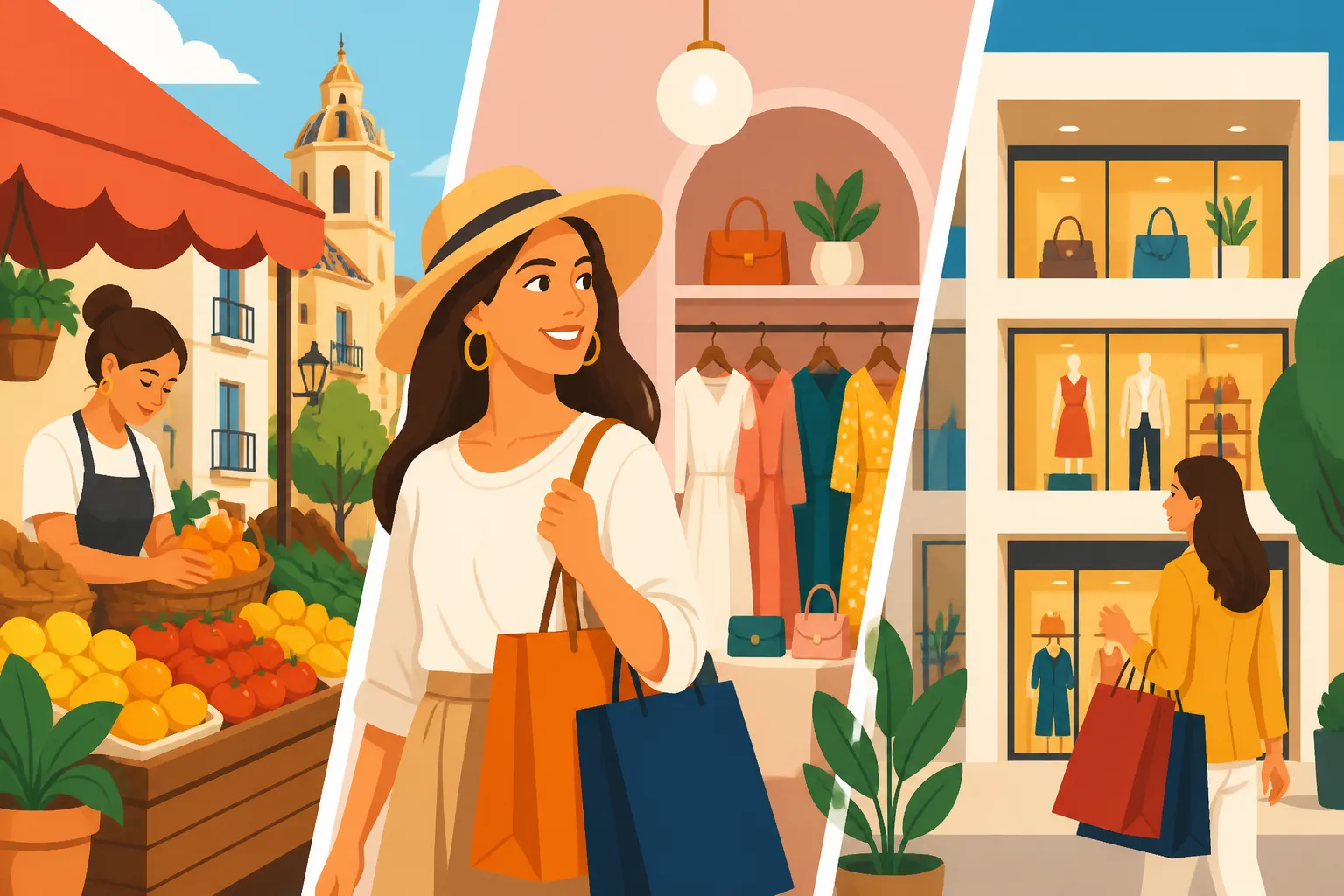
| Type of Shopping | Best For | Typical Hours | Vibe |
|---|---|---|---|
| Municipal Market | Fresh food, local cheese, cured meats | 8:00 – 14:00 | Energetic, traditional, local |
| El Corte Inglés | All-in-one convenience, electronics, brands | 10:00 – 22:00 | Professional, efficient, mid-to-high end |
| Independent Boutique | Unique fashion, artisan crafts, gifts | 10:00 – 14:00 & 17:00 – 20:30 | Personal, trendy, creative |
| Street Market (Rastro) | Antiques, bargains, second-hand items | Sundays 9:00 – 15:00 | Crowded, festive, eclectic |
Practical Tips for a Smooth Shopping Experience
Shopping in a foreign country involves more than just picking out items; you need to understand the financial and legal framework to get the most for your money.
Tax-Free Shopping for Non-EU Residents
If you live outside the European Union, you are eligible for a VAT (IVA) refund on your purchases in Spain. There is no longer a minimum spend requirement, which is a fantastic change for tourists. When you buy something, ask the shop assistant for a "Tax-Free form." You will need to show your passport (a photo of it on your phone often works).
Before you leave the country, you must validate these forms at a DIVA kiosk at the airport. It is a straightforward process, but it requires you to arrive at the airport a bit earlier than usual. For a detailed breakdown of the steps, refer to Tax-Free Shopping in Spain for Non-EU Visitors. This can effectively give you a 10% to 15% discount on everything you buy, which adds up quickly if you are purchasing electronics or designer goods.
Sales Seasons and Discounts
Spain has two main sales seasons, known as Rebajas. The winter sales start on January 7th (the day after Three Kings Day) and the summer sales usually begin on July 1st. During these periods, discounts start at 30% and can go as high as 70% toward the end of the season.
It is absolute madness in the streets during the first few days of Rebajas. If you are looking for something specific, you need to go early. If you prefer to avoid the crowds, wait a few weeks for the segundas rebajas (second sales), though sizes will be more limited. Check out Spanish Sales Seasons (Rebajas): When to Shop for tips on how to navigate the frenzy and which stores offer the best deals.
Regional Shopping Highlights Across Spain
Every region in Spain has its own specialty, and the shopping experience varies significantly from the humid streets of Bilbao to the sunny avenues of Malaga.
Madrid's Golden Mile and Beyond
In Madrid, the Salamanca district is home to the "Milla de Oro" (Golden Mile), specifically along Calle de Serrano and Calle de José Ortega y Gasset. This is where you’ll find the heavy hitters like Loewe (a Spanish luxury icon), Prada, and Chanel. Even if you aren't planning to buy a four-figure handbag, the window shopping and people-watching are world-class.
For a more alternative vibe, head to Calle de Fuencarral. This pedestrianized street connects the Gran Vía with the trendy neighborhoods of Chueca and Malasaña. It features a mix of mainstream brands and edgy streetwear shops. If you find yourself needing a break from the pavement, use GetYourGuide to find a walking tour of these historic neighborhoods to learn about the architecture while you shop.
Barcelona's Modernist Avenues
Shopping in Barcelona is inseparable from its architecture. Walking down Passeig de Gràcia, you are surrounded by Gaudí’s masterpieces while browsing high-end retailers. It is arguably the most beautiful shopping street in the world.
For those who enjoy a more intimate experience, the Gothic Quarter and El Born offer a labyrinth of tiny shops selling everything from handmade espadrilles to artisan chocolate. When you are visiting these areas, I recommend learning How to Shop at a Spanish Outdoor Market because many of the smaller plazas host pop-up craft markets on the weekends. After a long day of exploring the shops, finding a nearby apartment on Booking.com allows you to drop off your bags and head back out for a well-earned tapas dinner.
Disclaimer
The information provided in this guide is for general informational purposes only. While I strive to provide accurate and up-to-date details regarding shopping hours, tax regulations, and local customs in Spain, these can change frequently due to local legislation or seasonal shifts. Always verify specific store hours and tax-free procedures locally at the time of your visit. I do not accept responsibility for any inconvenience or financial loss resulting from reliance on the information contained in this article.